


Product description
10,000 YEARS OF CULTIVATION — THE WORLD’S SECOND MOST GROWN MILLET
Foxtail Millet ( Setaria italica ) is one of the oldest cultivated grains in the world, with a history spanning over 10,000 years across Asia and parts of Europe. Today, it remains one of the most widely grown millets globally—valued for its resilience, nutritional profile, and everyday versatility. Recognised in global markets under various names, Foxtail Millet has long been a staple in traditional diets and continues to gain popularity in modern, health-focused kitchens. In the UAE, it is one of the easiest ancient grains to incorporate into daily cooking. Its mild flavour and familiar, rice-like texture make it a seamless substitute in everyday meals—without requiring significant changes to recipes or cooking methods. Naturally gluten-free and easy to prepare, Foxtail Millet is a practical choice for those looking to diversify their grains with a nutrient-rich, time-tested staple.
A GENUINELY STRONG PROTEIN AND MINERAL PROFILE
Foxtail millet provides approximately 11–12g of protein per 100g — roughly double the protein content of white rice. Its mineral profile includes iron (approximately 4.6mg/100g in peer-reviewed analysis), magnesium, phosphorus, calcium, and B vitamins including thiamine and niacin. These are naturally occurring, whole-grain nutrients, not added or fortified.
LOW GLYCEMIC INDEX — WHAT THE SCIENCE ACTUALLY SHOWS
Foxtail millet has a predicted glycemic index of approximately 48–50 in peer-reviewed food science research — placing it in the low-GI category (below 55), compared to white rice which typically scores in the 70s. This means its carbohydrates are digested and released into the bloodstream more gradually than refined grains, a property attributed to its combination of dietary fibre, protein, and the physical structure of the grain. For context: this is general nutritional information about how the grain behaves, not a specific recommendation for people managing a diagnosed medical condition — if blood sugar management is a health priority, it’s worth discussing dietary changes with a healthcare provider alongside food choices.
NATURALLY GLUTEN-FREE
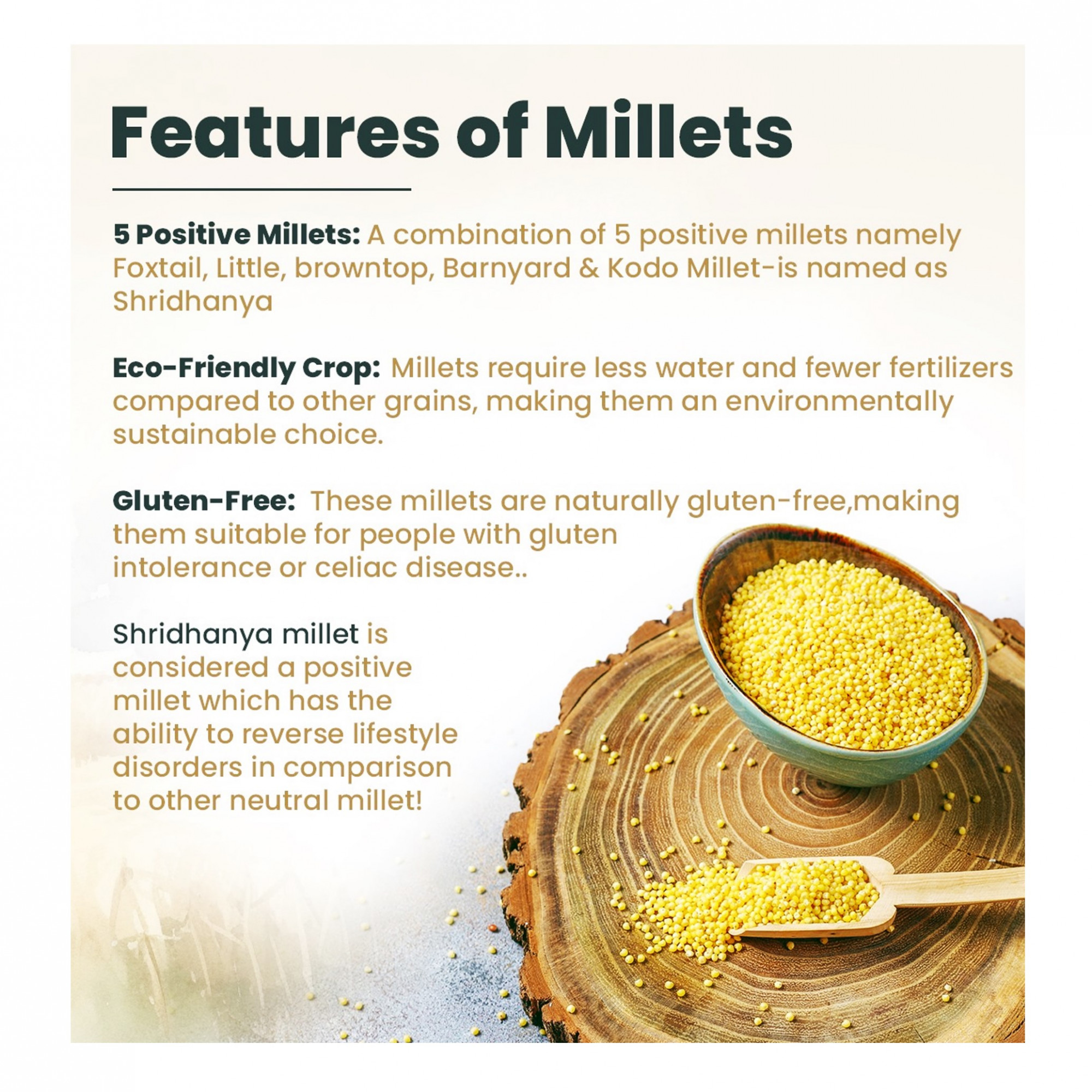
Foxtail millet is naturally gluten-free, produced from a grain that contains no gluten, unlike wheat, barley, or rye. Those with coeliac disease or severe gluten sensitivity should confirm cross-contamination controls directly with us if that’s a specific concern.
FIBRE AND DIGESTIVE SUPPORT
Fibre content in foxtail millet varies noticeably depending on whether the grain is polished or unpolished — from approximately 2g/100g (polished) to 8g+ (unpolished/whole grain) in published research.
HOW TO COOK FOXTAIL MILLET
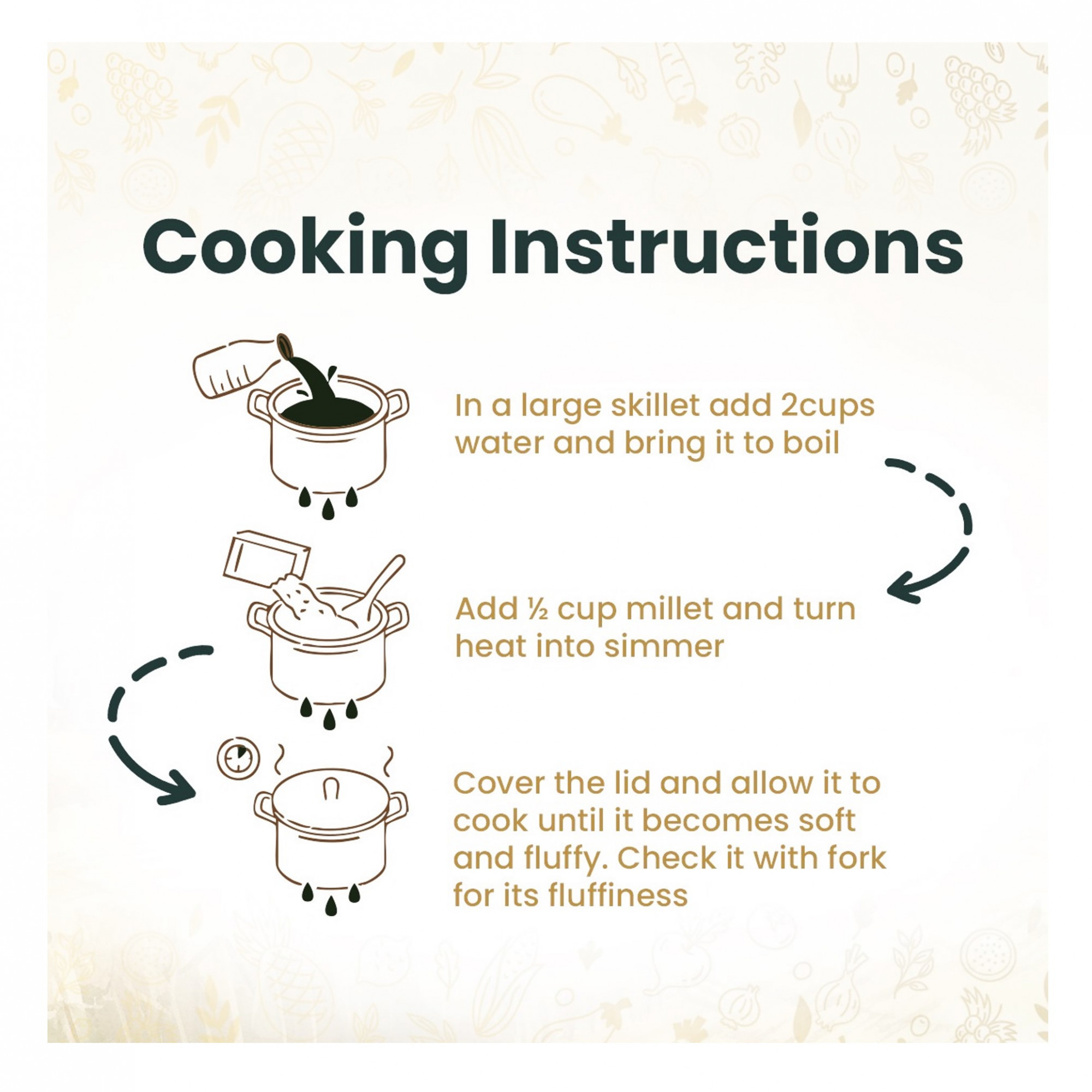
Foxtail Millet is one of the easiest millets to cook—no extended soaking required and ready in just 20–25 minutes. Its light, slightly fluffy texture makes it an excellent substitute for rice in everyday meals.
Basic Cooking Method
Rinse thoroughly under running water.
No soaking required (optional 15–20 minutes for softer texture).
Cook using a 1:2 ratio (1 cup millet to 2 cups water).
Simmer for 20–25 minutes until the water is absorbed and the grains are tender. Fluff and serve.
Ways to Use Foxtail Millet
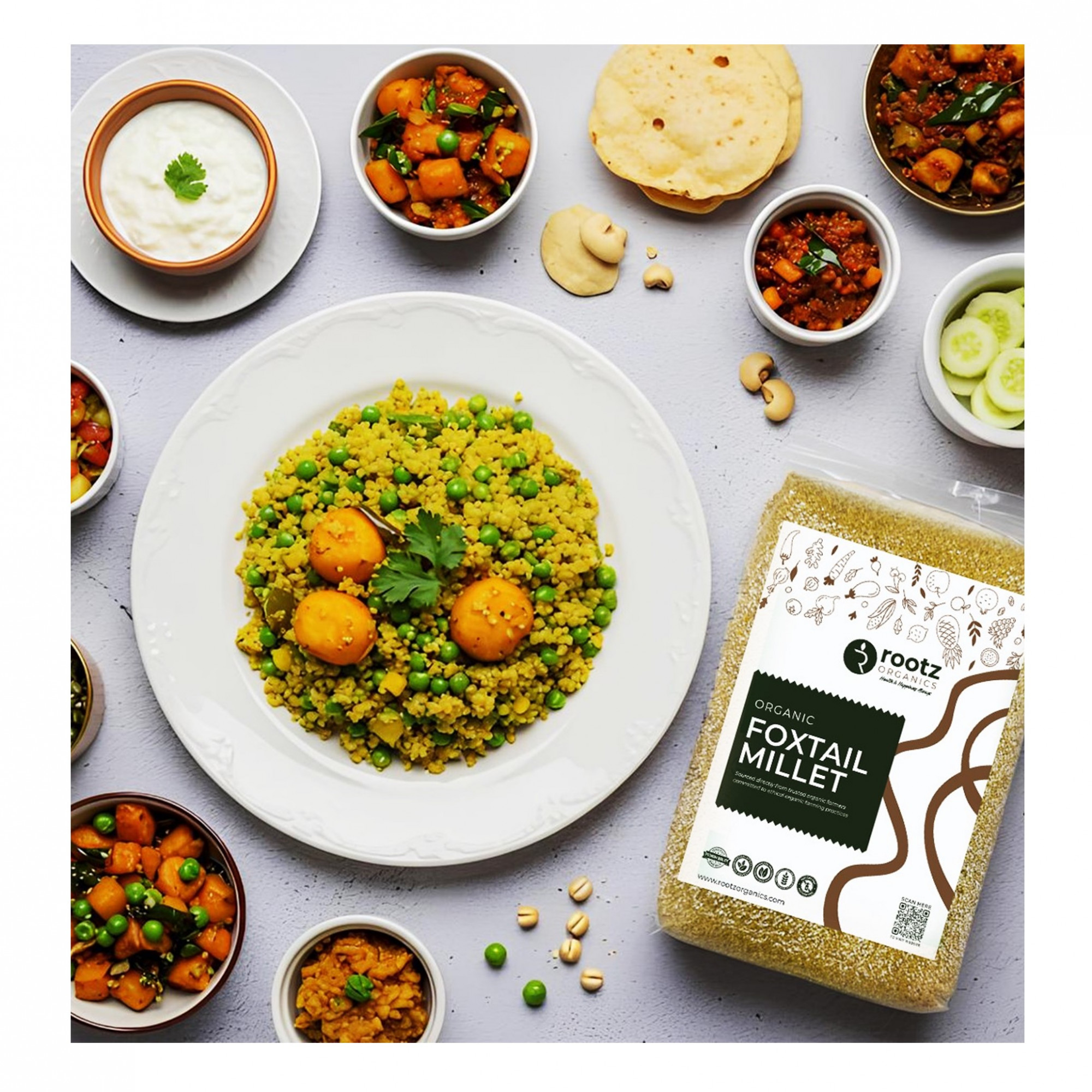
Rice Alternative: Serve with curries, vegetables, or grilled proteins as a light, balanced base.
Vegetable Pilaf: Cook with vegetables, herbs, and whole spices for a wholesome one-pot dish.
Khichdi-Style Meals: Combine with lentils and mild spices for a comforting, nutrient-rich meal.
Savory Breakfast: Lightly roast and cook with vegetables and seasonings for a satisfying start to the day.
Porridge / Breakfast Bowl: Cook with extra water for a softer consistency; enjoy sweet or savoury.
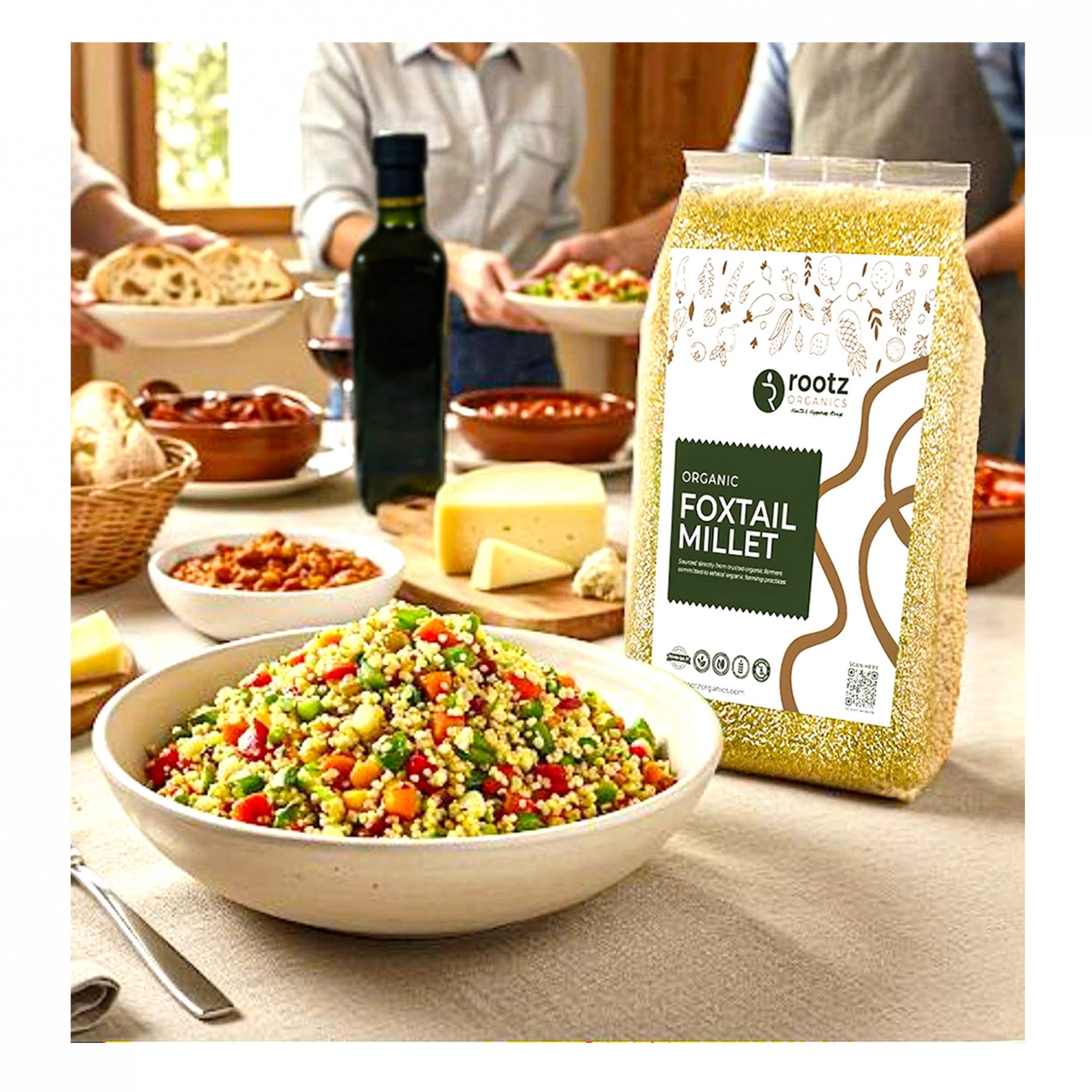
Salads & Grain Bowls: Cool and toss with fresh vegetables, herbs, and dressing for meal prep.
Fermented Batters: Use in combination with lentils for soft pancakes or steamed cakes as a lighter alternative.
Naturally gluten-free, easy to digest, and versatile, Foxtail Millet fits seamlessly into modern UAE kitchens—ideal for clean eating, meal prep, and everyday nutrition.
STORAGE
Store in a cool, dry place in an airtight container away from moisture, sunlight, and strong odours. Millet can absorb smells from its environment if stored uncovered. Consume within a reasonable timeframe for best quality — whole grains with intact bran will have a shorter shelf life than polished grains.
Nutrition Table
Basis: Per 100g dry weight — values drawn from peer-reviewed research on Setaria italica (foxtail millet)| Nutrient | Per Serving | Per 100g/ml | % DV* |
| Energy | — | ~351–360 kcal | 18% |
| Total fat | — | ~3.5–4.3g | 5% |
| Total carbohydrates | — | ~68–75g | 25% |
| — Dietary fibre | — | ~2–8g (varies: polished vs. unpolished — see note) | — |
| Protein | — | ~11–12g | 22% |
| Iron | — | ~4.6mg | 26% |
| Calcium | — | ~31–54mg | 4–5% |
| Magnesium | — | ~45mg | 11% |
| Phosphorus | — | ~100mg | 8% |
| Potassium | — | ~393mg | 8% |
| Zinc | — | ~2.3mg | 21% |
| B Vitamins (Thiamine, Niacin, B6) | — | Present, significant source | — |
| Glycemic Index | — | Low (approx. 48–50 predicted) | — |
Reviews
Login
Don't have an account?
Sign UpIt’s the millet most people find easiest to substitute for rice. Cooked in a 1:2 ratio (millet to water) for about 20–25 minutes, it produces a light, slightly fluffy texture that works well in khichdi, pulao, upma, and salads. The flavour is mild with a gentle nuttiness — familiar enough that most families adapt to it quickly without needing a completely different recipe.
Yes — naturally gluten-free, since it’s produced from a grain that contains no gluten. Those with coeliac disease or severe gluten sensitivity should confirm cross-contamination controls during processing directly with us, since “naturally gluten-free” doesn’t guarantee a certified gluten-free processing environment.
Glycemic index (GI) measures how quickly a food raises blood sugar levels. Foxtail millet has a predicted GI of approximately 48–50 in peer-reviewed food science research, placing it in the low-GI category (below 55). This means its carbohydrates are digested and absorbed more gradually than refined grains like white rice (GI typically in the 70s), resulting in a more gradual, sustained energy release. If managing blood sugar is a health priority for you, a healthcare professional is the right person to guide your overall dietary approach.