
Product description
BETA-GLUCAN AND CHOLESTEROL — A CLAIM WITH REAL REGULATORY BACKING
Barley is naturally rich in beta-glucan, a soluble fibre that has one of the strongest evidence bases of any food health claim. Both the US FDA and the European Food Safety Authority (EFSA) have formally approved a health claim stating that consuming approximately 3g or more of beta-glucan per day, from oats or barley, as part of a diet low in saturated fat and cholesterol, may help lower LDL (“bad”) cholesterol — a finding backed by dozens of randomised controlled trials and several large meta-analyses. The mechanism: beta-glucan binds to bile acids in the gut, causing the body to draw on circulating cholesterol to produce more bile acids, which in turn lowers blood cholesterol levels. To reach the studied 3g daily beta-glucan threshold from barley alone generally requires a generous regular serving as part of an overall low-saturated-fat diet — this is a genuine, evidence-backed benefit, not an overnight fix from a single bowl of soup.
AN IMPORTANT NOTE — BARLEY CONTAINS GLUTEN
Unlike many of the grains, flours, and rice products in the Rootz range, barley is a true cereal grain related to wheat and contains gluten. This product is not suitable for those with coeliac disease or gluten sensitivity. If you're shopping our Rice & Grains category specifically for gluten-free options, our rice, millet, and amaranth products are better suited.
WHOLE GRAIN NUTRITION
Beyond beta-glucan, barley is a good source of molybdenum, manganese, selenium, copper, phosphorus, magnesium, and B vitamins including thiamine (B1) and niacin.
DIGESTIVE FIBRE
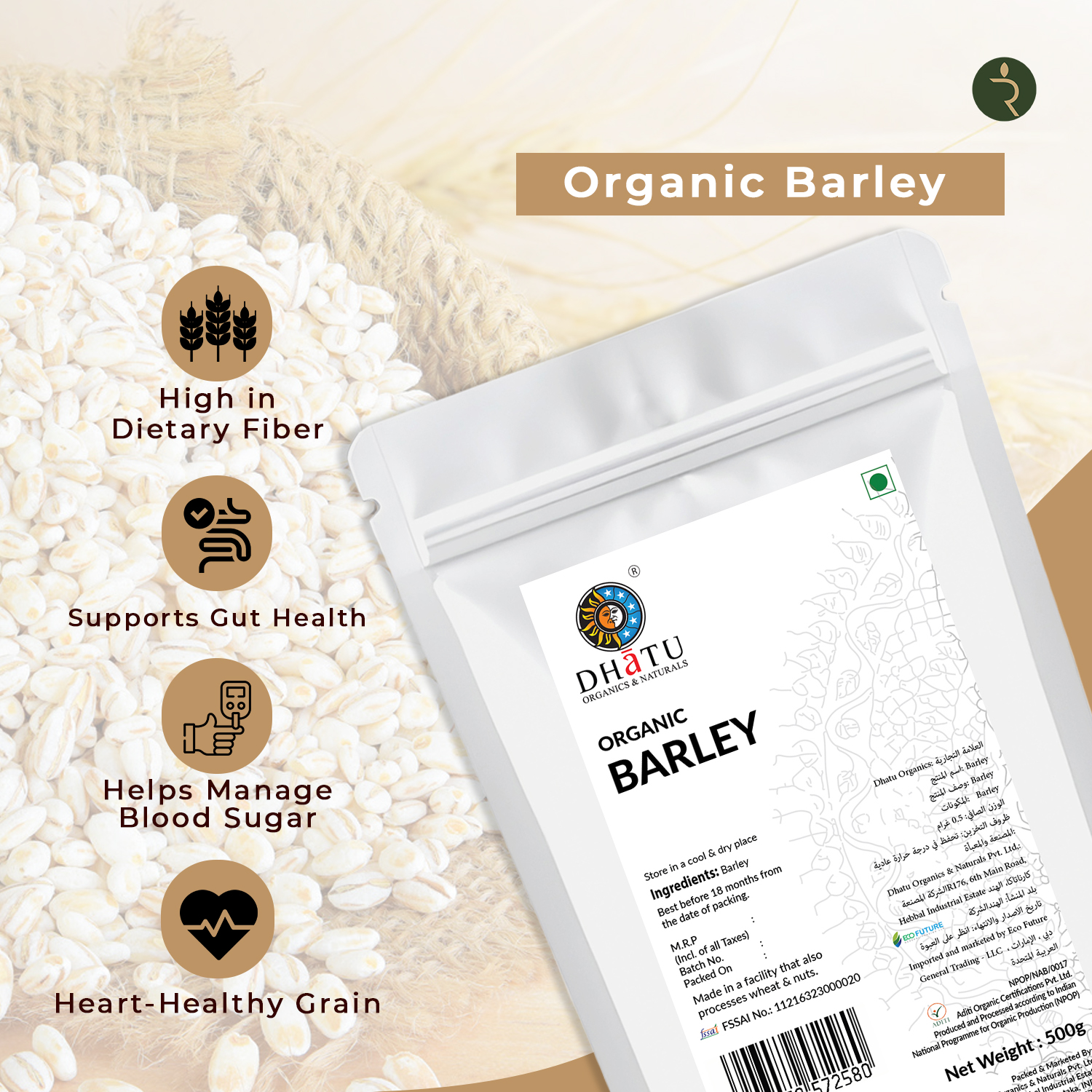
Barley contains both soluble fibre (beta-glucan) and insoluble fibre, supporting regular digestion and contributing to a feeling of fullness after meals — a genuine, well-established benefit of whole grains generally, presented here in straightforward terms rather than as a specific medical claim.
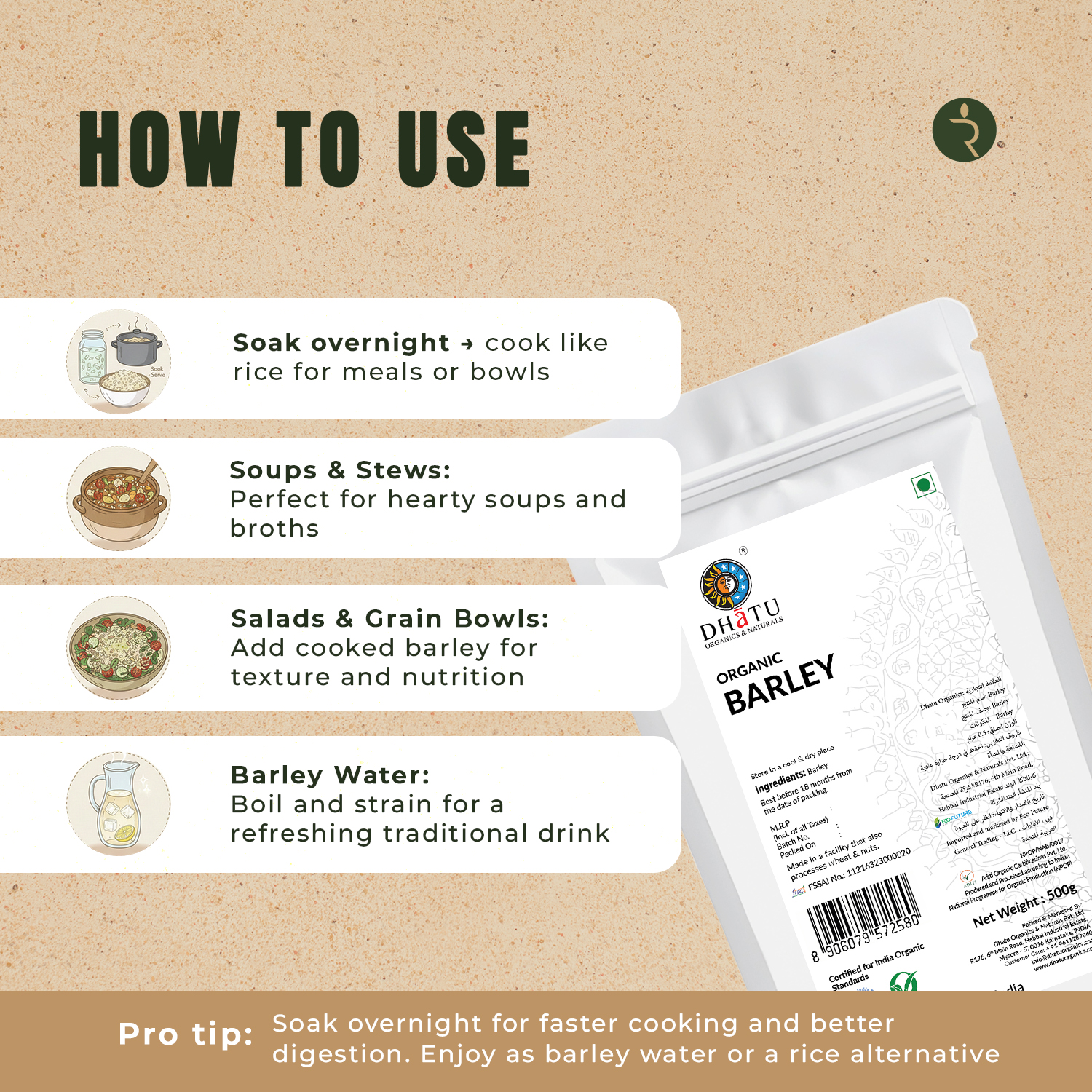
HOW TO USE
A hearty, versatile whole grain for soups, stews, and grain bowls.
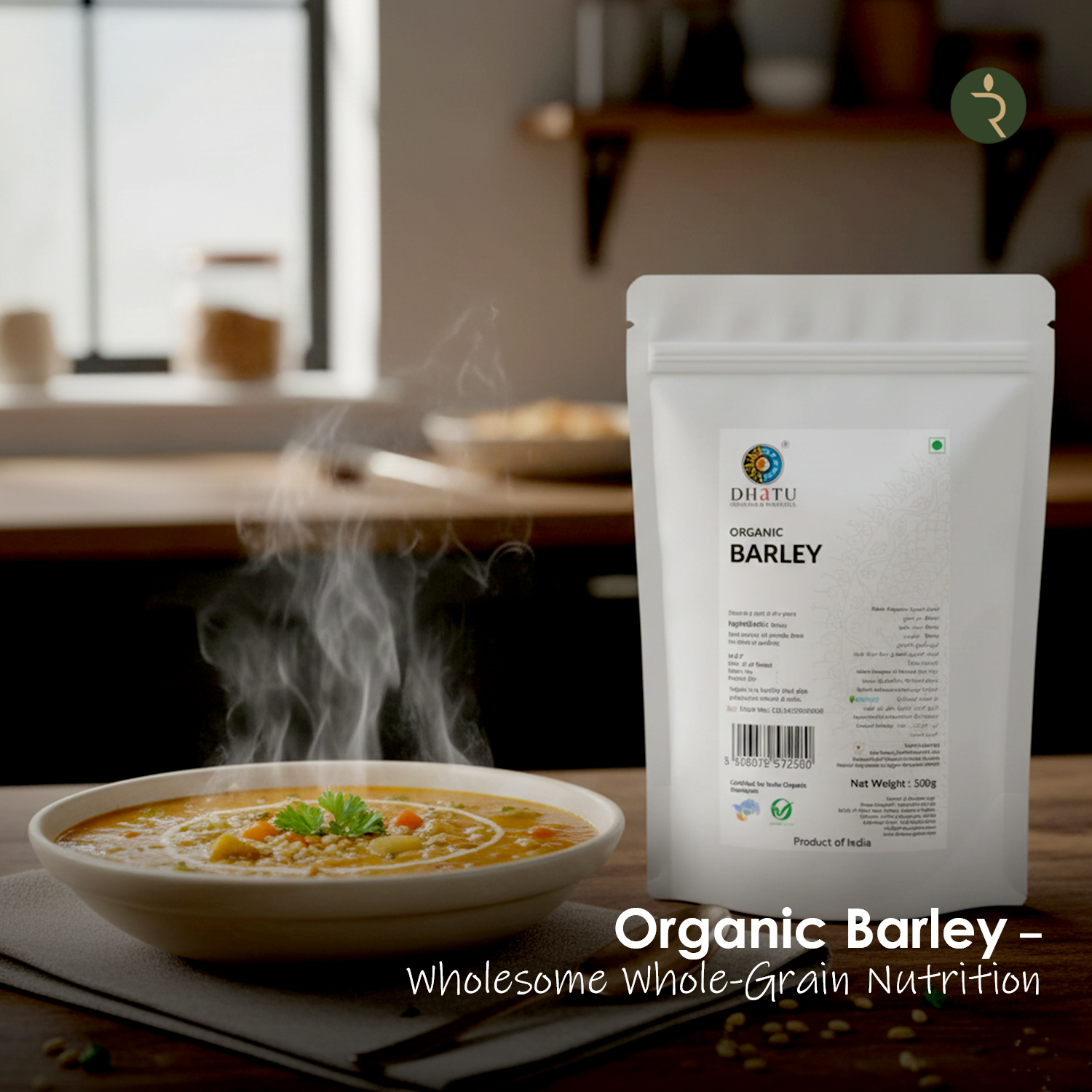
- Soups and stews: barley's classic use — added to broths, it thickens naturally while adding a chewy texture.
- Pilafs and grain bowls: cooked and tossed with vegetables, herbs, and a dressing for a hearty side or main.
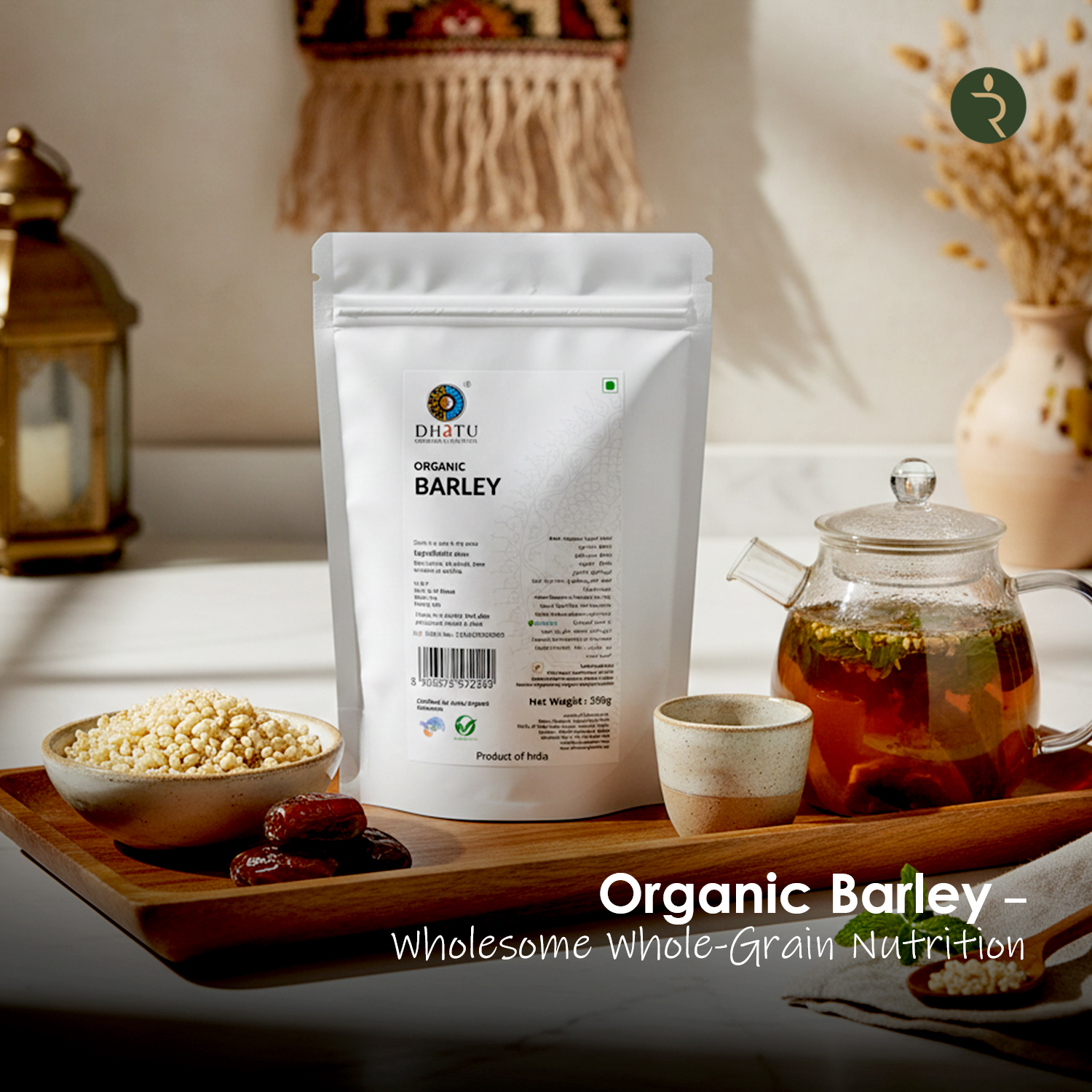
- Barley water: a traditional preparation, simmered and strained for a light, traditional drink.
- Salads: cooled cooked barley tossed with fresh vegetables, herbs, and a vinaigrette.
- Porridge: cooked with milk or a plant-based alternative for a hearty breakfast.
- Risotto-style dishes: substituted for arborio rice in a barley “risotto” for a nuttier, chewier result.
STORAGE
Store in a sealed plastic or glass container in a cool, dry place away from heat and light. For longer storage, particularly in hot climates, refrigerate or freeze in a tightly sealed container to prevent moisture absorption. Properly stored, barley keeps for up to a year.
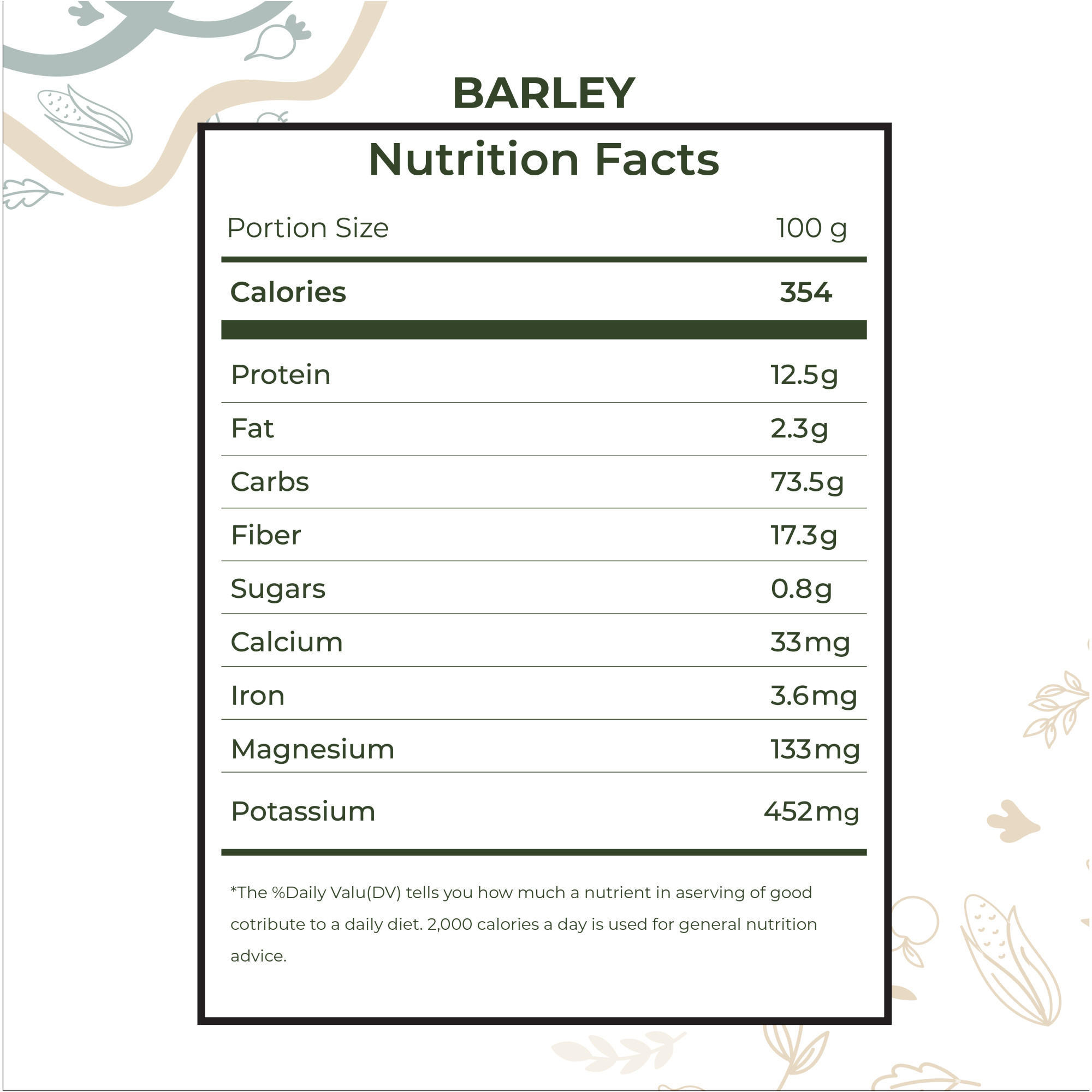
| Nutrient | Per Serving | Per 100g | % Daily Value* |
|---|---|---|---|
| Energy | - | ~352 kcal | 18% |
| Total fat | - | 2-3g | 3% |
| Total Carbs | - | 73-78g | 27% |
| Dietary Fibre | - | 10-17g | - |
| Protein | 10-13g | 23% | |
| Selenium | - | Excellent source | - |
| Manganese | - | Excellent source | - |
| Magnesium & Phosphorous | - | Good source | - |
| Beta- Glucan threshold | - | 3g/day | - |
Reviews
Login
Don't have an account?
Sign UpYes, more rigorously than most food health claims. Both the US FDA and the European Food Safety Authority have formally approved a claim that consuming approximately 3g or more of beta-glucan per day, from oats and/or barley, as part of a diet low in saturated fat and cholesterol, may help lower LDL cholesterol. This is supported by dozens of randomised controlled trials and several large meta-analyses — a notably strong evidence base compared to many grain health claims.
Yes — barley is a true cereal grain related to wheat and naturally contains gluten. This is not a gluten-free product and is not suitable for those with coeliac disease or gluten sensitivity, despite sitting alongside several genuinely gluten-free grains and flours in our Rice & Grains category.
Barley is a classic addition to soups and stews, where it adds a chewy texture and natural thickening. It also works well in pilafs, grain bowls, salads, porridge, and barley-style “risotto.” Traditional barley water is another simple, well-established preparation.
Yes — barley is a true cereal grain related to wheat and naturally contains gluten. This product is not suitable for those with coeliac disease or gluten sensitivity. This is the same position taken on the Organic Barley 500g whole grain product in the Rootz range. If you are looking for a gluten-free porridge or khichdi grain, ragi, foxtail millet, or kodo millet are well-suited alternatives in our range.


