
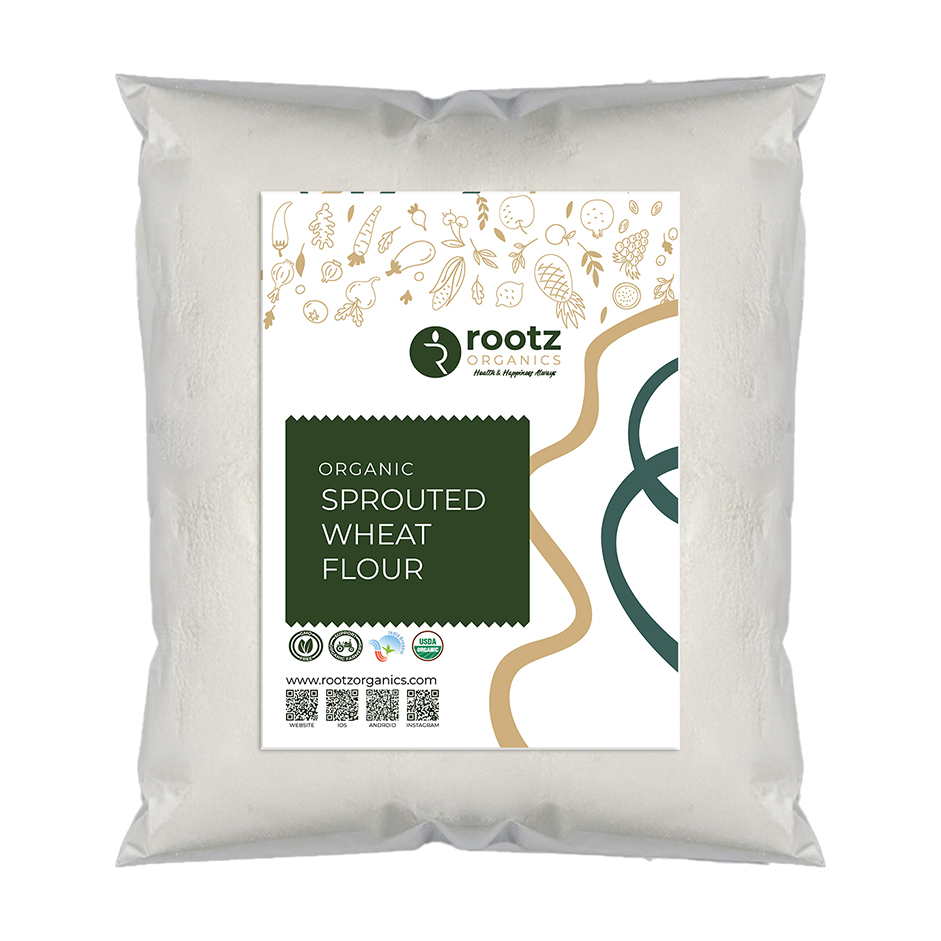
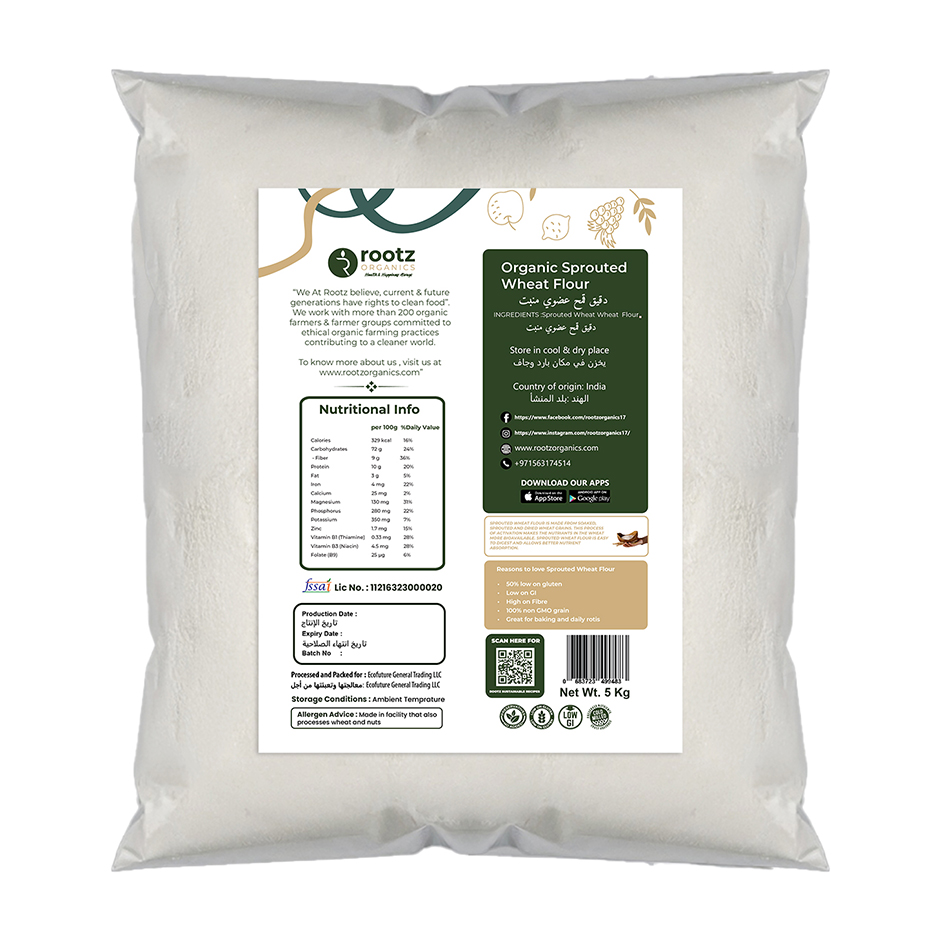
Product description
Usage Instructions:
- Best Flour for sourdough breads , due to its enhanced enzymatic activity.
- Use as a 1:1 substitute for regular whole wheat flour in baking and cooking.
- For softer dough: Add warm water gradually and knead well.
- Great for making chapati, breads, cakes, pancakes, muffins, and cookies.
- Can be mixed with other flours like barley, oats, or millet for extra nutrition.
Storage Instructions:
- Store in a cool, dry place away from direct sunlight.
- Once opened, keep the flour in an airtight container.
- For long-term freshness, refrigerate or freeze in a sealed bag.
Quick recipes:
Recipe 1: Sprouted Wheat Parathas
- Mix flour, water, salt, and a little oil; knead into a soft dough. Roll and cook on a hot tawa with ghee until golden.
Recipe 2: Healthy Sprouted Wheat Muffins
- Combine flour, mashed banana, honey, milk, and baking powder. Bake at 180°C for 20–25 mins.
Reviews
Login
Don't have an account?
Sign UpWe take organic wheat berries and allow them to germinate — to begin sprouting — before drying and milling them into flour. During germination, the grain activates its own enzymes, neutralises phytic acid (which normally blocks mineral absorption), and significantly increases the bioavailability of iron, zinc, magnesium, folate, and B vitamins. You get the same flour format, but your body absorbs far more of what is in it.
We take organic wheat berries and allow them to germinate — to begin sprouting — before drying and milling them into flour. During germination, the grain activates its own enzymes, neutralises phytic acid (which normally blocks mineral absorption), and significantly increases the bioavailability of iron, zinc, magnesium, folate, and B vitamins. You get the same flour format, but your body absorbs far more of what is in it.
Yes — 1:1 substitute for whole wheat flour in chapati, roti, and paratha. Use slightly less water than usual (sprouted flour absorbs faster), knead well, rest the dough for 10 minutes. The rotis are softer, hold moisture longer, and have a subtle natural sweetness. For baking, a 1:1 substitution also works — expect a slightly denser, nuttier crumb. Sprouted wheat flour is especially prized for sourdough bread due to its high enzymatic activity.
Yes — 1:1 substitute for whole wheat flour in chapati, roti, and paratha. Use slightly less water than usual (sprouted flour absorbs faster), knead well, rest the dough for 10 minutes. The rotis are softer, hold moisture longer, and have a subtle natural sweetness. For baking, a 1:1 substitution also works — expect a slightly denser, nuttier crumb. Sprouted wheat flour is especially prized for sourdough bread due to its high enzymatic activity.
Sprouting requires additional time, controlled conditions, careful drying, and cold-milling — processes that a standard flour mill does not use. The resulting flour is nutritionally superior: more bioavailable protein, more absorbable minerals, more active B vitamins, and no phytic acid blocking your gut from using any of it. You are paying for a living food, not a commodity grain product. The 2kg bag works out to AED 37.48 per kg — comparable to other premium organic flours, and significantly less than the health cost of nutrient-poor alternatives.
Sprouting requires additional time, controlled conditions, careful drying, and cold-milling — processes that a standard flour mill does not use. The resulting flour is nutritionally superior: more bioavailable protein, more absorbable minerals, more active B vitamins, and no phytic acid blocking your gut from using any of it. You are paying for a living food, not a commodity grain product. The 2kg bag works out to AED 37.48 per kg — comparable to other premium organic flours, and significantly less than the health cost of nutrient-poor alternatives.
Sprouted wheat flour is not gluten-free and is not suitable for people with coeliac disease. However, many people with mild wheat sensitivity — not a diagnosed condition — find it significantly easier to tolerate than regular whole wheat, because sprouting partially breaks down gluten proteins and deactivates enzyme inhibitors that contribute to digestive discomfort. If you have a confirmed diagnosis, please consult your healthcare provider before trying.
Sprouted wheat flour is not gluten-free and is not suitable for people with coeliac disease. However, many people with mild wheat sensitivity — not a diagnosed condition — find it significantly easier to tolerate than regular whole wheat, because sprouting partially breaks down gluten proteins and deactivates enzyme inhibitors that contribute to digestive discomfort. If you have a confirmed diagnosis, please consult your healthcare provider before trying.


