

Product description
THE HIGHEST FIBRE CONTENT OF THE SIRIDHANYA MILLETS
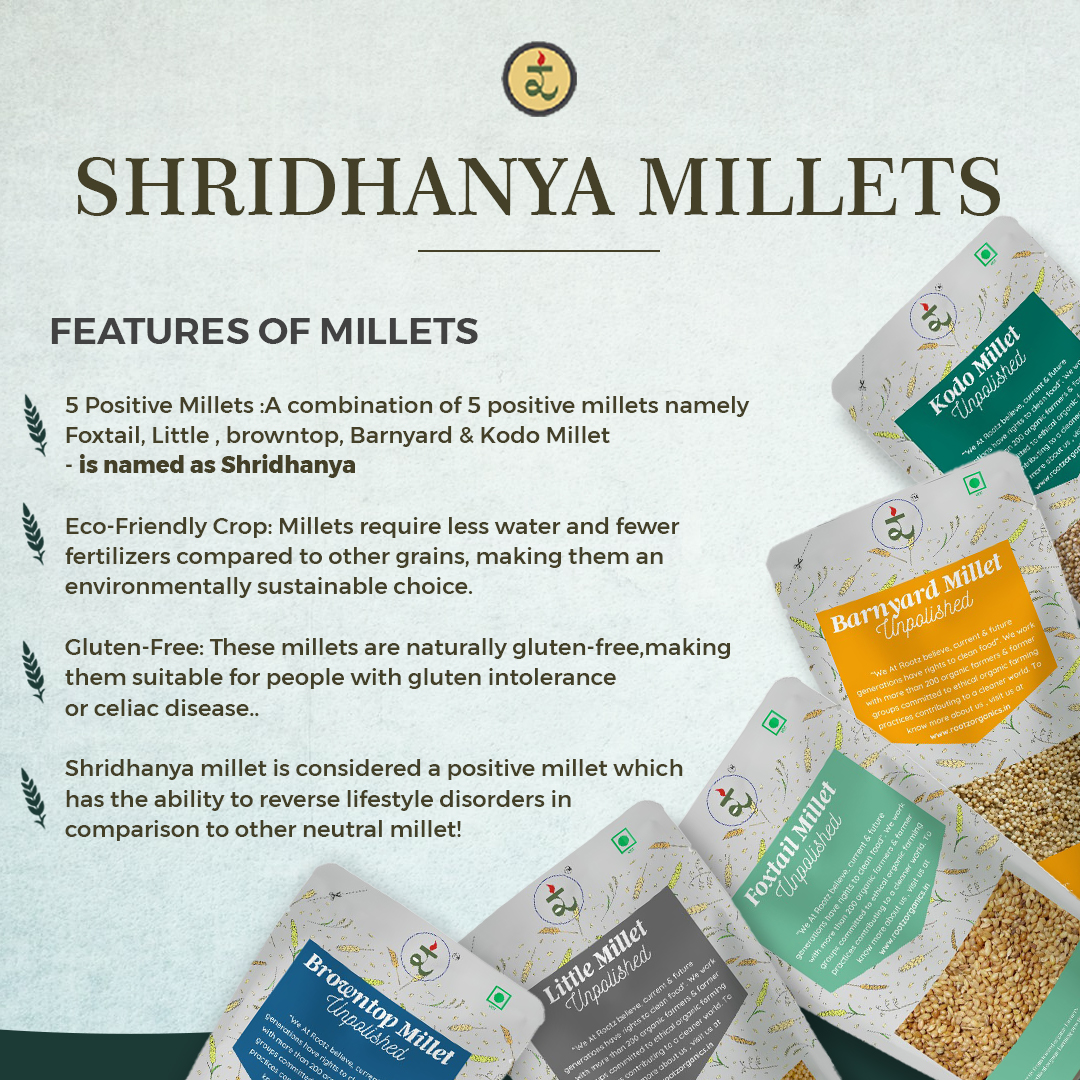
Brown top millet (Brachiaria ramosa) consistently registers the highest dietary fibre content of the five Siridhanya (positive) millets in peer-reviewed nutritional research, with approximately 12 to 12.5g dietary fibre per 100g. To contextualise: white rice contains approximately 0.4g fibre per 100g; barnyard millet approximately 6–10g; little millet approximately 7.6–8.6g; kodo millet approximately 10.2g. Brown top millet’s fibre content is at the top of this range, and its high fibre-to-carbohydrate ratio is cited as its defining nutritional characteristic within the Siridhanya system.
WHAT THAT FIBRE ACTUALLY DOES
Dietary fibre serves multiple well-established nutritional functions: it slows carbohydrate digestion and glucose absorption (contributing to the low glycemic response), feeds beneficial gut bacteria (prebiotic function), promotes digestive regularity, and contributes to the feeling of fullness after a meal. These are general, well-documented nutritional mechanisms of dietary fibre, not disease-specific claims. Brown top millet’s high fibre content also explains why it has a naturally low glycemic index — the same grain property underlies both nutritional characteristics.
HIGH PROTEIN AND MINERALS
Alongside its fibre, brown top millet provides approximately 10–12g protein per 100g, with iron ranging from 7 to 17.85mg/100g across studies depending on variety and conditions. It is also a source of zinc, magnesium (~143mg/100g in some analyses), calcium, phosphorus, and B vitamins. The wide iron range reflects genuine variation between cultivars and analytical methods — presented here as a range rather than a single figure.
A NOTE ON NAMING: BROWN TOP MILLET IS NOT PROSO MILLET
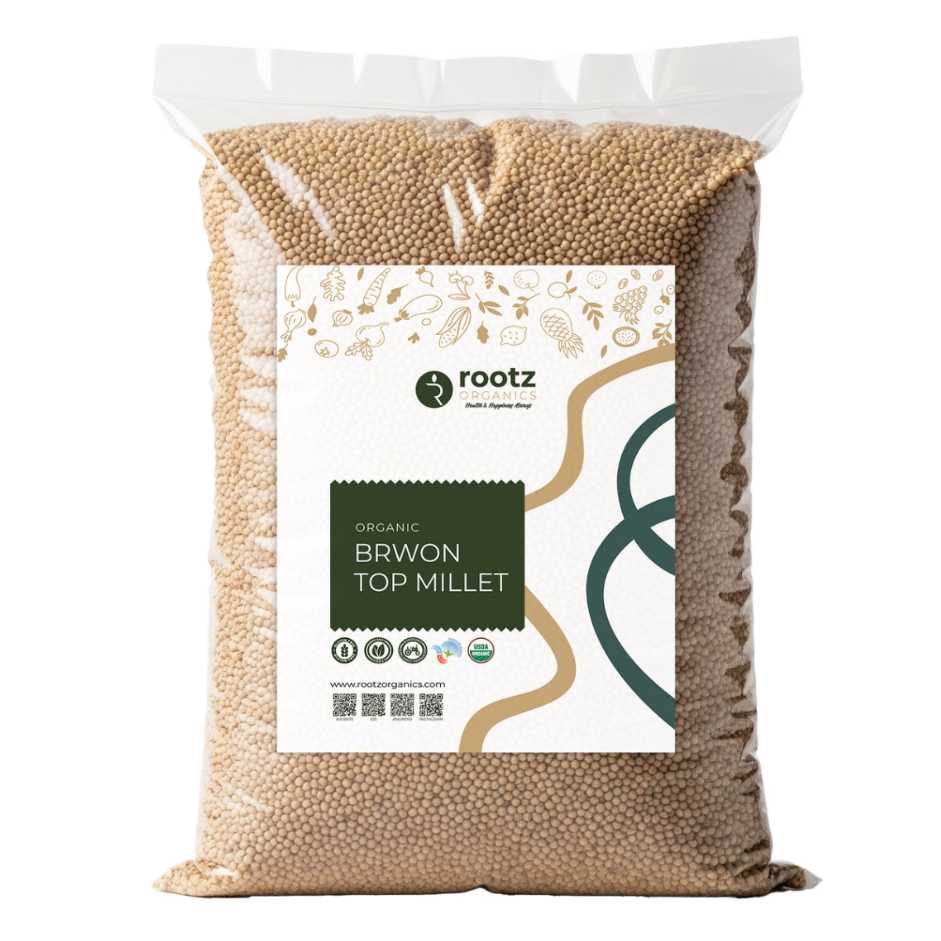
Brown top millet (Brachiaria ramosa) and proso millet (Panicum miliaceum) are botanically distinct species. They are sometimes confused because the Tamil name “Panivaragu” is used for both in different sources. This product is brown top millet (Brachiaria ramosa), also known as Korle in Kannada, Andu Korralu in Telugu, and Mothavaragu in Tamil. If you are specifically looking for proso millet, these are different grains.
NATURALLY GLUTEN-FREE
Brown top millet contains no gluten. Those with coeliac disease or severe gluten sensitivity should confirm cross-contamination controls during processing directly with us.
HOW TO COOK BROWN TOP MILLET
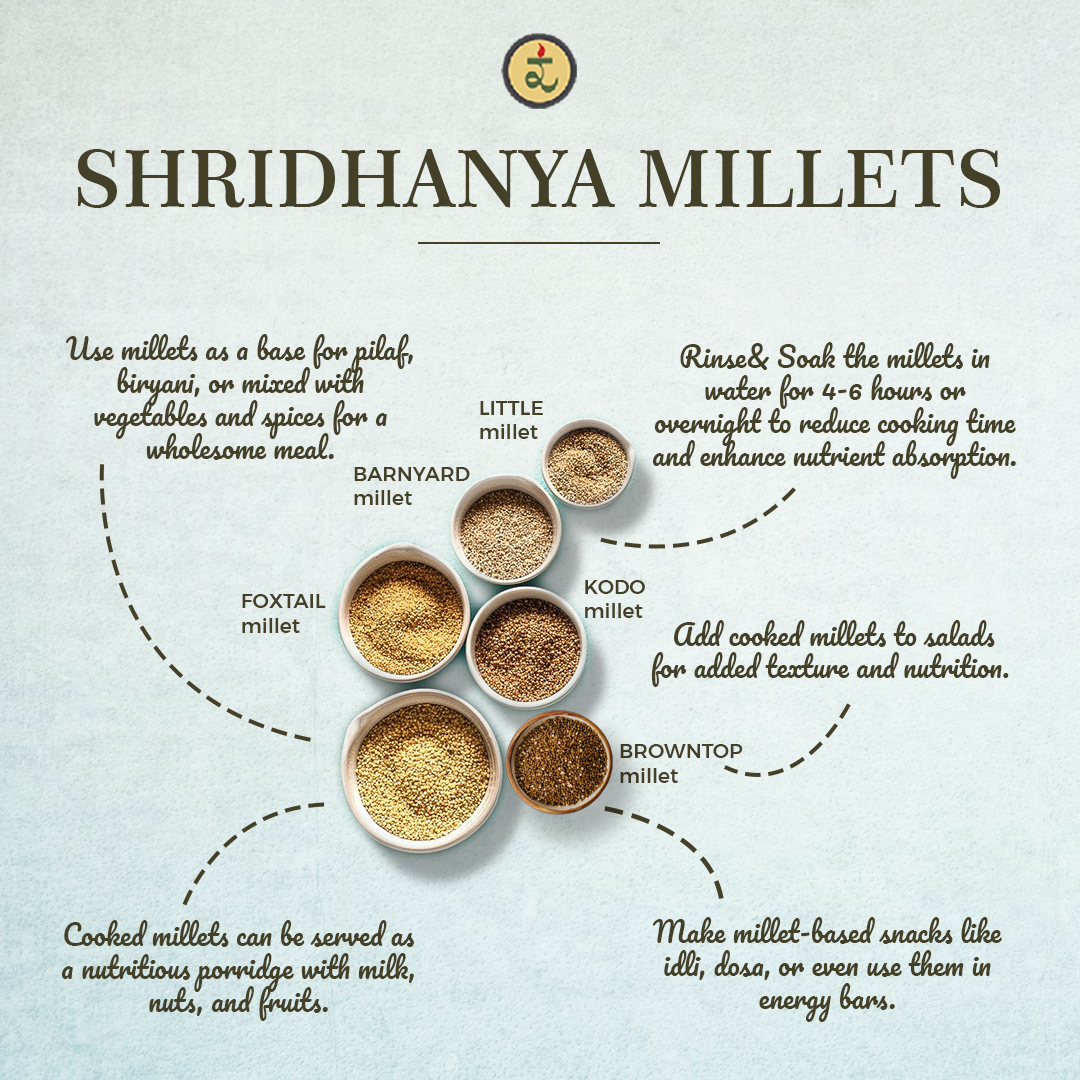
Brown Top Millet is a highly fibre-rich ancient grain best prepared with soaking or light fermentation to improve texture, digestibility, and mineral absorption. It cooks in approximately 20 minutes once soaked.
Basic Preparation
Soak for 6–8 hours or overnight.
Drain and rinse thoroughly before cooking.
Cooking Method
Use a 1:2.5 to 1:3 ratio (1 cup millet to 2.5–3 cups water).
Cook over medium heat for about 20 minutes until the grains are soft.
Allow to rest briefly, then fluff before serving.
Ways to Use Brown Top Millet
Simple Grain Base: Serve as a rice alternative with lentils, vegetable stews, or light curries.
Khichdi-Style Meals: Cook with lentils, mild spices, and ghee for a warm, balanced one-pot dish.
Vegetable Upma: Lightly roast before cooking with vegetables and seasonings for a savoury breakfast.
Porridge / Soft Bowl: Cook with extra water for a smoother, porridge-like consistency; enjoy sweet or savoury.
Mixed Millet Cooking: Combine with milder grains (such as foxtail millet) when starting out to ease into its texture and flavour.
Naturally gluten-free and exceptionally high in dietary fibre, Brown Top Millet is ideal for advanced, health-focused diets and structured meal planning in modern UAE kitchens.
STORAGE
Store in an airtight container in a cool, dry place away from moisture and sunlight. Given the 250g format, the grain should be consumed within a few months of opening for best quality.
Nutrition Table
Basis: Per 100g dry weight — values from peer-reviewed research on Brachiaria ramosa (brown top millet)
| Nutrient | Per Serving | Per 100g/ml | % DV* |
| Energy | — | ~307–396 kcal (varies by variety and processing) | 17% |
| Total fat | — | ~1.9–7.1g | 5% |
| Total carbohydrates | — | ~58–76g | 22% |
| — Dietary fibre | — | ~12–12.5g — highest of the Siridhanya millets | 43% |
| Protein | — | ~9–12g | 20% |
| Iron | — | ~7–17.85mg (varies significantly by variety) | — |
| Magnesium | — | ~143mg (significant source) | 34% |
| Calcium | — | ~28–88mg (varies by variety) | — |
| Zinc | — | ~2.7–6.6mg | 27% |
| Phosphorus | — | Significant source | — |
| B Vitamins | — | Present, including thiamine | — |
| Glycemic Index | — | Low — attributed to high fibre and resistant starch | — |
Reviews
Login
Don't have an account?
Sign UpSoak for 6–8 hours or overnight before cooking to reduce phytic acid content and improve mineral absorption. Drain, rinse, and cook in a 1:2.5 ratio (millet to water) for approximately 20 minutes until the grains are soft. It can be used as a rice substitute in everyday meals, in khichdi, upma, or porridge. If you’re new to this grain, try mixing it with foxtail millet for your first few preparations.
Brown top millet (Brachiaria ramosa) is a distinct species from the other Siridhanya millets — botanically different from foxtail, kodo, ragi, pearl, little, and barnyard millet. Its defining nutritional characteristic is the highest dietary fibre content of any Siridhanya millet (approximately 12–12.5g/100g), which also contributes to its naturally low glycemic response. It is primarily grown in Karnataka and Andhra Pradesh, and is known as Korle in Kannada and Andu Korralu in Telugu.
No — brown top millet (Brachiaria ramosa) and proso millet (Panicum miliaceum) are botanically distinct species. The confusion arises because the Tamil name “Panivaragu” is used for both grains in different sources. This product is brown top millet (Brachiaria ramosa), also known as Korle, Andu Korralu, and Mothavaragu. If you are specifically looking for proso millet, that is a different grain entirely.


