



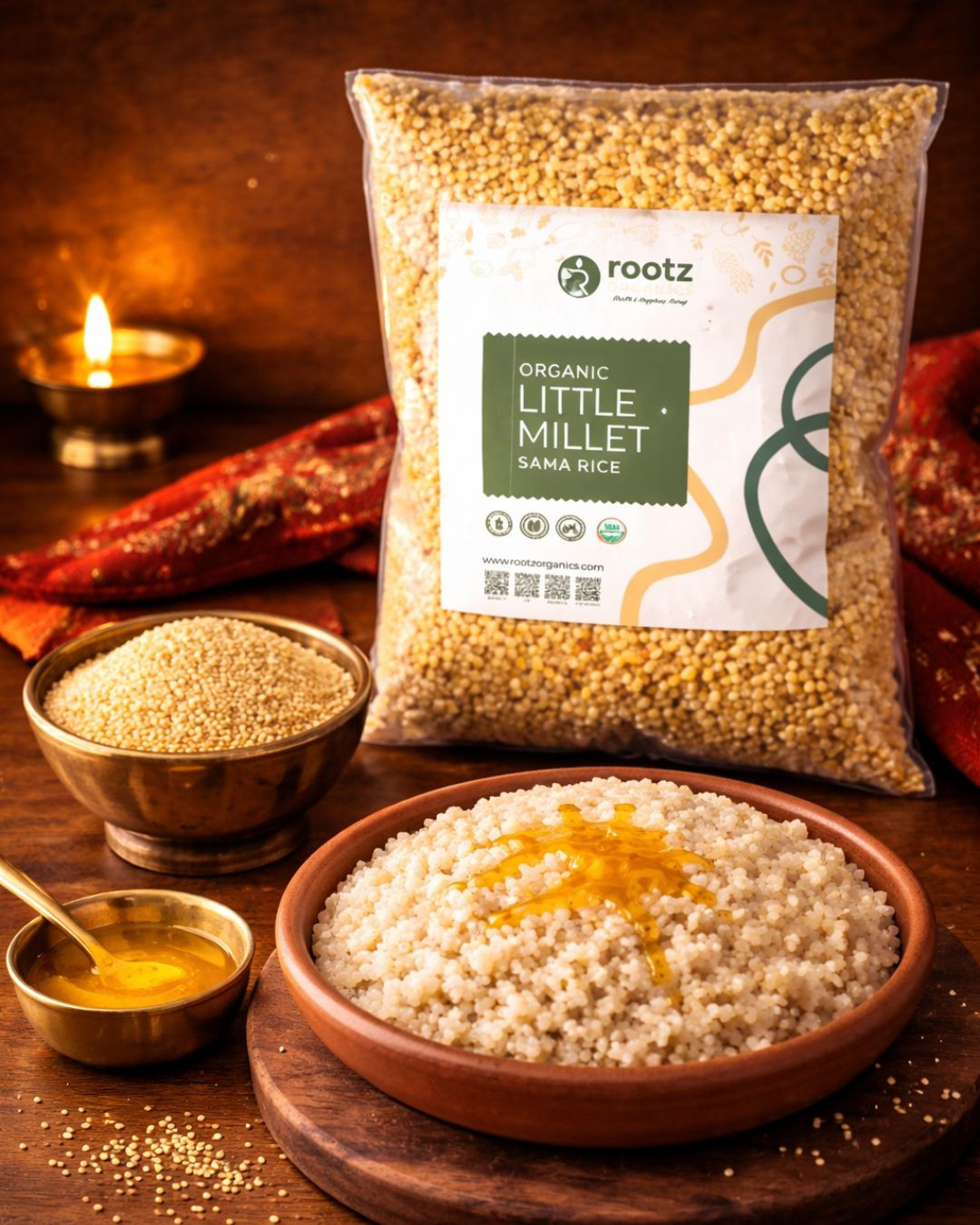
Product description
SAMA RICE: ONE GRAIN, TWO CULINARY IDENTITIES
Little Millet (Panicum sumatrense) is a naturally gluten-free ancient grain known for its small size and exceptional nutrient density. Widely recognized as a versatile “smart grain,” it is valued for its balanced nutrition, light texture, and easy digestibility—making it ideal for modern, health-conscious diets in the UAE. Often referred to as “Sama Rice” in retail and culinary contexts, this grain is commonly used as a rice alternative in a variety of recipes, from everyday meals to light, clean-eating dishes. Its quick cooking time and adaptability make it suitable for porridges, salads, pilafs, and meal prep routines. Rich in dietary fiber, plant-based protein, and essential minerals, Little Millet supports sustained energy, gut health, and overall wellness—perfect for busy urban lifestyles across Dubai, Abu Dhabi, and the wider UAE. Whether you are exploring gluten-free grains, diversifying your pantry with ancient superfoods, or looking for a lighter substitute to refined rice, Little Millet offers a wholesome, nutrient-rich solution for daily cooking.
~9.3mg IRON PER 100g — THE HIGHEST OF THE SIRIDHANYA MILLETS
Little millet’s iron content of approximately 9.3mg per 100g is the highest of the five Siridhanya (positive) millets — higher than pearl millet (~8mg), kodo millet (~0.5–2mg), ragi (~3.9mg), and foxtail millet (~2.8mg). For context, white rice contains approximately 0.4mg iron per 100g, making little millet’s iron content roughly 23 times higher. As with all plant-based iron, pairing with vitamin C-rich foods improves absorption, and soaking the grain before cooking reduces phytic acid content that can otherwise limit iron bioavailability.
HIGH FIBRE, LOW GLYCEMIC INDEX
Little millet contains approximately 7.6–8.6g of dietary fibre per 100g — research has noted this is roughly 20 times the fibre of white rice (approximately 0.4g/100g) and double that of brown rice (approximately 3.5g/100g). Its glycemic index is approximately 50–57, placing it firmly in the low-GI category, compared to white rice at 72–89. High fibre content slows carbohydrate digestion and contributes to a more gradual glucose release, a well-established general nutrition mechanism. This is accurate general nutritional information rather than specific dietary guidance for any health condition.
UNPOLISHED: BRAN AND GERM INTACT
This product is explicitly unpolished, meaning the grain’s outer bran layer and germ are retained rather than removed by mechanical polishing. The bran layer is where the majority of the fibre, iron, and micronutrients are concentrated — polishing removes this layer to produce a whiter, more shelf-stable grain, but at the cost of most of its nutritional value. Unpolished whole grain little millet has a slightly shorter shelf life than polished grain; store in an airtight container in a cool, dry place and consume within the recommended timeframe (see Storage below).
NATURALLY GLUTEN-FREE
Little millet contains no gluten, making it suitable for those avoiding gluten. Those with coeliac disease or severe gluten sensitivity should confirm cross-contamination controls during processing directly with us.
HOW TO COOK LITTLE MILLET
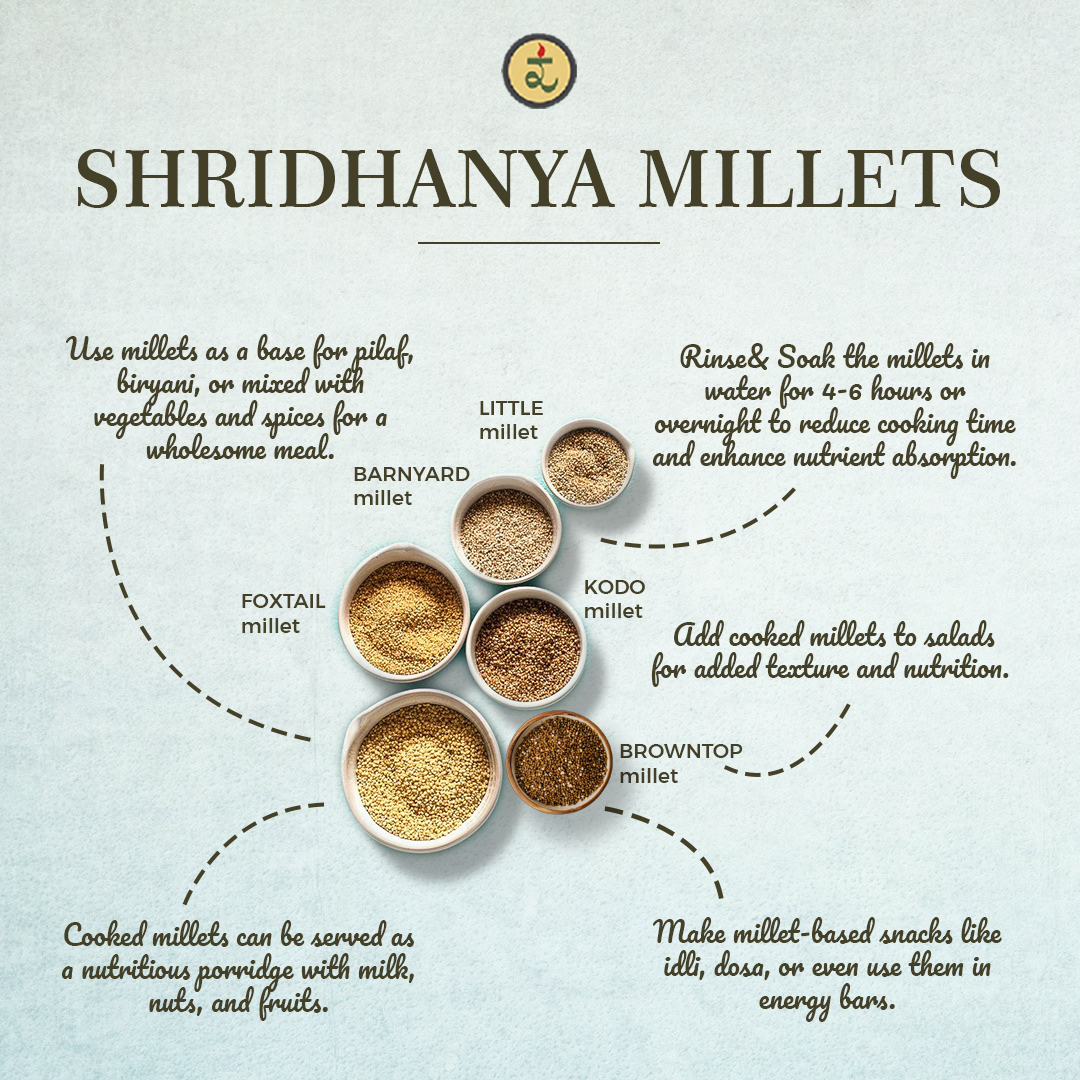
Little Millet is a quick-cooking, versatile ancient grain—perfect as a lighter, nutrient-rich alternative to rice. It cooks in just 15–20 minutes, making it ideal for everyday meals and meal prep.
Basic Cooking Method*
* Rinse thoroughly under running water.
* Optional: Soak for 20–30 minutes to enhance mineral absorption and reduce cooking time.
* Cook using a 1:2.5 ratio (1 cup millet to 2.5 cups water).
* Simmer for 15–20 minutes until the water is fully absorbed. Fluff and serve.
Ways to Use Little Millet*
* *Simple Grain Base:* Use as a substitute for white rice with curries, stews, or grilled proteins.
* *Vegetable Pilaf:* Cook with mixed vegetables, herbs, and mild spices for a wholesome one-pot meal.
* *Breakfast Bowl:* Prepare as a warm porridge with milk or plant-based alternatives, lightly sweetened or topped with fruits and nuts.
* *Savory Breakfast:* Lightly roast and cook with vegetables and seasonings for a balanced morning dish.
* *Grain Bowls & Salads:* Cool and use as a base for salads, buddha bowls, or meal prep combinations.
* *Comfort Meals:* Cook softer with extra water for a creamy, easy-to-digest consistency.
Naturally gluten-free and easy to digest, Little Millet fits seamlessly into modern UAE lifestyles—whether for clean eating, weight management, or balanced daily nutrition.
STORAGE — IMPORTANT FOR UNPOLISHED GRAIN
Unpolished little millet has a shorter shelf life than polished grain because the oil-containing germ layer can go rancid over time. Store in an airtight container in a cool, dry place away from sunlight and heat. In the UAE’s warm climate, refrigeration is recommended for bulk quantities. Consume within 3–6 months for best quality and freshness.
Nutrition Table
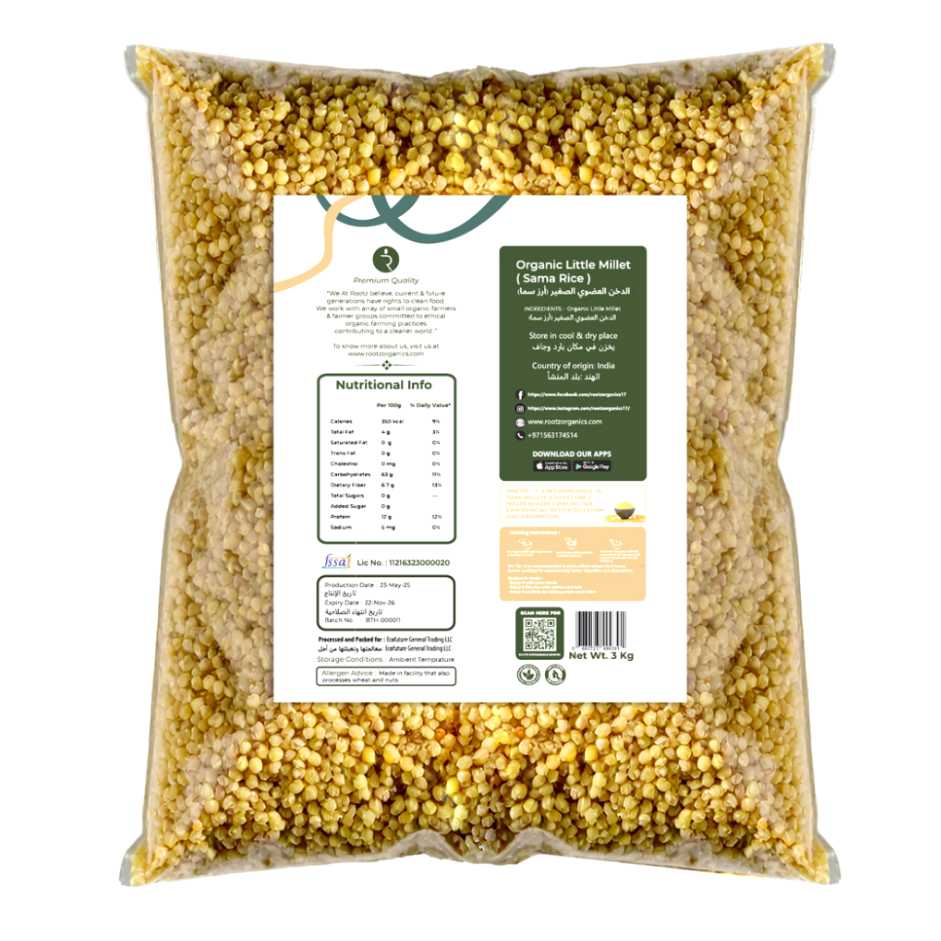
Basis: Per 100g dry weight — values from ICAR Indian Food Composition Tables and peer-reviewed research on Panicum sumatrense Nutrient Per Serving Per 100g/ml % DV* Energy — ~329–341 kcal 17% Total fat — ~5.2–5.3g 7% Total carbohydrates — ~60.9–75.7g (varies by source and variety) 24% — Dietary fibre — ~7.6–8.6g (≈20x the fibre of white rice) 29% Protein — ~8.7g 17% Iron — ~9.3mg — highest of the Siridhanya millets 52% Phosphorus — ~220mg 18% Magnesium — ~114–119mg 27% Calcium — ~17mg 1% Zinc — ~3.5mg 32% Glycemic Index — Low (approx. 50–57) —
Reviews
Login
Don't have an account?
Sign UpThey are all the same grain — Panicum sumatrense (little millet) — known by different names across regions and culinary contexts. Samai or Saamai is the South Indian everyday name (Tamil Nadu, Karnataka). Saame is the Kannada name. Sama or Samak is the North Indian name, specifically associated with fasting foods permitted during Navratri and Ekadashi. Kutki is the Hindi name used in Central India. The grain itself is identical; the name you know it by reflects where and when you cook with it.
Iron content in millets varies significantly by species, and little millet (approximately 9.3mg/100g) happens to have a naturally higher iron concentration than pearl millet (~8mg), ragi/finger millet (~3.9mg), foxtail millet (~2.8mg), and kodo millet. This reflects the grain’s natural mineral composition rather than any processing or fortification. The iron is non-haem (plant-form) iron, so pairing with vitamin C-rich foods and soaking before cooking (to reduce phytic acid) improves how much the body absorbs.
Little Millet, often referred to as “Sama Rice” in retail contexts, is traditionally used as a fasting-friendly grain in certain dietary practices where wheat and regular rice are avoided.
It is commonly chosen for its lightness, easy digestibility, and versatility in simple, minimal-ingredient meals.
Please note that fasting guidelines and food choices can vary based on individual preferences, cultural practices, and personal interpretations. This information is shared as a general usage reference rather than a definitive guideline.Little Millet, often referred to as “Sama Rice” in retail contexts, is traditionally used as a fasting-friendly grain in certain dietary practices where wheat and regular rice are avoided.
It is commonly chosen for its lightness, easy digestibility, and versatility in simple, minimal-ingredient meals.
Please note that fasting guidelines and food choices can vary based on individual preferences, cultural practices, and personal interpretations. This information is shared as a general usage reference rather than a definitive guideline.


