


Product description
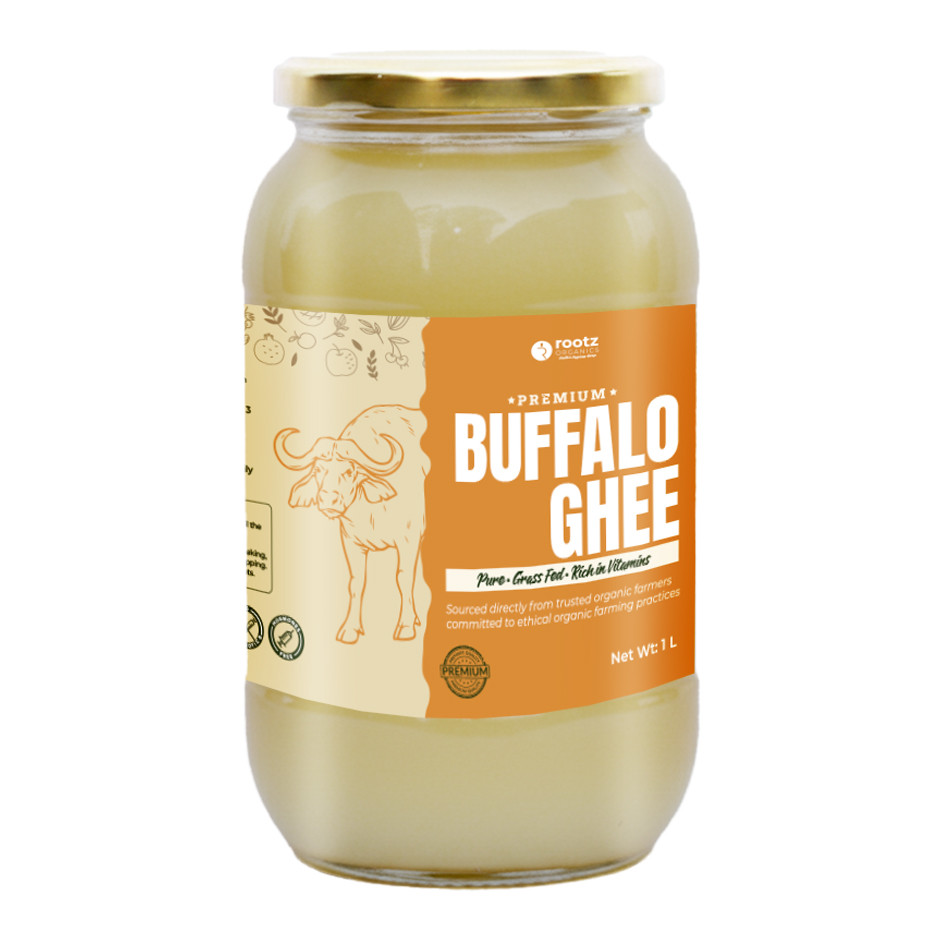
There are two reasons people reach for buffalo ghee over cow ghee: the smoke point and the flavor.
- Smoke point: Buffalo ghee reaches approximately 250°C before it starts to break down — compared to around 205°C for standard clarified butter and 160–180°C for most cooking oils. At 250°C, you can sear a steak, fry with a genuinely hot pan, or roast vegetables at high temperature without the fat producing acrolein (the compound responsible for that harsh, acrid smell when fats overheat and oxidize). This is why professional kitchens use clarified fats — and why 250°C matters for a UAE kitchen where high-heat cooking is part of every day.
- Flavour: Buffalo milk has a naturally richer, creamier, more full-bodied flavor than cow milk at the same stage of production. That richness carries through the clarification process. Buffalo ghee has a distinctly deeper, more golden flavour profile. Not subtle.
THE BILONA METHOD — WHY IT MATTERS
Most commercial ghee is made by cream separation: milk → cream skimmed directly → ghee extracted mechanically. Efficient. Fast. Missing most of what makes ghee nutritionally interesting.
The Bilona (bilona churning) method is the traditional process:
- Raw milk is cultured into curd (yoghurt fermentation, 8–12 hours)
- Curd is churned manually using a wooden bilona (churning rod) to separate white butter (makhan)
- White butter is separated and washed
- White butter is slow-cooked on low heat until all moisture evaporates and milk solids separate and caramelize
- The golden liquid is strained — this is Bilona ghee
The curd fermentation step is the critical difference. It produces beneficial enzymes and increases Butyric acid content — the short-chain fatty acid associated with gut lining health and anti-inflammatory activity.
This is why Bilona ghee has a distinctly different aroma (nuttier, more complex) and a slightly granular texture when at room temperature — the granularity is crystallized fat structure, not contamination. It is the quality indicator.
WHAT MAKES BUFFALO GHEE NUTRITIONALLY DISTINCT
- Butyric acid (C4:0): The short-chain fatty acid that feeds colonocyte cells (the cells lining your colon). Associated with reduced intestinal inflammation, improved gut barrier function, and studied extensively in the context of gut health. Buffalo milk contains higher Butyrate precursors than cow milk.
- Higher CLA (Conjugated Linoleic Acid): Grass-fed animals produce significantly more CLA than grain-fed. CLA is studied for anti-inflammatory, immune-modulating, and body composition effects.
- Fat-soluble vitamins: Vitamin A (retinol), Vitamin D, Vitamin E, and crucially Vitamin K2. These are the vitamins that only exist in fat — you cannot get them from plant foods in these forms. K2 in particular is responsible for directing calcium into bones rather than arteries; ghee from grass-fed animals is one of the more meaningful dietary K2 sources.
- MCTs (Medium Chain Triglycerides): Absorbed directly into the portal blood and converted to energy in the liver, bypassing the lymphatic fat storage pathway. A meaningful energy source for keto practitioners and anyone managing blood sugar.
- Lactose and casein-free: The clarification process removes the milk proteins and sugars completely. If dairy products cause digestive discomfort, ghee — properly made — is typically well-tolerated even by people with lactose sensitivity.
HOW TO USE
-
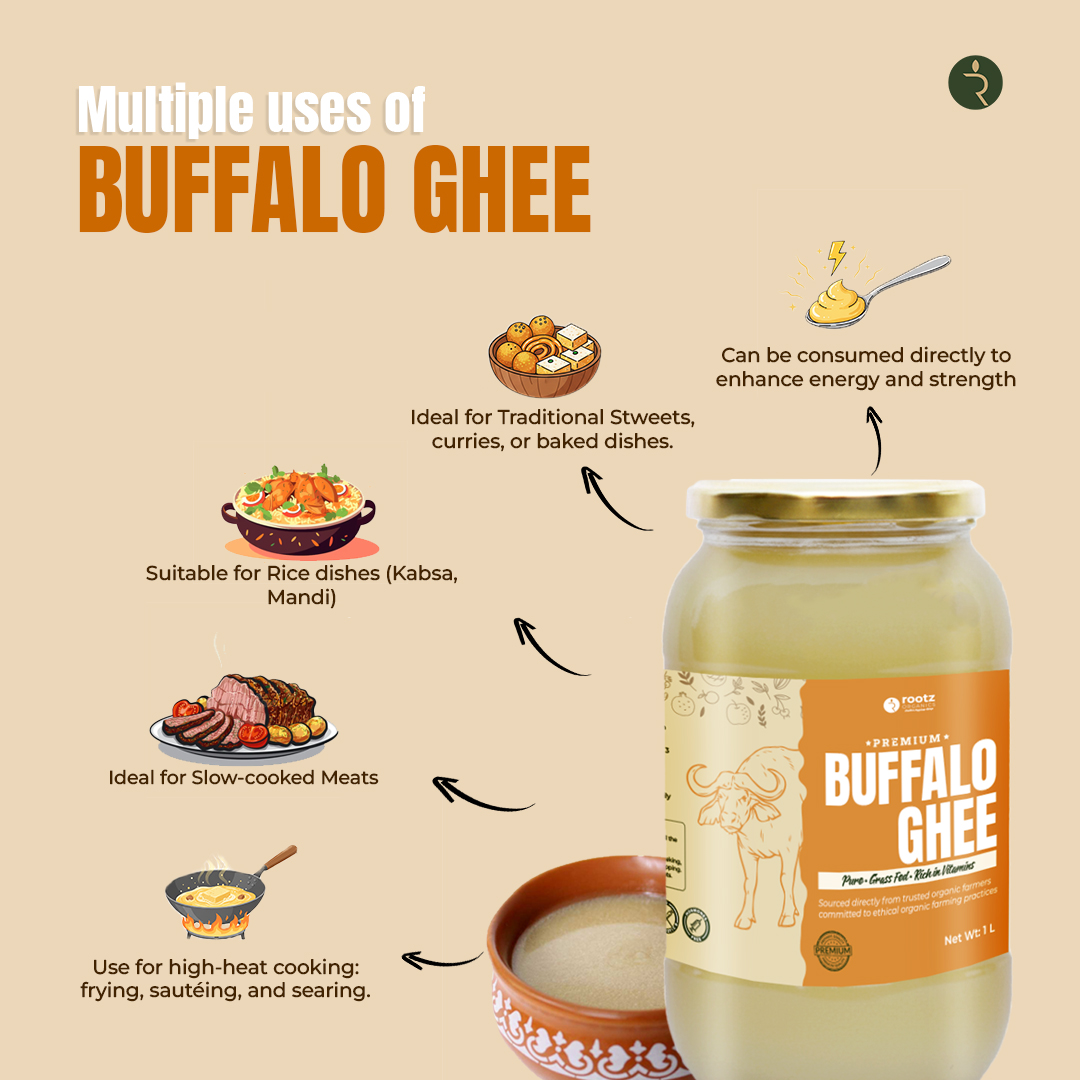
High-heat searing (250°C capacity):
Replace butter for searing proteins. Pan to 200–220°C before adding the protein. 1 tbsp buffalo ghee per 250g protein. The high smoke point means the fat stays stable, the Maillard reaction happens cleanly, and there is no harsh oxidized smell. -
Roasting:
Toss root vegetables, potatoes, or cauliflower in 1–2 tbsp melted ghee before roasting at 200°C. The butterfat coats evenly, caramelizes at the surface, and adds depth that olive oil does not provide at these temperatures. -
Pan sauces and beurre noisette:
Cook ghee in a light-colored pan over medium heat until the milk solids (if any remain) turn golden brown and the ghee smells nutty — this is beurre noisette with ghee. Deglaze with white wine or stock and use as a pan sauce for fish or chicken. Significantly more stable than butter for this technique. -
Baking:
Substitute 1:1 for butter in shortbread, pastry, and most cookie recipes. Produces a richer, more flavorful result. In croissant and laminated pastry, ghee is more forgiving at high temperatures than standard butter. -
Finishing fat:
Add 1 tsp to any grain dish — rice, quinoa, bulgur — just before serving. Stir through. The fat coats each grain individually and adds richness without heaviness. -
Blended coffee:
1 tsp buffalo ghee blended into freshly brewed black coffee for 30 seconds. The blending creates a microemulsion — a frothy, creamy texture without any dairy. The MCTs provide sustained energy without a glucose spike.
NUTRITION
Serving size: 1 tablespoon (14g)
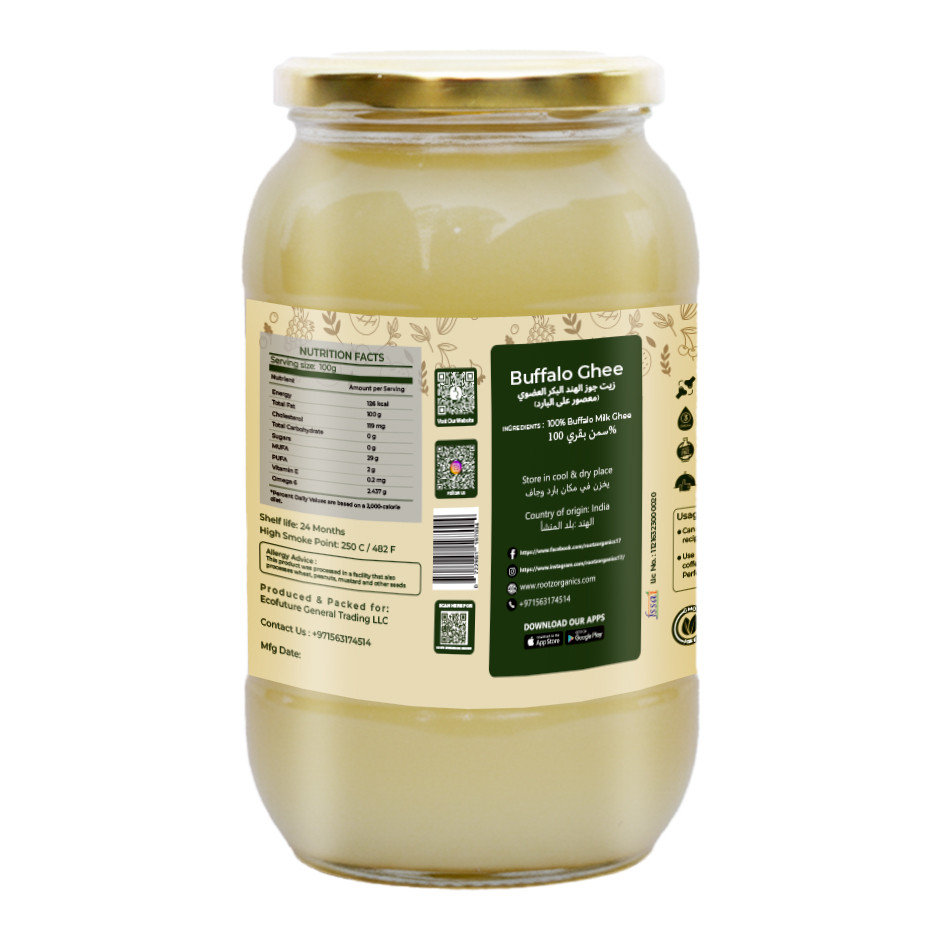
| Nutrient | Per 1 tsp (5g) | Per 100g | % Daily Value* |
|---|---|---|---|
| Energy | 45 kcal / 188 kJ | 900 kcal | 2% |
| Total fat | 5g | 99.8g | 6% |
| Saturated fat | 3.2g | 64g | 16% |
| Monounsaturated fat | 1.2g | 24g | — |
| Polyunsaturated fat | 0.2g | 4g | — |
| Trans fat | 0g | 0g | — |
| Total carbohydrates | 0g | 0g | 0% |
| of which Sugars | 0g | 0g | — |
| Protein | 0g | 0g | 0% |
| Sodium | 0mg | 0mg | 0% |
| Vitamin A (Retinol) | 44 mcg RAE | 880 mcg RAE | 98% |
| Vitamin E | 0.12mg | 2.4mg | 16% |
| Vitamin K2 (MK-4) | ~5 mcg | ~100 mcg | 83% |
| Butyric acid (C4:0, gut health) | ~0.2g | ~3.5–4g | — (no DV) |
| CLA (Conjugated Linoleic Acid) | ~0.04g | ~0.9g | — (no DV) |
| Lactose | 0g | 0g | — |
| Casein | 0g | 0g | — |
STORAGE
- Room temperature: up to 12 months if kept sealed and dry. No refrigeration required.
- The white granular texture when cool is crystallised fat structure — normal and expected in Bilona ghee. It liquefies at room temperature above approximately 32°C.
Reviews
Login
Don't have an account?
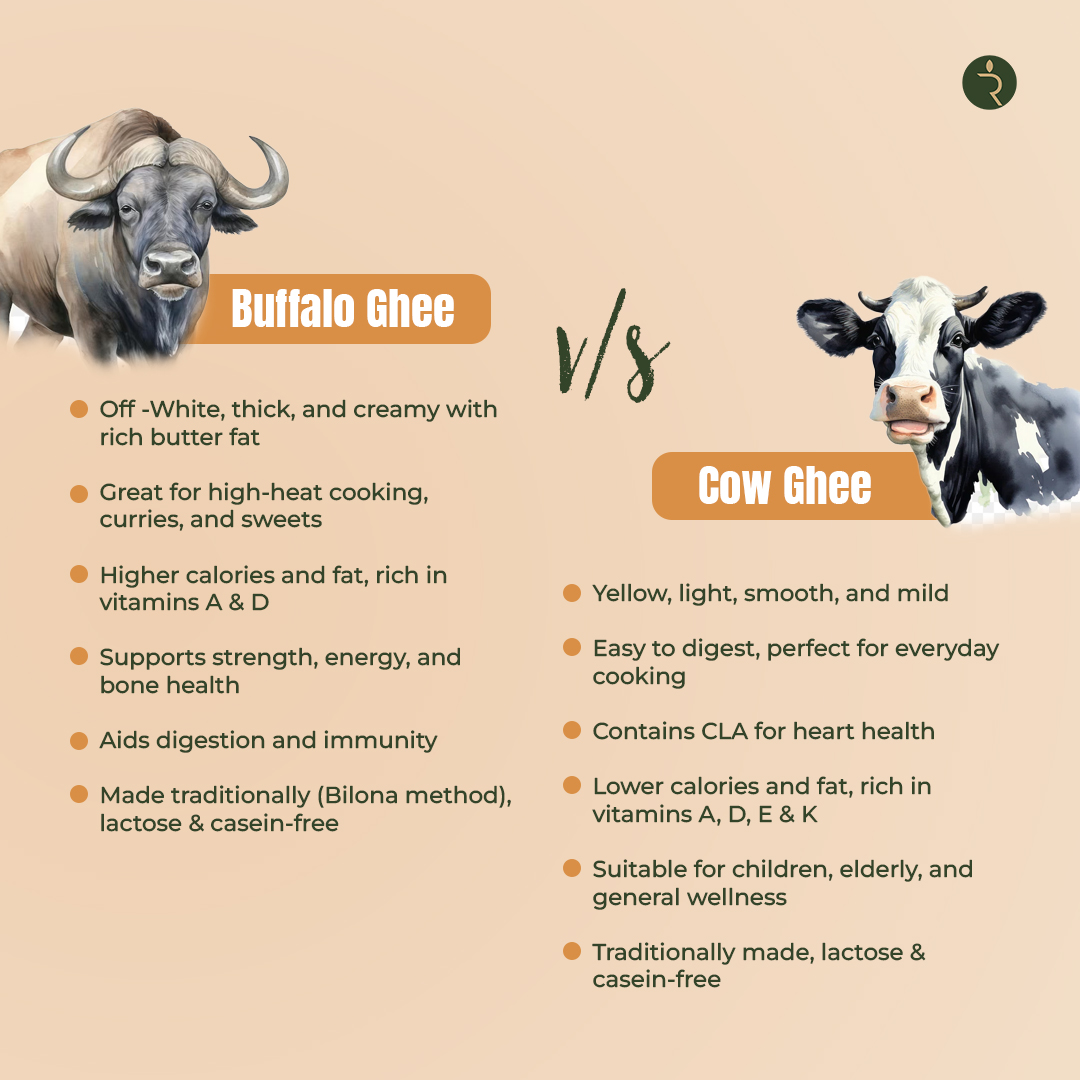
Sign UpThe key differences are butterfat content, smoke point, and flavour. Buffalo milk has a higher fat content than cow milk (approximately 7–8% vs 3.5–4.5%), which translates to a richer ghee with slightly higher butterfat. Buffalo ghee has a smoke point of approximately 250°C — cow ghee ranges from 230–250°C depending on the production method, so they are comparable at the premium end. The flavour profile is where they diverge most noticeably: buffalo ghee is richer, creamier, more full-bodied, with a deeper golden colour. Cow ghee, particularly from Desi breeds, tends to be lighter in colour with a nuttier, more delicate aroma. Neither is universally better — the choice depends on what you are cooking and your flavour preference. For high-heat cooking where you want maximum stability and a richer result, buffalo ghee is the preferred choice.
Most commercial ghee uses mechanical cream separation: milk is mechanically separated into cream, which is then directly processed into ghee. This is efficient and fast, but the fermentation step is skipped. The Bilona method is the traditional slow process: milk is cultured into full-fat yoghurt (8–12 hours fermentation), then manually churned with a wooden bilona to separate white butter (makhan), then this white butter is slow-cooked over low heat until the milk solids caramelise and the golden fat separates. The fermentation step is the critical difference — it produces beneficial enzymes and increases Butyric acid concentration. This is why Bilona ghee has a more complex, nuttier aroma and a slightly granular texture when cooled — the granularity is crystallised fat structure and is the quality indicator of authentic Bilona ghee, not a defect.
In most cases, yes. Ghee is clarified butter — the clarification process heats the butter until all moisture evaporates and the milk proteins (casein) and milk sugars (lactose) separate out as milk solids, which are then strained and removed. A properly clarified ghee contains essentially zero lactose and zero casein. Lactose intolerance is triggered by lactose; casein sensitivity (common in people who react to dairy proteins) is triggered by casein. Both are removed during clarification. The majority of lactose-intolerant individuals tolerate ghee well. However, people with a clinically diagnosed dairy allergy (IgE-mediated allergic response to milk proteins) should consult their allergist before consuming ghee, as trace protein may remain depending on production quality.
No - ghee does not require refrigeration and actually keeps better at room temperature. The clarification process removes all water and milk solids — the two things that cause butter to spoil. Ghee is essentially pure anhydrous fat with natural antioxidant vitamins (A, E, K2) that protect against rancidity. Properly sealed, this ghee is stable at room temperature for up to 12 months. In UAE conditions (ambient temperature 20–35°C indoors), keep the jar tightly sealed after each use. Use a completely dry spoon each time — any water introduced will cause localised degradation. If stored in the refrigerator, it will solidify and become harder to scoop — not harmful, just inconvenient. At room temperature above approximately 32°C, it liquefies — again normal.


