
Product description
WHOLE GRAIN BARLEY VS. BARLEY DALIYA — WHICH DO YOU NEED?
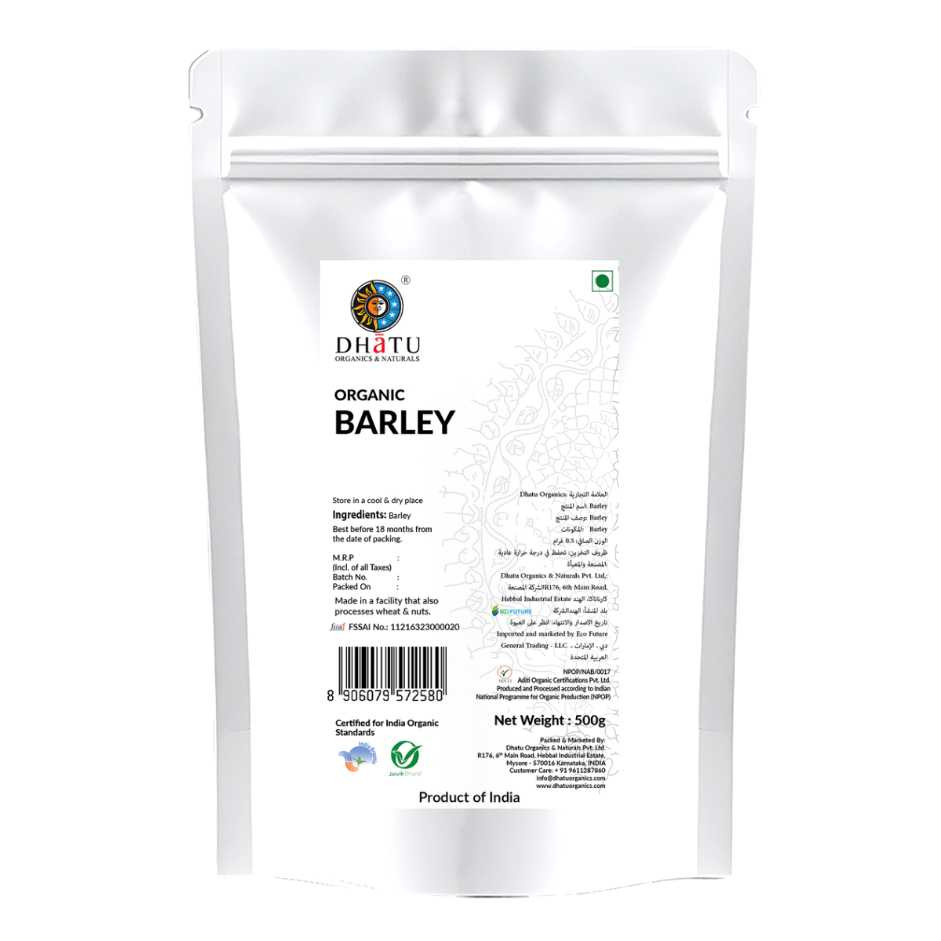
Rootz carries barley in two forms. This listing is whole grain barley — the complete grain, cleaned but not cracked or polished, which takes 40–60 minutes to cook and produces a distinctively chewy texture suited to slow-cooked dishes. The Organic Barley Daliya 500g is cracked barley that cooks in 15–20 minutes, suited to porridge, upma, and quick preparations. The beta-glucan health benefit applies to both; the difference is preparation time and culinary application.
BETA-GLUCAN AND CHOLESTEROL — THE FDA AND EFSA APPROVED THIS CLAIM
Barley is naturally rich in beta-glucan, a soluble fibre with one of the strongest evidence bases of any food health claim. Both the US FDA and the European Food Safety Authority (EFSA) have formally approved a claim that consuming approximately 3g or more of beta-glucan per day, from oats and/or barley, as part of a diet low in saturated fat and cholesterol, may help lower LDL (“bad”) cholesterol. This is backed by dozens of randomised controlled trials. The mechanism: beta-glucan binds to bile acids in the gut, causing the body to draw on circulating cholesterol to produce more, which lowers blood levels. A generous daily serving of whole grain barley — as part of an overall balanced, low-saturated-fat diet — can contribute meaningfully toward this threshold.
CONTAINS GLUTEN — PLEASE READ BEFORE PURCHASING
Barley is a true cereal grain related to wheat and naturally contains gluten. This product is not suitable for those with coeliac disease or gluten sensitivity. If you are shopping for a gluten-free grain alternative for soups or grain bowls, our millets and rice products are well-suited options.
WHOLE GRAIN NUTRITION
Barley is a good source of molybdenum, manganese, selenium, copper, phosphorus, magnesium, and B vitamins including thiamine (B1) and niacin. Its combined soluble and insoluble fibre supports digestive regularity and a feeling of fullness.
HOW TO COOK WHOLE GRAIN BARLEY
- Slow-cooking grain — allows 40–60 minutes. Optional soak of 8 hours reduces cook time.
- Optional: soak in cold water for 8 hours or overnight before cooking to reduce cook time by approximately 15–20 minutes.
- Rinse before cooking. Cook 1 cup barley in 3 cups water or stock, simmering until tender, approximately 40–60 minutes (30–40 minutes if pre-soaked).
- Barley soup or stew: add to vegetable, chicken, or lentil soup in the last 40–60 minutes of cooking. Barley naturally thickens the broth as it cooks.
- Pilaf or grain bowl: cook in stock with onions, garlic, and whole spices, serve as a side dish or the base of a grain bowl with roasted vegetables.
- Salad: cool cooked barley and toss with fresh herbs, cucumber, tomato, and a lemon-olive oil dressing.
- Porridge: cook with more water (1:4 ratio) for a softer, porridge-like consistency. This works better with Barley Daliya — whole grain barley porridge requires a longer cook time.
STORAGE
Store in a cool, dry place in a sealed container of glass or plastic, away from heat and light. In the UAE’s warm climate, refrigerator storage during summer months is recommended; ensure the container is tightly sealed to prevent moisture absorption. Properly stored, whole grain barley keeps for up to one year.
Nutrition Table Basis:
Per 1 serving (approx. 45g / ⅓ cup dry) / Per 100g — general values for whole grain barley Nutrient Per Serving Per 100g % DV* Energy ~155 kcal ~345 kcal 8% Total fat ~1g ~2.3g 3% Total carbohydrates ~32g ~72g 26% — Dietary fibre (incl. beta-glucan) ~4.5–8g ~10–17g — Protein ~5–6g ~12–13g 24% Beta-glucan (soluble fibre) Present Significant source — (FDA/EFSA ~3g/day threshold) Selenium Excellent source Excellent source — Manganese Good source Good source — Magnesium & Phosphorus Good source Good source — B Vitamins (Thiamine, Niacin) Present Present —
Reviews
Login
Don't have an account?
Sign UpYes — barley is a true cereal grain related to wheat and naturally contains gluten. This product is not suitable for those with coeliac disease or gluten sensitivity. If you are looking for a gluten-free grain for soups or grain bowls, our millets and rice products are well-suited alternatives.
Both are organic barley, but in different forms. This whole grain barley takes 40–60 minutes to cook and is suited to slow-cooked soups, stews, and pilafs where the grain maintains its texture. Barley Daliya (also in the Rootz range) is cracked and partly pre-cooked barley that takes 15–20 minutes, suited to porridge, upma, and quicker preparations. The beta-glucan health benefit applies to both; the difference is cook time, texture, and application.
Yes, more rigorously than most food health claims. Both the US FDA and the European Food Safety Authority (EFSA) have formally approved a claim that consuming approximately 3g or more of beta-glucan per day, from oats and/or barley, as part of a diet low in saturated fat and cholesterol, may help lower LDL cholesterol. This is supported by dozens of randomised controlled trials — a notably strong evidence base compared to most grain health claims.


