
Product description
There is a vegetable that has been used in Ayurvedic medicine for blood sugar management for over 3,000 years, is the source of one of the world's most commercially important food additives, and is available fresh at Rootz for AED 12.95 per kilogram.
Most people outside the South Asian community have never heard of it.
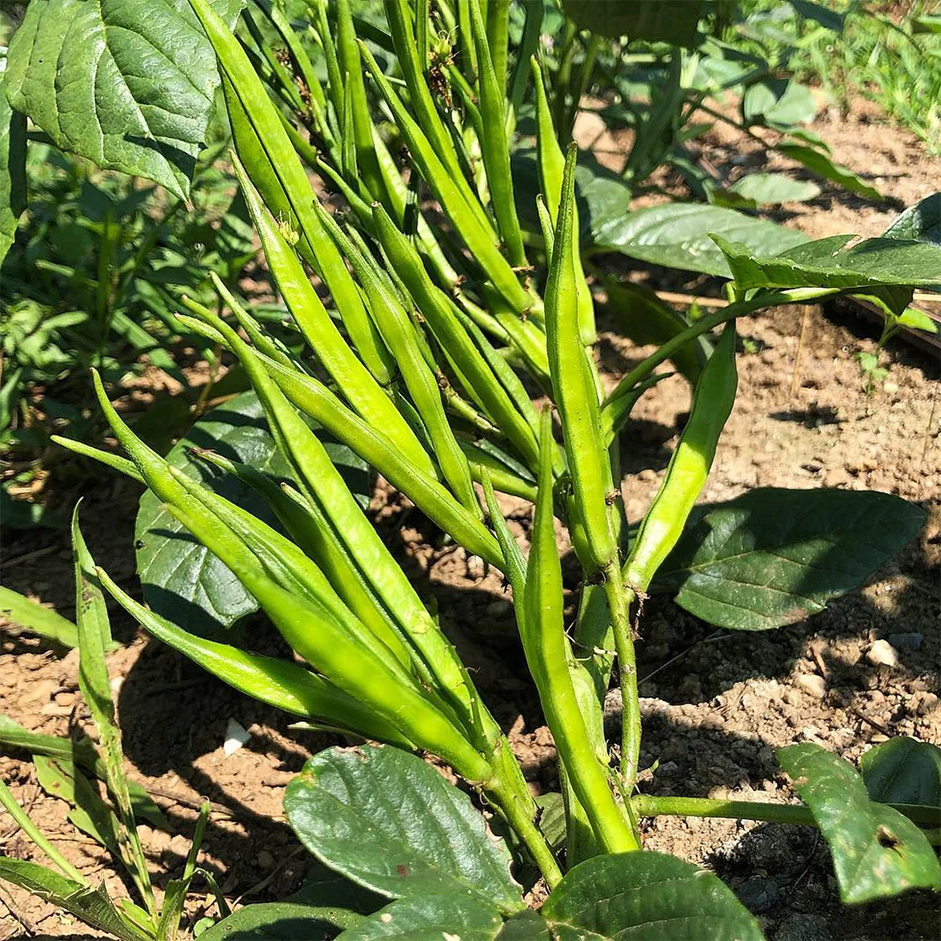
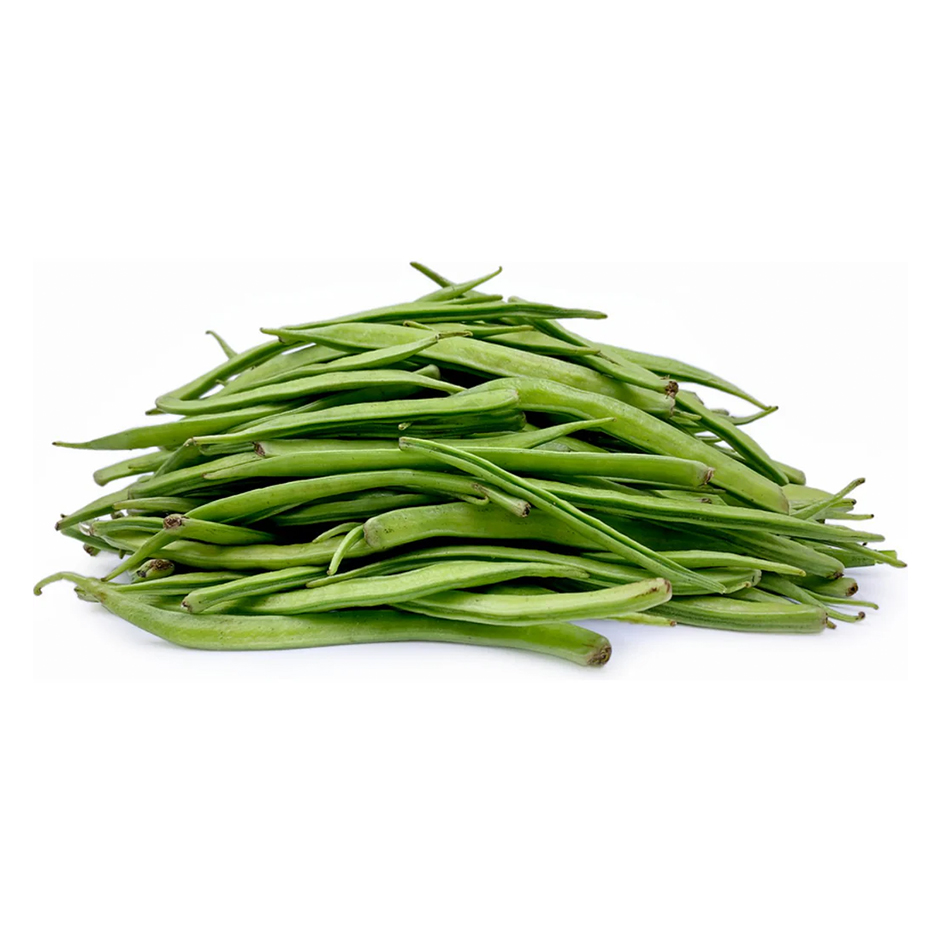
Gawar beans — cluster beans, gwar phali, goruchikkudu, kothavarangai — are a staple of the Rajasthani, Gujarati, Andhra, and Tamil kitchens. They grow in tight clusters on a vine in semi-arid conditions, which is why they thrive in the dry heat of northwestern India. Their flavour is slightly bitter and deeply earthy — the kind of vegetable that, once you have had it made correctly in a tadka sabzi with A2 ghee and dried red chilli, you wonder how you went so long without it.
WHY GAWAR BEANS ARE NUTRITIONALLY EXCEPTIONAL
The commercial food industry extracts a substance from guar seeds called guar gum — used as a thickener in ice cream, sauces, baked goods, salad dressings, and hundreds of other processed foods. The reason guar gum is so useful commercially is the same reason gawar beans are so valuable nutritionally: the soluble fibre in the seed forms a viscous gel when it contacts liquid.
In your digestive tract, this gel physically slows the digestion and absorption of carbohydrates eaten in the same meal. The result is a blunted glucose spike after eating — the mechanism behind multiple randomised controlled trials showing that guar fibre significantly reduces postprandial blood glucose in both diabetic and non-diabetic subjects.
Fresh gawar beans deliver this fibre in whole-food form: more bioavailable, more flavourful, and accompanied by the full micronutrient profile of the vegetable, including folate, Vitamin K, Vitamin C, iron, and calcium.
WHAT THE SCIENCE SAYS
Blood sugar management: The soluble guar fibre forms a viscous gel in the small intestine, slowing carbohydrate digestion and blunting the postprandial glucose spike. Clinical studies show consistent reductions in postprandial glucose of 15–30% when guar fibre is consumed alongside a carbohydrate-containing meal.
LDL cholesterol reduction: The same gel-forming mechanism binds bile acids in the gut, reducing LDL cholesterol reabsorption. Multiple studies demonstrate reductions of 10–15% in LDL with regular guar fibre consumption.
Gut health: Guar fibre is a prebiotic — it feeds beneficial Lactobacillus and Bifidobacterium species in the colon. Regular consumption supports microbiome diversity and improves bowel regularity without causing the bloating associated with insoluble fibres.
Folate (pregnancy and DNA): Gawar provides approximately 27% of the daily folate requirement per 100g — one of the highest folate concentrations in commonly eaten vegetables. Folate is essential for DNA synthesis and cell division, and critically important during the first trimester of pregnancy for neural tube development.
Iron for vegetarians: Gawar provides non-haem iron in a form accessible within a vegetarian diet — particularly important for those who do not consume meat or rely on plant-based iron sources.
HOW TO COOK GAWAR EVERY DAY
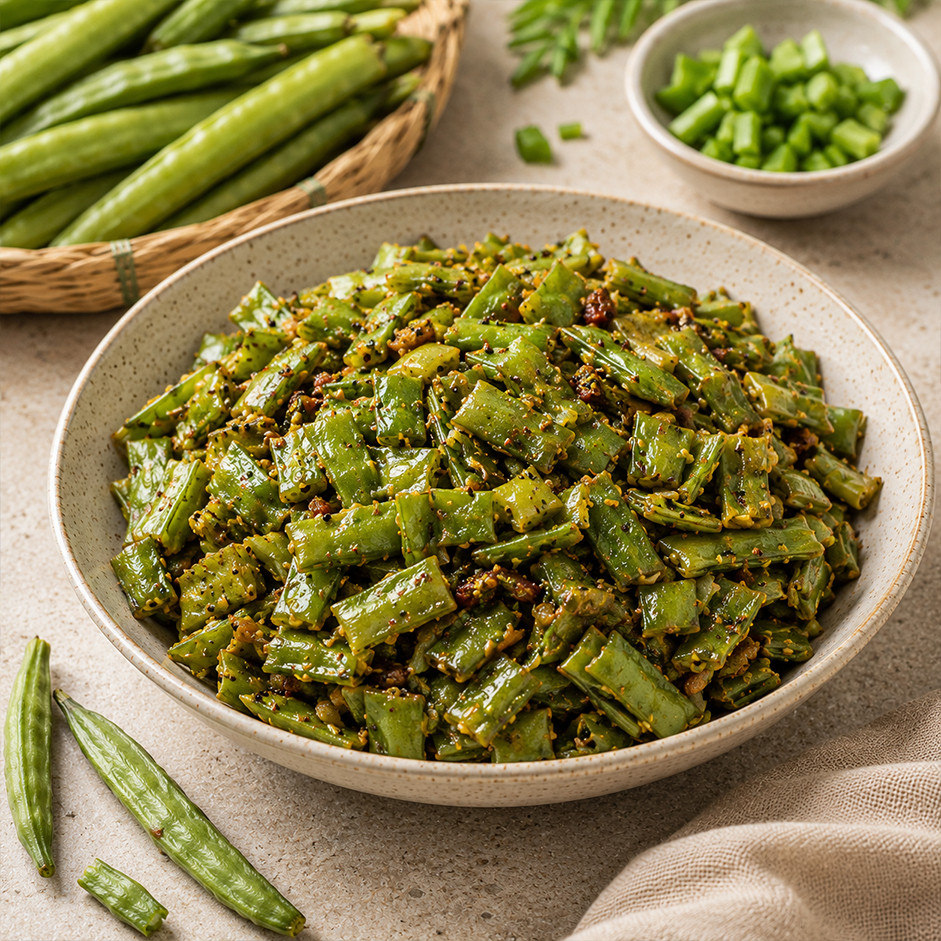
Classic gawar ki sabzi (the essential preparation): Heat A2 ghee in a kadai. Add mustard seeds, cumin seeds, dried red chilli, and curry leaves. Once the seeds splutter, add chopped onion and cook until golden. Add garlic and ginger. Add chopped tomatoes and cook down. Add trimmed, cut gawar beans with turmeric, coriander powder, cumin powder, and salt. Cover and cook on low-medium heat for 15–20 minutes until tender. Finish with lemon juice and fresh coriander.
Gawar aloo sabzi (Rajasthani staple): Add diced potato to the gawar preparation above. The potato balances the bitterness of the beans and creates a more substantial, meal-worthy dish.
Gawar in dal: Add whole or cut gawar beans to toor or moong dal in the last 10 minutes of pressure cooking or simmering. The beans absorb the dal flavour and add texture and fibre to every bowl.
South Indian gawar stir-fry: Temper mustard seeds, dried red chilli, and curry leaves in coconut oil. Add gawar beans. Stir-fry on high heat 8–10 minutes. Finish with freshly grated coconut, salt, and lemon juice. Serve alongside sambar and rice.
Gawar sambar: Add whole young gawar pods to tamarind-based sambar with toor dal in the final 15 minutes of cooking. A standard preparation in Tamil and Andhra homes.
Gawar paratha: Finely chop cooked, spiced gawar and use as stuffing in whole wheat parathas. Serve with A2 curd and pickle.
PREPARATION GUIDE — HOW TO GET THE BEST FROM GAWAR
Trim both ends and remove the fibrous string along the seam of each pod. Cut into 2–3cm pieces. Cook covered on medium heat — not high heat — to allow the beans to steam-cook without losing moisture. The slightly bitter flavour mellows significantly with adequate cooking time and fat. Do not undercook: undercooked gawar is tough and intensely bitter. Do not overcook: overcooked gawar loses its texture and turns grey-green.
The A2 ghee tadka is not optional — it is what makes gawar ki sabzi extraordinary rather than merely acceptable. The fat carries the spice flavours into the beans and rounds out the bitterness in a way that no amount of additional spice can replicate.
| Nutrient | Per serving | Per 100g | % Daily Value* |
|---|---|---|---|
| Energy | 16 kcal / 67 kJ | 16 kcal / 67 kJ | 1% |
| Total fat | 0.4g | 0.4g | 1% |
| Saturated fat | 0.1g | 0.1g | 0% |
| Trans fat | 0g | 0g | — |
| Total carbohydrates | 3.0g | 3.0g | 1% |
| Dietary fibre (soluble) | 1.7g | 1.7g | 6% |
| Sugars (natural) | 1.2g | 1.2g | — |
| Protein | 1.0g | 1.0g | 2% |
| Sodium | 7mg | 7mg | 0% |
| Vitamin C | 27mg | 27mg | 30% |
| Vitamin K | 109mcg | 109mcg | 91% |
| Folate | 108mcg | 108mcg | 27% |
| Iron | 0.9mg | 0.9mg | 5% |
| Calcium | 130mg | 130mg | 10% |
| Potassium | 250mg | 250mg | 5% |
| Guar Gum (Soluble Galactomannan Fibre) † | Approx. 1.2–1.7g per 100g (fresh weight) | — | — |
Reviews
Login
Don't have an account?
Sign UpGawar beans (Cyamopsis tetragonoloba) are a leguminous vegetable native to the Indian subcontinent, where they have been cultivated for over 3,000 years. They grow in tight clusters on a vine — typically 5–10 pods per cluster — which gives them their English name 'cluster beans'. The Hindi name 'gawar' or 'guar' comes from the Sanskrit word for cow fodder, as the plant was historically grown as both a food crop and animal feed.
Commercially, guar seeds are the source of guar gum — one of the most widely used food additives in the world, used as a thickener and stabiliser in ice cream, sauces, baked goods, and dairy products. The soluble fibre in guar gum that makes it useful as an industrial thickener is the same fibre that makes fresh gawar beans so valuable nutritionally: it forms a gel in the digestive tract that slows glucose absorption, reduces LDL cholesterol, and feeds beneficial gut bacteria.
In Indian regional cooking, gawar is known by several names: gawar phali in Hindi, goruchikkudu in Telugu, kothavarangai in Tamil, and chavli in Gujarati. It is a staple vegetable across Rajasthan, Gujarat, Andhra Pradesh, and Maharashtra — regions where it thrives in semi-arid conditions and has been part of daily cooking for millennia. Gawar beans (Cyamopsis tetragonoloba) are a leguminous vegetable native to the Indian subcontinent, where they have been cultivated for over 3,000 years. They grow in tight clusters on a vine — typically 5–10 pods per cluster — which gives them their English name 'cluster beans'. The Hindi name 'gawar' or 'guar' comes from the Sanskrit word for cow fodder, as the plant was historically grown as both a food crop and animal feed.
Commercially, guar seeds are the source of guar gum — one of the most widely used food additives in the world, used as a thickener and stabiliser in ice cream, sauces, baked goods, and dairy products. The soluble fibre in guar gum that makes it useful as an industrial thickener is the same fibre that makes fresh gawar beans so valuable nutritionally: it forms a gel in the digestive tract that slows glucose absorption, reduces LDL cholesterol, and feeds beneficial gut bacteria.
In Indian regional cooking, gawar is known by several names: gawar phali in Hindi, goruchikkudu in Telugu, kothavarangai in Tamil, and chavli in Gujarati. It is a staple vegetable across Rajasthan, Gujarat, Andhra Pradesh, and Maharashtra — regions where it thrives in semi-arid conditions and has been part of daily cooking for millennia.
Gawar beans are one of the most clinically studied vegetables for metabolic health, primarily because they are the natural source of guar gum — a soluble fibre with a well-documented effect on postprandial (after-meal) blood glucose levels.
Blood sugar management: Guar gum's soluble fibre forms a viscous gel in the small intestine, physically slowing the digestion and absorption of carbohydrates. This blunts the glucose spike after a meal. Multiple randomised controlled trials have demonstrated that guar gum supplementation significantly reduces postprandial blood glucose in both type 2 diabetic and non-diabetic subjects. Consuming fresh gawar beans delivers this same fibre in whole-food form alongside the full spectrum of the vegetable's micronutrients.
LDL cholesterol reduction: The same gel-forming mechanism that slows glucose absorption also binds bile acids in the gut, reducing LDL cholesterol reabsorption. Studies show consistent reductions in LDL of 10–15% with regular guar fibre consumption.
Gut health: As a soluble prebiotic fibre, guar gum feeds Lactobacillus and Bifidobacterium species in the colon, supporting microbiome diversity and improving bowel regularity.
Micronutrient profile: Folate (27% DV per 100g — critical for DNA synthesis and pregnancy), Vitamin K (supporting bone and cardiovascular health), Vitamin C (immune support), iron (particularly important for vegetarian diets), and calcium. Gawar is one of the rare vegetables that provides meaningful iron in a vegetarian-accessible form. Gawar beans are one of the most clinically studied vegetables for metabolic health, primarily because they are the natural source of guar gum — a soluble fibre with a well-documented effect on postprandial (after-meal) blood glucose levels.
Blood sugar management: Guar gum's soluble fibre forms a viscous gel in the small intestine, physically slowing the digestion and absorption of carbohydrates. This blunts the glucose spike after a meal. Multiple randomised controlled trials have demonstrated that guar gum supplementation significantly reduces postprandial blood glucose in both type 2 diabetic and non-diabetic subjects. Consuming fresh gawar beans delivers this same fibre in whole-food form alongside the full spectrum of the vegetable's micronutrients.
LDL cholesterol reduction: The same gel-forming mechanism that slows glucose absorption also binds bile acids in the gut, reducing LDL cholesterol reabsorption. Studies show consistent reductions in LDL of 10–15% with regular guar fibre consumption.
Gut health: As a soluble prebiotic fibre, guar gum feeds Lactobacillus and Bifidobacterium species in the colon, supporting microbiome diversity and improving bowel regularity.
Micronutrient profile: Folate (27% DV per 100g — critical for DNA synthesis and pregnancy), Vitamin K (supporting bone and cardiovascular health), Vitamin C (immune support), iron (particularly important for vegetarian diets), and calcium. Gawar is one of the rare vegetables that provides meaningful iron in a vegetarian-accessible form.
Gawar beans have a slightly bitter, earthy flavour that mellows significantly with heat and fat. The bitterness is part of the character — similar to karela (bitter gourd) but much milder — and is actually a marker of the phytochemical content that makes them medicinally valuable. Here is the classic preparation:
Gawar Ki Sabzi (serves 4): Wash and trim both ends of 500g gawar beans. Cut into 2–3cm pieces. Heat 2 tbsp A2 ghee in a heavy pan or kadai over medium heat. Add 1 tsp mustard seeds and let them splutter. Add 1 tsp cumin seeds, 2 dried red chillies, and 8–10 curry leaves. Fry 30 seconds. Add 1 medium onion (finely chopped) and cook until golden, about 5 minutes. Add 4 garlic cloves (minced) and 1 inch fresh ginger (grated). Cook 2 minutes. Add 2 medium tomatoes (chopped) and cook until soft, about 5 minutes. Add the gawar beans, 1/2 tsp turmeric, 1 tsp coriander powder, 1/2 tsp cumin powder, salt to taste. Stir well to coat. Cover and cook on low-medium heat for 15–20 minutes, stirring occasionally, until beans are tender but not mushy. Finish with a squeeze of lemon juice and fresh coriander.
Other preparations: Gawar with aloo (potato) — a Rajasthani staple. Gawar in dal — add whole or cut beans to toor dal in the last 10 minutes of cooking. Stir-fried gawar (South Indian style) — with coconut, mustard seeds, and curry leaves. Gawar in sambar — a classic Tamil addition. Gawar paratha stuffing — chopped finely, cooked with spices, and used as flatbread filling. Gawar beans have a slightly bitter, earthy flavour that mellows significantly with heat and fat. The bitterness is part of the character — similar to karela (bitter gourd) but much milder — and is actually a marker of the phytochemical content that makes them medicinally valuable. Here is the classic preparation:
Gawar Ki Sabzi (serves 4): Wash and trim both ends of 500g gawar beans. Cut into 2–3cm pieces. Heat 2 tbsp A2 ghee in a heavy pan or kadai over medium heat. Add 1 tsp mustard seeds and let them splutter. Add 1 tsp cumin seeds, 2 dried red chillies, and 8–10 curry leaves. Fry 30 seconds. Add 1 medium onion (finely chopped) and cook until golden, about 5 minutes. Add 4 garlic cloves (minced) and 1 inch fresh ginger (grated). Cook 2 minutes. Add 2 medium tomatoes (chopped) and cook until soft, about 5 minutes. Add the gawar beans, 1/2 tsp turmeric, 1 tsp coriander powder, 1/2 tsp cumin powder, salt to taste. Stir well to coat. Cover and cook on low-medium heat for 15–20 minutes, stirring occasionally, until beans are tender but not mushy. Finish with a squeeze of lemon juice and fresh coriander.
Other preparations: Gawar with aloo (potato) — a Rajasthani staple. Gawar in dal — add whole or cut beans to toor dal in the last 10 minutes of cooking. Stir-fried gawar (South Indian style) — with coconut, mustard seeds, and curry leaves. Gawar in sambar — a classic Tamil addition. Gawar paratha stuffing — chopped finely, cooked with spices, and used as flatbread filling.
Yes — gawar beans are one of the most appropriate vegetables for diabetics and are used in traditional Ayurvedic medicine specifically for blood sugar management. The clinical evidence is strong: multiple studies have demonstrated that the guar gum fibre in gawar beans significantly reduces postprandial glucose (the spike in blood sugar after eating) and improves insulin sensitivity with regular consumption.
For maximum blood sugar benefit, follow these preparation guidelines:
1. Do not overcook: The soluble fibre content is best preserved when the beans are cooked until tender but still hold their shape (15–20 minutes in a covered pan). Extended cooking breaks down the fibre structure and reduces its glucose-slowing effect. Avoid pressure cooking for long periods.
2. Cook with fat: Preparing gawar in A2 ghee reduces the overall glycaemic impact of the meal by slowing gastric emptying. The fat also enhances absorption of fat-soluble micronutrients including Vitamin K.
3. Eat as the first course or mix into the main meal: Consuming the high-fibre gawar component at the beginning of a meal or mixed throughout (rather than after rice or roti) maximises the fibre's gel-forming effect on subsequent carbohydrate absorption.
4. Pair with complex carbohydrates: Gawar sabzi with brown rice or multigrain roti produces a significantly lower glycaemic response than the same carbohydrate eaten without the vegetable.
Note: If you are on medication for diabetes or blood sugar management, consult your physician before significantly increasing gawar consumption, as the fibre effect on glucose absorption may alter medication timing requirements. Yes — gawar beans are one of the most appropriate vegetables for diabetics and are used in traditional Ayurvedic medicine specifically for blood sugar management. The clinical evidence is strong: multiple studies have demonstrated that the guar gum fibre in gawar beans significantly reduces postprandial glucose (the spike in blood sugar after eating) and improves insulin sensitivity with regular consumption.
For maximum blood sugar benefit, follow these preparation guidelines:
1. Do not overcook: The soluble fibre content is best preserved when the beans are cooked until tender but still hold their shape (15–20 minutes in a covered pan). Extended cooking breaks down the fibre structure and reduces its glucose-slowing effect. Avoid pressure cooking for long periods.
2. Cook with fat: Preparing gawar in A2 ghee reduces the overall glycaemic impact of the meal by slowing gastric emptying. The fat also enhances absorption of fat-soluble micronutrients including Vitamin K.
3. Eat as the first course or mix into the main meal: Consuming the high-fibre gawar component at the beginning of a meal or mixed throughout (rather than after rice or roti) maximises the fibre's gel-forming effect on subsequent carbohydrate absorption.
4. Pair with complex carbohydrates: Gawar sabzi with brown rice or multigrain roti produces a significantly lower glycaemic response than the same carbohydrate eaten without the vegetable.
Note: If you are on medication for diabetes or blood sugar management, consult your physician before significantly increasing gawar consumption, as the fibre effect on glucose absorption may alter medication timing requirements.
Selecting: Fresh gawar beans should be firm, bright green, and snap cleanly when bent — similar to the snap test for French beans. Avoid beans that are yellowing, limp, spotted, or have swollen, bulging seeds (this indicates over-maturity and the beans will be tough and more intensely bitter). The pods should feel smooth and taut. Younger, smaller pods (under 8cm) are more tender and less bitter than large, mature ones.
Cleaning and prep: Wash thoroughly under running water. Trim both ends (the tip and the stem end). Remove the fibrous string that runs along the seam of some varieties — simply snap the tip and pull it down the length of the pod. Cut into 2–3cm pieces for sabzi, or leave whole for some preparations. No soaking required.
Storage — refrigerator: Store unwashed gawar beans in a breathable bag or paper bag in the crisper drawer. They will keep for 4–6 days. Do not store in a sealed plastic bag — trapped moisture accelerates decay. Wash only immediately before use.
Storage — freezer: Blanch cleaned, cut gawar beans in boiling salted water for 2 minutes. Transfer immediately to ice water for 2 minutes. Drain, dry thoroughly, and freeze in a single layer on a tray before transferring to sealed freezer bags. Frozen gawar keeps for up to 3 months and can be used directly from frozen in cooked preparations (sabzi, dal, curry). Blanching is essential — unblanched gawar turns soft and loses colour when frozen.
Sign of freshness: Fresh gawar has a clean, slightly grassy smell. Any ammonia-like or fermented odour indicates spoilage. Selecting: Fresh gawar beans should be firm, bright green, and snap cleanly when bent — similar to the snap test for French beans. Avoid beans that are yellowing, limp, spotted, or have swollen, bulging seeds (this indicates over-maturity and the beans will be tough and more intensely bitter). The pods should feel smooth and taut. Younger, smaller pods (under 8cm) are more tender and less bitter than large, mature ones.
Cleaning and prep: Wash thoroughly under running water. Trim both ends (the tip and the stem end). Remove the fibrous string that runs along the seam of some varieties — simply snap the tip and pull it down the length of the pod. Cut into 2–3cm pieces for sabzi, or leave whole for some preparations. No soaking required.
Storage — refrigerator: Store unwashed gawar beans in a breathable bag or paper bag in the crisper drawer. They will keep for 4–6 days. Do not store in a sealed plastic bag — trapped moisture accelerates decay. Wash only immediately before use.
Storage — freezer: Blanch cleaned, cut gawar beans in boiling salted water for 2 minutes. Transfer immediately to ice water for 2 minutes. Drain, dry thoroughly, and freeze in a single layer on a tray before transferring to sealed freezer bags. Frozen gawar keeps for up to 3 months and can be used directly from frozen in cooked preparations (sabzi, dal, curry). Blanching is essential — unblanched gawar turns soft and loses colour when frozen.
Sign of freshness: Fresh gawar has a clean, slightly grassy smell. Any ammonia-like or fermented odour indicates spoilage.


