
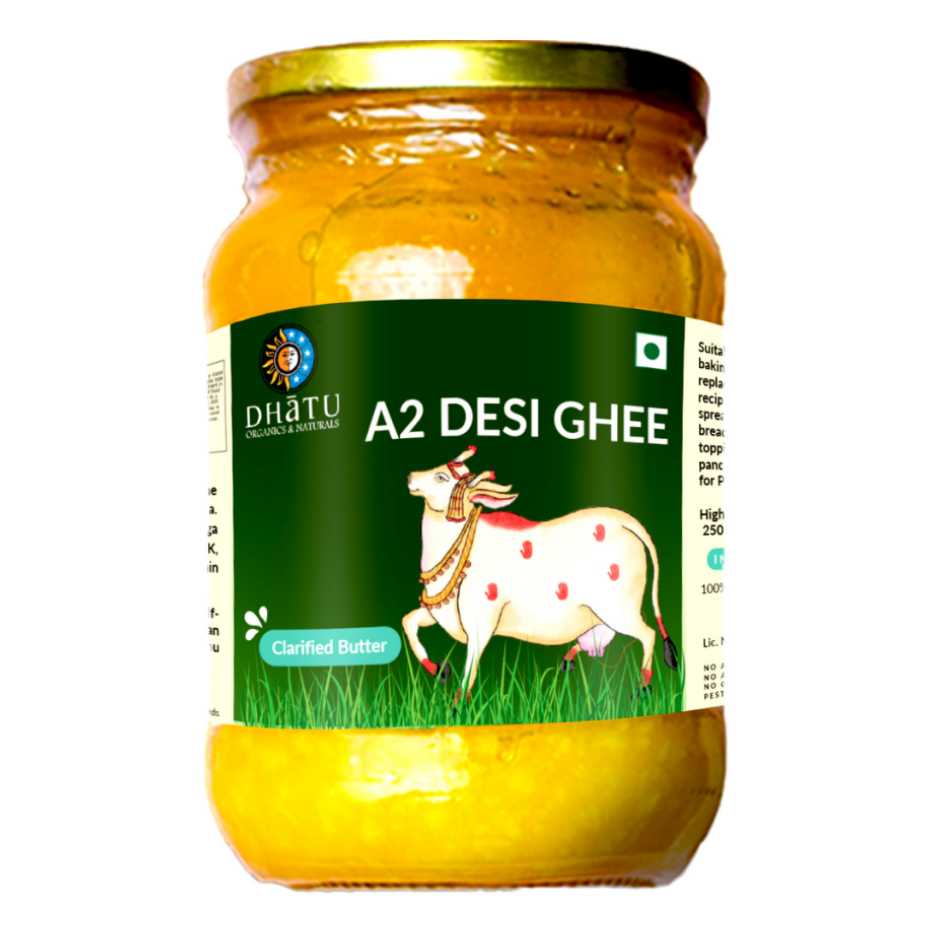
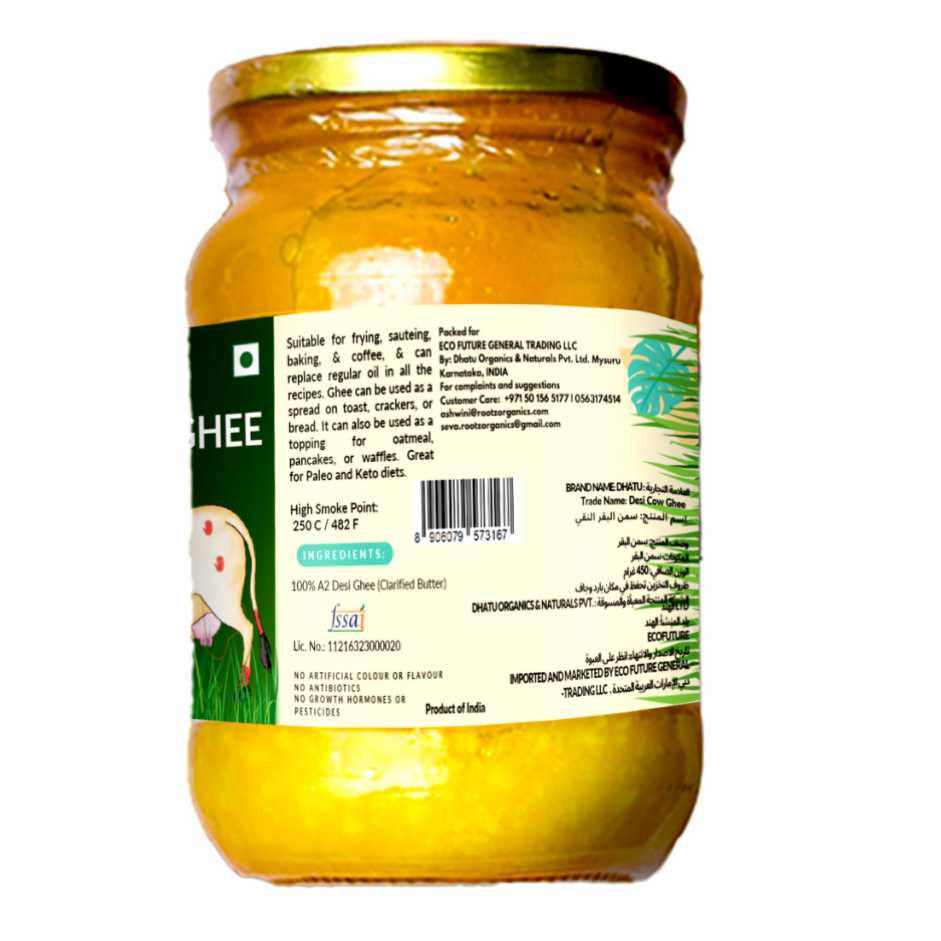
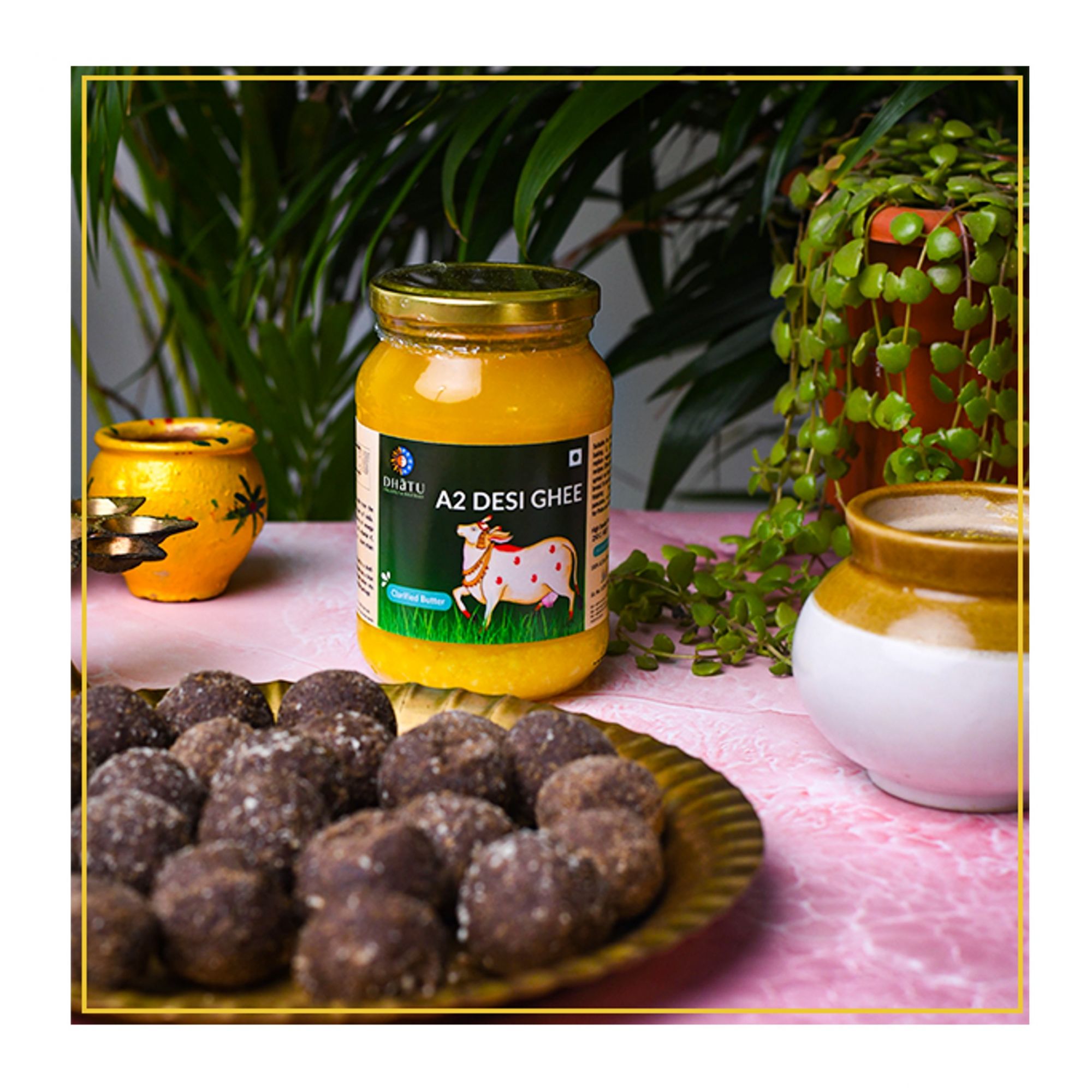
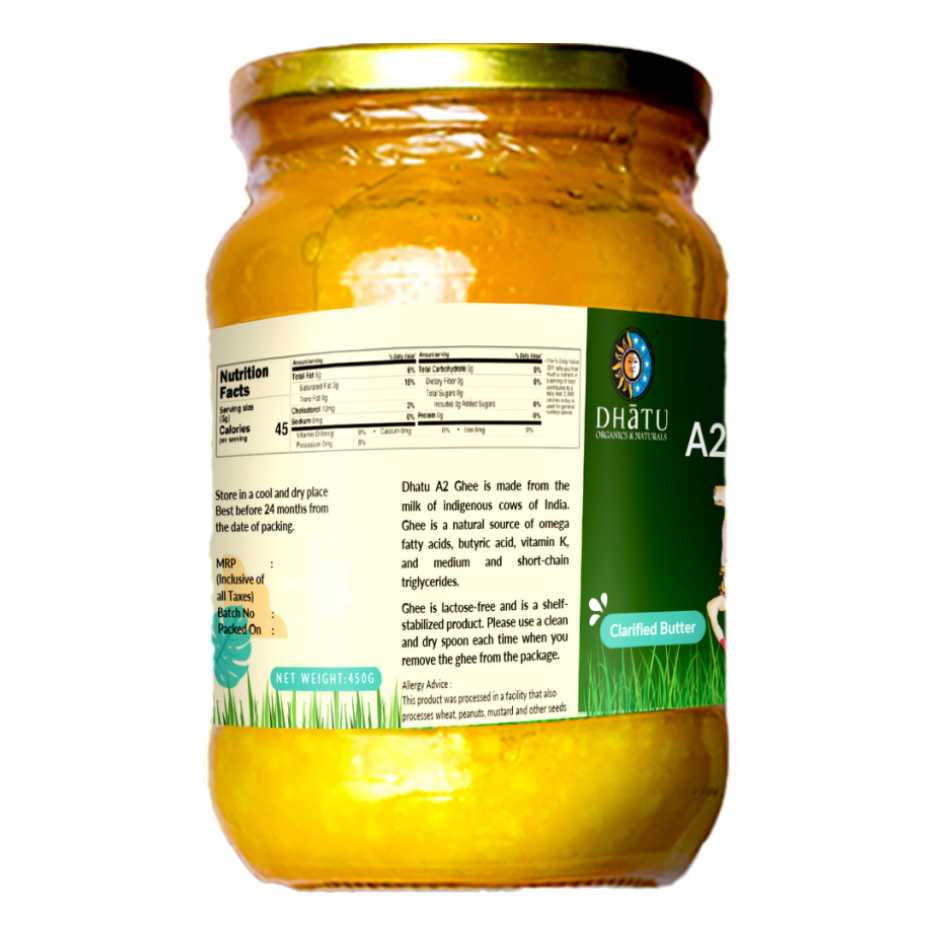
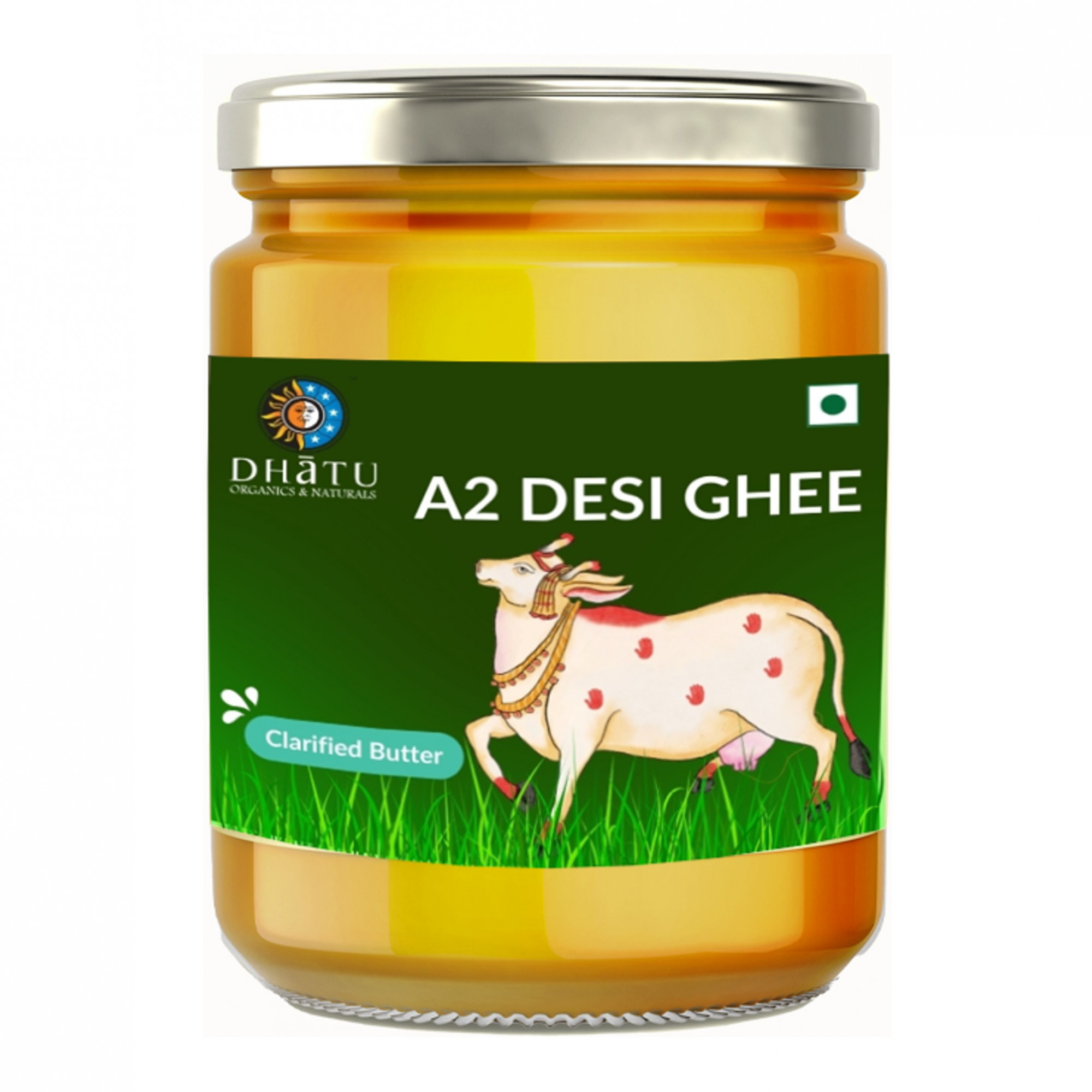
Product description
What is A2 Ghee — and why does it matter?
Not all ghee is the same. Most commercial ghee — even the ones that say "pure" and "desi" on the label — are made from A1 cow milk, or a blend of A1 and A2, processed at high speed, and often sourced from cows raised in cramped conditions on grain-heavy diets.
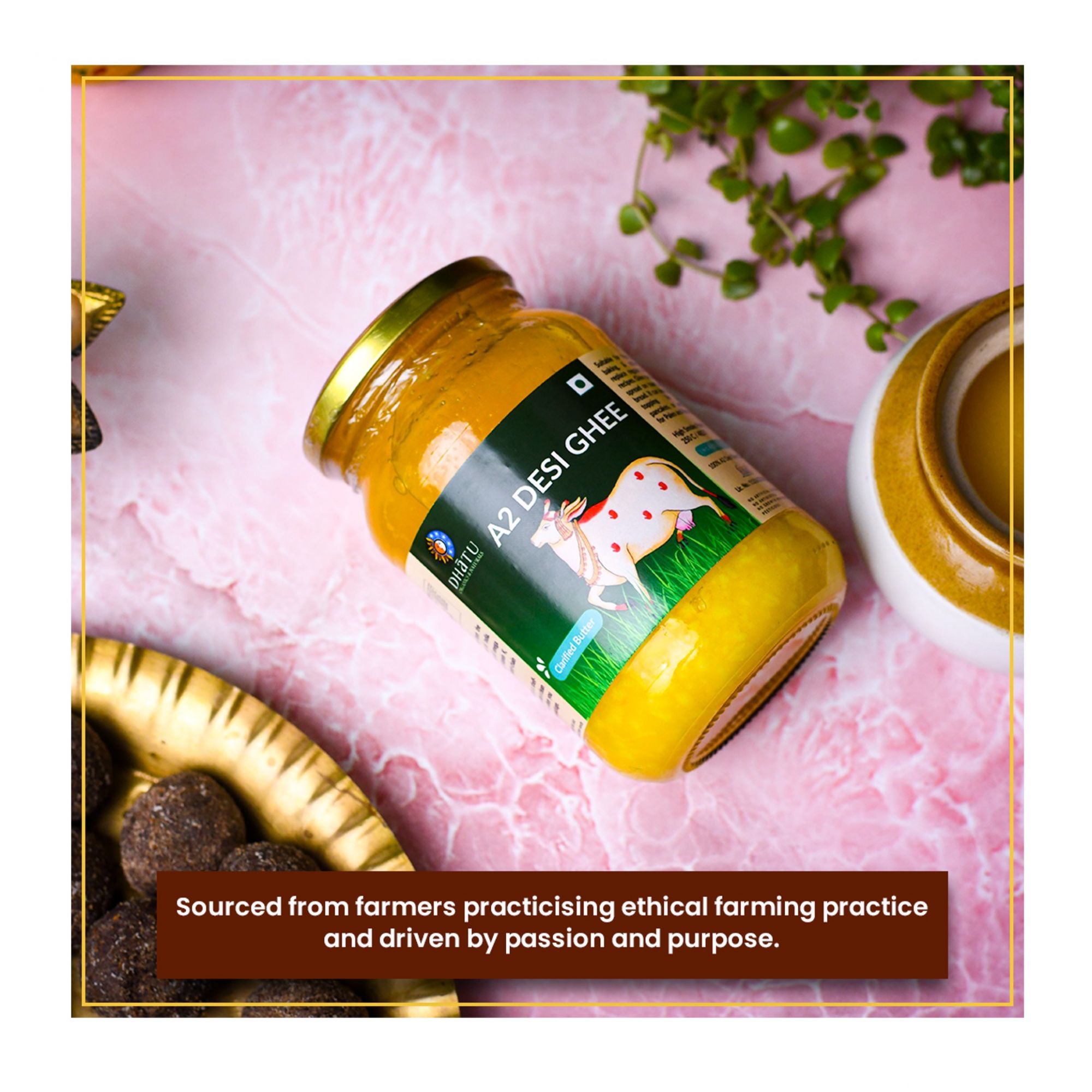
A2 Desi Cow Ghee is made exclusively from the milk of indigenous desi cows — breeds like Gir — that naturally produce only the A2 beta-casein protein. This is the protein variant your body has evolved to process. A1 beta-casein, found in most hybrid European breeds, behaves differently in the gut — and is increasingly associated with digestive discomfort and inflammation in studies.
We source our A2 milk from our farm where the cows are grass-fed, allowed to roam freely, and monitored from fodder to milking. No factory farming. No hormones. No shortcuts.
The Bilona method — why it changes everything
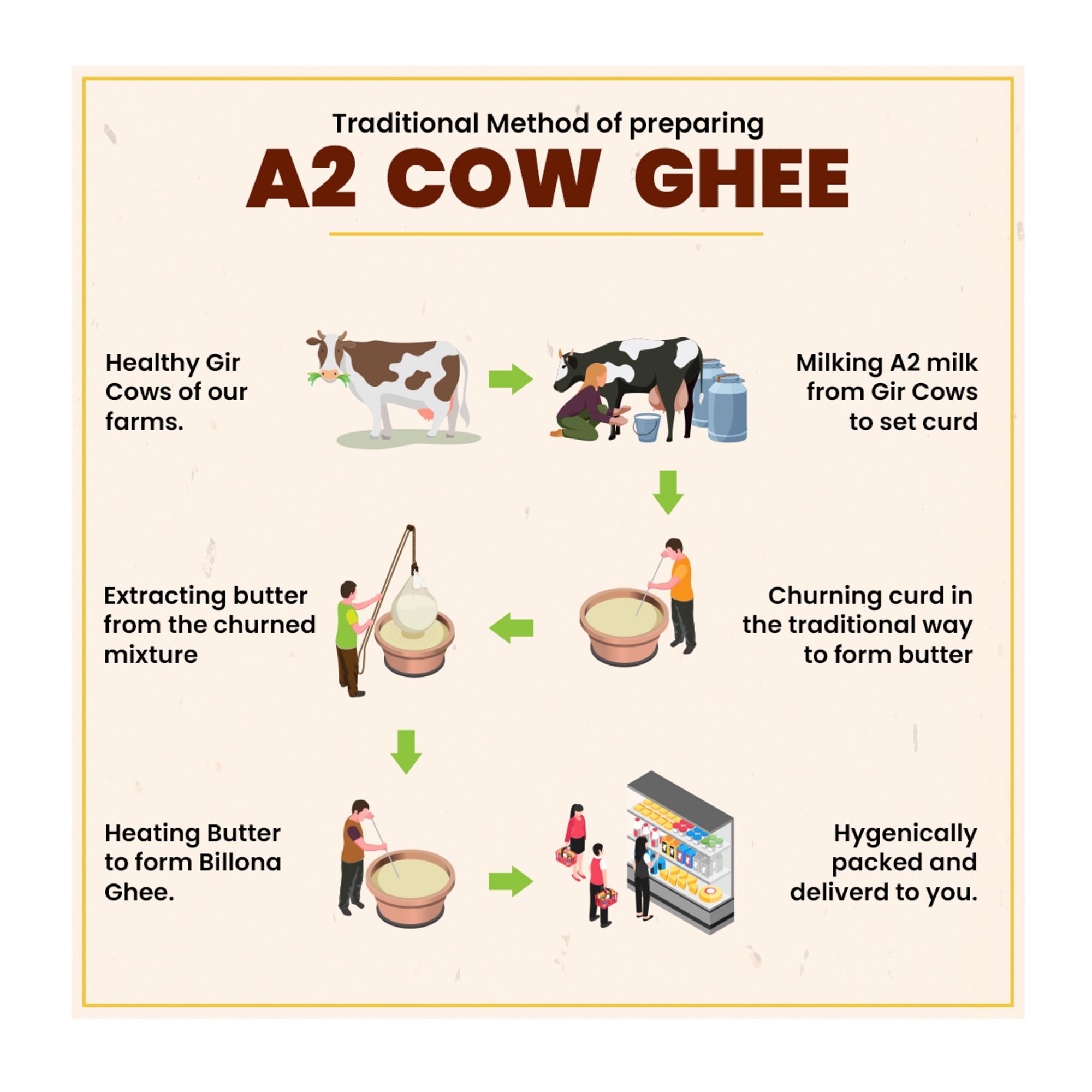
The word "Bilona" refers to a traditional hand-churning process that begins not with cream, but with curd. Here is how it works:
Step 1 — The fresh A2 milk is cultured into curd overnight using a live natural culture.
Step 2 — The curd is hand-churned (bilona) in a clay pot using a wooden churner to extract white butter. This step is what separates Bilona ghee from all standard ghee production.
Step 3 — The white butter is slowly simmered over low flame until the milk solids separate, leaving behind pure, golden, aromatic ghee.
The cream-separator method used in commercial production extracts butter from cream directly — faster and cheaper, but it skips the curd fermentation step entirely. That step is where the live cultures, the full-fat nutrition, and the depth of flavour come from. No curd = no Bilona = not the same ghee.
Nutrition
Serving size: 1 tablespoon (14g)
| Nutrient | Value | % Daily Value |
|---|---|---|
| Energy | 123 kcl | --- |
| Saturated Fat | 45% | |
Omega-3 Fatty Acids (ALA) | 40mg | — |
Butyric Acid (C4:0) | 0.5g | — |
Vitamin A (Retinol) | 438 IU | 15% |
Vitamin D | 12 IU | 3% |
Vitamin E (Tocopherol) | 0.4mg | 3% |
Vitamin K2 (MK-4) | 1.5mcg | 1% |
Conjugated Linoleic Acid (CLA) | — |
HOW TO USE IT
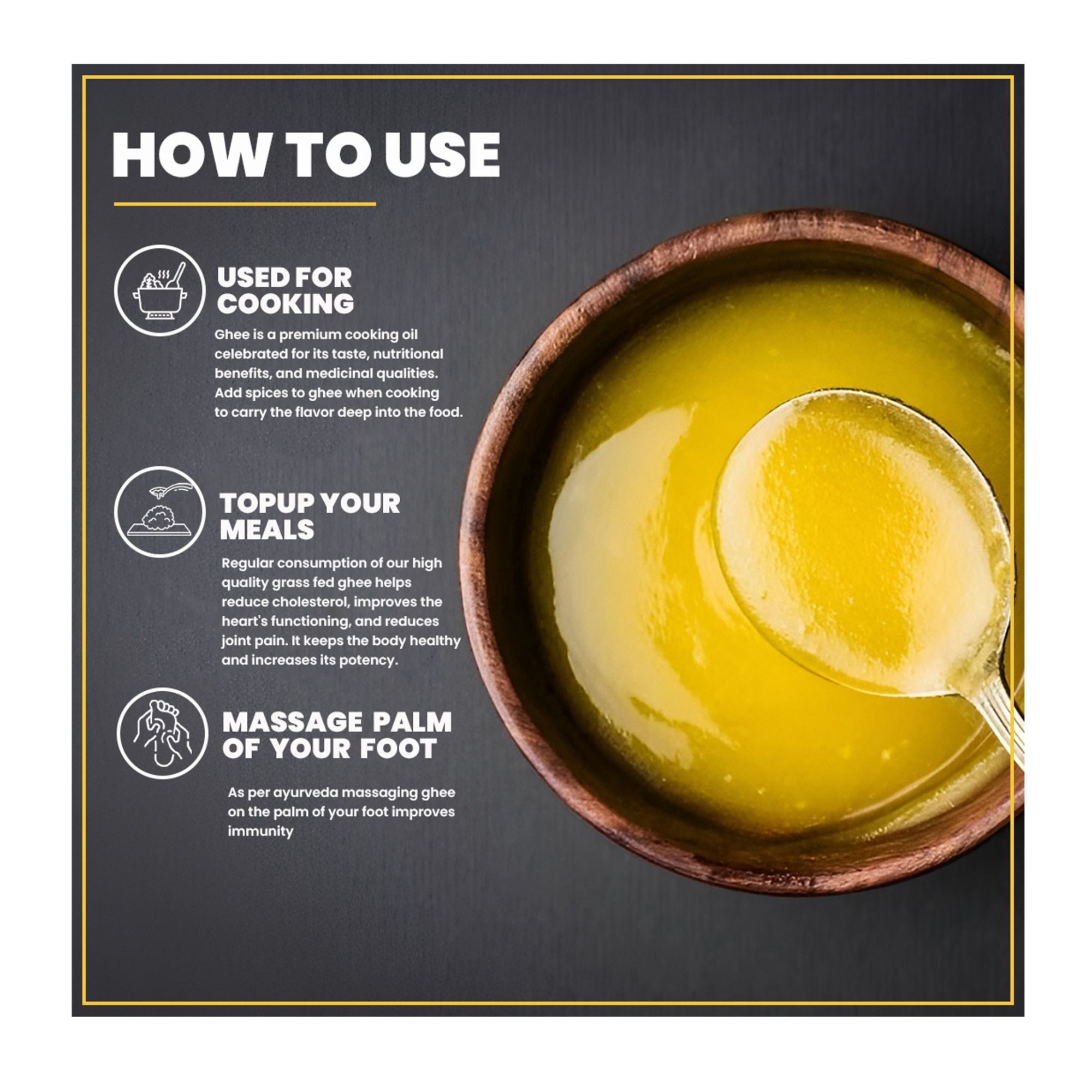
Cook your sabzi, dal, tadka, or biryani in it. Add a spoon to warm A2 milk at night for sleep and recovery. Spread it on fresh roti straight off the tawa. Use it in place of butter in baking. Or begin your morning with half a teaspoon on an empty stomach — a time-honoured Ayurvedic ritual for digestion, immunity, and a grounded start to the day.
Watch Videos
We culture A2 milk into curd, hand-churn it to extract white butter, then slowly simmer it into ghee. This ancient process preserves butyric acid, omega-3s, and fat-soluble vitamins that industrial cream-separator ghee loses. It takes longer — and you will taste the difference.
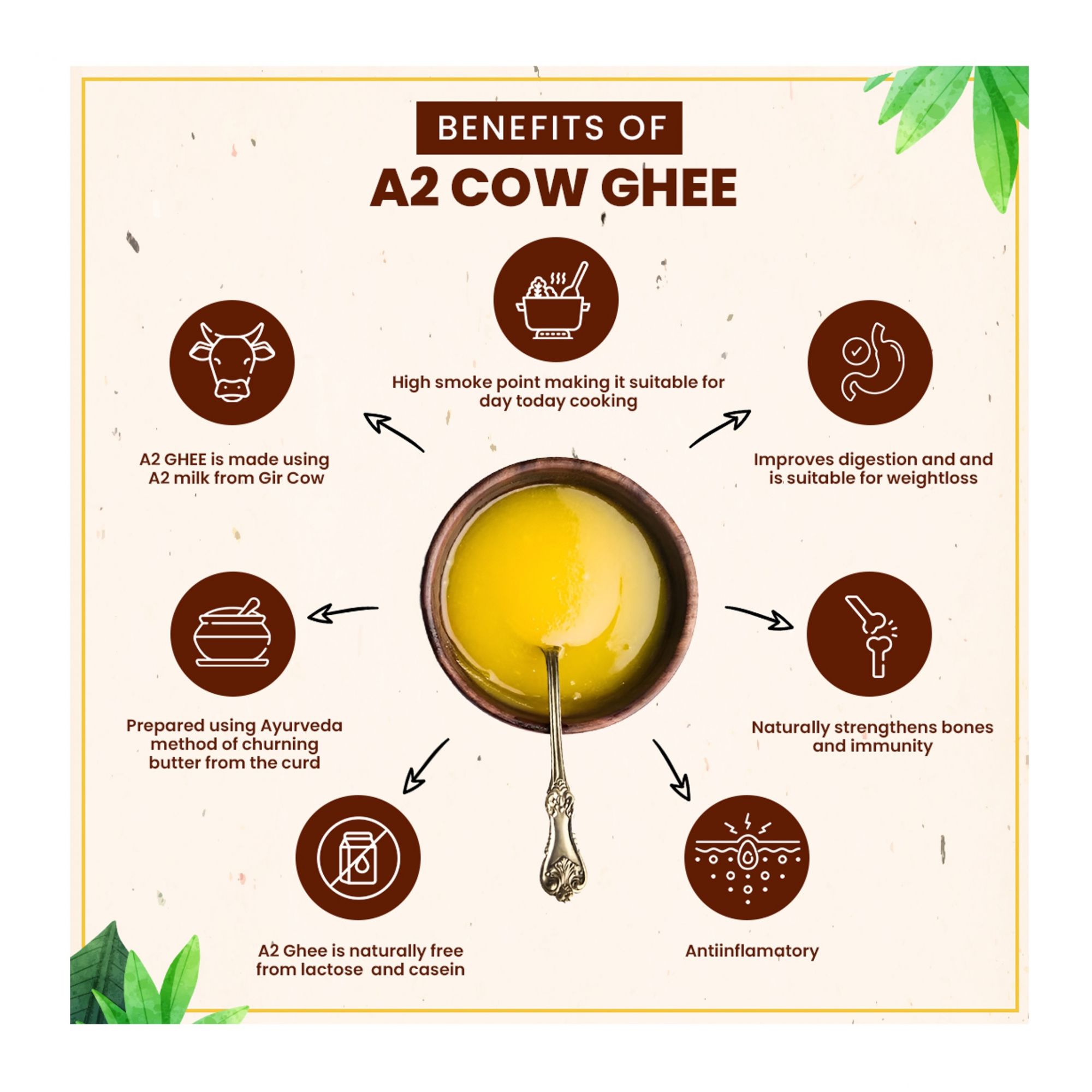
Yes, for most people. During clarification, all milk solids (lactose and casein) are strained out, leaving pure fat. Our A2 milk base also uses only the easier-to-digest A2 beta-casein protein. If you have a severe dairy allergy, consult your healthcare provider first.
Yes. A2 Desi Cow Ghee has a smoke point of approximately 250°C (480°F) — one of the highest of any cooking fat. Safe and stable for frying, tempering, roasting, and baking. It does not break down into harmful compounds at high temperatures the way butter or vegetable oils do.
Regular commercial ghee often uses A1 cow milk or an A1/A2 blend. Our ghee uses only indigenous Desi A2 cows — breeds like Gir and Sahiwal whose milk contains only A2 beta-casein, closer in structure to human breast milk and widely considered easier on the gut


