
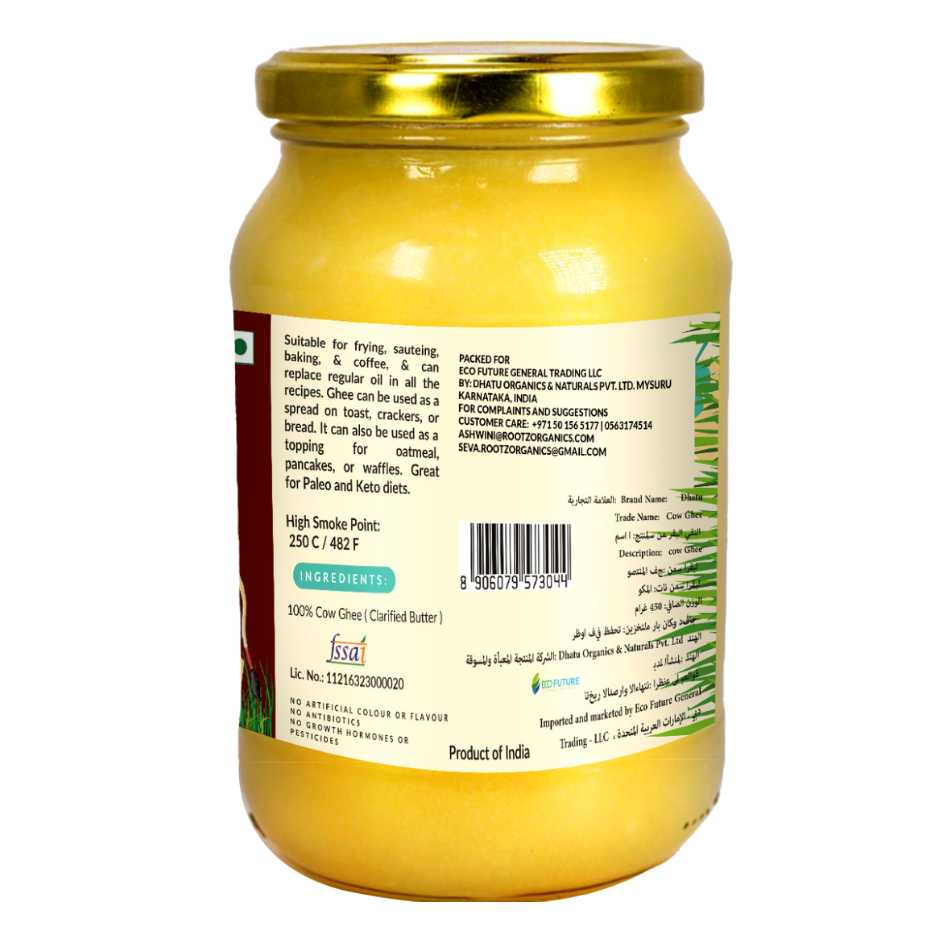
Product description
MADE THE TRADITIONAL WAY — CURD-CHURNED, NOT CREAM-CHURNED
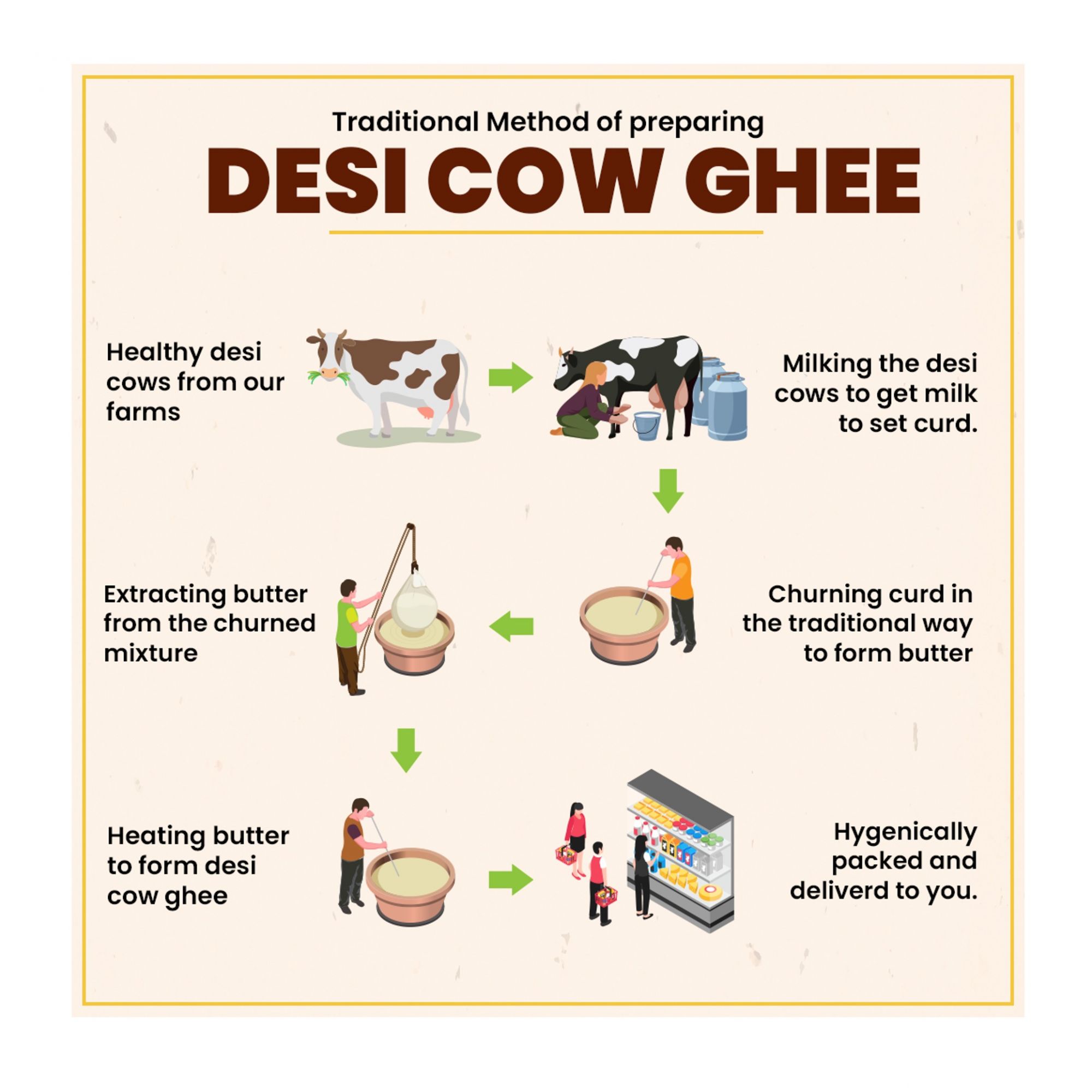
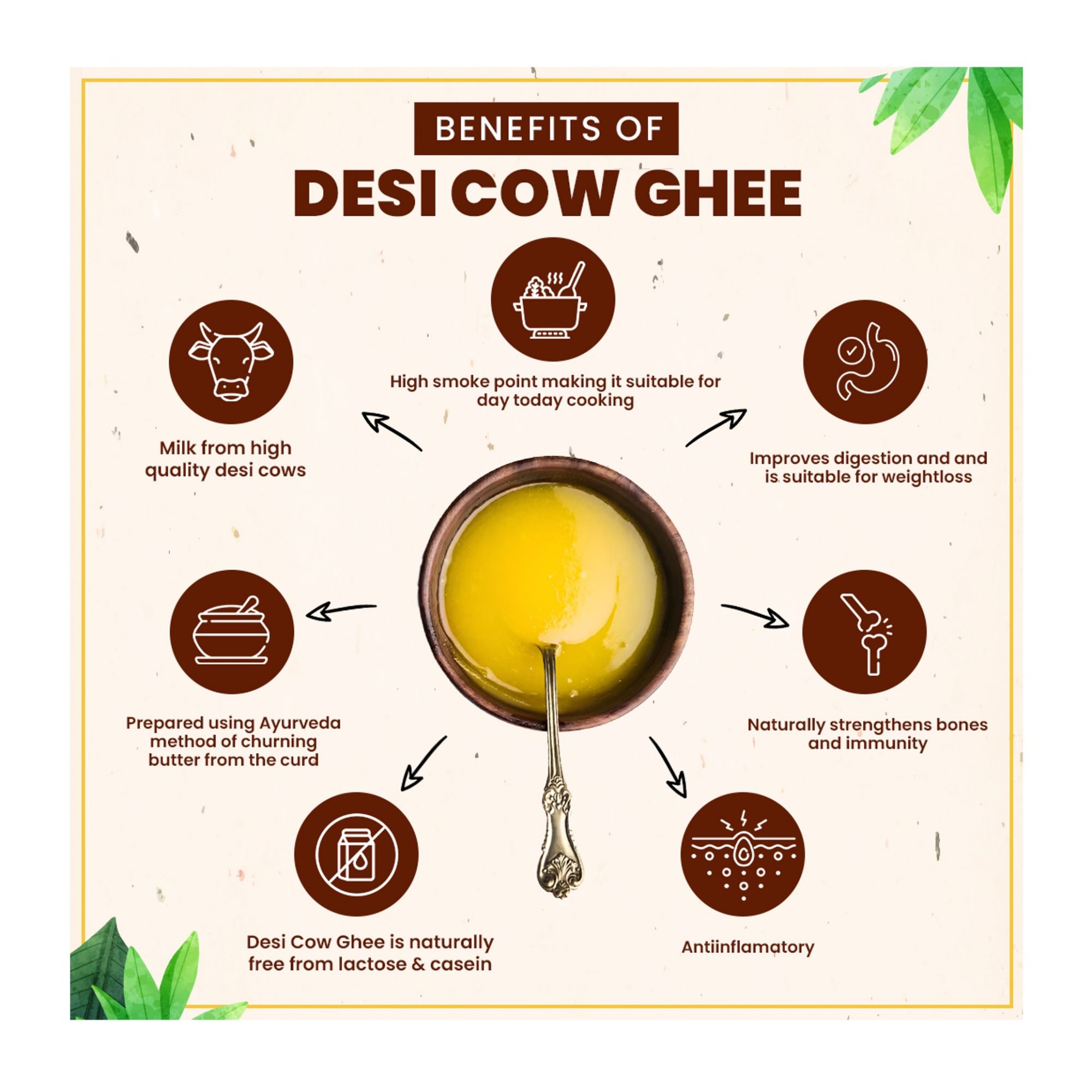
Most commercial ghee is made directly from cream or butter — a faster, simpler process. This ghee is made using the traditional curd-first method long used in Indian kitchens: milk is set into curd, the curd is churned to separate the butter, and that butter is then simmered slowly over low heat. As the ghee cooks, milk solids form and are removed, leaving behind a smooth, golden ghee with a deep, rich aroma. This is a meaningfully more time-intensive process than direct cream-churning, and it's part of why traditionally made ghee carries a more pronounced flavour and aroma than mass-market alternatives.
GRASS-FED DESI COW MILK
This ghee is made exclusively from the milk of grass-fed Desi (indigenous Indian-breed) cows. Desi breeds are generally lower-yield but slower-raised than many high-production Western dairy breeds, and are commonly associated in Ayurvedic tradition with A2 beta-casein milk protein. Grass-fed cattle generally produce milk and resulting fat with a more favourable balance of fatty acids than grain-fed cattle, consistent with general dairy nutrition research.
PURE & UNADULTERATED — ONE INGREDIENT
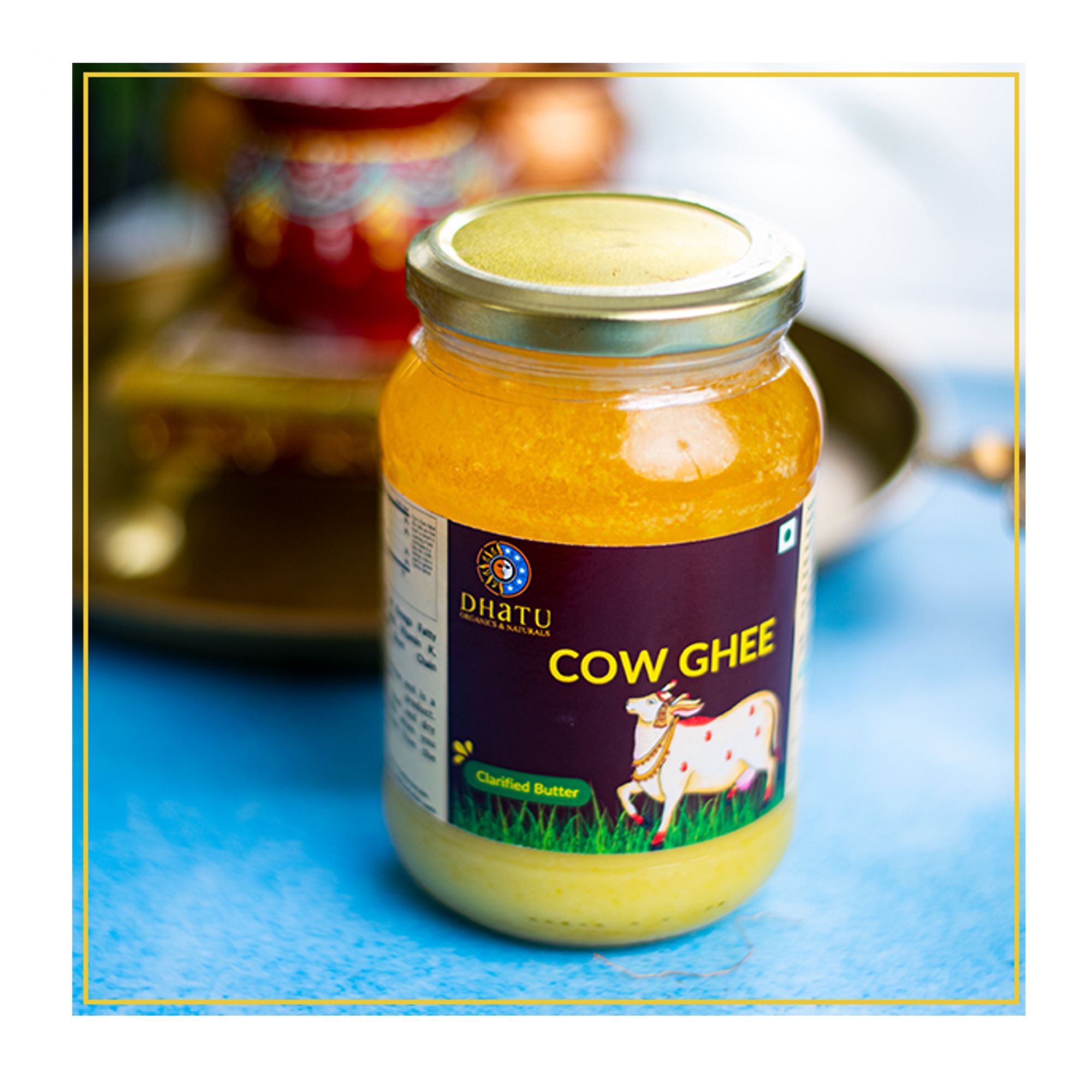
This product is made from grass-fed Desi cow milk ghee infused with turmeric, with no additives, artificial flavourings, or preservatives.
A HIGH SMOKE POINT — GENUINELY VERSATILE FOR COOKING
Ghee has one of the highest smoke points of any common cooking fat — typically well above 200°C, depending on quality and production method — making it stable for sautéing, frying, roasting, and tempering spices without breaking down the way many oils do at high heat. Because the milk solids are removed during production, ghee is also naturally lactose- and casein-reduced compared to butter, which is part of why it's traditionally well tolerated by many people who are sensitive to dairy in its other forms.
FAT-SOLUBLE VITAMINS & BUTYRIC ACID
Ghee naturally contains the fat-soluble vitamins A, D, E, and K, along with butyric acid, a short-chain fatty acid associated with gut and digestive health support in general nutrition research. As with any concentrated fat, ghee is calorie-dense and best enjoyed as part of a balanced overall diet rather than consumed in unlimited quantity — a typical serving size is roughly 1 teaspoon to 1 tablespoon per use.
HOW TO USE
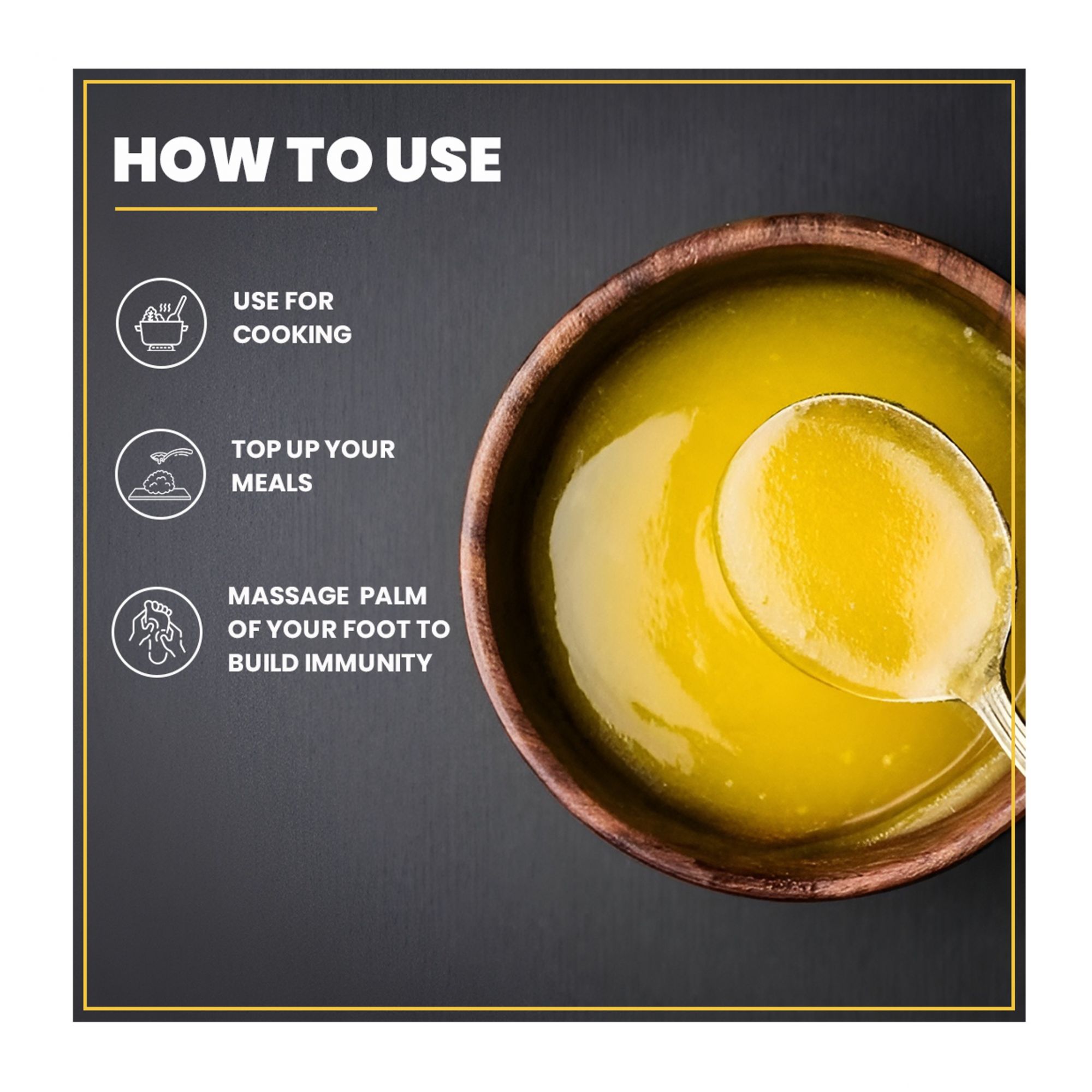
A traditional, versatile cooking fat suited to both everyday and special-occasion cooking.
- Tempering (tadka): heated with whole spices at the start of cooking to release their aroma into a dish — a traditional South Asian technique where ghee's flavour shines.
- Roti and paratha: brushed onto warm flatbreads for richness and flavour.
- Rice and khichdi: stirred through as a finishing touch for added richness.
- Sautéing and frying: a stable, high-smoke-point fat for everyday stovetop cooking.
- Baking: substituted for butter in many recipes, adding a distinct, nutty depth of flavour.
- Warm milk: a traditional spoonful stirred into warm milk, particularly in the evening, as a long-standing household practice.
- Spreading: on warm toast or bread as a traditional butter alternative.
- Daily cooking fat: a general-purpose replacement for butter or refined oils in most stovetop cooking.
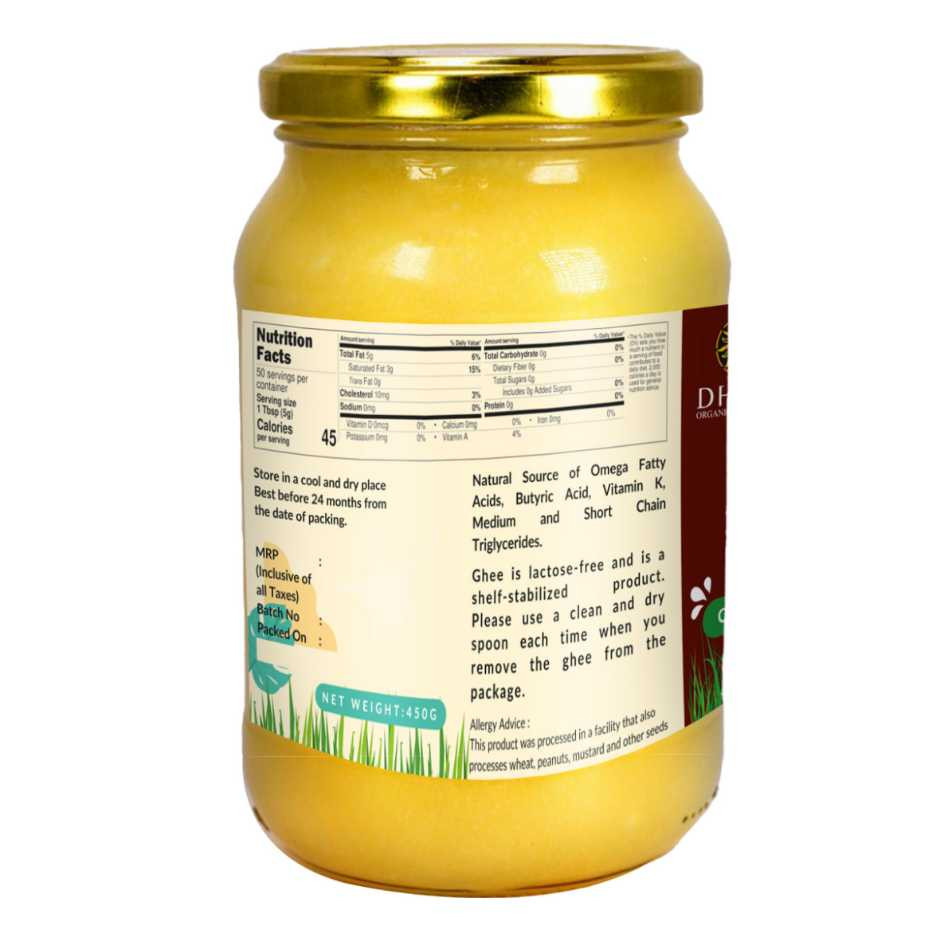
Store in a cool, dry place, away from direct sunlight and moisture. Ghee is naturally shelf-stable at room temperature for extended periods due to the removal of milk solids during production, though refrigeration can extend freshness further. Always use a clean, dry spoon to prevent moisture or contamination from shortening shelf life.
NUTRITION
Basis: Per 1 tbsp (~13g) / Per 100g
| Nutrient | Per 1 tbsp (14g) | Per 100g | % Daily Value* |
|---|---|---|---|
| Energy | 119 kcal / 497 kJ | 900 kcal | 6% |
| Total fat | 13g | 100g | 17% |
| — Saturated fat | 8g | 62g | 42% |
| — Monounsaturated fat (Omega-9) | 3.4g | 26g | — |
| — Polyunsaturated fat (Omega-6) | 0.5g | 4g | — |
| — Total Carbohydrates | 0g | 0g | 0% |
| Total carbohydrates | 0g | 0g | 0% |
| Protein | 0g | 0.3g | 0% |


