
Product description
A WILD SEED FROM THE HILLS OF UTTARAKHAND
Barnyard millet (Echinochloa frumentacea) is technically a wild grass seed rather than a true cereal grain — botanically distinct from wheat and rice, though it functions as a grain substitute in everyday cooking. It is cultivated primarily in the hilly districts of Uttarakhand (Chamoli, Uttarkashi, Pauri, Tehri), where it has been known as Jhangora for generations. One of the world’s fastest-maturing food crops, it produces ripe seeds in approximately 45 days from sowing, which historically made it essential for hill communities during short growing seasons.
THE LOWEST GI OF ANY COMMON MILLET — APPROXIMATELY 41.7
A peer-reviewed study published in the Journal of Food Science and Technology (Ugare et al., 2011) measured barnyard millet’s glycemic index at approximately 41.7 — the lowest of any commonly consumed millet. For context: white rice sits at 72–89, wheat bread at 70–75, foxtail millet at approximately 50, and little millet at approximately 54. A GI below 55 is classified as low; barnyard millet’s figure sits comfortably within the low range, attributed to its high dietary fibre content and high proportion of resistant starch, which together slow carbohydrate digestion and glucose release. This is a general nutritional property of the grain, not specific dietary advice for any health condition.
HIGH FIBRE, HIGH PROTEIN, GOOD MINERAL PROFILE
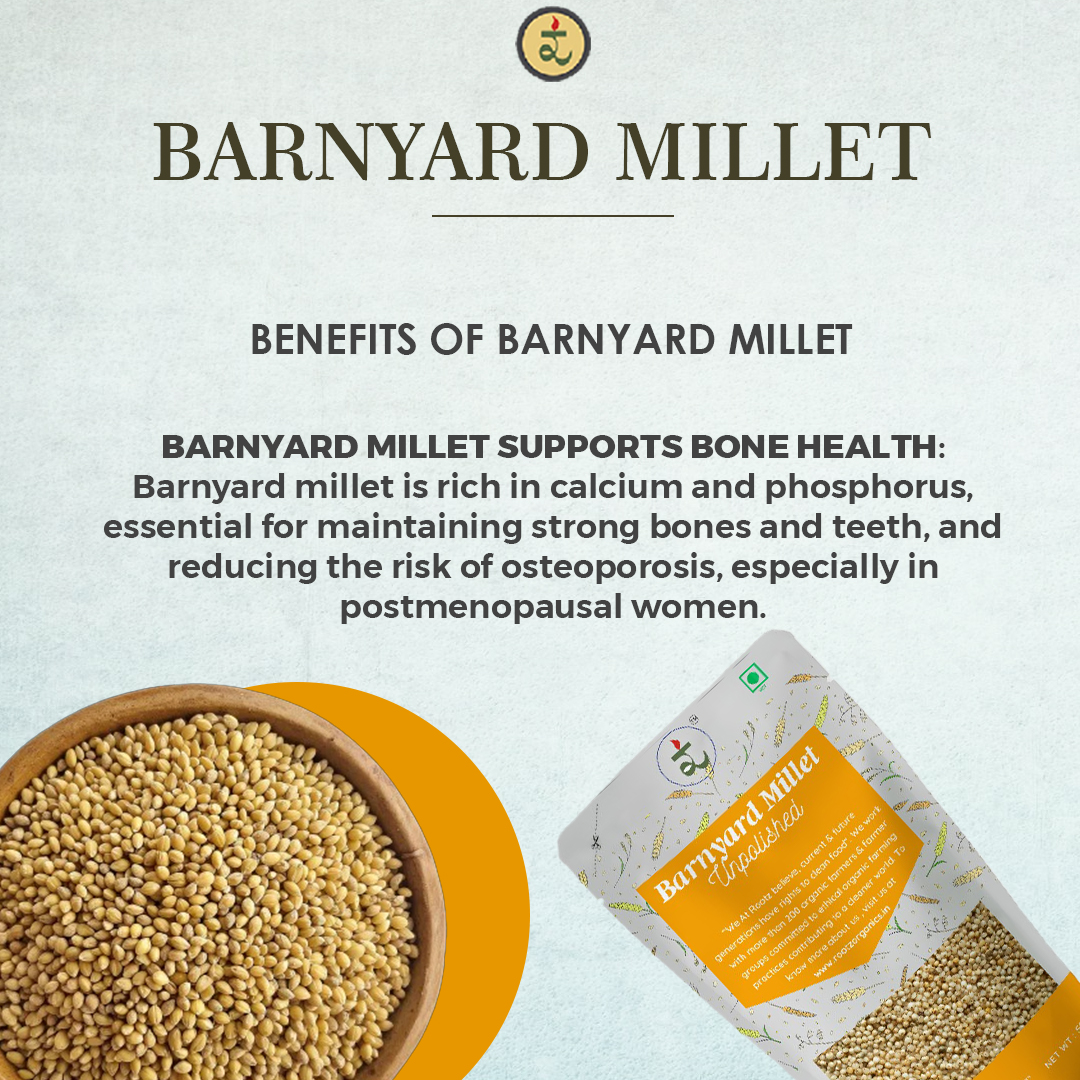
Barnyard millet provides approximately 6–10g dietary fibre per 100g, 12–14g protein, and 3–12mg iron, depending on the specific variety and processing method. Its fibre content is among the highest of the Siridhanya millets; its protein content (12–14g/100g) is the highest of the commonly consumed millets in this range. It also provides calcium (~30–42mg/100g), magnesium, phosphorus (~220–281mg/100g), and zinc.
WHAT IT LOOKS LIKE AND HOW IT COOKS
Barnyard millet grain is tiny, white, and round — larger than semolina (rawa) and smaller than sago (sabudana). When cooked, it does not separate into individual grains the way long-grain rice does; instead it cooks to a soft, slightly sticky consistency similar to broken rice (hence the traditional name “Sanwa Rice” or “Sawa Rice”). This texture makes it particularly well-suited to khichdi and porridge preparations.
FASTING GRAIN: SANWA/JHANGORA FOR NAVRATRI AND EKADASHI
Barnyard Millet is widely recognized as a fasting-friendly grain in certain dietary traditions where wheat, regular rice, and similar grains are typically avoided. In these contexts, it is often used as a light and easily digestible alternative in simple, minimal-ingredient meals. Common preparations include khichdi-style dishes, light pilafs, and soft porridges, typically cooked with mild seasonings and wholesome fats for easy digestion. Its naturally gluten-free composition, quick cooking time, and gentle impact on digestion make it a preferred choice for clean, simplified eating routines. Please note that fasting practices and permitted foods may vary based on individual preferences, cultural contexts, and personal interpretations. This is shared as a general reference based on widely known traditional usage.
HOW TO COOK BARNYARD MILLET
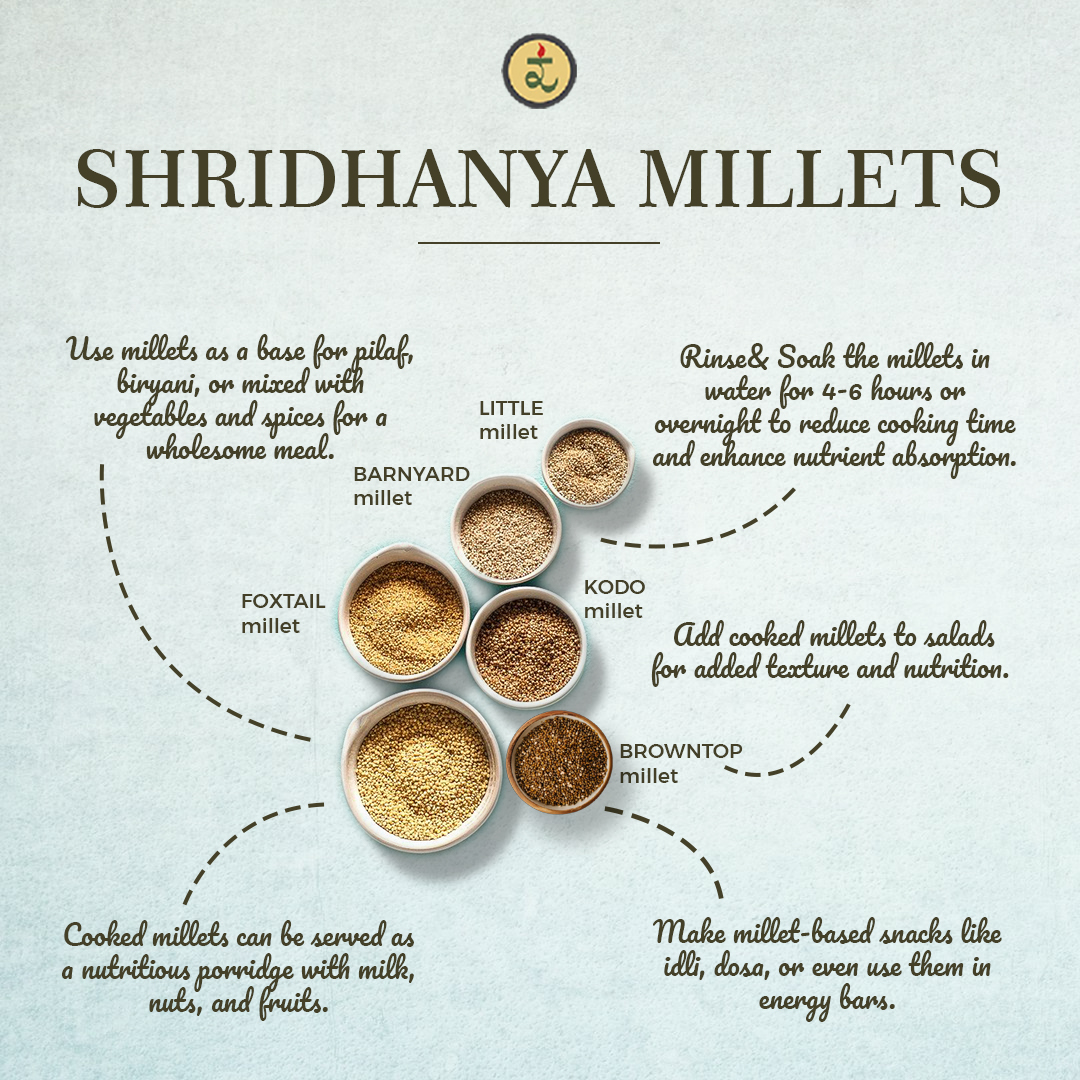
Barnyard Millet is quick to prepare and naturally easy to digest, making it a convenient alternative to rice for everyday meals. It cooks in 15–20 minutes and develops a soft, slightly sticky texture—similar to broken rice.
Basic Cooking Method*
- Rinse thoroughly under running water.
- No soaking required.
- Cook using a 1:2.5 ratio (1 cup millet to 2.5 cups water).
- Simmer for 15–20 minutes until soft and fully cooked.
- Note: The grains remain soft and lightly sticky rather than separate—this is its natural texture.
Ways to Use Barnyard Millet
- Simple Grain Base:* Serve as a light alternative to rice with curries, vegetables, or protein-based dishes.
- Vegetable Pilaf:* Cook with vegetables, herbs, and whole spices for a balanced one-pot meal.
- Porridge / Bowl:* Use a 1:3.5 ratio for a softer, porridge-like consistency—ideal for breakfast or light meals.
- Savory Breakfast:* Lightly roast before cooking and prepare with vegetables and mild spices.
- Comfort Meals:* Cook soft with minimal seasoning for easy-to-digest, clean eating options.
- Flour Applications:* Can be milled into flour and used for flatbreads, pancakes, or fermented batters.
Naturally gluten-free and quick to cook, Barnyard Millet fits seamlessly into modern UAE kitchens—perfect for light meals, meal prep, and balanced nutrition.
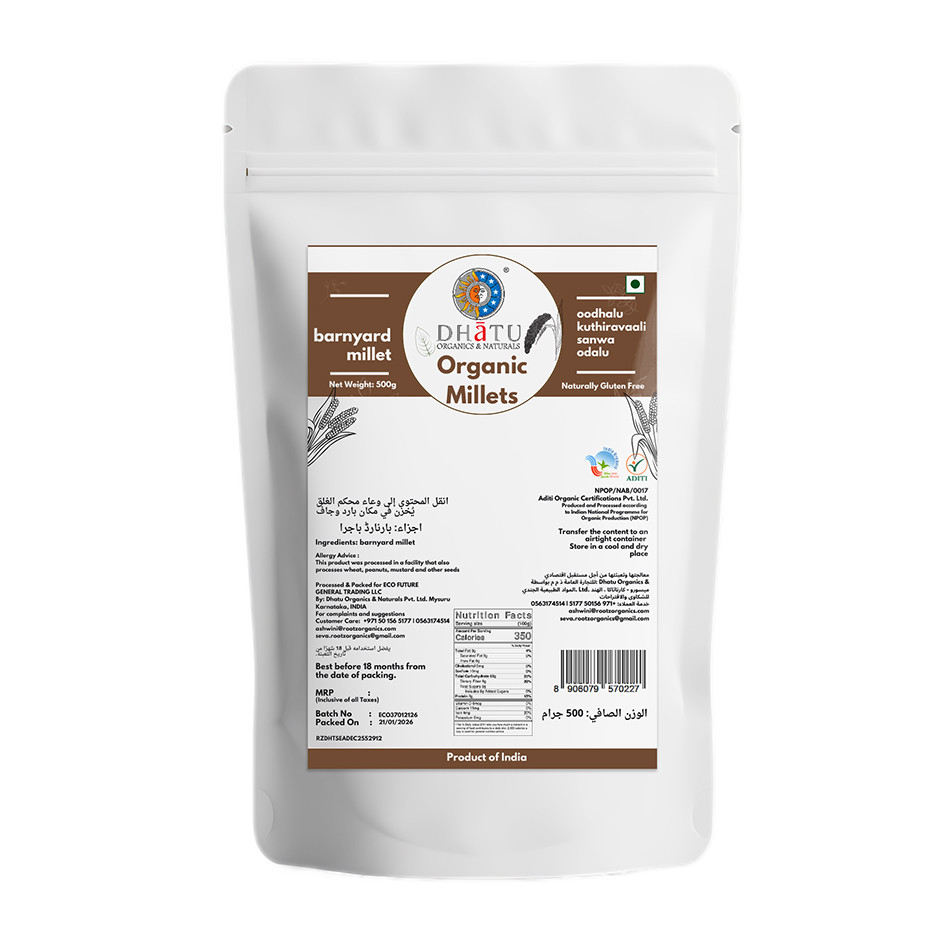
Nutrition Table
Basis: Per 100g dry weight — values from peer-reviewed research on Echinochloa frumentacea (barnyard millet)
| Nutrient | Per Serving | Per 100g/ml | % DV* |
| Energy | — | ~342–398 kcal (varies by variety) | 18% |
| Total fat | — | ~3.6–5.7g | 6% |
| Total carbohydrates | — | ~51–68g | 21% |
| — Dietary fibre | — | ~6–10g (among highest of Siridhanya millets) | — |
| — Resistant starch | — | High — contributes to low-GI response | — |
| Protein | — | ~10.5–14g (highest of common millets) | 22% |
| Iron | — | ~3–12mg (varies by variety and processing) | — |
| Calcium | — | ~19–42mg | 3% |
| Magnesium | — | ~83–135mg | 25% |
| Phosphorus | — | ~220–281mg | 19% |
| Zinc | — | ~2–6mg | 23% |
| Glycemic Index | — | ~41.7 (peer-reviewed, Ugare et al. 2011) — lowest of common millets | — |
Reviews
Login
Don't have an account?
Sign UpBarnyard millet (Echinochloa frumentacea) is a wild grass seed cultivated across the hilly regions of Uttarakhand and parts of South India. It’s called “Sanwa Rice” (or Sawa Rice) because when cooked, it has a texture similar to broken rice — soft, slightly sticky, rather than separate grains. It goes by many regional names: Sanwa or Swank in North India, Jhangora in Uttarakhand, Kuthiraivali in Tamil Nadu, Oodalu in Karnataka, and Udalu in Telugu-speaking regions.
A glycemic index of approximately 41.7 has been confirmed in a peer-reviewed study (Ugare et al., 2011, Journal of Food Science and Technology). Barnyard millet’s particularly low GI is attributed to its high dietary fibre content (6–10g/100g) and a notably high proportion of resistant starch — starch that resists digestion in the small intestine and is instead fermented in the large intestine, bypassing the normal glucose spike. This makes barnyard millet one of the most slowly digested grains available.
Barnyard Millet, often referred to as “Sanwa” or “Jhangora” in retail contexts, is widely used as a fasting-friendly grain in certain dietary practices where wheat and regular rice are typically avoided.
It is commonly prepared as light, simple meals such as soft grain bowls, pilaf-style dishes, or porridge, valued for its easy digestibility and gentle texture.
Fasting guidelines and permitted foods can vary based on individual preferences, cultural practices, and personal interpretations. This information is shared as a general reference based on widely recognised traditional usage.Barnyard Millet, often referred to as “Sanwa” or “Jhangora” in retail contexts, is widely used as a fasting-friendly grain in certain dietary practices where wheat and regular rice are typically avoided.
It is commonly prepared as light, simple meals such as soft grain bowls, pilaf-style dishes, or porridge, valued for its easy digestibility and gentle texture.
Fasting guidelines and permitted foods can vary based on individual preferences, cultural practices, and personal interpretations. This information is shared as a general reference based on widely recognised traditional usage.