
Product description
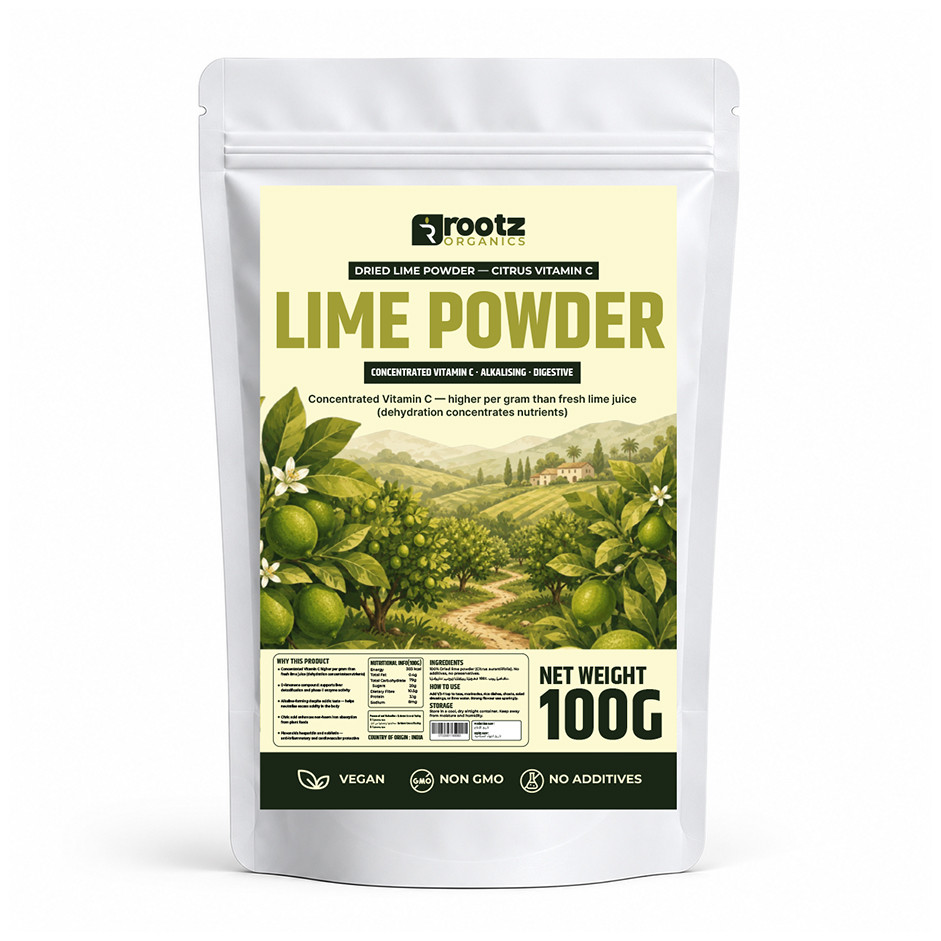
WHY DRIED LIME POWDER HAS MORE VITAMIN C THAN FRESH
Dehydration concentrates nutrients — removing water weight while retaining most water-soluble vitamins. Lime juice is approximately 88% water. Removing that water concentrates the Vitamin C content per gram of dry weight significantly above fresh juice levels.
D-LIMONENE:
The primary compound in lime essential oil — concentrated in the peel. Studied for:
- Phase II liver detoxification enzyme activation (cytochrome P450)
- Digestive health (gastro-oesophageal reflux reduction in studies)
- Anti-tumour activity in cell line studies
- Cholesterol-lowering in animal models
ALKALINE-FORMING:
Despite their acidic taste (pH ~2), citrus fruits metabolise to alkaline ash in the body. Their mineral content (potassium, magnesium, calcium) produces an alkaline metabolic byproduct, which can help buffer excess dietary acidity.
CITRIC ACID:
Enhances non-haem iron absorption from plant foods — the mechanism behind the traditional food pairing of lemon/lime with iron-rich legumes and greens.
FLAVONOIDS (hesperidin, nobiletin):
Studied for anti-inflammatory, cholesterol-lowering, and cardiovascular-protective effects.
HOW TO USE:
- Gulf cooking (loomi): this is the same dried lime used across the Gulf — stir into machboos, kabsa, saloona/salona stews and lentil shorba for a signature tangy depth
- Levantine & international: brighten marinades, salad dressings, grain bowls and grilled fish
- South Asian: chaats, rice dishes and lime water
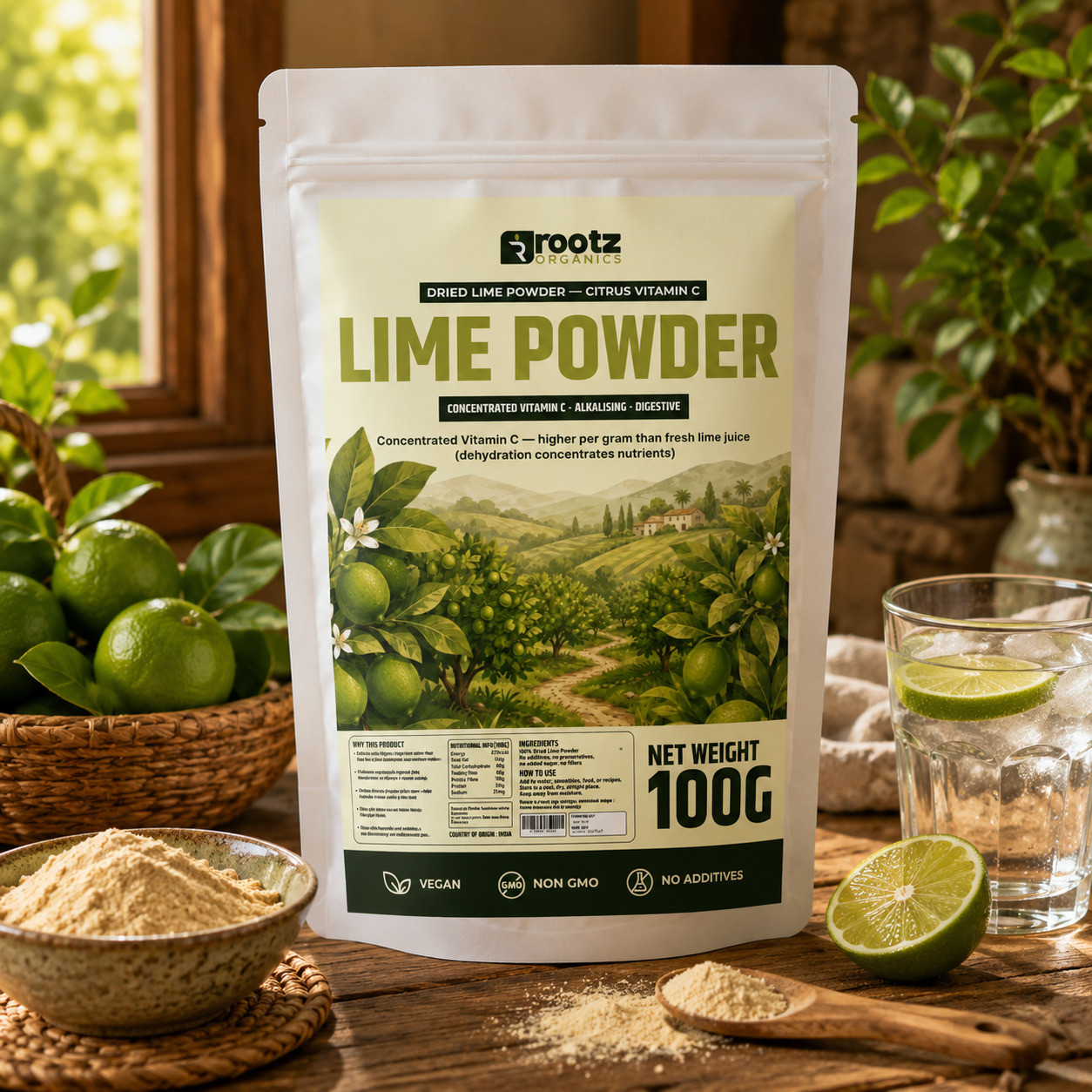
- Drinks: ½–1 tsp in still or sparkling water for instant lime water
- Strong flavour — start with ½ tsp
STORAGE
Cool, dry, airtight container. Away from moisture. Hygroscopic.
INGREDIENTS
100% Dried lime powder (Citrus aurantiifolia). No additives.
Reviews
Login
Don't have an account?
Sign UpLime powder is dehydrated fresh lime — the moisture is removed, concentrating Vitamin C, citric acid, and flavonoids per gram. The flavour is more concentrated, so much less is needed (½ tsp vs the juice of a whole lime). All the same compounds are present — citric acid, Vitamin C, D-limonene, hesperidin — just more concentrated.Lime powder is dehydrated fresh lime — the moisture is removed, concentrating Vitamin C, citric acid, and flavonoids per gram. The flavour is more concentrated, so much less is needed (½ tsp vs the juice of a whole lime). All the same compounds are present — citric acid, Vitamin C, D-limonene, hesperidin — just more concentrated.
Very similar. Loomi (also called noomi basra, dried Persian lime) is a Gulf culinary ingredient — whole dried limes ground to powder. The same dehydration process and the same lime species (Citrus aurantiifolia). Lime powder is a finer grind. Both deliver the same sour, citrusy, slightly floral character to dishes.Very similar. Loomi (also called noomi basra, dried Persian lime) is a Gulf culinary ingredient — whole dried limes ground to powder. The same dehydration process and the same lime species (Citrus aurantiifolia). Lime powder is a finer grind. Both deliver the same sour, citrusy, slightly floral character to dishes.
For cooking and marinating, yes — ½ tsp lime powder approximates the flavour of 1 tbsp fresh lime juice. For fresh finishing (salad dressing, ceviche), the texture and volatile freshness of fresh lime juice is superior. Lime powder excels in dry rubs, spice blends, teas, and dishes where you want the flavour without added moisture.For cooking and marinating, yes — ½ tsp lime powder approximates the flavour of 1 tbsp fresh lime juice. For fresh finishing (salad dressing, ceviche), the texture and volatile freshness of fresh lime juice is superior. Lime powder excels in dry rubs, spice blends, teas, and dishes where you want the flavour without added moisture.