
Product description
WHY ORANGE PEEL IS MORE NUTRITIOUS THAN ORANGE FLESH
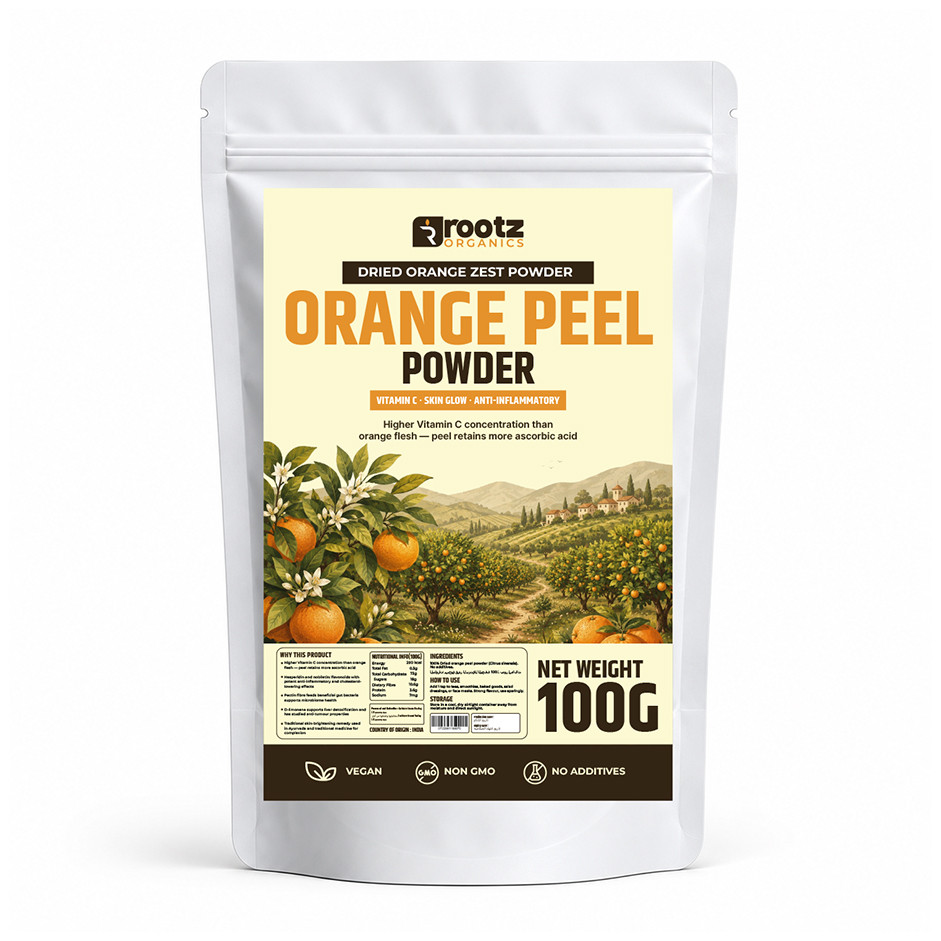
The peel (zest) of the orange contains:
- 5–10x higher Vitamin C concentration than the juice
- Significantly more hesperidin and nobiletin (flavonoids) than the juice
- Higher pectin (soluble prebiotic fibre) concentration
- D-limonene (the primary essential oil compound — essentially absent in juice)
- Concentrated polyphenols and antioxidants
Why? The peel is the orange's protective barrier — it concentrates bioactive compounds that protect the fruit from UV, pests, and oxidative damage. These are the same compounds that benefit human health.
HESPERIDIN:
The primary flavonoid in orange peel. Multiple clinical studies show hesperidin:
- Reduces LDL cholesterol by 7–10%
- Improves blood vessel endothelial function
- Anti-inflammatory: reduces IL-6 and TNF-alpha markers
- Antioedema: reduces capillary permeability (reduces leg swelling)
D-LIMONENE:
Aromatic terpene in the essential oil. Studied for:
- Phase II liver detoxification enzyme (glutathione S-transferase) activation
- Gastric acid neutralisation (may reduce GERD symptoms)
- Anti-tumour activity in multiple cell line and animal studies
PECTIN FIBRE:
Primary soluble fibre in orange peel. Prebiotic — feeds beneficial gut bacteria. Also forms a gel that slows glucose absorption.
SKIN HEALTH:
Vitamin C is required for collagen synthesis. Hesperidin and polyphenols reduce skin inflammation. Traditional Ayurvedic and Arab beauty use of orange peel powder for complexion brightening has this nutritional basis.
HOW TO USE:
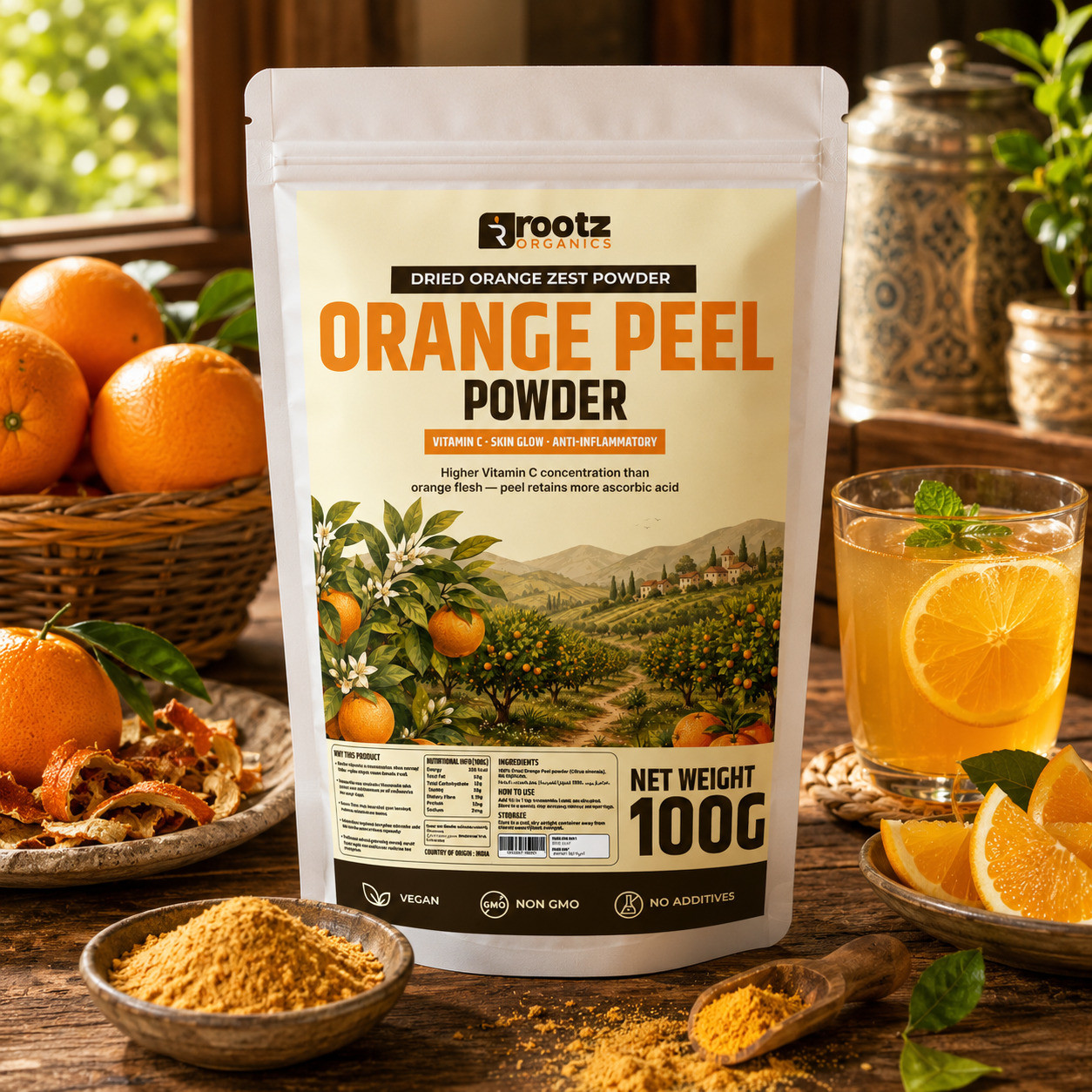
- Arabic & Gulf baking: fold into semolina cakes, maamoul, basbousa and orange-blossom-style desserts
- International baking: cake batter, muffins and bread for natural orange flavour
- Drinks: 1 tsp in teas, smoothies or warm water
- Beauty: face mask — mix 1 tsp with honey and yoghurt/curd, leave 10 minutes, rinse
- Strong flavour — start with ½ tsp
STORAGE
Cool, dry, airtight container. Away from moisture and sunlight.
INGREDIENTS
100% Dried orange peel powder (Citrus sinensis). No additives.
Reviews
Login
Don't have an account?
Sign UpThe peel is the orange's protective outer layer — it concentrates bioactive compounds for UV protection and antioxidant defence. Per gram, dried orange peel contains approximately 5–10x the Vitamin C concentration of the juice, plus significantly more hesperidin (the primary cardiovascular flavonoid) and D-limonene (liver detox).The peel is the orange's protective outer layer — it concentrates bioactive compounds for UV protection and antioxidant defence. Per gram, dried orange peel contains approximately 5–10x the Vitamin C concentration of the juice, plus significantly more hesperidin (the primary cardiovascular flavonoid) and D-limonene (liver detox).
Yes — this is traditional Ayurvedic and Arab beauty use. Orange peel's Vitamin C supports collagen synthesis. Hesperidin and polyphenols reduce skin inflammation. D-limonene has mild exfoliating properties. Mix 1 tsp with honey and A2 curd for a face mask. Apply for 10 minutes, rinse with cool water. Start twice weekly.Yes — this is traditional Ayurvedic and Arab beauty use. Orange peel's Vitamin C supports collagen synthesis. Hesperidin and polyphenols reduce skin inflammation. D-limonene has mild exfoliating properties. Mix 1 tsp with honey and A2 curd for a face mask. Apply for 10 minutes, rinse with cool water. Start twice weekly.
Yes — orange peel powder is dried, ground orange zest. Fresh orange zest used in baking is the same material — just dried and finely milled. 1 tsp orange peel powder approximately equals the zest of ½ to 1 fresh orange in a recipe. The flavour is more concentrated in the powder form due to dehydration.Yes — orange peel powder is dried, ground orange zest. Fresh orange zest used in baking is the same material — just dried and finely milled. 1 tsp orange peel powder approximately equals the zest of ½ to 1 fresh orange in a recipe. The flavour is more concentrated in the powder form due to dehydration.