
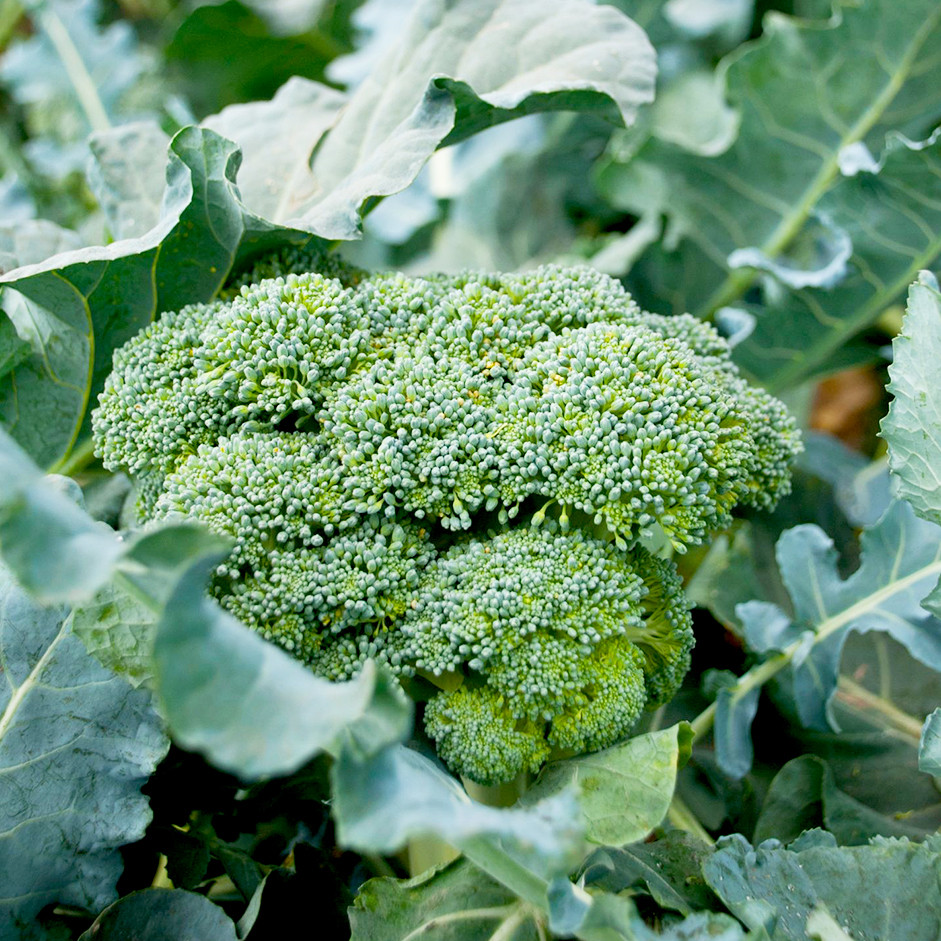
Product description
WHY BROCCOLI DESERVES MORE THAN A SIDE-DISH REPUTATION
Broccoli (Brassica oleracea var. italica) is a member of the Brassicaceae family — the cruciferous vegetables that also include cabbage, kale, cauliflower, and Brussels sprouts. It is the most nutritionally dense of the group per calorie, and one of the most researched vegetables in human nutrition science. The reason for scientific interest is specific: sulforaphane.
SULFORAPHANE — THE COMPOUND THAT CHANGED NUTRITION SCIENCE
When broccoli is chopped, chewed, or crushed, the cell walls break down and two previously separate compounds — glucoraphanin and the enzyme myrosinase — come into contact. The reaction produces sulforaphane (isothiocyanate). This is not a vitamin or mineral. It is a phytochemical with a mechanism unlike any other plant compound studied in human nutrition.
Sulforaphane activates the Nrf2 pathway — a master switch in the cell's nucleus that upregulates hundreds of detoxification and antioxidant genes simultaneously. In practical terms, this means:
Cancer prevention: sulforaphane inhibits cancer cell proliferation across multiple cancer types in laboratory and epidemiological studies. Over 1,000 published studies. The strongest evidence is for bladder, prostate, breast, and colon cancers. The mechanism is not antioxidant quenching (as with Vitamin C) — it is the activation of the cell's own defence systems, making it more powerful and more lasting.
Liver detoxification: Nrf2 activation increases the production of Phase II detoxification enzymes in the liver — the enzymes responsible for processing and eliminating carcinogens, heavy metals, and other environmental toxins. This is why broccoli is categorised as a liver-supportive food independently of its vitamin content.
Anti-inflammatory: sulforaphane inhibits NF-κB signalling — one of the primary molecular switches for systemic inflammation. Chronic low-grade inflammation is the foundation of most metabolic diseases: Type 2 diabetes, cardiovascular disease, non-alcoholic fatty liver disease, and cancer.
Blood sugar regulation: multiple clinical studies show sulforaphane supplementation reduces fasting blood glucose and HbA1c in obese Type 2 diabetic patients, with improvements comparable to metformin at lower doses.
Neuroprotective: crosses the blood-brain barrier. Associated in studies with reduced risk of neurodegenerative conditions. Studied in clinical trials for autism spectrum disorders (ASD) — showing significant improvement in social interaction and behavioural measures in a randomised controlled trial.
HOW TO MAXIMISE SULFORAPHANE
Chop or crush broccoli and wait 40 minutes before cooking. The myrosinase-glucoraphanin reaction that produces sulforaphane takes time. Chopping first, then waiting before applying heat, increases sulforaphane yield by approximately 2.5x compared to cutting and immediately cooking.
Steam — do not boil. Boiling for more than 3–4 minutes reduces sulforaphane content by over 50% because myrosinase is destroyed by heat before the reaction is complete. Steaming at lower temperatures for 3–4 minutes preserves the enzyme and the reaction.
Add mustard seeds or mustard powder. Mustard seeds contain myrosinase. Adding a pinch of mustard seed powder to boiled or microwaved broccoli partially restores sulforaphane formation from the glucoraphanin that survives cooking.
Raw is highest. Raw broccoli (in salads, with dips, in slaws) preserves the most sulforaphane of any preparation. The florets are edible and nutritious raw.
THE VITAMINS — BEYOND SULFORAPHANE
Broccoli's vitamin profile is exceptional even before sulforaphane is considered:
Vitamin C (89mg per 100g raw — 99% DV): one of the highest Vitamin C concentrations of any common vegetable. Vitamin C is required for collagen synthesis (skin, joint, vessel integrity), immune function, iron absorption from plant foods, and antioxidant recycling. Broccoli is a reliable, affordable source in the UAE diet where citrus is often relied on exclusively.
Vitamin K (102mcg per 100g raw — 85% DV): the highest Vitamin K vegetable available at this price point. Vitamin K is required for coagulation factor synthesis, bone mineralisation (works synergistically with Vitamin D and calcium), and prevention of arterial calcification. Many UAE residents are subclinically Vitamin K deficient.
Folate / Vitamin B9 (63mcg per 100g — 16% DV): essential for DNA synthesis and repair, cell division, and pregnancy health. Critical in the periconceptional period for neural tube defect prevention.
Vitamin B6 (0.175mg per 100g — 10% DV): required for amino acid metabolism, serotonin and dopamine synthesis, and immune function.
Vitamin E (0.78mg per 100g — 5% DV): fat-soluble antioxidant protecting cell membranes.
FIBRE AND GUT HEALTH
2.6g dietary fibre per 100g — both soluble (feeds gut bacteria) and insoluble (bowel motility). Broccoli contains sulforaphane-glucosinolates that also modulate the gut microbiome independently of their anticancer effects. Regular cruciferous vegetable consumption is associated with increased Lactobacillus and Bifidobacterium populations.
HOW TO COOK BROCCOLI
Method 1 — Maximum Sulforaphane (recommended):
Chop broccoli into small florets. Wait 40 minutes. Steam 3–4 minutes until bright green but still firm. Do not overcook — sulforaphane formation and preservation require this timing.
Method 2 — Roasted:
Toss florets with a small amount of cold-pressed olive oil, salt, and garlic powder. Roast at 220°C for 15–18 minutes until edges char lightly. The caramelisation adds flavour complexity. Vitamin C reduces but sulforaphane formed before roasting is preserved.
Method 3 — Stir-fry (UAE kitchen standard):
Heat oil or A2 ghee in a wok. Add garlic and ginger. Add broccoli florets. High heat, 3–4 minutes maximum, constant movement. Finish with soy or oyster sauce. The brief high-heat exposure limits sulforaphane loss vs slow boiling.
Method 4 — Raw (maximum nutrition):
Break into small florets. Serve with hummus, labneh, or a tahini-lemon dip. Excellent in salads with lemon, olive oil, pine seeds, and pomegranate. All sulforaphane potential preserved.
The stalk is edible. Peel the tough outer layer of the stalk and slice the inner core — it has the same nutrition as the florets and a pleasant, mild crunch when raw or lightly cooked.
STORAGE
Refrigerate immediately on arrival. Store in the vegetable drawer, loose or wrapped loosely in a damp paper towel. Do not seal airtight — broccoli needs to breathe. Consume within 3–5 days of delivery for maximum sulforaphane potential and vitamin C content. Broccoli that is yellowing has lost much of its sulforaphane content.
Freezing: blanch for 2 minutes in boiling water, shock in ice water, dry thoroughly, and freeze in a single layer before transferring to a bag. Frozen blanched broccoli retains significant nutritional value and keeps for 6–8 months.


