
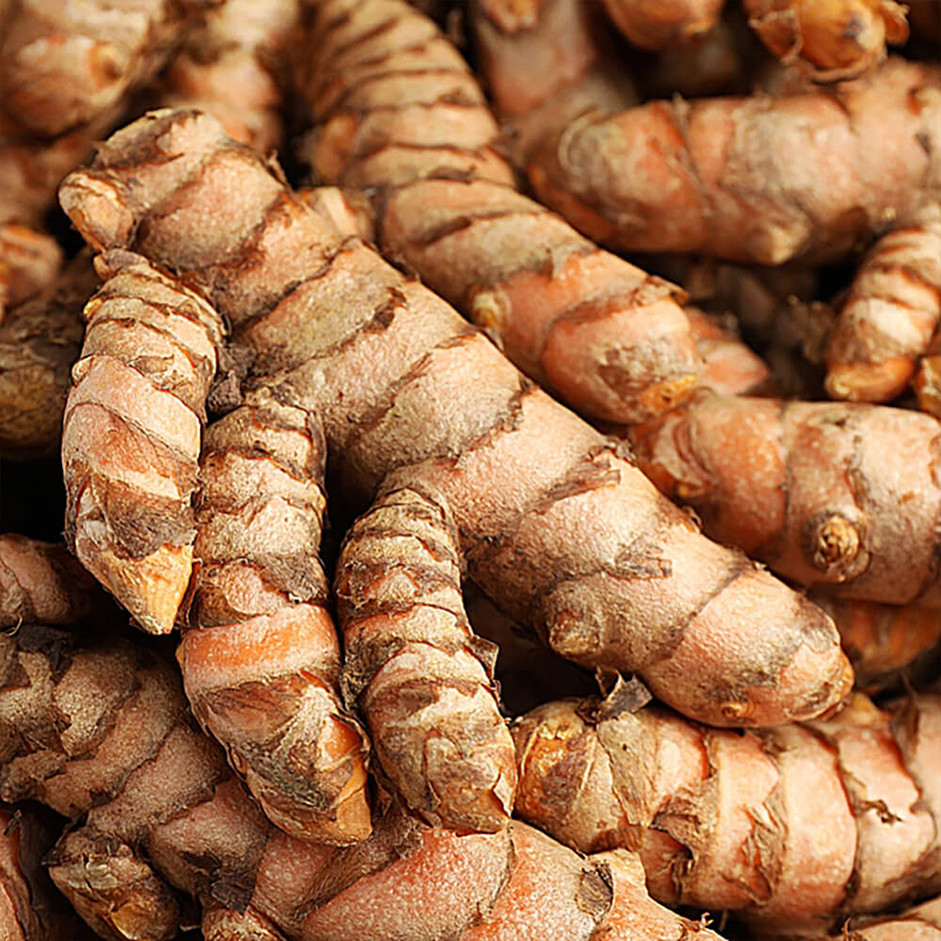
Product description
Long before turmeric became a global wellness trend, raw turmeric root (Curcuma longa) was a daily staple in Indian, South Asian, and Middle Eastern kitchens—used for immunity, digestion, healing, and recovery. Today, modern research (10,000+ studies on curcumin) confirms what traditional medicine always knew: turmeric supports inflammation control, liver function, joint health, gut health, and antioxidant defense.
WHY RAW TURMERIC ROOT IS BETTER THAN POWDER
- Higher potency: Fresh root retains turmerone oils lost during drying
- Better absorption: Natural oils + curcumin work synergistically
- Functionally superior for health (not just color/flavor)
For best results: combine with black pepper + healthy fat
KEY HEALTH BENEFITS OF CURCUMIN
- Anti-inflammatory: Targets NF-κB & COX-2 pathways (joint pain, recovery)
- Liver detox support: Enhances natural detox processes
- Gut health: Supports microbiome & reduces inflammation
- Brain function: Neuroprotective, crosses blood-brain barrier
- Antioxidant boost: Supports glutathione production
- Immune balance: Regulates—not overstimulates—immune response
HOW TO USE RAW TURMERIC DAILY
1. Golden Milk (Haldi Doodh)
Grate fresh turmeric into warm A2 milk + black pepper + honey
Best for immunity, sleep, recovery
2. Morning Wellness Shot
Turmeric + ginger + lemon + pepper
Daily anti-inflammatory boost
3. Cooking
Add to dal, curries, rice, stir-fries
Better flavor + higher nutrient density
4. Turmeric Ginger Tea
Simmer fresh root → strain → add lemon & honey
Digestive + anti-inflammatory
Nutrition
Servings per 100g
| Nutrient | Value | % Daily Value |
|---|---|---|
| Energy | 85 kcal | 0% |
| Saturated Fat | 0.5 g | 0% |
| Protein | 2 g | 0% |
| Iron | 3.4 mg | 1% |
| Total Carbohydrate | 17 g | 0% |
| Dietary Fiber | 2 g | 0% |
| Vitamin C | 10 mg | 1% |
| Potassium | 630 mg | 1% |
| Curcumin (active compound) † | ~600 mg (2–5%) | — |
STORAGE (UAE CONDITIONS)
- Room temp (cool, dark): 2–3 weeks
- Refrigerated (cut): 5–7 days
- Frozen: Long-term storage without nutrient loss
Reviews
Login
Don't have an account?
Sign UpRaw turmeric root contains curcumin alongside the root's natural volatile oils — particularly turmerone — which significantly enhance curcumin absorption in the digestive system. The drying and milling process that produces turmeric powder removes much of these oils, reducing bioavailability. Studies show that curcumin from whole turmeric (including its natural oils) is better absorbed than isolated curcumin or dried powder preparations at equivalent doses.
Raw turmeric also has a more complex, mildly peppery-floral flavour profile compared to the more concentrated, slightly bitter and earthy taste of dried powder. For golden milk, wellness shots, and fresh culinary use, raw root is the superior form. Dried powder remains useful for spice blends, long-cooked curries, and convenience applications. For maximum health benefit, raw root consumed with black pepper and a fat source (A2 ghee or full-fat milk) is the most effective preparation.
The classic preparation — haldi doodh — is simple: grate 1 inch (approx. 5g) of fresh turmeric into 250ml of warm A2 milk. Add a pinch of freshly cracked black pepper (essential — piperine in black pepper increases curcumin absorption by up to 2,000%), a pinch of cinnamon, and a teaspoon of raw honey. Whisk and drink warm, ideally before bed. This is a ritual with over 3,000 years of Ayurvedic practice and a growing body of modern research behind it. For a morning wellness shot: blend 1 inch each of fresh turmeric and ginger with the juice of half a lemon, a pinch of black pepper, and 100ml of water. Strain. Drink 30ml. Takes 5 minutes and delivers curcumin, gingerols, and Vitamin C in one preparation. In cooking: grate or slice directly into curries, dal, rice, soups, or stir-fries at the start of cooking. Replaces or augments dried turmeric powder. In pickling: slice thin rounds, toss with lime juice, salt, and green chilli. Rest overnight. Eat with rice or paratha as a traditional South Indian digestive side.
Yes . This is one of the most important and well-evidenced food pairings in nutritional science. Curcumin on its own is rapidly metabolised by the liver and intestinal wall before it can reach the bloodstream in meaningful concentrations. Piperine the active compound in black pepper inhibits this rapid metabolism by blocking the CYP3A4 enzyme pathway, allowing curcumin to remain in the body long enough to exert its anti-inflammatory effects. A landmark 1998 study by Shoba et al. (published in Planta Medica) demonstrated that adding piperine to curcumin increased its bioavailability by 2,000% in human subjects. Even a small pinch of freshly cracked black pepper in your golden milk or wellness shot makes a dramatic difference to the amount of curcumin your body actually uses. This is also why fat-soluble curcumin benefits from being consumed with a fat source (A2 ghee, coconut oil, or full-fat milk) fat further extends its time in the digestive system.
Unpeeled, unwashed raw turmeric root keeps for 2–3 weeks in a cool, dark, dry place at room temperature (a kitchen drawer or cupboard away from direct sunlight). Do not refrigerate uncut turmeric — cold and moisture accelerate decay. Once cut or peeled: wrap tightly in a paper towel or beeswax cloth and refrigerate. Use within 5–7 days. For longer storage: peel, grate or slice, and freeze in small portions in a sealed bag. Frozen raw turmeric retains its curcumin content well and can be used directly from frozen in cooking, golden milk, or smoothies without thawing. Staining warning: raw turmeric stains intensely and permanently — cutting boards, fabric, grout, nail beds, and plastic surfaces will discolour on contact. Use a dedicated cutting board and consider wearing gloves when grating or cutting. Surfaces can be cleaned with a dilute bleach solution or lemon juice immediately after contact.


