
Product description
Cut a tamarillo in half and you will immediately understand why it is sometimes called the most beautiful fruit in the world.
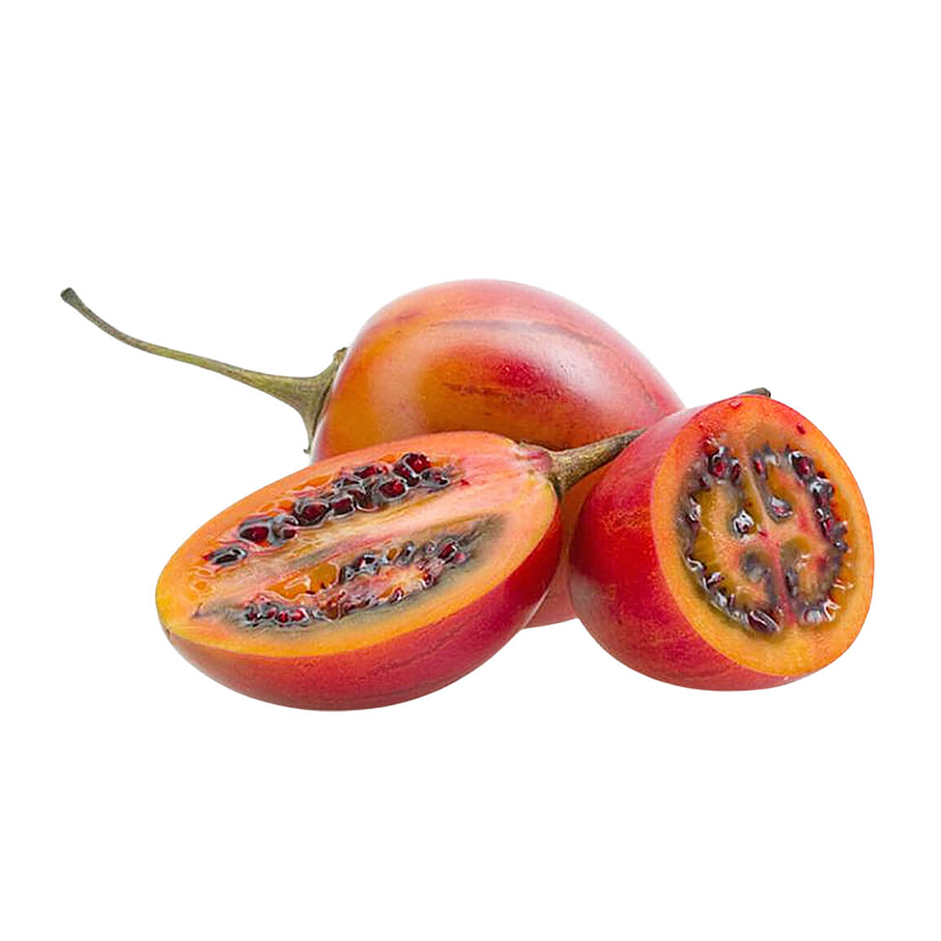
The flesh is deep red-purple — the colour of port wine or garnet — arranged in concentric rings around a central cavity of dark, jelly-encased seeds. It looks like a cross-section of a blood orange if a blood orange had decided to take itself much more seriously. The smell is intensely aromatic: tart, floral, and complex in a way that no common supermarket fruit approaches.
Then you taste it. And it tastes like nothing else.
WHAT TAMARILLO TASTES LIKE
The closest description: blood orange meets passion fruit, with a savoury depth borrowed from the tomato — to which it is botanically related (both are Solanaceae, the nightshade family). The tartness is pronounced and clean. The sweetness emerges underneath it, building as the fruit warms in your mouth. The seeds are edible and add a slight crunch and additional flavour. The skin is bitter and not typically eaten — but scoop out everything inside and you have one of the most complex, satisfying mouthfuls available from a single piece of fruit.
The traditional way to eat a tamarillo in Colombia: halve lengthwise, add a pinch of sugar or a drizzle of raw honey, and scoop with a teaspoon. This is how generations of Colombian families start their morning. It takes 90 seconds and delivers more Vitamin C than an orange, more antioxidants than a cup of blueberries, and a flavour that makes every other breakfast fruit feel understated.
WHY COLOMBIA — AND WHY ALTITUDE MATTERS
Colombia is the world's largest exporter of tamarillo. The fruit is native to the Andes and grows naturally at 1,800–3,000 metres altitude in the highland departments of Antioquia, Nariño, Cundinamarca, and Boyacá — the same regions that produce Colombia's finest coffee.
The altitude is not incidental. It is the reason Colombian tamarillos are considered the finest quality globally:
Diurnal temperature variation: Warm days (18–24°C) and cool nights (8–14°C) at altitude concentrate natural sugars in the fruit while preventing them from being metabolised overnight. The result is a more intensely flavoured, sweeter fruit than any lowland-grown equivalent.
UV intensity: At 2,000+ metres, UV radiation is significantly more intense than at sea level. Plants respond by producing more polyphenol antioxidants — including anthocyanins and Vitamin C — as natural UV protection. This is why altitude-grown fruits are almost universally more antioxidant-dense than lowland equivalents.
Slower growth: The cooler temperatures extend the growth cycle to 10–11 months from flowering to harvest. Longer time on the tree means more time for flavour compound development and mineral accumulation from the volcanic Andean soil.
WHAT THE SCIENCE SAYS
Vitamin C: One tamarillo (70–80g) delivers approximately 21–24mg of Vitamin C — equivalent to an orange. Per 100g, tamarillo provides around 31% of daily Vitamin C requirement. Essential for immune function, collagen synthesis, and iron absorption.
Vitamin B6: Tamarillo is one of the most exceptional fruit sources of Vitamin B6 — providing approximately 18% of daily requirement per 100g. B6 is essential for neurotransmitter synthesis (serotonin, dopamine), haemoglobin production, and immune function. Almost no common fruit delivers meaningful B6.
Anthocyanins: The deep red-purple colour comes from anthocyanins — the same class of polyphenol antioxidants found in blueberries and blackberries, studied extensively for cardiovascular protection, anti-inflammatory effects, and neuroprotective properties.
Low sugar, high nutrition: Only 31 kcal per 100g with 3.9g natural sugars — one of the lowest-sugar exotic fruits available. Suitable for diabetic diets and blood sugar management when consumed in normal portions.
Potassium: 321mg per 100g — meaningful cardiovascular and electrolyte support.
HOW TO USE TAMARILLO IN THE UAE KITCHEN
Raw with honey (90 seconds, zero cooking): Halve lengthwise. Drizzle with raw honey. Scoop with a teaspoon. Add a pinch of black pepper to bring out the savoury notes. The Colombian morning ritual.
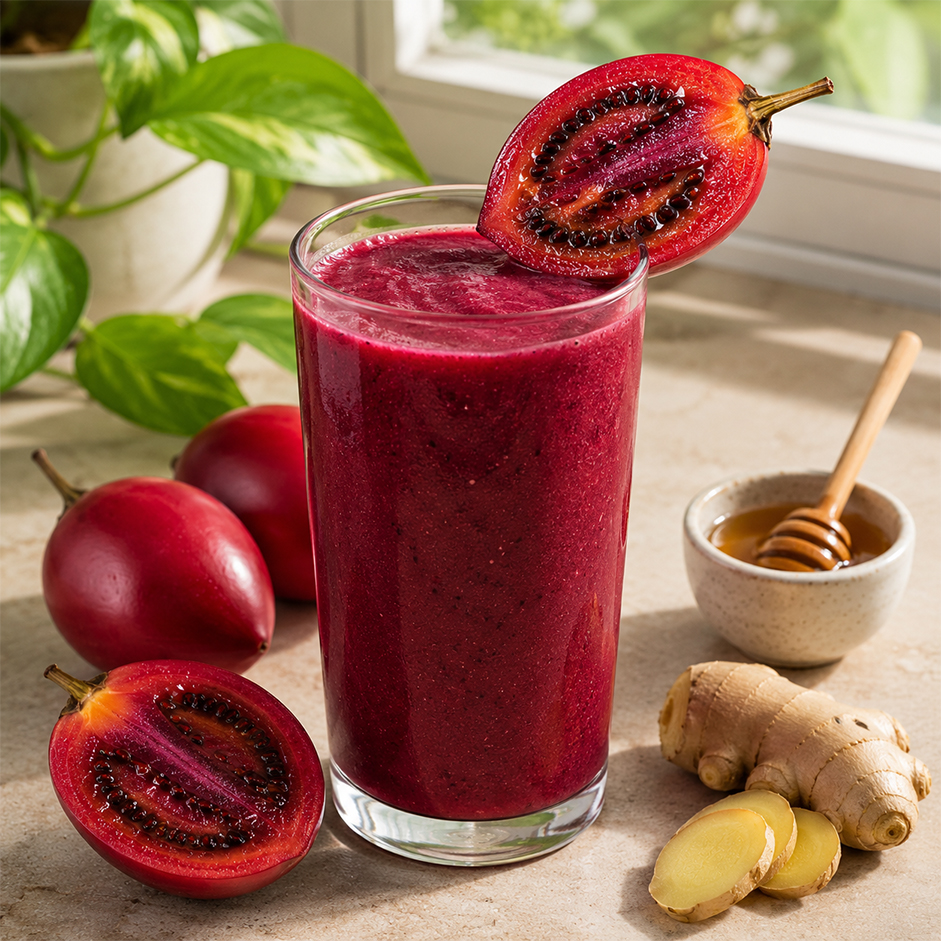
Morning smoothie (5 minutes): Scoop flesh from 2 tamarillos. Blend with 1 banana, 150g A2 curd or coconut milk, 1 tablespoon raw honey, and fresh ginger. Deeply purple, tart, extraordinary. More antioxidants than any supplement combination.
Tamarillo chutney (45 minutes, keeps 3 weeks): Peel (blanch 30 seconds), dice. Cook with red onion, apple cider vinegar, brown sugar, ginger, mustard seeds, and chilli until thick and jammy. Pairs with cheese boards, grilled lamb, and sourdough.
Tamarillo salsa (10 minutes): Dice peeled flesh with red onion, coriander, jalapeño, and lime juice. A deep purple-red salsa for grilled fish, tacos, or corn chips.
Tamarillo jam (30 minutes): Peel, chop, cook with sugar and lemon juice. The natural pectin sets without additives — intensely flavoured, deeply coloured.
In savoury dishes: Add peeled, halved tamarillos to slow-cooked lamb or chicken in the last 30 minutes. The tartness dissolves into the sauce like pomegranate molasses — an Andean technique with extraordinary results.
HOW TO PEEL A TAMARILLO
Score the skin with a sharp knife. Drop into boiling water for 30 seconds. Transfer immediately to cold water. The skin slips off cleanly. Alternatively, for eating raw with a spoon, peeling is not necessary — simply halve and scoop.
SOURCING
Certified organic tamarillos sourced from Colombian Andean farms, grown at 1,800–3,000 metres altitude. Country of origin: Colombia. No synthetic pesticides. No herbicides. No post-harvest chemical treatments. Delivered fresh within 24–48 hours of arrival at our UAE warehouse.
| Nutrient | Per serving | Per 100g | % Daily Value* |
|---|---|---|---|
| Energy | 31 kcal / 130 kJ | 31 kcal / 130 kJ | 2% |
| Total fat | 0.6g | 0.6g | 1% |
| Saturated fat | 0g | 0g | 0% |
| Trans fat | 0g | 0g | — |
| Total carbohydrates | 7.7g | 7.7g | 3% |
| Dietary fibre | 2.0g | 2.0g | 7% |
| Sugars (natural) | 3.9g | 3.9g | — |
| Protein | 1.5g | 1.5g | 3% |
| Sodium | 3mg | 3mg | 0% |
| Vitamin C | 29mg | 29mg | 31% |
| Vitamin B6 | 0.30mg | 0.30mg | 18% |
| Vitamin A (β-carotene) | 102mcg RAE | 102mcg RAE | 11% |
| Potassium | 321mg | 321mg | 7% |
| Iron | 0.6mg | 0.6mg | 3% |
| Calcium | 11mg | 11mg | 1% |
| Anthocyanins + Chlorogenic Acid (Polyphenol Antioxidants) † | Anthocyanins: ~15–25mg per 100g · Chlorogenic acid: ~30–50mg per 100g | — | — |
Reviews
Login
Don't have an account?
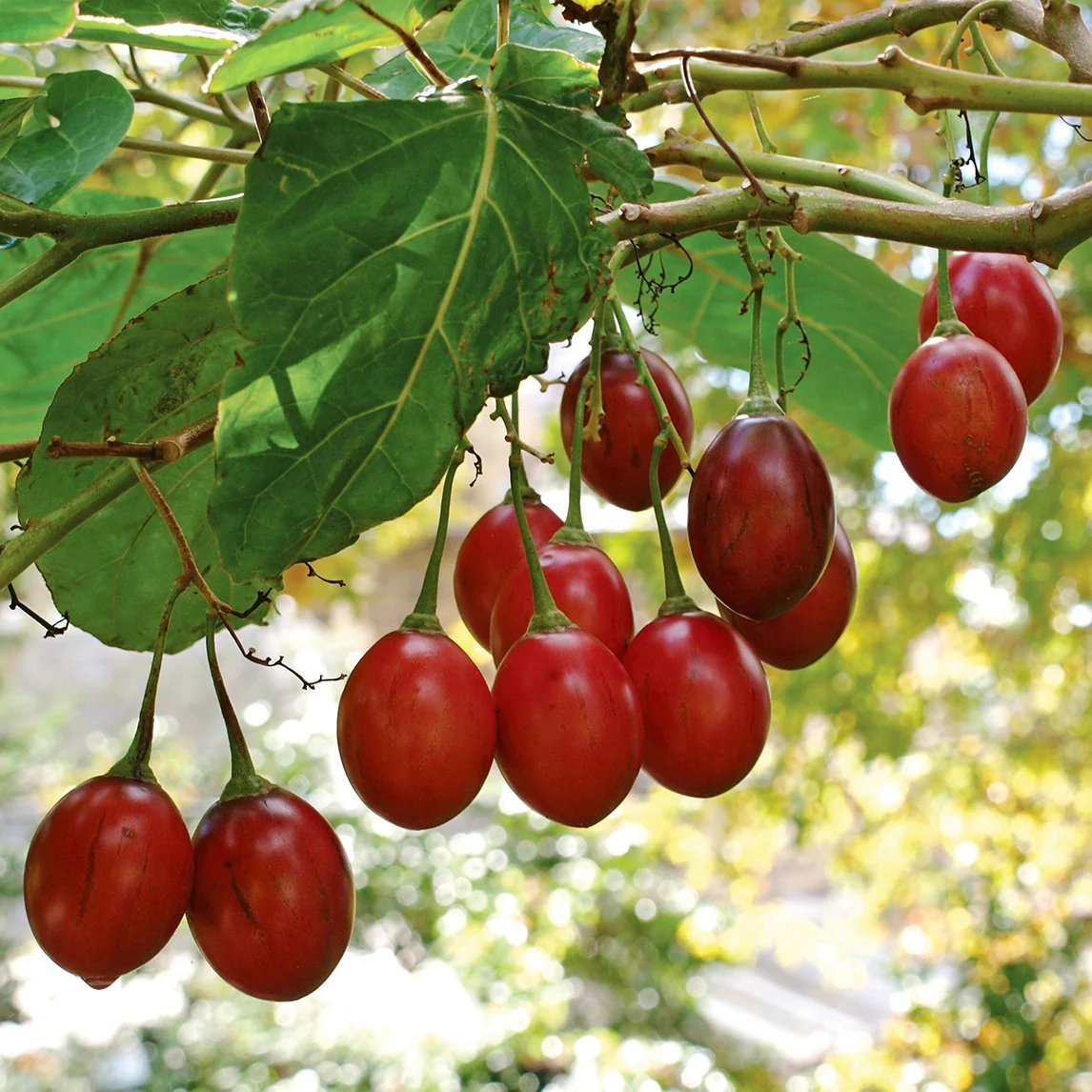
Sign UpTamarillo (Solanum betaceum, formerly Cyphomandra betacea) is a small tree native to the Andes of South America, producing egg-shaped fruit that are botanically related to the tomato, aubergine, and potato — all members of the Solanaceae (nightshade) family. In Colombia, Ecuador, and Peru, where it grows at altitudes of 1,800–3,000 metres, it is called tomate de árbol (tree tomato). In New Zealand, where it was commercialised and renamed for export in the 1960s, it became known as tamarillo.
Appearance: Smooth, glossy, egg-shaped fruit, 5–8cm long. The skin is deep red to orange-red (depending on variety — red varieties are more common in Colombia and are sweeter; yellow varieties are sourer). The interior, when cut in half, reveals a dramatic deep red-purple to orange flesh arranged around a central cavity of dark, jelly-encased seeds in concentric rings. Visually extraordinary.
Flavour: Tart, tangy, and complex. The best description is somewhere between blood orange, passion fruit, and tomato — a combination of fruity sweetness, pronounced acidity, and a savoury depth that makes it unique among fruits. The skin is bitter and not typically eaten — but the flesh and seeds are scooped out or blended whole. The flavour intensifies significantly when the fruit ripens to a deep red-black and yields to gentle pressure. Underripe tamarillos are sharp and astringent; properly ripe ones are sweet-tart and extraordinary.
How to eat raw: Halve lengthwise. Add a pinch of sugar or a drizzle of honey. Scoop out the flesh with a spoon — including the seeds, which are edible and flavourful. This is the traditional Colombian breakfast preparation. Tamarillo (Solanum betaceum, formerly Cyphomandra betacea) is a small tree native to the Andes of South America, producing egg-shaped fruit that are botanically related to the tomato, aubergine, and potato — all members of the Solanaceae (nightshade) family. In Colombia, Ecuador, and Peru, where it grows at altitudes of 1,800–3,000 metres, it is called tomate de árbol (tree tomato). In New Zealand, where it was commercialised and renamed for export in the 1960s, it became known as tamarillo.
Appearance: Smooth, glossy, egg-shaped fruit, 5–8cm long. The skin is deep red to orange-red (depending on variety — red varieties are more common in Colombia and are sweeter; yellow varieties are sourer). The interior, when cut in half, reveals a dramatic deep red-purple to orange flesh arranged around a central cavity of dark, jelly-encased seeds in concentric rings. Visually extraordinary.
Flavour: Tart, tangy, and complex. The best description is somewhere between blood orange, passion fruit, and tomato — a combination of fruity sweetness, pronounced acidity, and a savoury depth that makes it unique among fruits. The skin is bitter and not typically eaten — but the flesh and seeds are scooped out or blended whole. The flavour intensifies significantly when the fruit ripens to a deep red-black and yields to gentle pressure. Underripe tamarillos are sharp and astringent; properly ripe ones are sweet-tart and extraordinary.
How to eat raw: Halve lengthwise. Add a pinch of sugar or a drizzle of honey. Scoop out the flesh with a spoon — including the seeds, which are edible and flavourful. This is the traditional Colombian breakfast preparation.
Tamarillo is one of the most nutritionally dense exotic fruits available in the UAE market, with a profile that significantly outperforms most common fruits on multiple measures.
Vitamin C: One tamarillo (approximately 70–80g) delivers approximately 21–24mg of Vitamin C — roughly equivalent to an orange. Per 100g, tamarillo provides 29–35mg Vitamin C (around 30–38% of daily requirement). Vitamin C supports immune function, collagen synthesis, iron absorption, and acts as a potent antioxidant.
Vitamin B6 (pyridoxine): Tamarillo is an exceptional source of Vitamin B6 — providing approximately 0.3mg per 100g (around 18% of daily requirement). B6 is essential for neurotransmitter synthesis (serotonin, dopamine, GABA), haemoglobin production, and immune function. Most exotic fruits provide negligible B6.
Anthocyanins: The deep red-purple pigment of the tamarillo flesh is from anthocyanins — the same class of polyphenol antioxidants found in blueberries, blackberries, and red cabbage. Anthocyanins are studied extensively for cardiovascular protection, anti-inflammatory effects, and neuroprotective properties.
Potassium: 321mg per 100g (approximately 7% DV) — supporting cardiovascular health, blood pressure regulation, and electrolyte balance.
Iron: 0.6mg per 100g — a meaningful contribution for a fruit, particularly in plant-based diets where iron sources are limited.
Low calorie, low sugar: Only 31 kcal per 100g with 3.9g natural sugars — one of the lowest sugar exotic fruits available, making it suitable for blood sugar management and diabetic diets when consumed in normal portions.
Fibre: 2.0g per 100g — supporting gut motility and satiety. Tamarillo is one of the most nutritionally dense exotic fruits available in the UAE market, with a profile that significantly outperforms most common fruits on multiple measures.
Vitamin C: One tamarillo (approximately 70–80g) delivers approximately 21–24mg of Vitamin C — roughly equivalent to an orange. Per 100g, tamarillo provides 29–35mg Vitamin C (around 30–38% of daily requirement). Vitamin C supports immune function, collagen synthesis, iron absorption, and acts as a potent antioxidant.
Vitamin B6 (pyridoxine): Tamarillo is an exceptional source of Vitamin B6 — providing approximately 0.3mg per 100g (around 18% of daily requirement). B6 is essential for neurotransmitter synthesis (serotonin, dopamine, GABA), haemoglobin production, and immune function. Most exotic fruits provide negligible B6.
Anthocyanins: The deep red-purple pigment of the tamarillo flesh is from anthocyanins — the same class of polyphenol antioxidants found in blueberries, blackberries, and red cabbage. Anthocyanins are studied extensively for cardiovascular protection, anti-inflammatory effects, and neuroprotective properties.
Potassium: 321mg per 100g (approximately 7% DV) — supporting cardiovascular health, blood pressure regulation, and electrolyte balance.
Iron: 0.6mg per 100g — a meaningful contribution for a fruit, particularly in plant-based diets where iron sources are limited.
Low calorie, low sugar: Only 31 kcal per 100g with 3.9g natural sugars — one of the lowest sugar exotic fruits available, making it suitable for blood sugar management and diabetic diets when consumed in normal portions.
Fibre: 2.0g per 100g — supporting gut motility and satiety.
Tamarillo is far more versatile than most buyers expect. The key rule: always remove the bitter skin. Everything else — flesh, seeds, and jelly — is edible and flavourful.
Eating raw (the Colombian way): Halve lengthwise. Sprinkle with a pinch of sugar or drizzle with raw honey. Scoop the flesh and seeds with a teaspoon. The traditional breakfast preparation across the Colombian Andes. Add a pinch of salt and black pepper to bring out the savoury notes.
Morning smoothie: Scoop flesh from 2 tamarillos. Blend with 1 banana, 150g A2 curd or coconut milk, 1 tablespoon raw honey, and a small piece of fresh ginger. The tamarillo provides the Vitamin C, antioxidants, and tartness; the banana and curd balance the acidity. Deeply purple, extraordinarily flavoured. A breakfast that replaces a multivitamin.
Tamarillo chutney: Peel (score skin and blanch in boiling water 30 seconds, skin slips off), dice flesh. Cook with red onion, apple cider vinegar, brown sugar, fresh ginger, mustard seeds, and dried chilli in a heavy pan for 30–40 minutes until thick and jammy. Store refrigerated up to 3 weeks. Pairs with cheese boards, grilled meats, and strong cheddar on sourdough.
Tamarillo salsa: Dice peeled tamarillo with red onion, fresh coriander, jalapeño, lime juice, and salt. A stunning purple-red salsa that works with grilled fish, tacos, or as a dip with corn chips.
Tamarillo jam: Peel, chop, and cook with sugar and lemon juice. The natural pectin in tamarillo produces a jam that sets beautifully without added pectin — deeply purple, intensely flavoured.
Tamarillo in savoury cooking: Add peeled, halved tamarillos to slow-cooked lamb or chicken dishes in the last 30 minutes. The tartness breaks down into the sauce, adding complexity similar to pomegranate molasses. Used in Andean cooking this way for centuries.
Tamarillo juice: Blend peeled flesh with water, strain, add a pinch of salt and honey. A traditional Andean energy drink. Tamarillo is far more versatile than most buyers expect. The key rule: always remove the bitter skin. Everything else — flesh, seeds, and jelly — is edible and flavourful.
Eating raw (the Colombian way): Halve lengthwise. Sprinkle with a pinch of sugar or drizzle with raw honey. Scoop the flesh and seeds with a teaspoon. The traditional breakfast preparation across the Colombian Andes. Add a pinch of salt and black pepper to bring out the savoury notes.
Morning smoothie: Scoop flesh from 2 tamarillos. Blend with 1 banana, 150g A2 curd or coconut milk, 1 tablespoon raw honey, and a small piece of fresh ginger. The tamarillo provides the Vitamin C, antioxidants, and tartness; the banana and curd balance the acidity. Deeply purple, extraordinarily flavoured. A breakfast that replaces a multivitamin.
Tamarillo chutney: Peel (score skin and blanch in boiling water 30 seconds, skin slips off), dice flesh. Cook with red onion, apple cider vinegar, brown sugar, fresh ginger, mustard seeds, and dried chilli in a heavy pan for 30–40 minutes until thick and jammy. Store refrigerated up to 3 weeks. Pairs with cheese boards, grilled meats, and strong cheddar on sourdough.
Tamarillo salsa: Dice peeled tamarillo with red onion, fresh coriander, jalapeño, lime juice, and salt. A stunning purple-red salsa that works with grilled fish, tacos, or as a dip with corn chips.
Tamarillo jam: Peel, chop, and cook with sugar and lemon juice. The natural pectin in tamarillo produces a jam that sets beautifully without added pectin — deeply purple, intensely flavoured.
Tamarillo in savoury cooking: Add peeled, halved tamarillos to slow-cooked lamb or chicken dishes in the last 30 minutes. The tartness breaks down into the sauce, adding complexity similar to pomegranate molasses. Used in Andean cooking this way for centuries.
Tamarillo juice: Blend peeled flesh with water, strain, add a pinch of salt and honey. A traditional Andean energy drink.
Colombia is the world's largest exporter of tamarillo, and Andean-grown tamarillos from the country's coffee-and-fruit belt (the zona cafetera and surrounding highland departments of Antioquia, Nariño, Cundinamarca, and Boyacá) are consistently regarded by food exporters and chefs as the finest quality globally.
The altitude advantage operates through several mechanisms:
Diurnal temperature variation: At 1,800–3,000 metres, days are warm (18–24°C) and nights are cool (8–14°C). This temperature swing forces the plant to produce more sugars during the warm days — which are then preserved rather than metabolised overnight because of the cool temperatures. The result is a more intensely flavoured, sweeter fruit with higher total soluble solids.
UV intensity: At altitude, UV radiation is significantly more intense than at sea level. Plants respond by producing more polyphenol antioxidants (including anthocyanins and Vitamin C) as natural UV protection. This is the same principle behind why highland blueberries and high-altitude olive oils are more antioxidant-dense than lowland equivalents.
Slower growth: The cooler temperatures slow the fruit's growth cycle. Longer time on the tree means more time for flavour compound development. Colombian tamarillos take approximately 10–11 months from flowering to harvest — significantly longer than lowland varieties.
Soil mineralogy: Andean volcanic soils are rich in minerals including potassium, magnesium, and iron — nutrients that directly affect the flavour and nutritional profile of the fruit.
Colombia also has the agronomic advantage of being able to produce tamarillo year-round due to its equatorial climate modified by altitude — meaning consistent supply of fresh, ripe fruit without seasonal gaps. Colombia is the world's largest exporter of tamarillo, and Andean-grown tamarillos from the country's coffee-and-fruit belt (the zona cafetera and surrounding highland departments of Antioquia, Nariño, Cundinamarca, and Boyacá) are consistently regarded by food exporters and chefs as the finest quality globally.
The altitude advantage operates through several mechanisms:
Diurnal temperature variation: At 1,800–3,000 metres, days are warm (18–24°C) and nights are cool (8–14°C). This temperature swing forces the plant to produce more sugars during the warm days — which are then preserved rather than metabolised overnight because of the cool temperatures. The result is a more intensely flavoured, sweeter fruit with higher total soluble solids.
UV intensity: At altitude, UV radiation is significantly more intense than at sea level. Plants respond by producing more polyphenol antioxidants (including anthocyanins and Vitamin C) as natural UV protection. This is the same principle behind why highland blueberries and high-altitude olive oils are more antioxidant-dense than lowland equivalents.
Slower growth: The cooler temperatures slow the fruit's growth cycle. Longer time on the tree means more time for flavour compound development. Colombian tamarillos take approximately 10–11 months from flowering to harvest — significantly longer than lowland varieties.
Soil mineralogy: Andean volcanic soils are rich in minerals including potassium, magnesium, and iron — nutrients that directly affect the flavour and nutritional profile of the fruit.
Colombia also has the agronomic advantage of being able to produce tamarillo year-round due to its equatorial climate modified by altitude — meaning consistent supply of fresh, ripe fruit without seasonal gaps.
Selecting ripe tamarillos: A ripe tamarillo should be deeply coloured — dark red to red-black for red varieties, or deep orange-yellow for yellow varieties. The skin should yield slightly to gentle thumb pressure — not be rock-hard (underripe) or have soft spots or wrinkles (overripe or damaged). The stem cap should be intact and fresh-looking. Underripe tamarillos are sharp and astringent — the tartness overwhelms the sweetness. Allowing them to ripen fully at room temperature is essential for the best flavour.
Ripening at home: If your tamarillos arrive firm (common for international shipping — they are picked slightly underripe to survive transit), leave them at room temperature, away from direct sunlight, for 3–7 days. They will continue to ripen and develop full flavour. Place in a paper bag with a banana or apple to accelerate ripening — the ethylene these fruits emit speeds the process.
Storage once ripe: Ripe tamarillos can be refrigerated for 5–7 days. Unlike cucumbers, which are damaged by refrigerator temperatures, tamarillos handle refrigeration well once ripe. Store in the crisper drawer, loosely wrapped.
Freezing: Tamarillos freeze exceptionally well and retain their flavour and nutritional profile when frozen. Peel (blanch 30 seconds, skin slips off), halve or leave whole, freeze in a single layer, then transfer to bags. Use directly from frozen in smoothies, chutney, and cooked preparations. Frozen tamarillo is one of the best smoothie bases you can keep on hand.
Seasonal note: Colombian tamarillos are available year-round due to altitude-staggered planting, but peak quality typically occurs during the main harvest periods of February–April and August–October. Selecting ripe tamarillos: A ripe tamarillo should be deeply coloured — dark red to red-black for red varieties, or deep orange-yellow for yellow varieties. The skin should yield slightly to gentle thumb pressure — not be rock-hard (underripe) or have soft spots or wrinkles (overripe or damaged). The stem cap should be intact and fresh-looking. Underripe tamarillos are sharp and astringent — the tartness overwhelms the sweetness. Allowing them to ripen fully at room temperature is essential for the best flavour.
Ripening at home: If your tamarillos arrive firm (common for international shipping — they are picked slightly underripe to survive transit), leave them at room temperature, away from direct sunlight, for 3–7 days. They will continue to ripen and develop full flavour. Place in a paper bag with a banana or apple to accelerate ripening — the ethylene these fruits emit speeds the process.
Storage once ripe: Ripe tamarillos can be refrigerated for 5–7 days. Unlike cucumbers, which are damaged by refrigerator temperatures, tamarillos handle refrigeration well once ripe. Store in the crisper drawer, loosely wrapped.
Freezing: Tamarillos freeze exceptionally well and retain their flavour and nutritional profile when frozen. Peel (blanch 30 seconds, skin slips off), halve or leave whole, freeze in a single layer, then transfer to bags. Use directly from frozen in smoothies, chutney, and cooked preparations. Frozen tamarillo is one of the best smoothie bases you can keep on hand.
Seasonal note: Colombian tamarillos are available year-round due to altitude-staggered planting, but peak quality typically occurs during the main harvest periods of February–April and August–October.


