
Product description
Why parsnips are good for your family:
- Gut health: 6g of dietary fibre per cup — more than twice the fibre of carrots. Soluble fibre feeds beneficial gut bacteria; insoluble fibre supports bowel regularity
- Healthy ageing: Folate (22% daily requirement per serving) for cell renewal and DNA repair; vitamin K (25% per serving) for bone density and blood clotting
- Immune function: Vitamin C (26% daily requirement per serving) plus falcarinol anti-inflammatory compounds
- Heart health: High potassium (10% per serving) lowers blood pressure by counteracting sodium; soluble fibre reduces LDL cholesterol
- Women’s wellness: Folate is essential pre-conception and throughout pregnancy for preventing neural tube defects; parsnip is one of the best natural food sources
- Blood sugar: GI of approximately 52 (boiled); very high soluble fibre content slows glucose absorption and moderates blood sugar response
- Anti-inflammatory: Falcarinol and falcarindiol — unique to the carrot family — show promising anti-inflammatory effects in research
How to prepare parsnips — the Rootz way:
- Step 1: Scrub, don’t peel. Use a stiff brush under cold running water. The skin holds the falcarinol and much of the flavour. Peeling removes both.
- Step 2: Roast, don’t boil. Boiling leaches falcarinol and vitamin C into the water. Roasting concentrates flavour and preserves both compounds.
What to make:
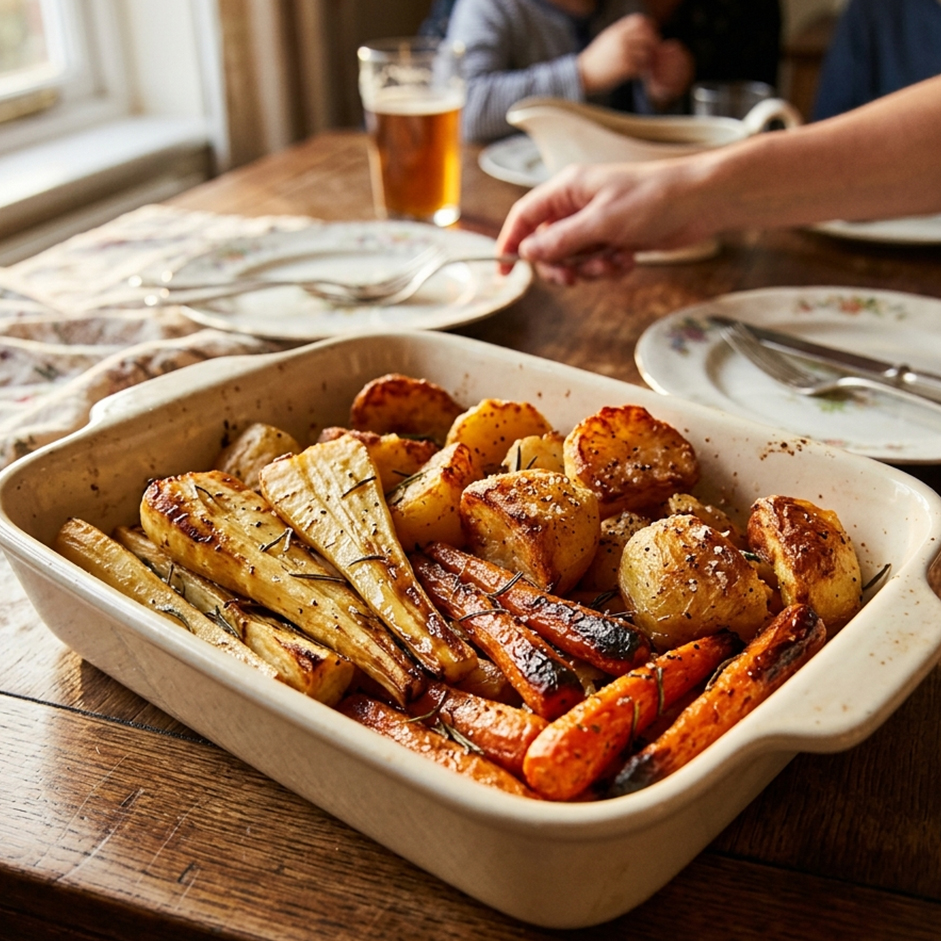
- Classic roast parsnips: halve lengthways, toss in cold-pressed oil, season, roast at 200°C for 30–35 minutes until caramelised. Serve alongside any roast.
- Honey and thyme roast parsnips: toss with oil, honey, fresh thyme, salt. Roast 30 minutes. The most addictive way to eat a parsnip.
- Parsnip and apple soup: simmer diced parsnip with apple, vegetable stock, and a little ginger. Blend until silky. Serve with crusty bread.
- Parsnip pureé: boil (where losing some falcarinol is acceptable for texture), mash with A2 butter and nutmeg. Sweeter and lighter than mashed potato.
- Parsnip crisps: slice very thinly, toss in cold-pressed oil and salt, bake at 180°C until golden. A surprisingly addictive clean snack.
- Roasted root vegetable tray: parsnips + carrots + beetroot + red onion in cold-pressed oil. The classic British combination.
- Parsnip in soup or stew: add diced parsnip to any vegetable stock base — it dissolves partially, thickening and sweetening the broth naturally.
Storage:
Store raw parsnips in the refrigerator crisper drawer or in a cool, dry place. They keep well for 2–3 weeks. Unlike many vegetables, parsnips continue to sweeten slightly in cold storage. Do not store at room temperature in UAE’s heat.


