
Product description
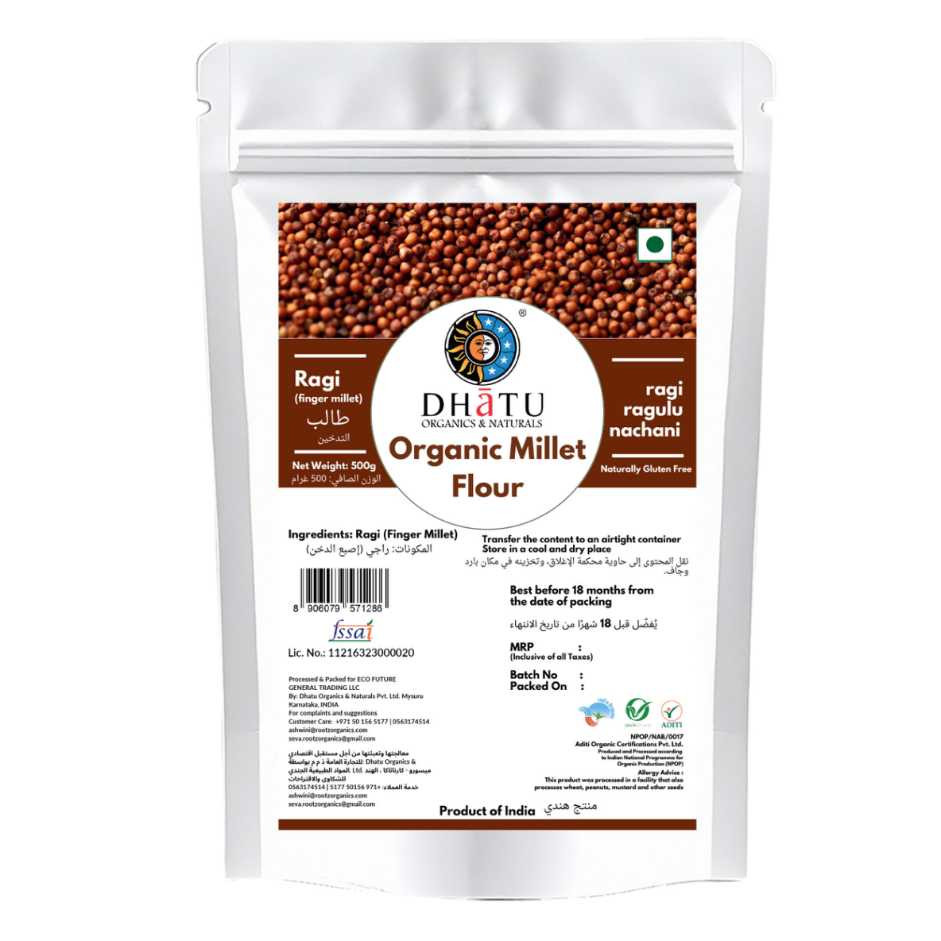
Ragi is rich in antioxidants, vitamins and minerals. It exhibits anti-diabetic, anti-microbial and anti-ulcerative properties. Traditionally in south India, Ragi is used in diabetic management, as a baby food and as a calcium supplement. How to use? Soak 1/2 cup whole ragi overnight in water. In the morning, grind the soaked ragi into a fine paste. Add 2 cups of water to the paste and filter it to extract ragi milk. Add palm sugar or Agave syrup for sweetner.Reviews
Login
Don't have an account?
Sign UpApproximately 344mg calcium per 100g — the highest of any commonly available cereal grain, confirmed across USDA FoodData Central and peer-reviewed research. For comparison: milk contains approximately 120mg per 100ml; white rice approximately 2mg per 100g; wheat approximately 41mg per 100g. This makes ragi a genuinely valuable calcium source in vegetarian and plant-based diets where dairy may be limited, and explains its long traditional use as a baby food and calcium supplement in South Indian households.
Ragi has been used as a traditional weaning food and first grain for babies in South India for generations — typically introduced around 6 months as a thin porridge made from ragi flour or ground whole ragi, mixed with breast milk or formula. Its calcium and iron content make it nutritionally well-suited to early infant feeding. Always follow your paediatrician’s guidance on when and how to introduce solid foods to your specific baby.
Yes — naturally gluten-free, as it’s produced from Eleusine coracana, a grain that contains no gluten. Those with coeliac disease or severe gluten sensitivity should confirm cross-contamination controls during processing directly with us, since “naturally gluten-free” doesn’t guarantee a dedicated gluten-free facility.