
Product description
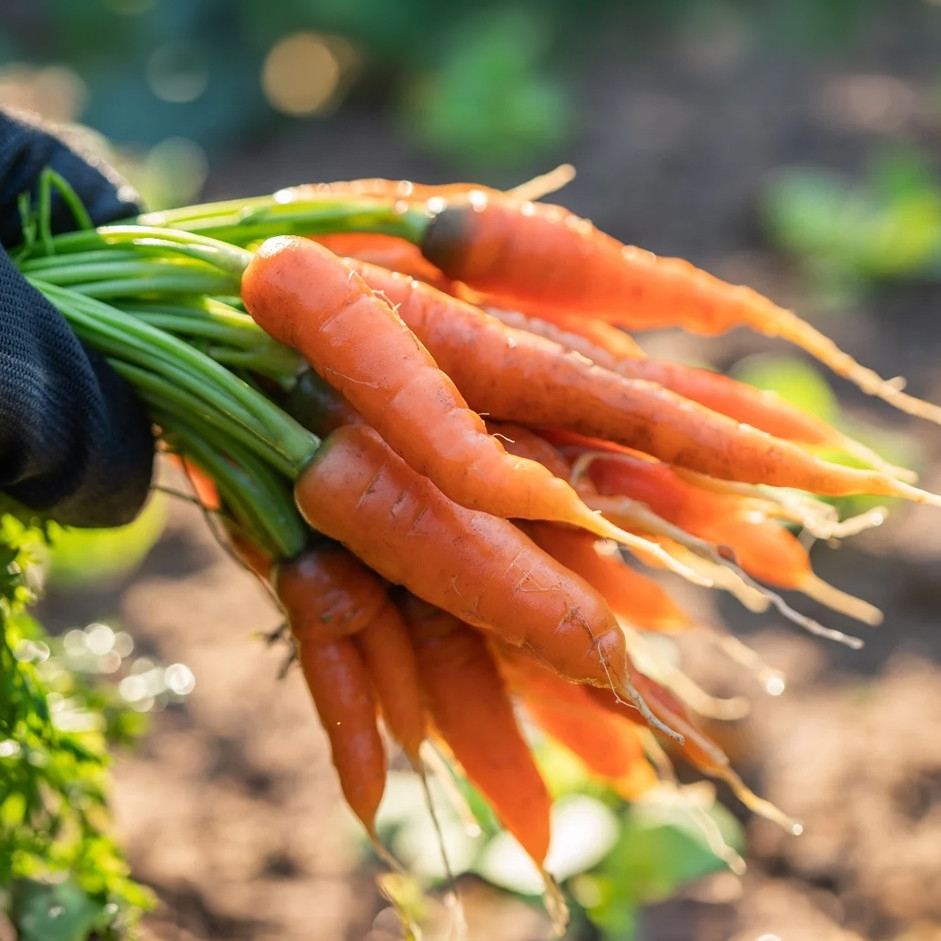
These are true baby carrots — small, slender and naturally sweet, sold in a bunch with their leafy green tops still attached. The tops are your freshness guarantee, and a sign of carrots pulled at their tender best.
WHAT MAKES THEM SPECIAL
Young carrots are sweeter and more delicate than mature ones, with a fine, crisp texture. Carrots are exceptionally rich in beta-carotene, which the body uses as Vitamin A — the deep orange colour is the indicator. And the feathery tops are edible: they make a wonderful pesto or herb garnish, so nothing goes to waste.
SOURCED FROM SOUTH AFRICA
South Africa grows excellent sweet, fresh carrots for the Gulf. Freshly harvested with tops on and air-freighted to the UAE.
NUTRITION — per 100g
| Nutrient | Amount | % DV* |
|---|---|---|
| Energy | 18 kcal | — |
| Carbohydrates | 3.8 g | 1% |
| of which sugars | 2.2 g | — |
| Dietary fibre | 1.1 g | 4% |
| Protein | 1.2 g | 2% |
| Total fat | 0.2 g | 0% |
| Vitamin C | 17 mg | 19% |
| Potassium | 262 mg | 6% |
| Folate | 29 µg | 7% |
| Vitamin B6 | 0.11 mg | 6% |
*%DV on a 2,000 kcal adult reference diet; approximate USDA values, varies with variety/ripeness. The deep orange colour reflects naturally occurring beta-carotene, which the body converts to Vitamin A.
HOW TO SELECT & STORE
- Store: remove the leafy tops and store separately — this keeps the roots crisp longer.
- Roots: refrigerate in the crisper for up to 1-2 weeks.
- Tops: use within 2-3 days (they wilt faster).
- Keep unwashed until ready to use.
HOW TO USE & SERVE
Sweet baby carrots are a versatile staple for every UAE table.
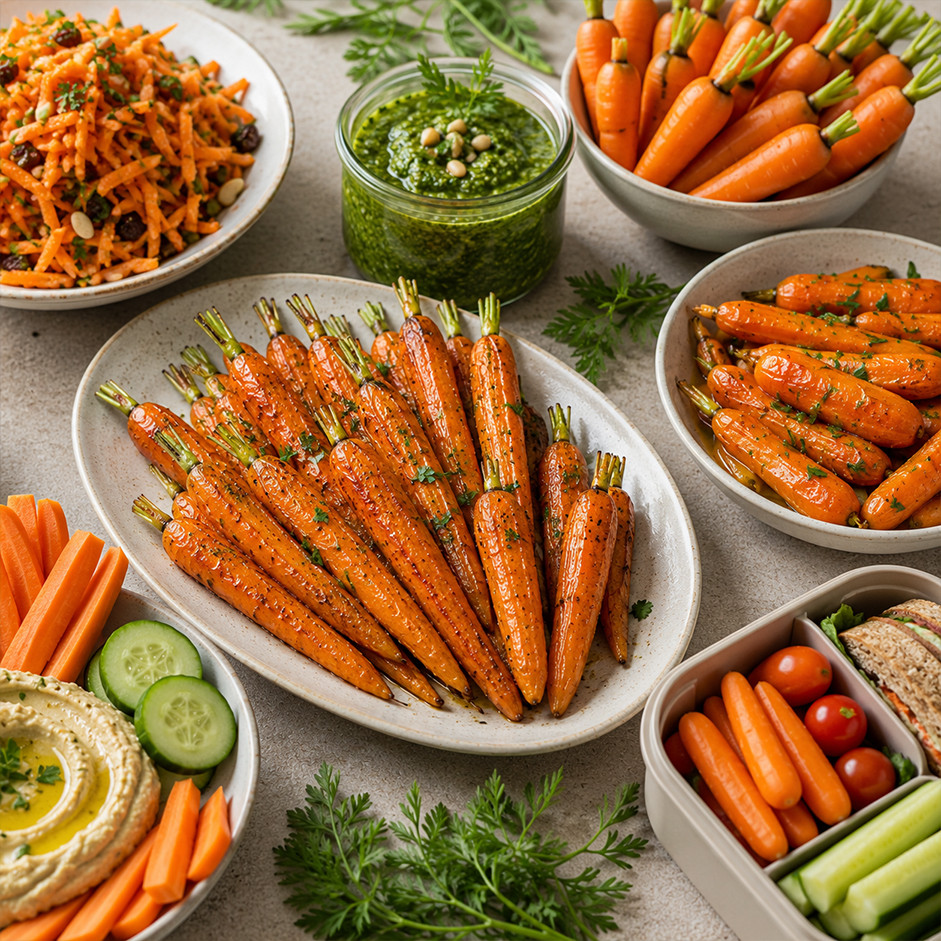
- Raw: rinse and eat whole as a crunchy snack, or with hummus and dips for kids and guests.
- Roasted (best for flavour): toss whole with olive oil, honey and cumin, roast until caramelised and tender — a beautiful side with the tops trimmed short.
- Steamed/glazed: quick-steam and toss with butter and herbs.
- Grated: into salads, slaws and wraps.
- Carrot-top pesto: blend the washed green tops with garlic, nuts, olive oil and lemon — a zero-waste herb sauce.
- Lunchboxes: perfectly sized for children.
Reviews
Login
Don't have an account?
Sign UpThese are true baby carrots — small, slender carrots harvested young and sold in a bunch with their leafy green tops still attached. They are not the machine-shaped 'baby-cut' kind made from large carrots. Young carrots are naturally sweeter and more tender, with a fine, crisp texture.These are true baby carrots — small, slender carrots harvested young and sold in a bunch with their leafy green tops still attached. They are not the machine-shaped 'baby-cut' kind made from large carrots. Young carrots are naturally sweeter and more tender, with a fine, crisp texture.
Yes — the feathery green tops are edible and a great way to avoid waste. Washed well, they make a fresh, slightly peppery pesto blended with garlic, nuts, olive oil and lemon, or a herb garnish for soups and salads. Remove them from the roots before storing so the carrots stay crisp.Yes — the feathery green tops are edible and a great way to avoid waste. Washed well, they make a fresh, slightly peppery pesto blended with garlic, nuts, olive oil and lemon, or a herb garnish for soups and salads. Remove them from the roots before storing so the carrots stay crisp.
Separate the leafy tops from the roots before refrigerating — the greens draw moisture from the carrots and cause them to soften faster. Store the roots unwashed in the crisper drawer for up to one to two weeks, and use the tops within two to three days as they wilt more quickly.Separate the leafy tops from the roots before refrigerating — the greens draw moisture from the carrots and cause them to soften faster. Store the roots unwashed in the crisper drawer for up to one to two weeks, and use the tops within two to three days as they wilt more quickly.
Carrots are exceptionally rich in beta-carotene, which the body converts to Vitamin A — per 100g they provide around 93% of an adult daily reference for Vitamin A, the source of their deep orange colour. They also supply fibre and potassium. Values are approximate USDA references.Carrots are exceptionally rich in beta-carotene, which the body converts to Vitamin A — per 100g they provide around 93% of an adult daily reference for Vitamin A, the source of their deep orange colour. They also supply fibre and potassium. Values are approximate USDA references.


