
Product description
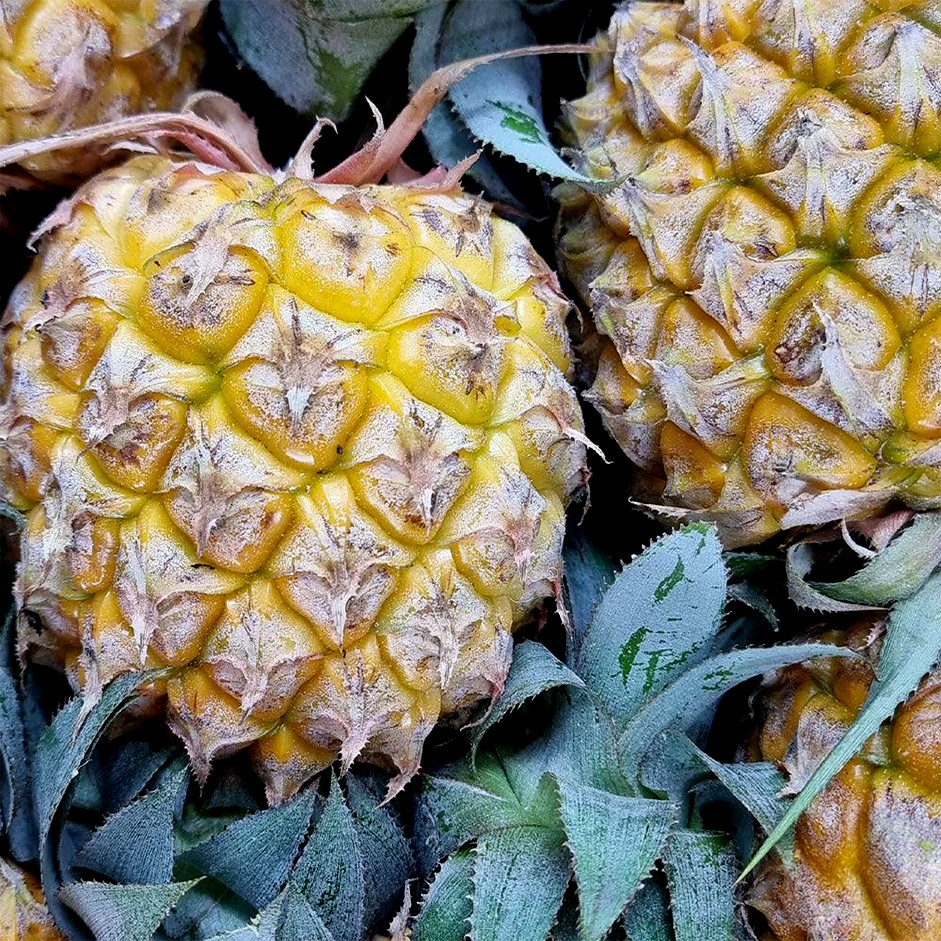
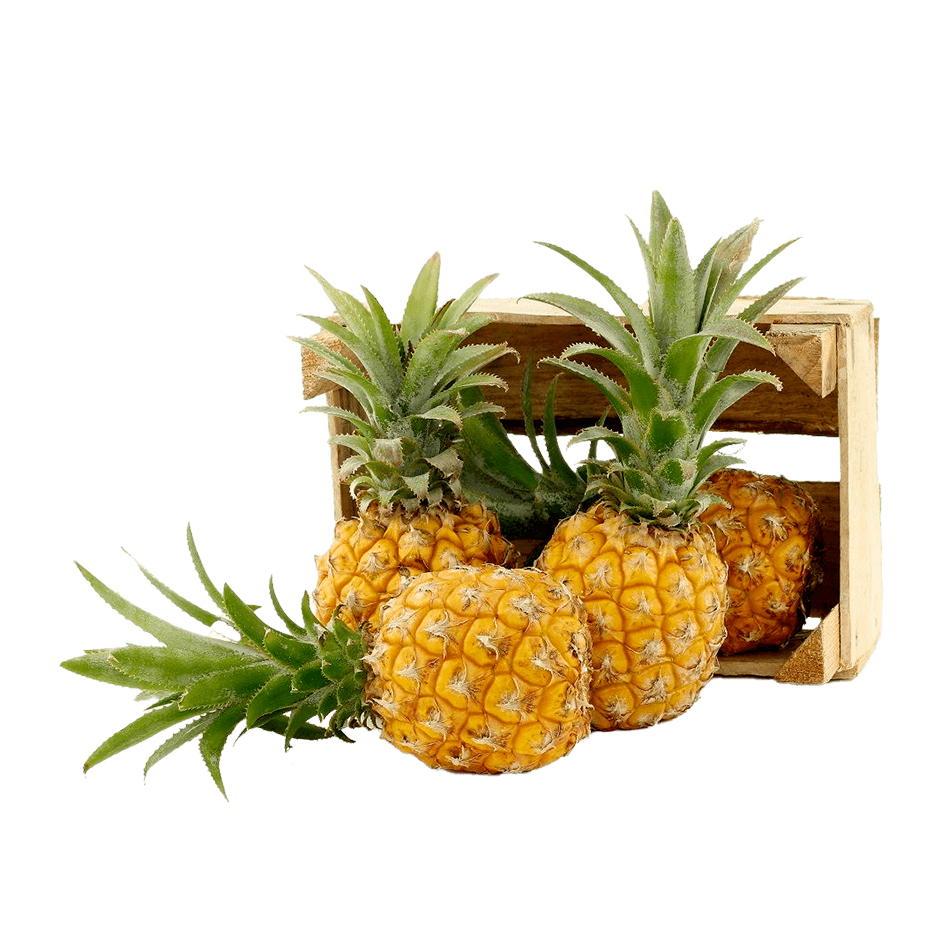
Mauritius is famous for its small, intensely sweet pineapples — often called Victoria or Queen pineapples. Smaller than the commercial kind, they are golden, fragrant, low in acidity and remarkably sweet, with a tender, edible-soft core.
WHAT MAKES IT SPECIAL
The baby size means concentrated flavour and just the right amount for one or two people — no waste, no overpowering acidity. Pineapple is also naturally rich in Vitamin C and manganese, and contains the enzyme bromelain.
SOURCED FROM MAURITIUS
Mauritius' climate produces some of the sweetest small pineapples in the world. [Confirm variety (Victoria/Queen) and any organic certification with supplier before using in live copy.] Picked ripe and air-freighted to the UAE.
NUTRITION — per 100g
| Nutrient | Amount | % DV* |
|---|---|---|
| Energy | 50 kcal | — |
| Carbohydrates | 13.1 g | 5% |
| of which sugars | 9.9 g | — |
| Dietary fibre | 1.4 g | 5% |
| Protein | 0.5 g | 1% |
| Total fat | 0.1 g | 0% |
| Vitamin C | 47.8 mg | 53% |
| Manganese | 0.93 mg | 40% |
| Potassium | 109 mg | 2% |
| Copper | 0.11 mg | 12% |
HOW TO SELECT & STORE
- Choose: golden skin and a sweet aroma at the base.
- Store whole: room temperature 1-2 days, or refrigerate up to 4-5 days.
- Once cut: refrigerate in a sealed container and eat within 2-3 days.
- The baby core is tender enough to eat.
HOW TO USE & SERVE
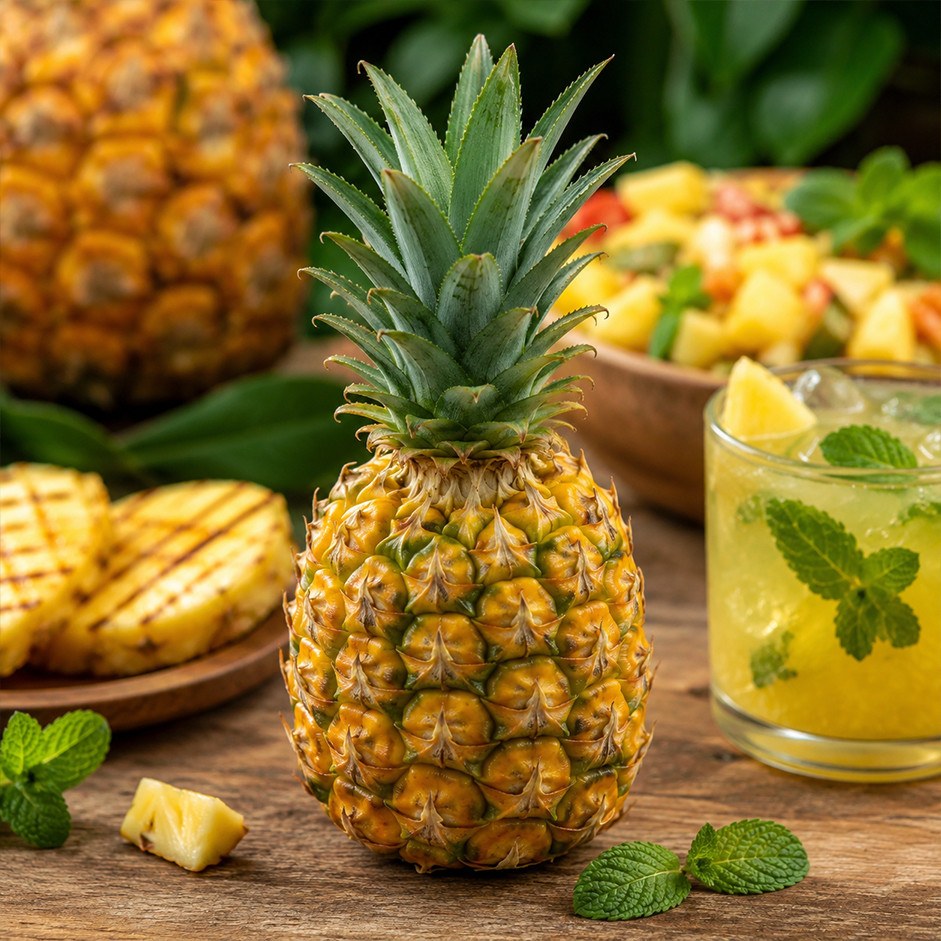
Baby pineapple suits every UAE table — fresh, in drinks, or grilled.
- The simplest way: top, halve or quarter, and eat fresh (the small core is tender).
- Snack & lunchboxes: perfectly sized rings for kids and busy days.
- Drinks & iftar coolers: blend into juice or muddle into a pineapple-mint mocktail.
- Grilled: halve and grill cut-side down for a caramelised dessert with honey.
- Savoury: dice into salsa, salads or South-East Asian dishes.
- Entertaining: a whole baby pineapple makes a beautiful single-serve centrepiece on a platter.
Reviews
Login
Don't have an account?
Sign UpBaby pineapples — often the Victoria or Queen variety grown in Mauritius — are naturally sweeter and lower in acidity than large commercial pineapples, with a more fragrant, golden flesh. Their small size also means concentrated flavour and a tender core that is soft enough to eat.Baby pineapples — often the Victoria or Queen variety grown in Mauritius — are naturally sweeter and lower in acidity than large commercial pineapples, with a more fragrant, golden flesh. Their small size also means concentrated flavour and a tender core that is soft enough to eat.
Slice off the leafy top, then halve or quarter the fruit lengthways, or cut it into rings. The small central core is tender enough to eat, so there is very little waste. Enjoy it fresh, in drinks, grilled with honey, or diced into salads and salsa.
Keep a whole baby pineapple at room temperature for 1-2 days, or refrigerate it for up to 4-5 days. Once cut, store the flesh in a sealed container in the fridge and eat within 2-3 days for the best flavour and juiciness.Keep a whole baby pineapple at room temperature for 1-2 days, or refrigerate it for up to 4-5 days. Once cut, store the flesh in a sealed container in the fridge and eat within 2-3 days for the best flavour and juiciness.
Per 100g pineapple provides around 50 kcal and is naturally rich in Vitamin C (about 48mg, roughly 53% of an adult daily reference) and manganese (around 40%). It also contains the enzyme bromelain. Values are approximate USDA references.Per 100g pineapple provides around 50 kcal and is naturally rich in Vitamin C (about 48mg, roughly 53% of an adult daily reference) and manganese (around 40%). It also contains the enzyme bromelain. Values are approximate USDA references.


