
Product description
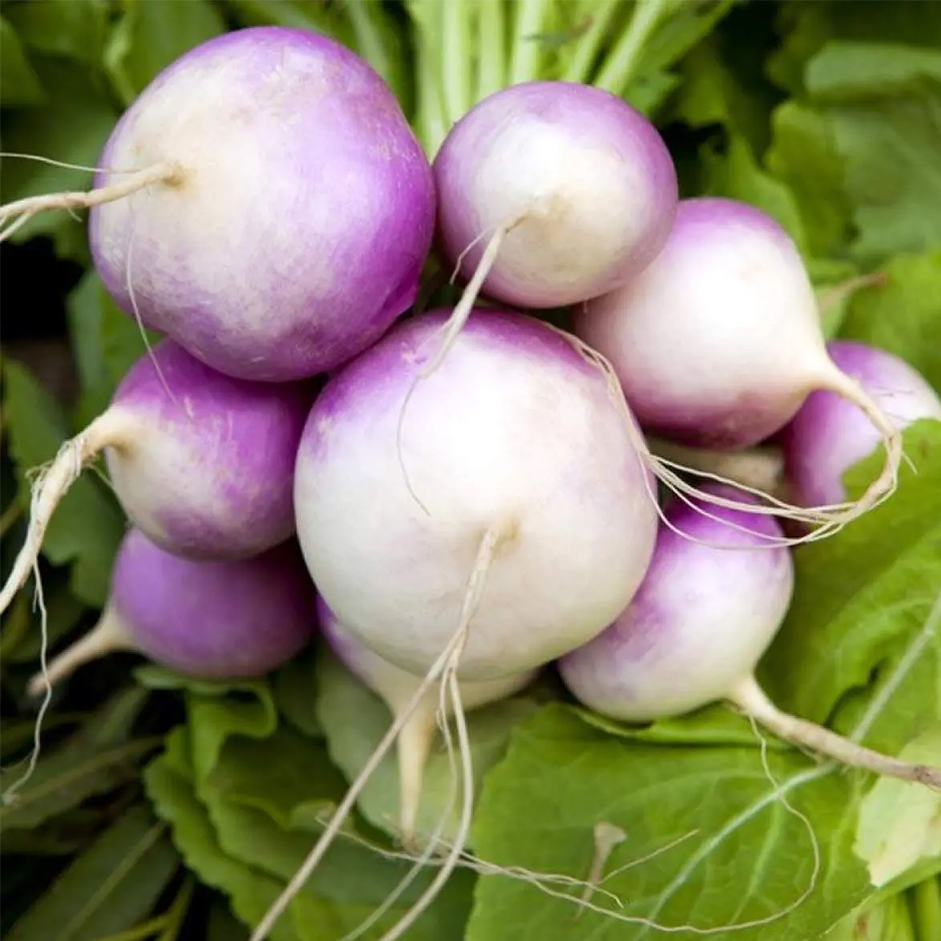
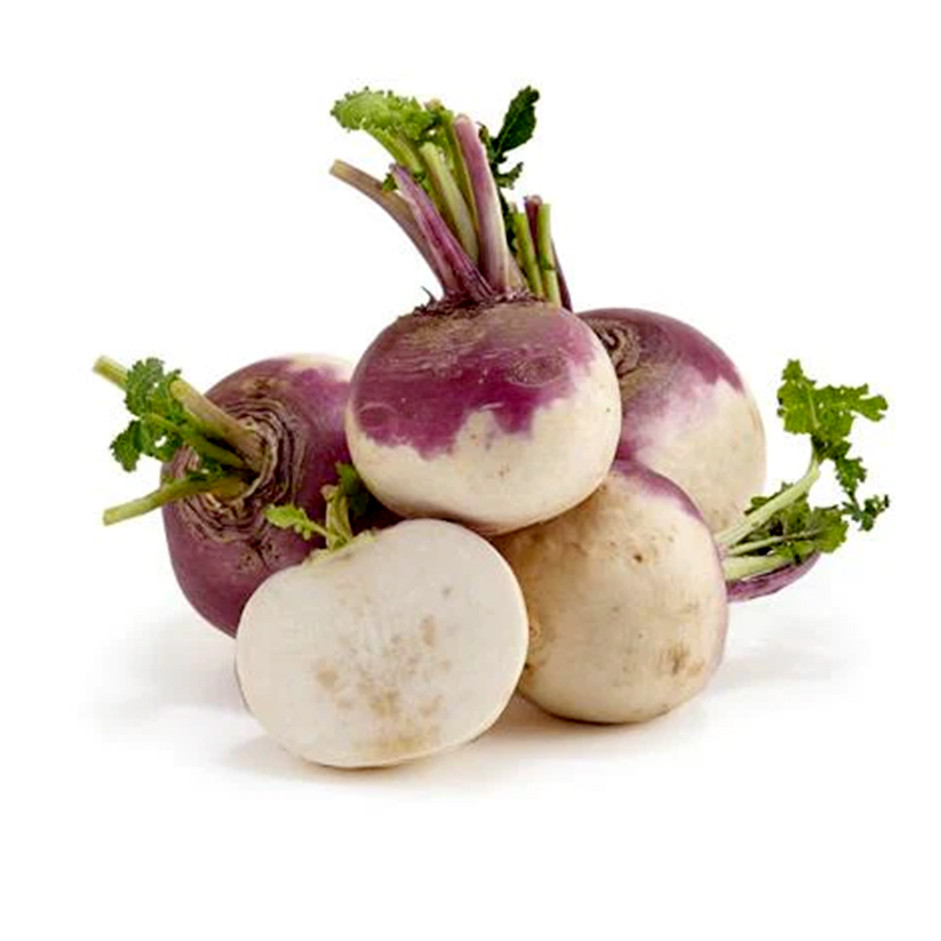
Somewhere between the sweetness of a roasted carrot and the mild peppery edge of a radish sits the baby turnip — and most people have never experienced one at its best. The turnip has an image problem. Full-grown turnips, harvested after the root has fully matured, can be sharp, bitter, and fibrous. Baby turnips are harvested weeks earlier, at 3–5 cm diameter, before the glucosinolates that create sharpness have had time to accumulate. What you get instead is a root that is sweet, tender, thin-skinned, and genuinely versatile.
Why South Africa
South Africa's Western Cape growing regions benefit from a climate that is unusually kind to root vegetables: warm, sunny days with cool nights that slow the growth rate and concentrate natural sugars in the root. This diurnal temperature variation — the same principle behind why alpine carrots are sweeter than tropical ones — produces baby turnips with exceptional natural sweetness and a more complex flavour profile than varieties grown in consistently warm climates. Our baby turnips are certified organic — no synthetic pesticides, no herbicides, no post-harvest chemical treatments. They arrive at your door within 24–48 hours of clearing our UAE warehouse.
What They Taste Like
- Raw
Crisp, juicy, mildly peppery with a sweet finish. Similar to a good radish but gentler — the kind of vegetable that surprises people who expect bitterness. - Roasted
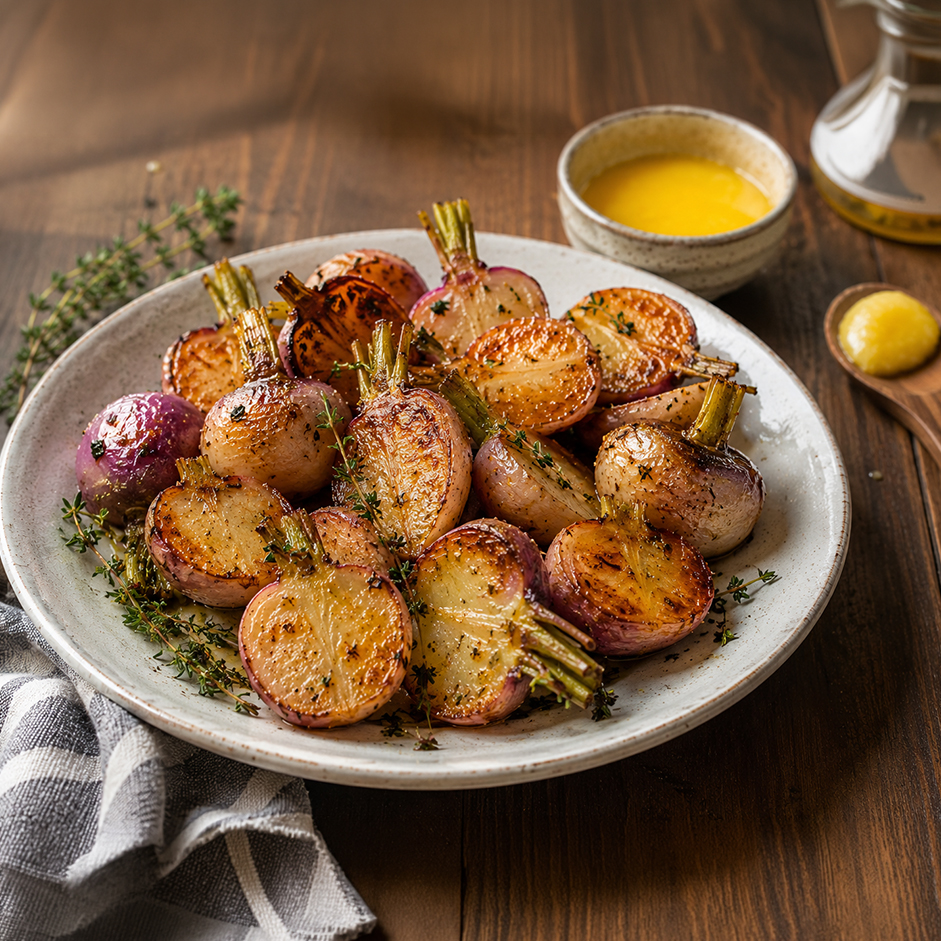
Extraordinary. The natural sugars caramelise at high heat, creating crisp, golden cut edges and a deeply sweet, almost buttery interior. This is the preparation that converts baby-turnip sceptics.
Mashed
Lighter than potato mash, with a mild peppery sweetness. Excellent alongside grilled fish, lamb, or roasted chicken. - Braised
In a light stock with butter and honey, baby turnips develop a glossy glaze and a flavour that belongs on a restaurant plate. - Pickled
In white vinegar with mustard seeds, dill, and salt, they transform into a sharp, crunchy condiment that belongs alongside every grain bowl, sandwich, and rice dish in the kitchen.
What The Science Says
Baby turnips are a Brassica vegetable — the same botanical family as broccoli, kale, cabbage, and Brussels sprouts. This is nutritionally significant because Brassica vegetables contain glucosinolates: sulphur-containing compounds that are converted by the body into isothiocyanates and indoles during digestion. These compounds have been extensively studied for their role in cancer prevention. Isothiocyanates inhibit the activation of carcinogens, support phase II detoxification enzymes in the liver, and have demonstrated anti-proliferative effects on breast, prostate, and colorectal cancer cells in laboratory studies. The World Cancer Research Fund includes Brassica vegetable consumption in their cancer prevention recommendations.
Beyond Glucosinolates, Baby Turnips Provide
- Vitamin C (21mg per 100g — 23% of daily requirement)
- Dietary fibre (1.8g per 100g)
- Folate (15mcg per 100g, essential during pregnancy)
- Potassium (191mg per 100g, supporting cardiovascular health)
How To Use Baby Turnips Every Day
- Roasted with A2 Ghee (The Simplest, Best Preparation)
Halve or quarter. Toss with A2 ghee, sea salt, freshly cracked black pepper. Roast at 200°C for 20–25 minutes. The cut edges brown and caramelise. No additional seasoning needed — the ghee and heat do the work. - Glazed Pan Side
Melt A2 ghee in a wide pan. Add whole baby turnips. Cook 8–10 minutes on medium heat, turning occasionally. When golden all over, add a splash of water, cover, and steam 3 minutes. Finish with lemon zest and sea salt.\| - Cream of Turnip Soup
Dice and sweat with onion and garlic in A2 ghee. Add vegetable stock. Simmer 15 minutes. Blend smooth. Season. Naturally creamy without dairy. - Pickled Turnips (24-Hour)
Slice or quarter. Pack into a jar with white wine vinegar, 1 tsp salt, 1 tsp sugar, mustard seeds, dill sprigs. Seal and refrigerate overnight. Serve alongside rice dishes, grain bowls, or grilled meat. - Raw Slaw
Grate or thinly slice. Combine with grated carrot, thinly sliced green apple, and a lemon-tahini dressing. Serve as a side or in wraps.
| Nutrient | Per serving | Per 100g | % Daily Value* |
|---|---|---|---|
| Energy | 28 kcal / 117 kJ | 28 kcal / 117 kJ | 1% |
| Total fat | 0.1g | 0.1g | 0% |
| Saturated fat | 0g | 0g | 0% |
| Trans fat | 0g | 0g | — |
| Total carbohydrates | 6.4g | 6.4g | 2% |
| Dietary fibre | 1.8g | 1.8g | 6% |
| Sugars (natural) | 3.8g | 3.8g | — |
| Protein | 0.9g | 0.9g | 2% |
| Sodium | 67mg | 67mg | 3% |
| Vitamin C | 21mg | 21mg | 23% |
| Folate | 15mcg | 15mcg | 4% |
| Potassium | 191mg | 191mg | 4% |
| Calcium | 30mg | 30mg | 2% |
| Manganese | 0.13mg | 0.13mg | 6% |
| Glucosinolates (Brassica phytonutrients) † | Approx. 60–100mg per 100g | — | — |
Reviews
Login
Don't have an account?
Sign UpBaby turnips are harvested at 3–5 cm diameter, before the root has fully matured. At this stage, the sugars are more concentrated relative to the starches, giving baby turnips a noticeably sweeter, milder flavour compared to full-grown turnips. The skin is so thin it does not need to be peeled — simply scrub, trim the tops, and they are ready to use. Full-grown turnips develop a sharper, more pungent flavour as glucosinolate compounds intensify with age. South Africa's climate — warm days and cool nights in the Western Cape growing regions — produces root vegetables with exceptional natural sweetness. The diurnal temperature variation (day-to-night temperature swing) slows growth slightly and allows sugars to accumulate in the root. This is the same principle behind why alpine and northern-climate root vegetables are generally sweeter than those grown in consistently warm climates. South African baby turnips in UAE's organic supply chain are consistently the sweetest available outside seasonal Japanese or French baby turnip harvests. Baby turnips are harvested at 3–5 cm diameter, before the root has fully matured. At this stage, the sugars are more concentrated relative to the starches, giving baby turnips a noticeably sweeter, milder flavour compared to full-grown turnips. The skin is so thin it does not need to be peeled — simply scrub, trim the tops, and they are ready to use. Full-grown turnips develop a sharper, more pungent flavour as glucosinolate compounds intensify with age. South Africa's climate — warm days and cool nights in the Western Cape growing regions — produces root vegetables with exceptional natural sweetness. The diurnal temperature variation (day-to-night temperature swing) slows growth slightly and allows sugars to accumulate in the root. This is the same principle behind why alpine and northern-climate root vegetables are generally sweeter than those grown in consistently warm climates. South African baby turnips in UAE's organic supply chain are consistently the sweetest available outside seasonal Japanese or French baby turnip harvests.
Baby turnips are one of the most versatile root vegetables in the kitchen because they work well across every cooking method and even raw. Roasting (best method): Halve or quarter, toss with A2 ghee or olive oil, salt, and pepper. Roast at 200°C for 20–25 minutes until caramelised and tender. The cut edges brown and sweeten dramatically. Pan-frying in A2 ghee: Whole baby turnips in a hot pan with ghee and salt. Cook 8–10 minutes, turning occasionally, until golden all over. Finish with a squeeze of lemon. Braising: Combine with chicken or vegetable stock, a knob of butter, and a teaspoon of honey. Simmer covered for 12–15 minutes until the liquid reduces to a glossy glaze. Mashing: Boil until tender, drain, mash with A2 ghee and sea salt. Lighter and slightly peppery compared to potato mash — excellent alongside grilled meat or fish. Raw in salads: Thinly slice and add to green salads, slaws, or grain bowls. The raw flavour is mildly peppery with sweetness — similar to radish but gentler. Pickling: Slice or quarter, pack into a jar with white vinegar, salt, sugar, mustard seeds, and dill. Ready in 24 hours. Soup: Dice and simmer with onion, garlic, ginger, and vegetable stock. Blend smooth for a naturally creamy, sweet soup that needs no cream. Baby turnips are one of the most versatile root vegetables in the kitchen because they work well across every cooking method and even raw. Roasting (best method): Halve or quarter, toss with A2 ghee or olive oil, salt, and pepper. Roast at 200°C for 20–25 minutes until caramelised and tender. The cut edges brown and sweeten dramatically. Pan-frying in A2 ghee: Whole baby turnips in a hot pan with ghee and salt. Cook 8–10 minutes, turning occasionally, until golden all over. Finish with a squeeze of lemon. Braising: Combine with chicken or vegetable stock, a knob of butter, and a teaspoon of honey. Simmer covered for 12–15 minutes until the liquid reduces to a glossy glaze. Mashing: Boil until tender, drain, mash with A2 ghee and sea salt. Lighter and slightly peppery compared to potato mash — excellent alongside grilled meat or fish. Raw in salads: Thinly slice and add to green salads, slaws, or grain bowls. The raw flavour is mildly peppery with sweetness — similar to radish but gentler. Pickling: Slice or quarter, pack into a jar with white vinegar, salt, sugar, mustard seeds, and dill. Ready in 24 hours. Soup: Dice and simmer with onion, garlic, ginger, and vegetable stock. Blend smooth for a naturally creamy, sweet soup that needs no cream.
Baby turnips are a nutritionally significant vegetable that is frequently underestimated. Per 100g: approximately 28 kcal, 6.4g total carbohydrates (3.8g natural sugars), 1.8g dietary fibre, 0.9g protein, 0g fat. Key micronutrients: Vitamin C (21mg, approximately 23% of daily requirement), Folate (15mcg, 4% DV), Potassium (191mg, 4% DV), Calcium (30mg, 2% DV), and Manganese (0.13mg, 6% DV). The most important phytochemical category is glucosinolates — sulphur-containing compounds converted by the body into isothiocyanates and indoles, which are studied for their role in cancer prevention, particularly for reducing proliferation of breast, prostate, and colorectal cancer cells. Turnips are a Brassica vegetable (same family as broccoli, kale, cabbage, and Brussels sprouts) and share the same glucosinolate profile. Turnip greens (the leafy tops), if included, are even more nutrient-dense than the roots: a 100g serving provides over 100% of daily Vitamin K and Vitamin A. If your baby turnips arrive with tops attached, do not discard them — sauté with garlic and A2 ghee as a side dish. Baby turnips are also low glycaemic index (approximately 62), suitable for blood sugar management. Baby turnips are a nutritionally significant vegetable that is frequently underestimated. Per 100g: approximately 28 kcal, 6.4g total carbohydrates (3.8g natural sugars), 1.8g dietary fibre, 0.9g protein, 0g fat. Key micronutrients: Vitamin C (21mg, approximately 23% of daily requirement), Folate (15mcg, 4% DV), Potassium (191mg, 4% DV), Calcium (30mg, 2% DV), and Manganese (0.13mg, 6% DV). The most important phytochemical category is glucosinolates — sulphur-containing compounds converted by the body into isothiocyanates and indoles, which are studied for their role in cancer prevention, particularly for reducing proliferation of breast, prostate, and colorectal cancer cells. Turnips are a Brassica vegetable (same family as broccoli, kale, cabbage, and Brussels sprouts) and share the same glucosinolate profile. Turnip greens (the leafy tops), if included, are even more nutrient-dense than the roots: a 100g serving provides over 100% of daily Vitamin K and Vitamin A. If your baby turnips arrive with tops attached, do not discard them — sauté with garlic and A2 ghee as a side dish. Baby turnips are also low glycaemic index (approximately 62), suitable for blood sugar management.
Yes to both. Raw baby turnips are fully edible and genuinely pleasant — unlike full-grown turnips, which can be aggressively peppery and fibrous when raw. Baby turnips have a texture similar to radish or jicama: crisp, juicy, and mild with a gentle peppery sweetness. Slice thinly on a mandoline for salads, or cut into batons and serve as a crudité alongside hummus or yoghurt dip. They also work well grated into slaws with carrot and cabbage. The green tops are not only edible but nutritionally exceptional. Turnip greens belong to the same family as kale, mustard greens, and cabbage. They are rich in Vitamins K, A, and C, as well as calcium and glucosinolates. The flavour is slightly bitter and peppery — similar to mustard greens. Best preparation for the greens: wash thoroughly, remove any thick stems, and sauté in A2 ghee with garlic and a pinch of salt for 3–5 minutes until wilted. Season with lemon juice and chilli flakes. Can also be added raw to smoothies (small quantity — the flavour is strong) or blanched and added to soups. In traditional South Asian and Mediterranean cooking, turnip greens have been used as a nutritional supplement and digestive aid for centuries. Do not discard them. Yes to both. Raw baby turnips are fully edible and genuinely pleasant — unlike full-grown turnips, which can be aggressively peppery and fibrous when raw. Baby turnips have a texture similar to radish or jicama: crisp, juicy, and mild with a gentle peppery sweetness. Slice thinly on a mandoline for salads, or cut into batons and serve as a crudité alongside hummus or yoghurt dip. They also work well grated into slaws with carrot and cabbage. The green tops are not only edible but nutritionally exceptional. Turnip greens belong to the same family as kale, mustard greens, and cabbage. They are rich in Vitamins K, A, and C, as well as calcium and glucosinolates. The flavour is slightly bitter and peppery — similar to mustard greens. Best preparation for the greens: wash thoroughly, remove any thick stems, and sauté in A2 ghee with garlic and a pinch of salt for 3–5 minutes until wilted. Season with lemon juice and chilli flakes. Can also be added raw to smoothies (small quantity — the flavour is strong) or blanched and added to soups. In traditional South Asian and Mediterranean cooking, turnip greens have been used as a nutritional supplement and digestive aid for centuries. Do not discard them.
Baby turnips have a shorter shelf life than full-grown turnips because their thin skin offers less protection. If the greens are attached: Remove them immediately upon arrival and store separately. Greens draw moisture from the root and cause it to wilt within 1–2 days if left attached. The greens themselves should be stored in a damp paper towel inside a loosely sealed bag in the refrigerator and used within 2–3 days. The roots: Store unwashed in the refrigerator's crisper drawer. They will keep for 1–2 weeks in good condition. Do not wash before storing — moisture on the skin accelerates decay. Wash only immediately before use. Freezing: Baby turnips can be frozen but require blanching first. Bring salted water to a boil, add halved or quartered turnips, blanch for 2 minutes, immediately transfer to ice water for 2 minutes, drain, dry, and freeze in a single layer before transferring to sealed bags. Frozen turnips are best used in cooked applications (soups, stews, roasts) — freezing softens their texture and makes them unsuitable for raw use. Staining note: Turnip juice can temporarily stain light-coloured surfaces and clothing. Use a dedicated cutting board and wipe surfaces immediately after cutting. Baby turnips have a shorter shelf life than full-grown turnips because their thin skin offers less protection. If the greens are attached: Remove them immediately upon arrival and store separately. Greens draw moisture from the root and cause it to wilt within 1–2 days if left attached. The greens themselves should be stored in a damp paper towel inside a loosely sealed bag in the refrigerator and used within 2–3 days. The roots: Store unwashed in the refrigerator's crisper drawer. They will keep for 1–2 weeks in good condition. Do not wash before storing — moisture on the skin accelerates decay. Wash only immediately before use. Freezing: Baby turnips can be frozen but require blanching first. Bring salted water to a boil, add halved or quartered turnips, blanch for 2 minutes, immediately transfer to ice water for 2 minutes, drain, dry, and freeze in a single layer before transferring to sealed bags. Frozen turnips are best used in cooked applications (soups, stews, roasts) — freezing softens their texture and makes them unsuitable for raw use. Staining note: Turnip juice can temporarily stain light-coloured surfaces and clothing. Use a dedicated cutting board and wipe surfaces immediately after cutting.


