
Product description
Brussels sprouts smell when overboiled. They taste bitter, sulphurous, and unpleasant when overboiled. They were the vegetable forced upon children at Christmas dinner, boiled to grey-green mush in a large pot, and placed on the table with the quiet threat of parental authority. That experience is real. The memory is accurate. The conclusion drawn from it — that Brussels sprouts are inherently unpleasant — is completely wrong.
The smell and bitterness of overboiled Brussels sprouts come from one specific process: the hydrolysis of glucosinolate compounds by the enzyme myrosinase, releasing hydrogen sulphide into the cooking water and the air above it. The longer the boiling time, the more hydrogen sulphide. The more hydrogen sulphide, the worse the smell and flavour. This is a cooking chemistry problem, not a vegetable problem.
Roasted at 220°C, Brussels sprouts undergo the Maillard reaction. The cut faces caramelise to deep golden-brown. The outer leaves become thin, crispy, nutty chips. The interior becomes sweet and tender. The sulphur compounds are driven off as volatile gases before they can develop. The result is a vegetable that tastes like caramelised cabbage, roasted chestnuts, and nutty greens — sweet, complex, and deeply satisfying.
This is one recipe change. And it changes everything.
THE NUTRITIONAL CASE — THE MOST CANCER-PROTECTIVE VEGETABLE AVAILABLE
Brussels sprouts have the highest glucosinolate density of any vegetable measured in nutritional research. Higher than broccoli. Higher than kale. Higher than cauliflower. Higher than any other member of the Brassica family, despite being in the same botanical family as all of them.
Glucosinolates are the sulphur-containing compounds that the Brassica plant produces as a defence mechanism against insects and pathogens. When we eat Brussels sprouts, these compounds are converted by the enzyme myrosinase — released when the cell walls are broken by chewing or chopping — into isothiocyanates and indoles, specifically sulforaphane and indole-3-carbinol (I3C).
Sulforaphane activates the Nrf2 pathway — the master transcription factor that upregulates over 200 antioxidant and detoxification genes in human cells, including enzymes that neutralise carcinogens before they can damage DNA. It also directly inhibits HDAC enzymes, which are overexpressed in multiple cancer types. Clinical studies show sulforaphane reduces proliferation of breast, prostate, colorectal, bladder, and pancreatic cancer cells.
Indole-3-carbinol (I3C) modulates estrogen metabolism — specifically shifting it toward the 2-hydroxyestrone pathway (cancer-protective) and away from the 16α-hydroxyestrone pathway (cancer-associated). This mechanism is studied specifically for breast cancer prevention.
Over 500 peer-reviewed studies have examined cruciferous vegetable consumption and cancer risk. Multiple large prospective cohort studies find inverse associations between cruciferous vegetable consumption and colorectal, lung, and bladder cancer risk — with Brussels sprouts showing consistently strong associations due to their exceptional glucosinolate content.
These are vegetables, not medicines. But the evidence base for the cancer-preventive properties of Brussels sprouts is more substantial than for almost any other single food.
BEYOND GLUCOSINOLATES — THE COMPLETE NUTRITIONAL PROFILE
- Vitamin C at 94% DV per 100g: More Vitamin C than an orange. Essential for immune function, collagen synthesis, and iron absorption. Boiling destroys 50–70% of the Vitamin C (it leaches into the cooking water). Roasting preserves far more.
- Vitamin K at 148% DV per 100g: One of the highest Vitamin K concentrations in any fresh vegetable. A single 100g serving exceeds the daily Vitamin K requirement. Essential for bone mineralisation and cardiovascular protection.
- Folate at 15% DV, Iron at 8% DV, Fibre at 14% DV: Comprehensive micronutrient and prebiotic fibre support in a single vegetable. The iron in Brussels sprouts is accompanied by the Vitamin C required for its maximum absorption — the vegetable is self-optimising for iron bioavailability.
- Omega-3 fatty acids: A small but meaningful amount of ALA (alpha-linolenic acid) — unusual in a non-oily vegetable and particularly relevant in plant-based diets.
WHY HOLLAND
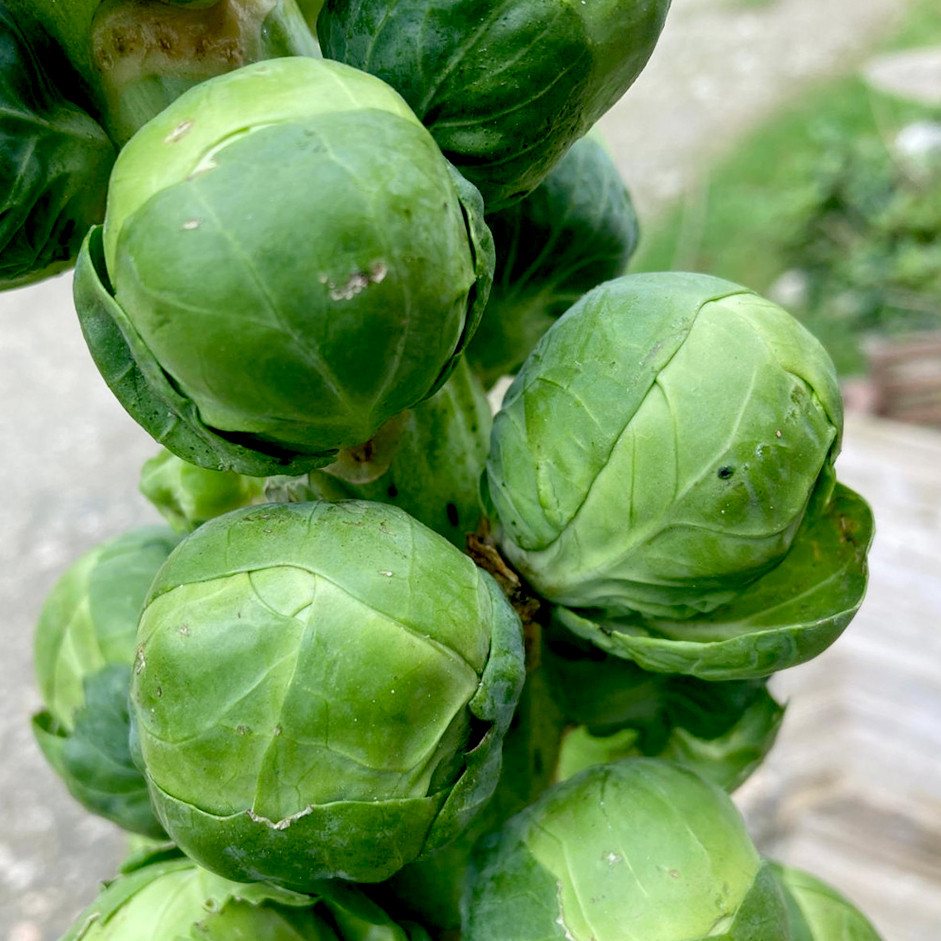
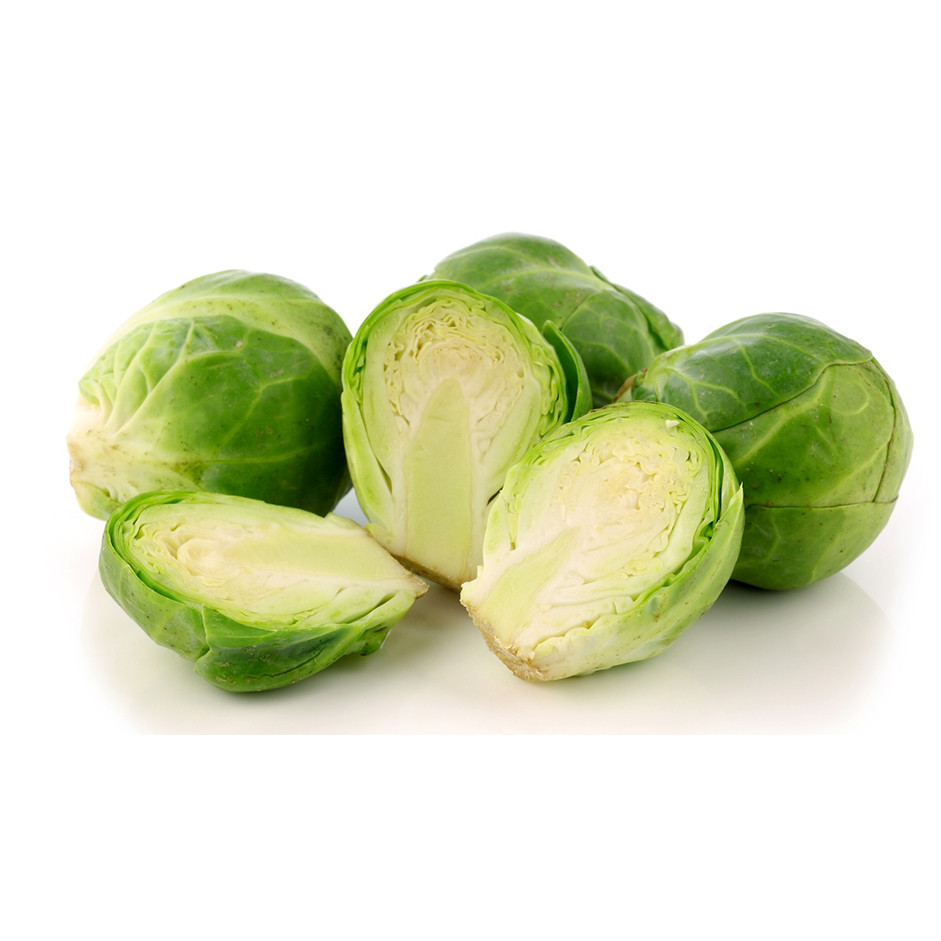
Dutch Brussels sprouts are grown in the cool, moist climate of the Netherlands' coastal and polder regions — the ideal conditions for Brassica development. Cool temperatures slow the growth rate, allowing glucosinolate concentration to build over a longer growing period. Tightly packed, dense heads — the sign of slow, cool growth — contain more glucosinolates per gram than loose, heat-stressed sprouts from warmer climates.
Dutch agricultural precision ensures consistent head size and density, rigorous organic certification, and year-round availability — meaning Rootz always has freshly harvested Dutch sprouts regardless of season.
| Nutrient | Per serving | Per 100g | % Daily Value* |
|---|---|---|---|
| Energy | 43 kcal / 180 kJ | 43 kcal / 180 kJ | 2% |
| Total fat | 0.3g | 0.3g | 0% |
| Saturated fat | 0.1g | 0.1g | 0% |
| Trans fat | 0g | 0g | — |
| Total carbohydrates | 8.9g | 8.9g | 3% |
| Dietary fibre | 3.8g | 3.8g | 14% |
| Sugars (natural) | 2.2g | 2.2g | — |
| Protein | 3.4g | 3.4g | 7% |
| Sodium | 25mg | 25mg | 1% |
| Vitamin K | 177mcg | 177mcg | 148% |
| Vitamin C | 85mg | 85mg | 94% |
| Folate | 61mcg | 61mcg | 15% |
| Vitamin B6 | 0.22mg | 0.22mg | 13% |
| Iron | 1.4mg | 1.4mg | 8% |
| Potassium | 389mg | 389mg | 8% |
| Manganese | 0.34mg | 0.34mg | 15% |
| Calcium | 42mg | 42mg | 3% |
| Glucosinolates (Sinigrin, Glucobrassicin, Sulforaphane precursor) — Highest Density of Any Vegetable † | Total glucosinolates: ~237mg per 100g fresh weight (highest of any Brassica vegetable measured) | — | — |
THE SEVEN-DAY PLAN FOR 1KG
A kilogram of Brussels sprouts is eight to ten generous servings. These are the seven preparations that use them without repetition:
- Roasted at 220°C with A2 ghee and lemon (Days 1–2): The foundational preparation. Everything described above. Finish with aged balsamic. This is the dish that changes minds.
- Pan-fried in A2 ghee with cumin and dried chilli (Day 3): The Indian-Italian fusion that the Rootz kitchen was made for. 8 minutes. Serve with dal and rice.
- Shaved raw salad with apple cider vinegar dressing (Day 4): Mandoline-thin, dressed with ACV, olive oil, honey, and Dijon. Top with toasted almonds and dried cranberries. Nutty, mild, completely different from cooked.
- Brussels sprout pasta (Day 5): Roasted halved sprouts tossed with spaghetti, olive oil, garlic, chilli, and Parmesan. 20 minutes. A complete meal
- Brussels sprout soup (Day 6): Blended smooth with vegetable stock, A2 ghee, and black pepper. Garnish with cream or coconut cream. A surprisingly delicate and elegant soup.
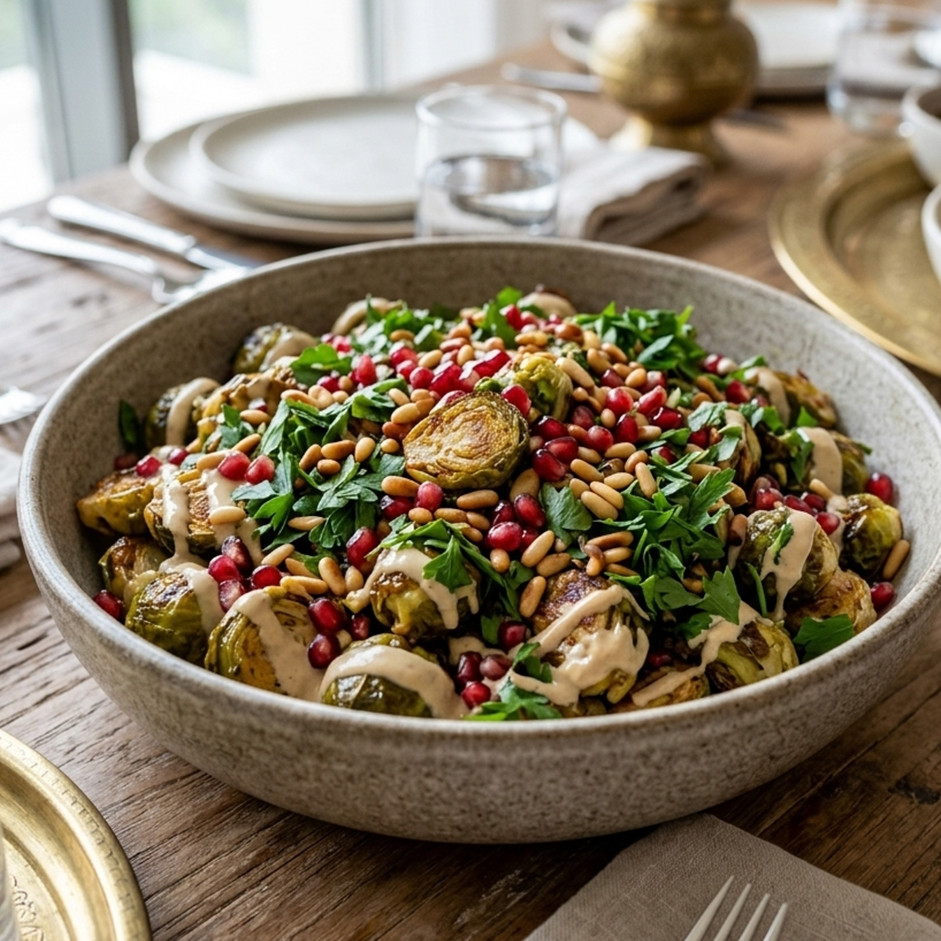
- The Levantine finish (Day 7): Roasted sprouts + tahini + pomegranate seeds + pine nuts + parsley. The preparation that belongs at a UAE dinner party table.


