
Product description
There is a fragrance that defines Southeast Asian cooking. It is not chilli. It is not lemongrass alone. It is not coconut milk.
It is the smell released when you tear a kaffir lime leaf.
Intensely floral. Citrus-forward but unlike any citrus you have encountered. Complex, penetrating, and immediately identifiable by anyone who has eaten authentic Thai green curry, Tom Kha Gai, Indonesian rendang, or Balinese babi guling. This is the fragrance of citronellal, limonene, linalool, and beta-pinene — the essential oil complex contained in the double-lobed leaves and knobbly skin of Citrus hystrix. And nothing replaces it.
Dried kaffir lime leaves lose 70–80% of their essential oil content within weeks of drying. Powdered versions are a distant ghost of the flavour. Commercial curry pastes use both and compensate with MSG and flavour enhancers. Fresh kaffir lime — torn, pounded, or finely shredded into your cooking — is the ingredient that makes the difference between a Thai curry that tastes like a restaurant dish and one that tastes like it came from a jar.
WHAT KAFFIR LIME ACTUALLY IS
Kaffir lime is not a lime in the way you understand lime. The juice is barely used — it is slightly acidic, with an unpleasant raw character that makes it unsuitable for the direct applications you would use Persian or Key lime for. The fruit's value is entirely in its essential oil-rich exterior:
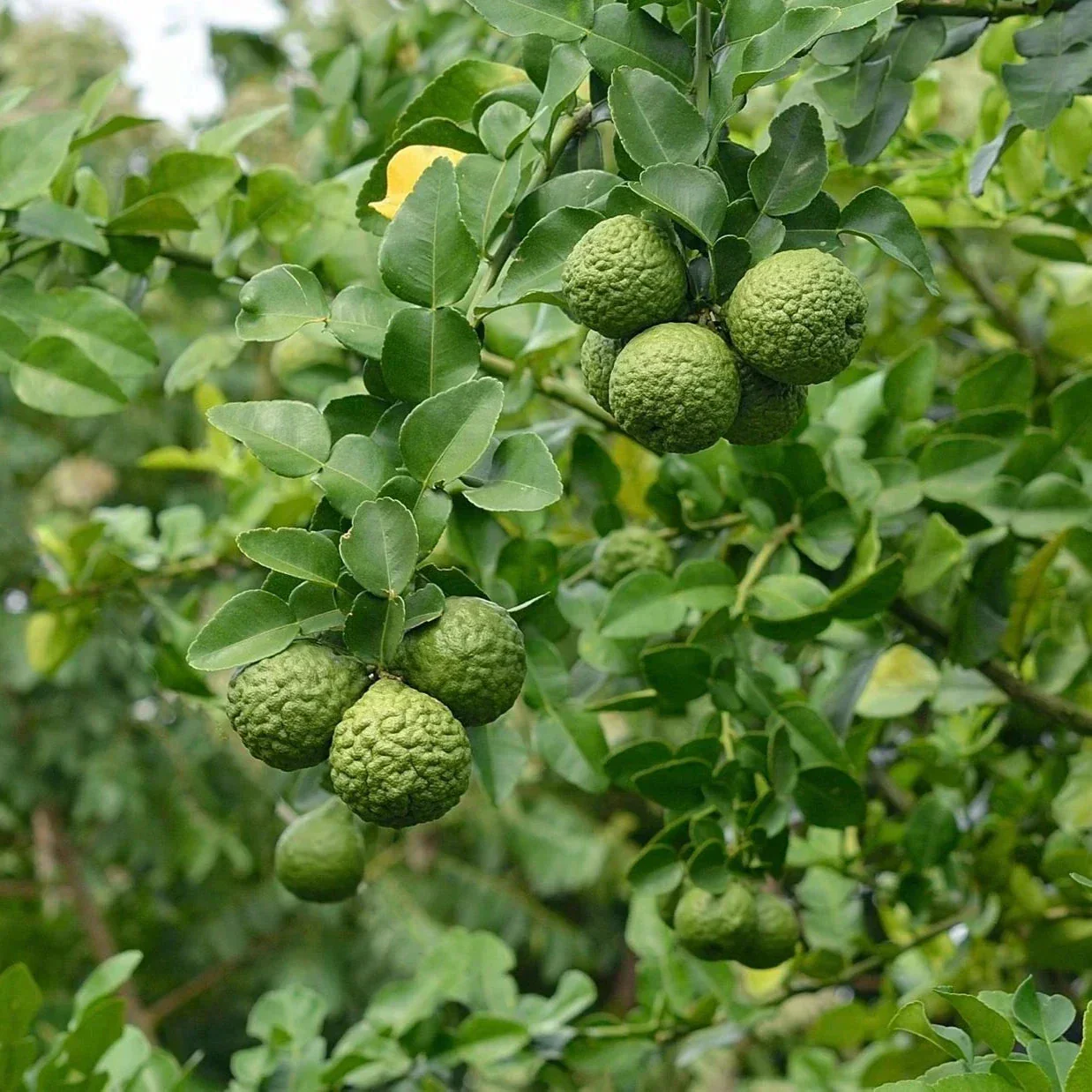
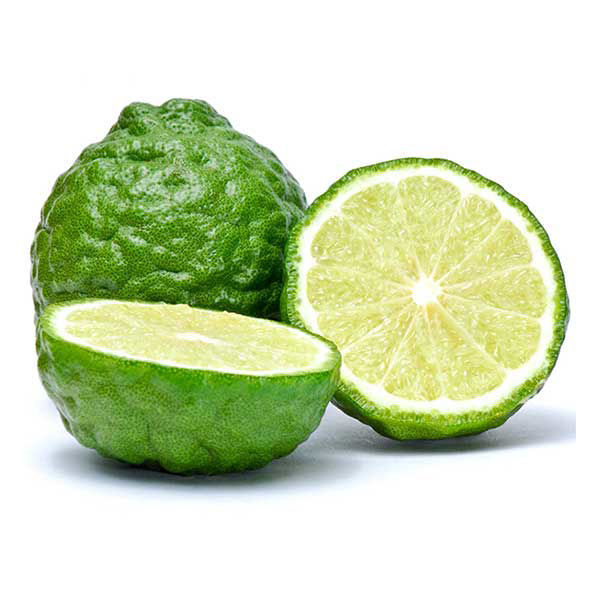
- The zest (outer skin): The knobbly, bumpy green rind contains extraordinarily concentrated essential oils — more per gram than almost any other citrus variety. Grated on a microplane and added to curry paste, it contributes a limonene-forward citrus intensity that the leaves cannot fully replicate.
- The leaves: Botanically unique — two glossy, dark green lobes connected end-to-end by a winged petiole, forming a distinctive hourglass shape that no other plant produces. The leaves contain the same essential oil complex as the zest, in slightly different proportions (more citronellal relative to limonene), and are the primary flavouring in Thai green and red curry paste, Tom Kha, many Thai soups, Indonesian sambals, and Balinese spice pastes.
WHY THAILAND
Thailand is the primary global origin for culinary-grade makrut lime, and Thai-grown varieties have the highest essential oil concentration in the species — a product of the specific growing conditions, traditional cultivation methods, and variety selection that Thai farmers have developed over centuries of growing this plant primarily for culinary rather than juice production.
Thai culinary makrut lime is grown and harvested specifically for leaf and zest production: trees are maintained at a smaller size than juice lime trees, leaves are harvested at peak essential oil development (typically in the morning), and the fruit is picked when the skin's oil glands are at maximum concentration. This is an ingredient cultivated with the precision of a spice, not a commodity fruit.
HOW TO USE
The zest — three ways:
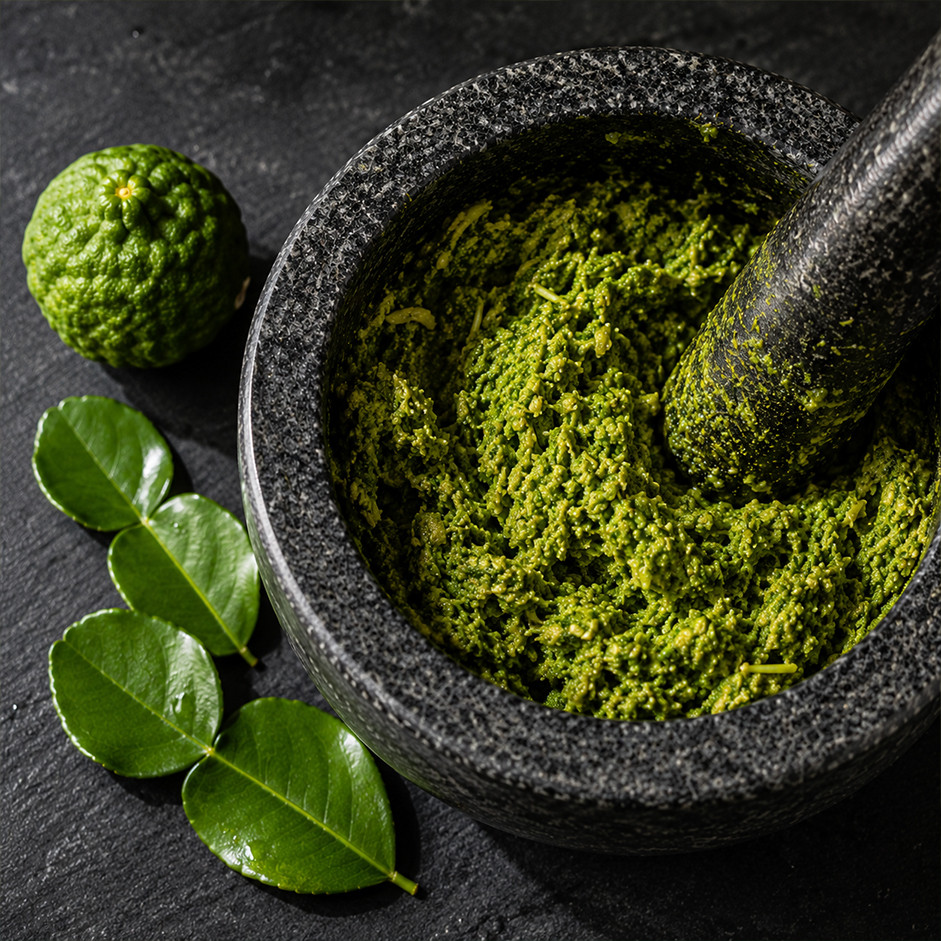
- Grated into curry paste (essential): Microplane the outer green skin (avoid the white pith) and add 1–2 teaspoons per batch of curry paste. The zest's limonene concentration adds a citrus brightness that the leaves alone do not provide.
- In sweet preparations: Kaffir lime zest in coconut rice pudding, panna cotta, or ice cream is a Thai dessert staple. The floral aromatics work in sweet contexts with a complexity that standard lime zest cannot approach.
- Infused into oil or syrup: Peel strips of zest and steep in warm coconut oil or simple syrup for 30 minutes. Strain. The infused oil works as a finishing drizzle on Thai dishes; the infused syrup makes the most aromatic cocktail base available.
WHAT THE SCIENCE SAYS
- Essential oil composition: Thai kaffir lime essential oil is dominated by citronellal (35–80% depending on the plant part and harvest stage), followed by limonene, linalool, beta-pinene, and sabinene. Each compound has studied biological activities:
- Citronellal: Demonstrated antimicrobial activity against dental pathogens (S. mutans, P. gingivalis), antifungal effects, and insect-repellent properties. Widely studied for its anti-anxiety effects in clinical aromatherapy — reducing cortisol and heart rate in controlled trials.
- Limonene: A studied antioxidant that protects cell membranes from oxidative damage, demonstrated chemopreventive properties in laboratory models, and skin-penetrating properties that make it the active ingredient in multiple topical drug delivery formulations.
- Linalool: The same calming terpene found in lavender essential oil — demonstrated anxiolytic effects in both animal models and human clinical studies, reducing stress markers when inhaled or applied topically.
- Oral health: Traditional Thai dentistry uses kaffir lime juice and zest as a tooth-whitening and gum-protecting treatment. Laboratory studies confirm antibacterial activity against the principal oral pathogens responsible for dental caries and periodontitis at concentrations achievable through regular food use.
| Nutrient | Per serving | Per 100g | % Daily Value* |
|---|---|---|---|
| Energy | 4 kcal / 17 kJ | 37 kcal / 155 kJ | <1% |
| Total fat | 0.1g | 0.9g | 1% |
| Saturated fat | 0g | 0g | 0% |
| Trans fat | 0g | 0g | — |
| Total carbohydrates | 0.9g | 9.0g | <1% |
| Dietary fibre | 0.3g | 3.0g | 1% |
| Sugars (natural) | 0.2g | 1.7g | — |
| Protein | 0.2g | 1.7g | <1% |
| Sodium | 1mg | 14mg | 0% |
| Vitamin C | 2.9mg | 29mg | 3% |
| Vitamin A | 3mcg RAE | 30mcg RAE | <1% |
| Calcium | 10mg | 103mg | 8% |
| Iron | 0.3mg | 2.9mg | 2% |
| Potassium | 10mg | 102mg | 0% |
| Essential Oil Complex — Citronellal, Limonene, Linalool, Beta-Pinene † | Essential oil yield: 0.2–0.5ml per 100g fresh leaf · Citronellal: 35–80% of total essential oil | — | — |


