Why More UAE Families Are Switching to Organic Atta
Introduction: Something Is Changing in the UAE Kitchen
It did not make headlines. There was no viral moment, no celebrity endorsement, no government campaign behind it. And yet, slowly and steadily, something is shifting in the most private room of homes across the UAE.
The kitchen.
More specifically, the shelf where the atta bag sits.
For years, that shelf told a familiar story. The same trusted supermarket brand, the same clean white packaging, picked up without much thought during weekly grocery runs or added routinely to an online organic grocery cart. Atta was atta. You ran out, you restocked. It was one of the few staples that rarely invited questions.
That is beginning to change.
And the shift is not being driven by trends or influencers. It is coming from families living in the UAE—parents noticing their child feels uncomfortable after meals, professionals wondering why they feel heavy despite eating home-cooked food, and young couples taking a closer look at ingredient labels for the first time.
It is coming from a quiet but persistent realization: something in our everyday food may have drifted away from what it was meant to be.
In a country where food is sourced globally and built for convenience, this question carries even more weight. And increasingly, families are choosing to ask it.
Organic atta is no longer a niche choice in the UAE. It is becoming the answer to a question more households are asking openly: what exactly are we eating every single day—and is there a better way?
This is the story of why, for a growing number of UAE homes, that answer begins with the atta bag.
The Moment Families Start Asking Different Questions
Most families in the UAE who switch to organic atta do not arrive at that decision through a research paper or a doctor’s advice. They arrive there through a moment of quiet curiosity—one that gradually grows into something harder to ignore.
It may begin with a parent noticing their child feels unusually heavy or uncomfortable after meals. Or a visiting parent or grandparent remarking, almost casually, that flour used to smell different, feel different, and that rotis once had a taste that seems to be missing today.
These are not urgent health alarms. They are subtle observations. But they point to something deeper: a growing awareness that even our most everyday food may have changed in ways we never really questioned.
In a place like the UAE, where food is sourced globally and designed for consistency and shelf life, that realization becomes even more relevant.
Organic atta, for many families, becomes the answer to a simple but powerful question they are finally ready to ask: what if we returned to something more real?

The Problem With What We Normalised
For many households across the UAE, branded commercial atta—whether locally packaged or imported—quietly became the default definition of normal. It came in neat, polished packaging, behaved predictably in the kitchen, and produced rotis that looked consistently perfect. What it did not always do was nourish in the way wheat naturally should.
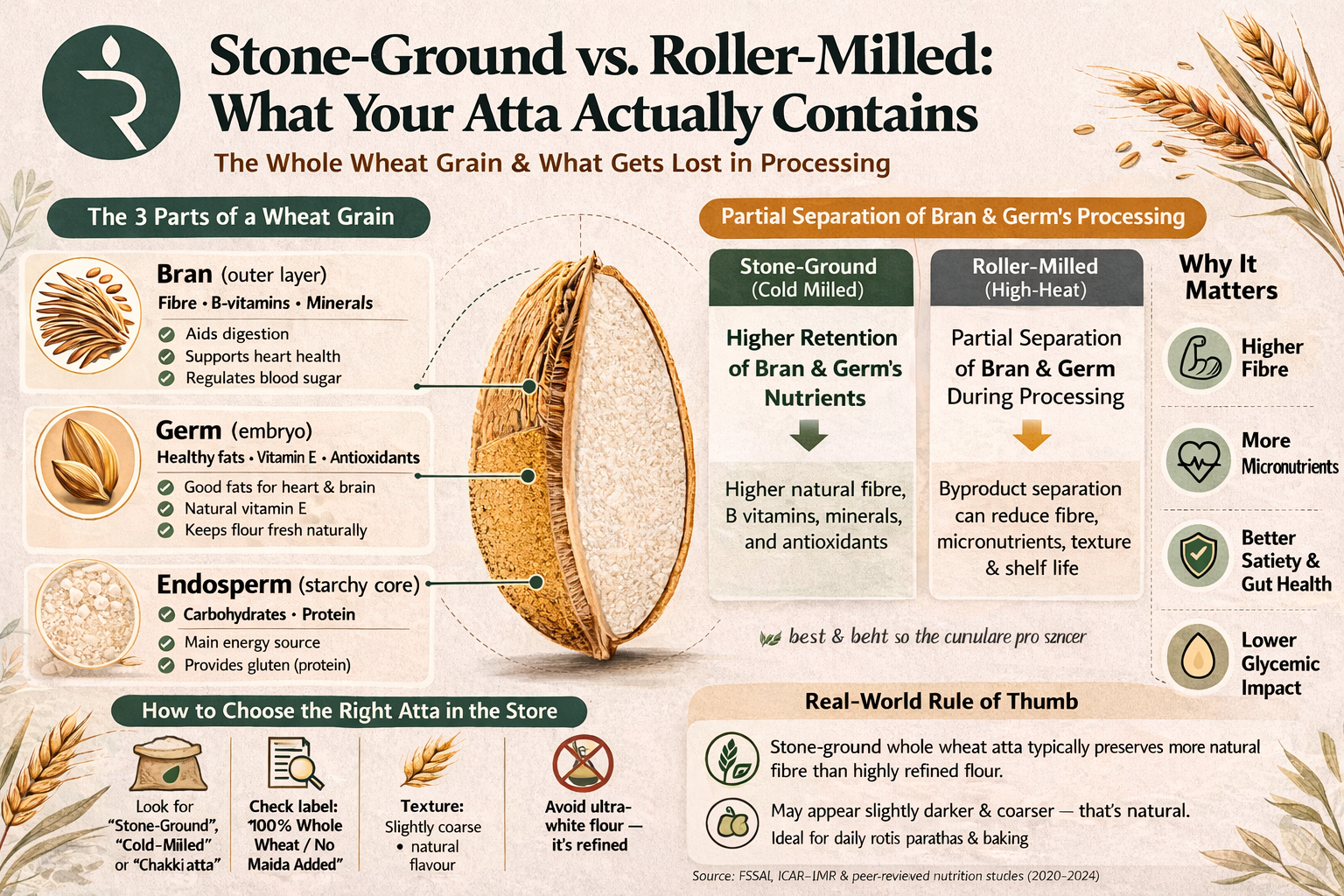
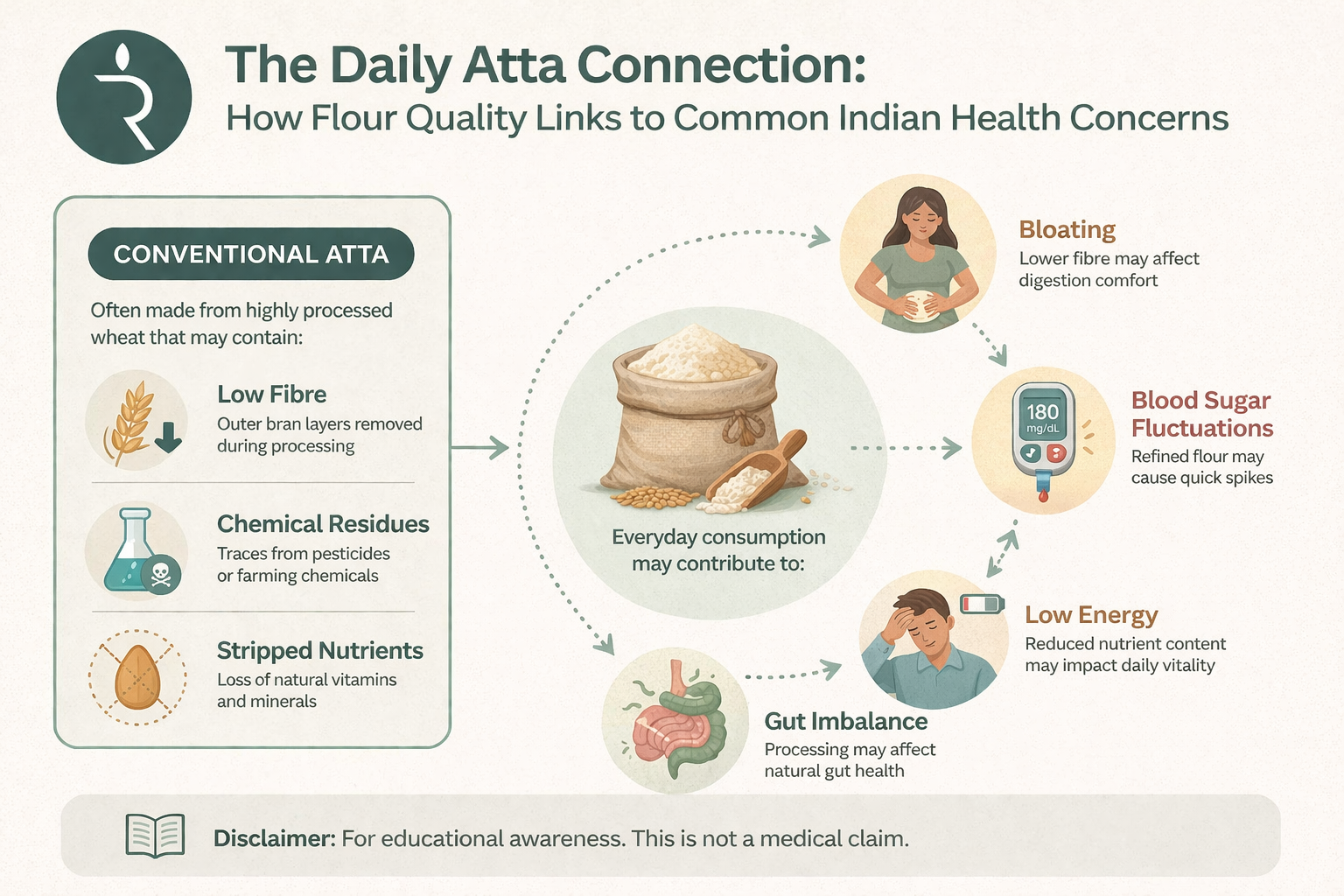
Much of the wheat flour available today is processed with shelf life, transport stability, and visual uniformity in mind. In that process, the wheat bran and germ—where most of the grain’s nutritional value resides—are often partially removed. The flour may be refined to achieve a consistent color and texture, and treated to perform uniformly across kitchens.
In a global supply chain like the UAE’s, where wheat is sourced, processed, and transported across countries, the focus is often on durability and scalability rather than freshness and nutritional integrity. The wheat itself may be grown using synthetic pesticides and fertilizers, leaving behind residues long before it reaches your kitchen shelf.
None of these processes are designed to improve the nutritional quality of the flour. They are designed to make it more stable, more consistent, and more commercially efficient.
Over time, many families have been consuming flour that bears little resemblance to the stone-ground, whole-grain atta that was once the norm.
The shift to organic atta is, at its core, a decision to move away from that compromise—and return to something closer to real, whole food.
Five Reasons: UAE Families Are Making the Switch Right Now
The Children Are the Turning Point
Across the UAE, the family member who most often triggers the switch to organic atta is not the health-conscious adult—it is the child. Parents who may overlook their own digestive discomfort become far more attentive when they begin to notice similar patterns in their children.
Bloating, irregular digestion, low energy after meals, and difficulty concentrating are concerns that many parents in the UAE are increasingly aware of—especially with growing exposure to global health standards and pediatric guidance. When these patterns start to feel connected to daily food rather than lifestyle factors alone, the atta in the kitchen becomes one of the first things families reconsider.
Children’s bodies are still developing, and what they consume daily plays a critical role in their long-term health. Organic atta, free from chemical residues and naturally rich in fibre and nutrients, offers a cleaner and more supportive foundation for everyday meals.
A Return to the Chakki Mindset
For many residents in the UAE—especially Indian expats—there is a deep, almost sensory memory attached to the idea of the chakki. Freshly milled flour, ground from whole wheat, carrying a natural aroma and texture that felt alive.
That experience may feel distant in a modern, globally supplied food system. But it has not been forgotten.
Organic stone-ground atta brings that experience back—not as nostalgia, but as a genuinely better way of producing flour. Unlike industrial roller milling, stone grinding preserves the wheat germ and bran, maintaining the grain’s full nutritional value.
The result is flour that is more complete, easier to digest, and noticeably richer in taste and aroma.
For those who have experienced both, the difference is not subtle—and once recognized, it becomes difficult to ignore.
The UAE Consumer Is Rethinking Its Relationship With Food
The modern consumer in the UAE is fundamentally different from the one who relied on the same familiar food brands for years without question. Today’s households are more aware, more exposed, and more intentional. They read labels. They research sourcing. They follow global conversations around nutrition and food quality. Many have already experienced enough lifestyle-related health concerns within their families to understand that diet plays a central role in long-term wellbeing.
This consumer is not chasing a trend. They are making informed, deliberate choices. And organic atta fits naturally into a broader shift toward food that is transparent, traceable, and aligned with long-term health rather than short-term convenience.
What is particularly notable in the UAE is that this awareness cuts across diverse communities—expat families, young professionals, and first-time parents alike. It is no longer limited to premium niches. More households are choosing to prioritise the quality of everyday staples, recognising that what they eat daily deserves the highest standard.
The Health Conversation Is Reaching the Kitchen
Across the UAE, conversations around health are evolving rapidly.
Concerns such as diabetes, digestive issues, hormonal imbalances, and chronic inflammation are becoming increasingly common—even among younger populations. While these discussions once focused primarily on sugar intake, sedentary lifestyles, and stress, there is now a growing awareness of something more foundational: the quality of everyday food.
Nutritionists, wellness experts, and healthcare professionals are increasingly highlighting the importance of daily staples. When the flour that forms the base of regular meals is stripped of fibre, exposed to chemical residues, and processed for shelf life rather than nutrition, its impact on digestion and metabolic health becomes difficult to overlook.
For many UAE families navigating these concerns, switching to organic atta is not seen as a cure, but as a practical and foundational step toward reducing daily nutritional stress and supporting better overall health.
Organic Is Becoming Accessible, Not Just Aspirational
One of the most meaningful shifts in the UAE over recent years is that organic atta has moved beyond being a niche product limited to specialty stores and premium aisles—it is becoming genuinely accessible, both in availability and in everyday use.
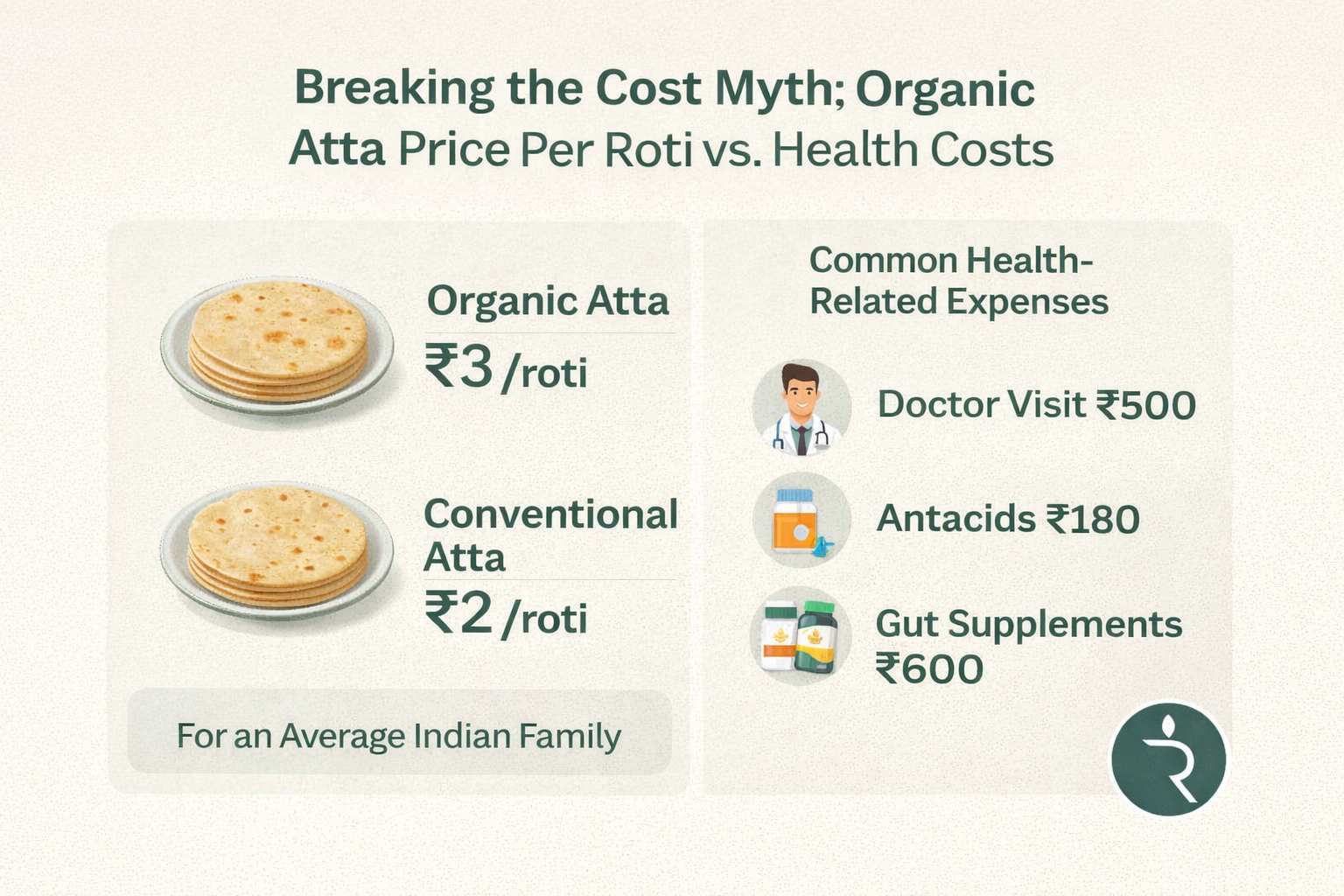
Direct-to-consumer organic brands have played a significant role in this transformation. By sourcing directly from certified organic farms and delivering through their own platforms, they have reduced unnecessary layers in the supply chain. This has made it possible to offer high-quality organic atta at a price point that is increasingly within reach for many households across the UAE.
When viewed per meal rather than per kilogram, the difference becomes even more reasonable. And when compared to the broader cost of managing lifestyle-related health concerns—whether it is frequent consultations, digestive supplements, or ongoing fatigue—the value becomes clear.
At Rootz Organics, accessibility is at the heart of the model. Certified organic atta should not feel like an indulgence. It should be a natural, practical choice for families who want to eat better without adding complexity to their lives.
Our sourcing connects trusted farms directly to your kitchen, with a focus on transparency at every stage—because in a place like the UAE, where food travels far before it reaches your plate, knowing where your flour comes from should feel simple, not exceptional.
What the Switch Actually Looks Like in Real Life
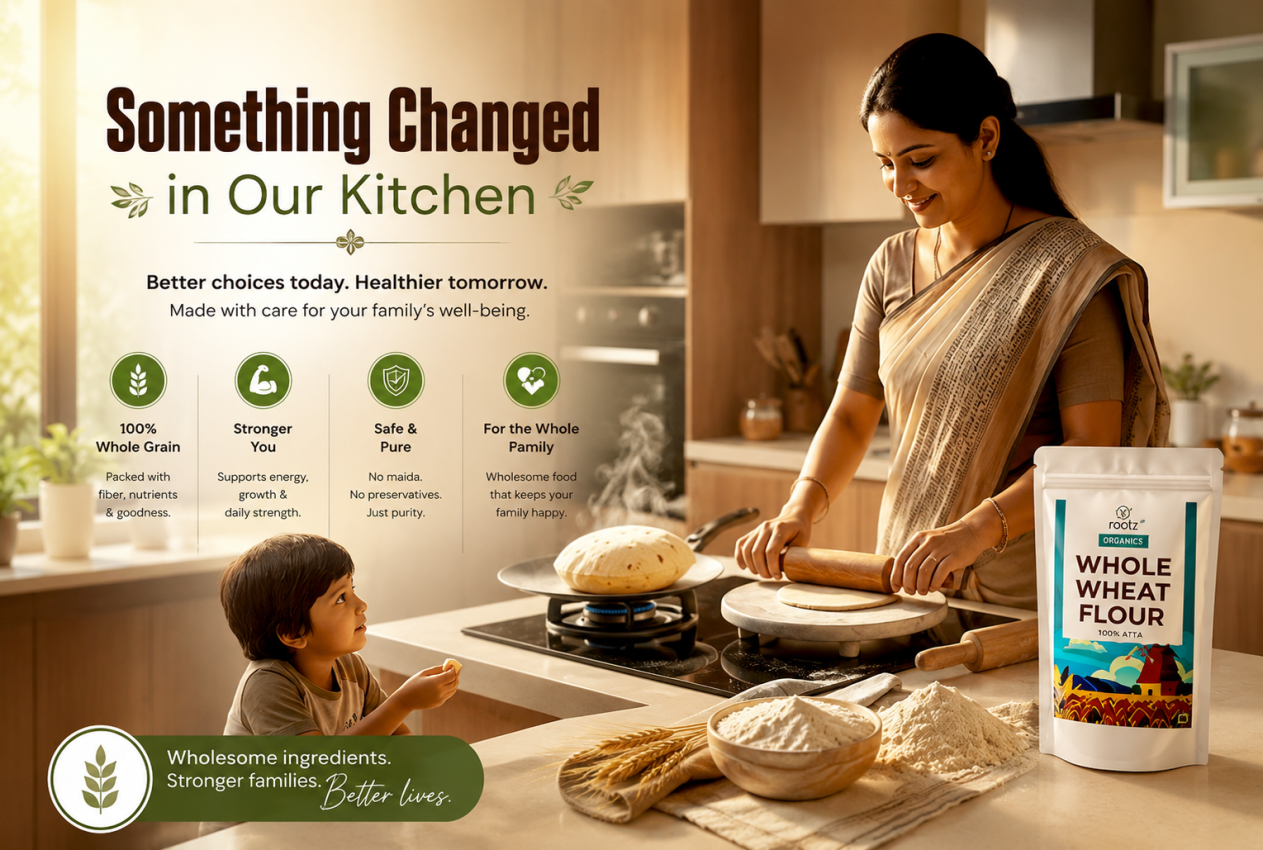
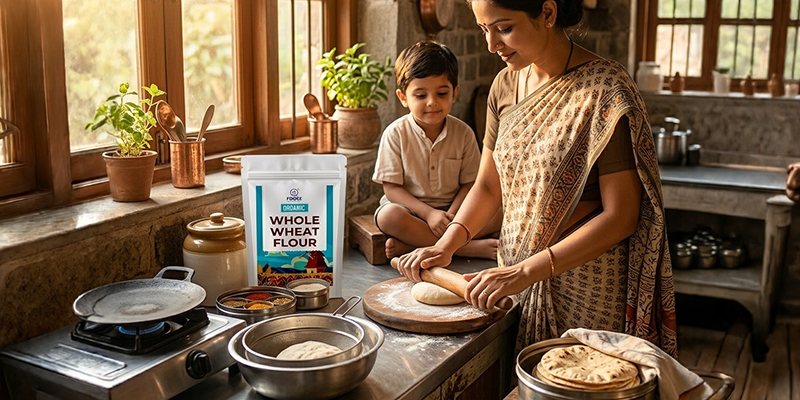
For most families in the UAE, switching to organic atta is one of the simplest and least disruptive dietary changes they can make. The roti still looks like a roti. The paratha still tastes like a paratha. The cooking process remains exactly the same.
What begins to change is how you feel after the meal. The heaviness that many people have quietly accepted as part of eating wheat often starts to ease. Digestion feels more comfortable and consistent. Energy levels after meals become steadier rather than sluggish. Over time, these small, almost subtle improvements build into a noticeable difference in everyday wellbeing.
The transition itself is usually seamless. Some families may observe that organic whole wheat atta produces rotis with a slightly deeper colour and a more natural, nutty aroma compared to the refined, bright white flour they were used to.
This is not a difference to be concerned about. It is simply the presence of the wheat germ and bran—exactly as nature intended. It is, in its most honest form, what real flour is meant to look and feel like.
Conclusion: This Is Not a Trend. It Is a Return.
Organic atta is not new. Stone-ground, chemical-free wheat flour is how food was traditionally prepared long before modern industrial processing prioritised shelf life over substance.
What is happening now, across kitchens in the UAE, is not a passing trend. It is a growing recognition. A recognition that the food we consume every single day—quietly, routinely—has a deeper impact on our health than we often acknowledge.
And that choosing better flour is not about changing everything. It is about making one simple, thoughtful, and meaningful decision.
More families across the UAE are making that decision every day. Because in a fast-paced lifestyle, the kitchen remains one of the few places where control, quality, and care still begin.
Join the Families Already Eating Better
Rootz Organics brings you certified organic, stone-ground whole wheat atta, sourced from trusted farms and delivered across the UAE. Fully traceable, genuinely clean, and thoughtfully made for modern kitchens.
Shop Rootz Organic Atta | Freshly milled. Honestly sourced. Delivered to your door.
Real wheat. Real milling. Real transparency. That is what Rootz means.
FAQs
Q: Why are families in the UAE switching to organic atta?
A: Families across the UAE are increasingly choosing organic atta due to growing awareness around pesticide residues in conventional wheat, the reduced nutritional value of heavily processed flour, and the benefits of clean, stone-ground organic flour online for better digestion and long-term wellbeing.
Q: Is organic atta really different from regular supermarket atta in the UAE?
A: Yes, significantly. Organic atta is made from wheat grown without synthetic pesticides and is typically stone-ground to preserve the wheat germ and bran. It also avoids bleaching agents and chemical additives commonly used in commercially processed flour.
Q: Does organic atta taste different?
A: Organic stone-ground atta has a naturally richer, nuttier aroma and produces rotis with a slightly deeper colour. Many families find the taste more wholesome and satisfying compared to refined, processed flour.
Q: Is organic atta worth the higher price in the UAE?
A: When considered per meal, the price difference is relatively small. Many families view it as a valuable investment in daily health, especially when compared to the potential long-term costs of managing digestive or lifestyle-related health concerns.
Q: How can I verify if organic atta is genuinely certified in the UAE?
A: Look for internationally recognized organic certifications and brands that provide transparency about sourcing and processing. Trusted brands like Rootz Organics clearly communicate their farm-to-kitchen journey, helping you make an informed choice.
-
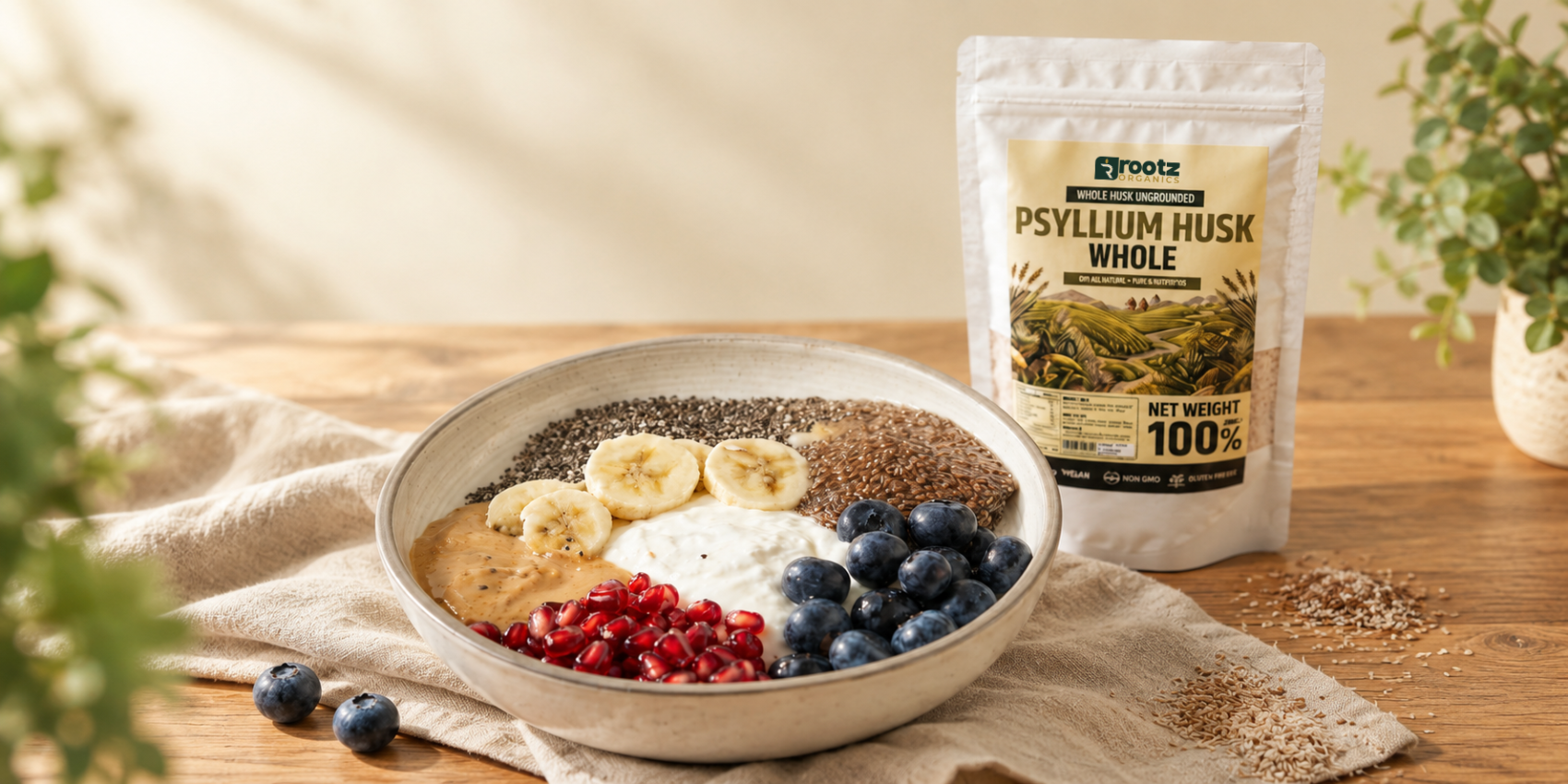
Psyllium Husk and Whole Seeds: The Simple Fibre Upgrade Every UAE Kitchen Needs
September 11th, 2026 -
 August 14th, 2026
 -
 August 14th, 2026