What Are the Types of Rice and Their GI And How Should You Choose?
Introduction: The Rice on Your Plate Is Not One Decision… It Is Several
The UAE runs on rice just as much as any other region. From fragrant Basmati in biryanis and mandi to short-grain rice used in everyday meals, rice is not just a staple here—it is a constant across diverse cultures and cuisines. For many families living in the UAE, the choice of rice often comes down to habit, availability, or taste, not health impact.
That conversation needs to change. Not because rice is unhealthy—it is not. But because different types of rice behave very differently inside your body. What most residents don’t realize is that the rice they eat daily could be quietly causing sharp spikes in blood sugar, while a simple switch to a different variety could make a significant difference.
The concept that makes this clear is the Glycemic Index. And once you understand it, choosing rice becomes one of the most practical and powerful health decisions you can make in your everyday diet.
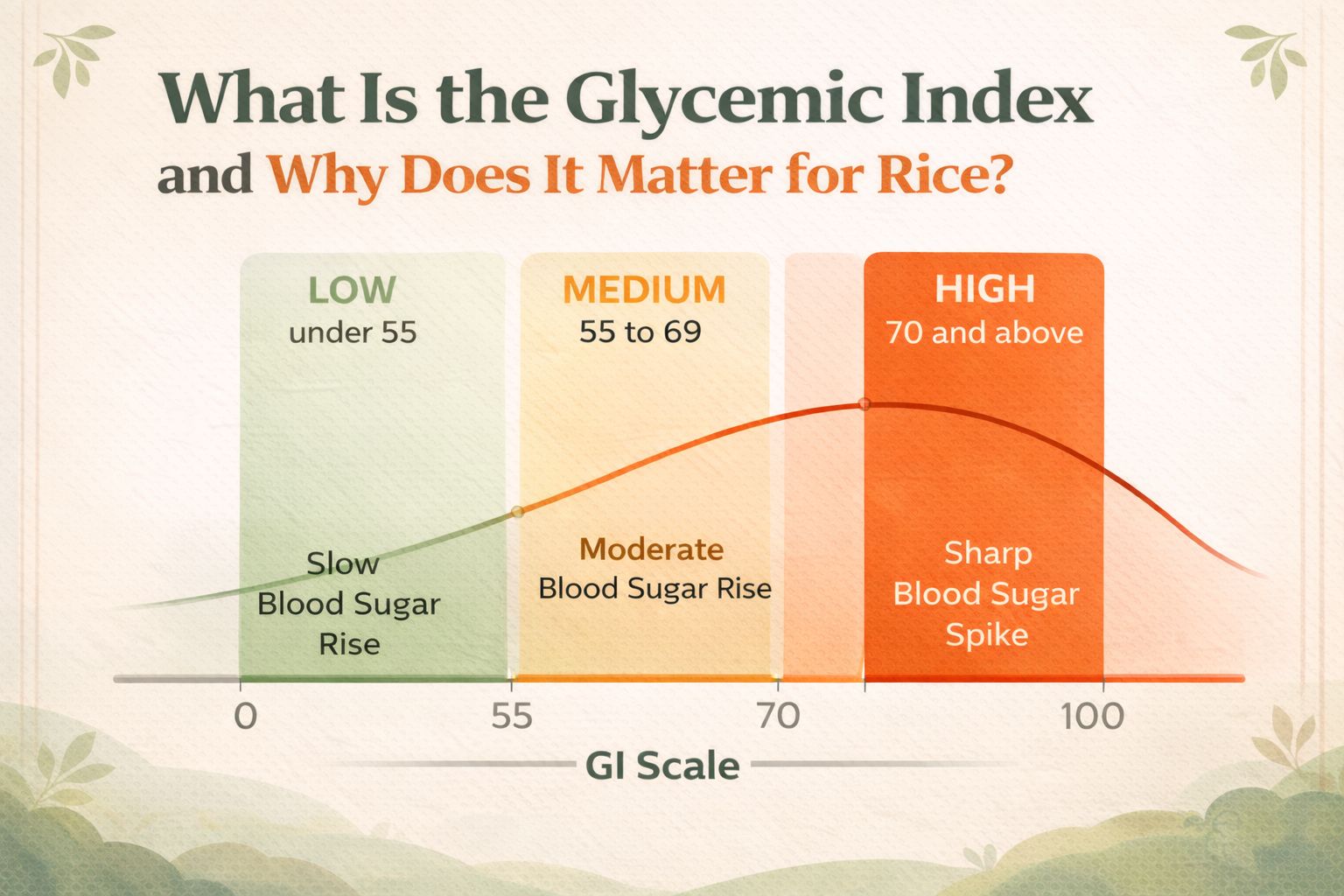
The Glycemic Index, or GI, is a measure of how quickly a carbohydrate-containing food raises your blood sugar after you eat it. Foods are scored on a scale of 0 to 100. A score under 55 is considered low, between 55 and 69 is medium, and 70 and above is high.
High-GI foods cause a rapid spike in blood sugar, followed by an equally rapid crash…leaving you hungry again quickly, with energy that rises and falls instead of staying stable. Over time, frequent blood sugar spikes are strongly linked to insulin resistance, weight gain, type 2 diabetes, and persistent fatigue—health concerns that are increasingly relevant across the UAE.
Low-GI foods release glucose more gradually. They help you stay full for longer, maintain consistent energy levels, and reduce the strain on your metabolic system with every meal.
In a country like the UAE, where rice is a regular part of meals—whether in biryanis, mandi, or everyday home cooking—often once or even twice a day, the GI of the rice you choose becomes one of the most important nutritional factors in your daily diet.
The GI of Popular Rice Varieties Available in the UAE
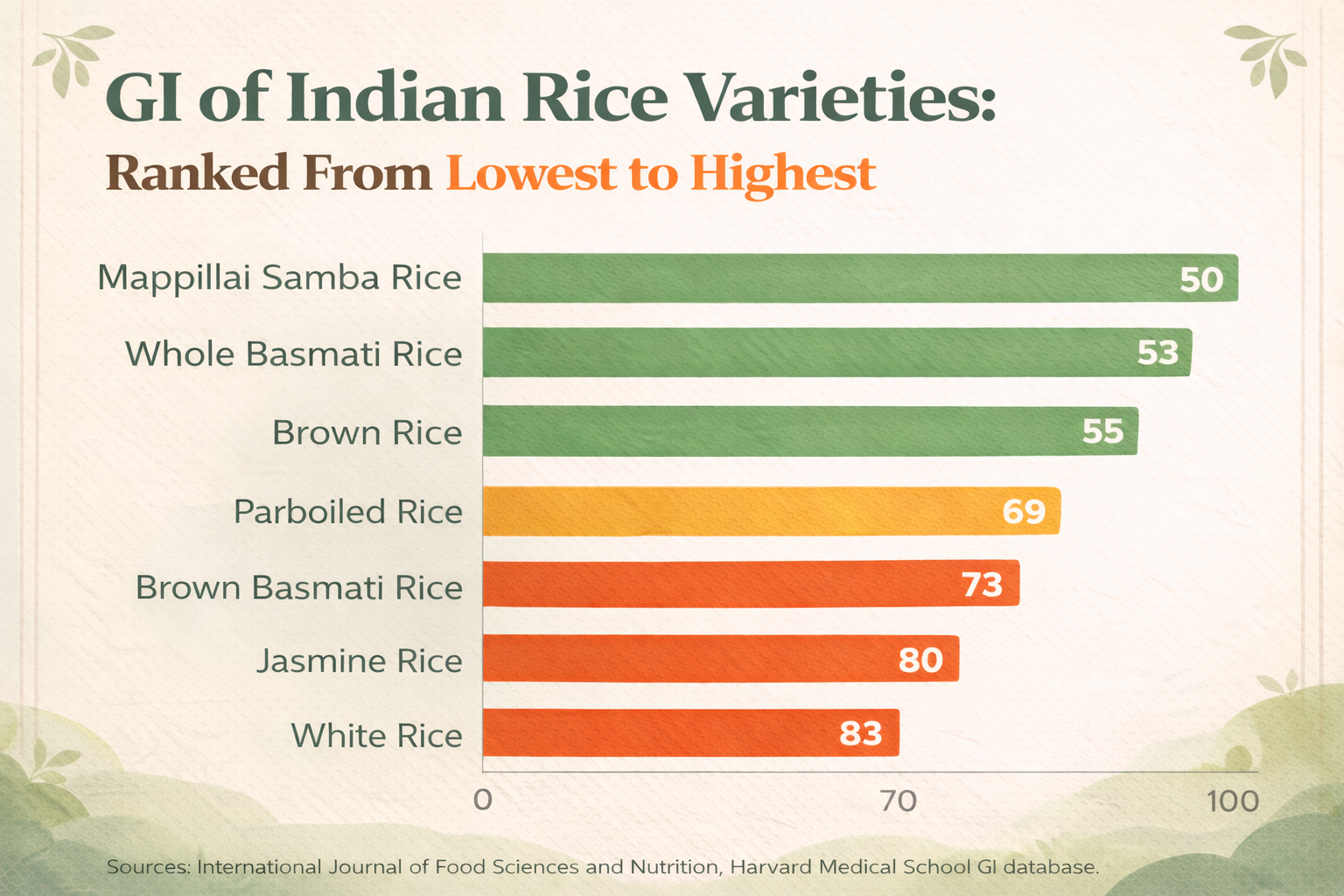
White Polished Rice (standard commercial variety): GI 70 to 87 This is the most commonly available and consumed rice across UAE supermarkets. The bran and germ are removed during milling, leaving mostly starch. With a GI ranging from 70 to 87, it is a high-GI food that digests quickly and causes rapid blood sugar spikes.
Sona Masoori (polished): GI approximately 72 Widely consumed by South Asian expatriate communities in the UAE, Sona Masoori is considered a daily staple. Studies have shown its GI to be around 72, placing it firmly in the high-GI category. Similar commonly available varieties like Ponni (around 70) and Surti Kolam (around 77) also fall into the high-GI range, making them less ideal for frequent consumption.
White Basmati Rice: GI 50 to 58 One of the most popular rice choices in the UAE, especially for dishes like biryani and mandi. Thanks to its long grain and higher amylose content, Basmati digests more slowly than regular white rice. With a GI of 50 to 58, it falls into the medium to lower range among white rice options, making it a comparatively better choice.
Brown Rice: GI 50 to 55 Increasingly available in UAE supermarkets as health awareness grows. Brown rice retains its bran and germ layers, which slow digestion. With a GI of 50 to 55, it is considered low GI. Its fibre content helps improve blood sugar control and keeps you full longer.
Brown Basmati Rice: GI approximately 50 A strong option for health-conscious consumers in the UAE. It combines the naturally lower GI of Basmati with the added fibre and nutrients of whole grain rice. With a GI around 50, it offers both taste and metabolic stability.
Red Rice (Matta / Rose Matta): GI 45 to 52 Commonly available in specialty and South Indian stores across the UAE. Rich in fibre and antioxidants, red rice has a GI between 45 and 52, making it a low-GI option. Though traditional to Kerala cuisine, it is now gaining attention among health-focused consumers in the UAE.
Black Rice: GI approximately 42 A premium, nutrient-dense variety increasingly found in organic and specialty stores across the UAE. With a GI around 42 and significantly higher fibre content than white rice, it supports stable blood sugar levels. It is also rich in Vitamin E, iron, protein, and powerful phytonutrients, making it one of the most nutritionally superior rice choices available.
Why Organic Matters Specifically for Rice
Understanding GI is one half of the rice equation. The other half is what actually comes with the rice beyond its starch profile.
As discussed in our blog on → Why Organic Rice is Better Than Regular Rice, conventionally grown rice—regardless of where it is produced—is often treated with multiple rounds of synthetic pesticides during cultivation, along with chemical fumigation during storage and polishing agents during processing. Since the UAE imports a large portion of its rice, these factors depend heavily on sourcing practices, which are not always visible to the end consumer.
This means the rice reaching many UAE households can carry residual chemicals that build up over time with daily consumption—especially concerning in a region where rice is eaten regularly.
Choosing a low-GI rice variety is a meaningful health decision. Choosing an organic low-GI variety makes it a complete one. The benefits of whole grain options like brown basmati or red rice are most fully realised when the bran layer—where fibre, minerals, and antioxidants are concentrated—has not been exposed to synthetic chemicals that can accumulate in that very layer.
For consumers in the UAE, this makes sourcing and certification critical. Look for rice that is organically certified, minimally processed, and traceable back to its origin. This ensures that what you gain nutritionally is not offset by what you unintentionally consume alongside it.
Explore → Rootz Organic Red Rice, → Rootz Organic Brown Basmati, and → Rootz Organic Sona Masoori…grown without synthetic pesticides, processed minimally, and sourced with full transparency from farm to table—now accessible for health-conscious households in the UAE.
How to Lower the GI of Any Rice You Eat
Cook and cool before reheating. When cooked rice is cooled and then reheated, a portion of its starch converts into resistant starch—a type that behaves more like fibre in the body and raises blood sugar more slowly. This means leftover rice from the previous meal can have a lower GI impact than freshly cooked rice served hot.
Pair rice with protein, fibre, and healthy fats. Combining rice with lentils, beans, grilled meats, or vegetables helps slow down glucose absorption. In UAE households, this could mean pairing rice with dal, chickpeas, grilled chicken, or vegetable-rich dishes. Adding a small amount of healthy fat—like olive oil or a spoon of pure ghee—also helps reduce blood sugar spikes. A plain plate of rice will always spike blood sugar faster than a balanced meal like biryani with protein, mandi with meat, or rice served alongside curries and vegetables.
Portion with intention. Even low-GI rice can lead to high blood sugar impact if eaten in large quantities. The ideal approach is a moderate serving of rice combined with generous portions of vegetables, protein, and healthy fats—a pattern that aligns well with both traditional Middle Eastern and South Asian meals commonly enjoyed across the UAE.
Conclusion: Rice Is Not the Problem. The Wrong Rice, Eaten the Wrong Way, Is.
The conversation in the UAE around rice and health often goes in two unhelpful directions: either rice is blamed entirely for blood sugar issues and avoided, or it continues to be consumed daily without ever questioning its impact.
The truth is far more practical. Rice is a culturally important and nutritionally valuable staple across the UAE’s diverse food landscape—when the right variety is chosen, sourced responsibly, processed minimally, and eaten as part of a balanced meal.
Red rice, brown basmati, and organic whole-grain varieties bring rice back to what it was always meant to be: a slow-releasing, fibre-rich, nutrient-dense grain that supports steady energy instead of sudden spikes.
Whether it is part of your everyday meals, biryani on weekends, or mandi gatherings, the rice you choose matters. Your daily plate deserves rice that supports your health, not works against it.
Rice That Works With Your Health, Not Against It
Rootz Organics brings you certified organic rice in the varieties that matter most—grown without synthetic pesticides, responsibly sourced, and processed to preserve the natural integrity of every grain.
→ Shop Rootz Organic Red Rice | → Shop Rootz Organic Brown Basmati | → Shop Rootz Organic Sona Masoori
Carefully sourced. Genuinely certified.
The right rice, grown right. That is the Rootz difference.
- Health and Happiness Always
FAQs
Q: Which rice has the lowest glycemic index available in the UAE? A: Black rice has one of the lowest GI values at approximately 42, followed by red rice (45–52), brown basmati (around 50), and brown rice (50–55). These varieties are widely available in UAE supermarkets and organic stores, and are among the best choices for managing blood sugar through daily rice consumption.
Q: Is Sona Masoori rice good for diabetics? A: In its standard polished form, Sona Masoori has a GI of around 72, which classifies it as high GI. For individuals in the UAE managing diabetes or blood sugar levels, switching to brown basmati, red rice, or other unpolished whole grain varieties is a more suitable everyday option.
Q: Does the cooking method affect the glycemic index of rice? A: Yes, significantly. Cooking rice slightly firm instead of very soft, cooling it before reheating, and pairing it with protein, vegetables, and healthy fats (like olive oil or ghee) can meaningfully reduce the overall blood sugar impact of a rice-based meal—common practices that fit well with both Middle Eastern and South Asian cooking styles in the UAE.
Q: Why should I choose organic rice over regular rice? A: Conventionally grown rice can involve pesticide use and chemical treatments during storage and processing. Since the UAE imports most of its rice, sourcing transparency becomes important. Choosing organic rice online ensures that the grain—especially the nutrient-rich bran layer in whole grain varieties—is not carrying unwanted chemical residues.
Q: What is the healthiest rice for everyday cooking in the UAE? A: For daily meals, brown basmati or red rice offer an excellent balance of low GI, whole grain nutrition, and versatility across dishes like biryani, mandi, or simple rice plates. For those transitioning from white rice, basmati (especially unpolished or semi-polished) is the most practical starting point due to its familiar taste and relatively lower GI among white rice varieties.
-
Psyllium Husk and Whole Seeds: The Simple Fibre Upgrade Every UAE Kitchen Needs
September 11th, 2026 -
 August 14th, 2026
 -
 August 14th, 2026