Why Pure Organic Cow Ghee is a Superfood for UAE Kitchens
Introduction: The Golden Jar That Never Should Have Left Our Kitchens
There was a time, not very long ago, when many households across traditional cultures, including UAE South Asian households kept a small steel or ceramic jar of ghee within arm's reach of the stove. Not as a health supplement. Not as a wellness trend. Simply as a matter of course.
A dollop on hot dal. A generous layer on a freshly made roti. A spoonful stirred into a child's rice before they took their first bite of solid food. Ghee was not just an ingredient in the kitchen. It was a philosophy of nourishment. A daily, unquestioned act of caring for the people you cooked for.
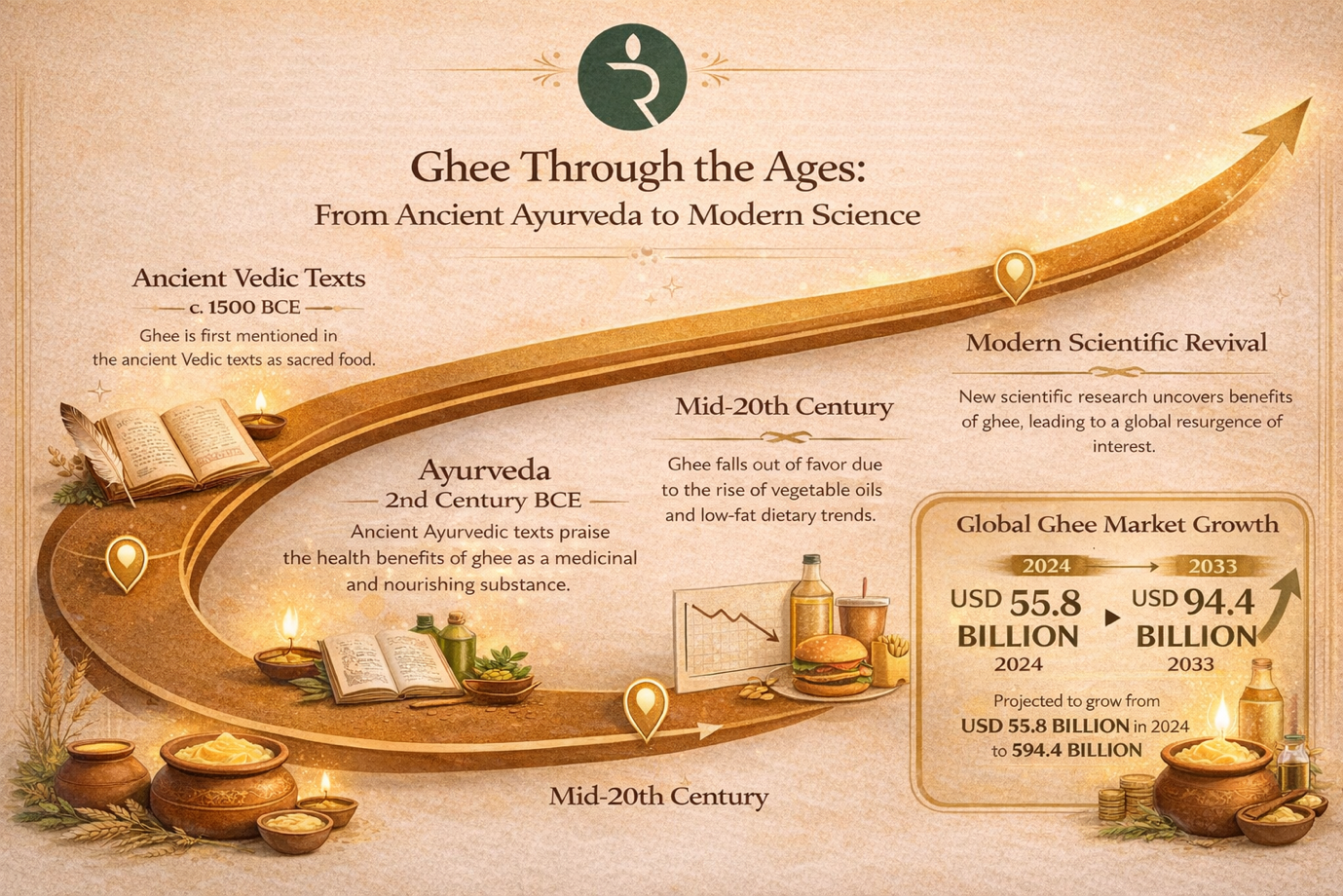
Then somewhere along the way, it fell out of favour. Dietary guidelines from the West declared all saturated fats the enemy. Refined vegetable oils took over. Vanaspati entered kitchens wearing ghee's clothes. The jar of ghee moved from the stovetop to the back of the shelf, and eventually, for many families, off the grocery list entirely.
That decision, it turns out, may have been one of the most expensive health trade-offs the modern household ever made.
Because the science that pushed ghee out has since been revised, corrected, and in many cases, quietly reversed. The scientific view on dairy fats is undergoing a fundamental change. While they were once associated with negative health effects, recent research has provided new insights into the functional benefits of dairy fats and their fatty acids. Ayurveda, which never stopped championing ghee through centuries of use, is now finding its traditional knowledge increasingly validated by modern research.
Pure organic cow ghee is not nostalgia dressed up as wellness. It is one of the most nutritionally dense, functionally powerful foods available in traditional kitchens across the UAE and beyond. And understanding why begins with understanding what it actually contains, and what most commercial ghee does not.
What Makes Organic Ghee Different From What You Are Probably Buying
Before exploring what organic cow ghee does for your health, it is worth being honest about something that affects millions of households in the UAE and globally every single day.
A significant portion of the ghee being sold is not pure ghee.
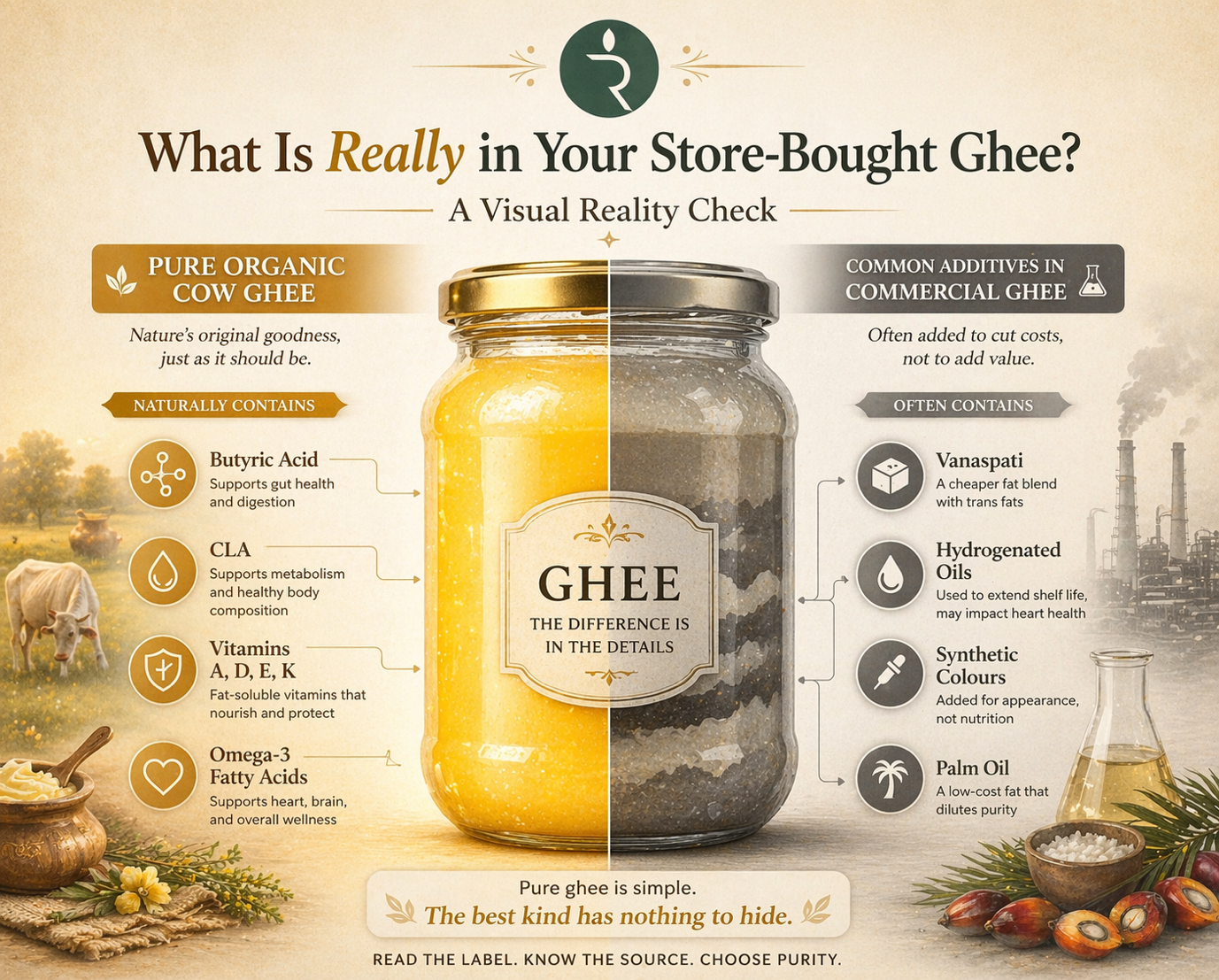
Food safety reports in multiple regions, including GCC markets, have found adulterated ghee samples. The most common of these are vanaspati, cheap vegetable oils like palm oil, hydrogenated fats, starch, synthetic colouring agents, and in some deeply concerning cases, animal body fat mixed in to mimic the texture of genuine desi ghee. The market price of ghee is roughly three times higher than most edible vegetable oils and fats, and global supply of genuine ghee consistently falls short of demand. This gap between price and availability creates a strong financial incentive for adulteration.
What makes this particularly concerning is that adulterated ghee can introduce harmful trans fats into your diet, which are linked to increased cholesterol levels and a higher risk of heart disease. Some adulterants include artificial colours or preservatives that can trigger allergic reactions, and consuming impure ghee means missing out on the genuine nutritional benefits of pure ghee entirely.
In other words, the ghee that many households believe they are consuming as a health food may, in fact, be doing the opposite of what they intend.
Organic ghee changes this completely. Organic desi cow ghee stands out due to its unique production process and superior quality. The term "desi" refers to cows that are native to the Indian subcontinent and are raised in traditional ways without hormones or antibiotics. These cows are allowed to graze freely on natural grass and herbs, which results in their milk being highly nutritious and pure. The ghee produced from their milk is considered more potent than regular ghee because it contains higher levels of essential nutrients.
The Science Behind the Superfood
The word "superfood" is overused to the point of meaninglessness in modern wellness culture. Organic ghee earns the title honestly, through a nutritional profile that is genuinely exceptional. Here is what the science actually says:
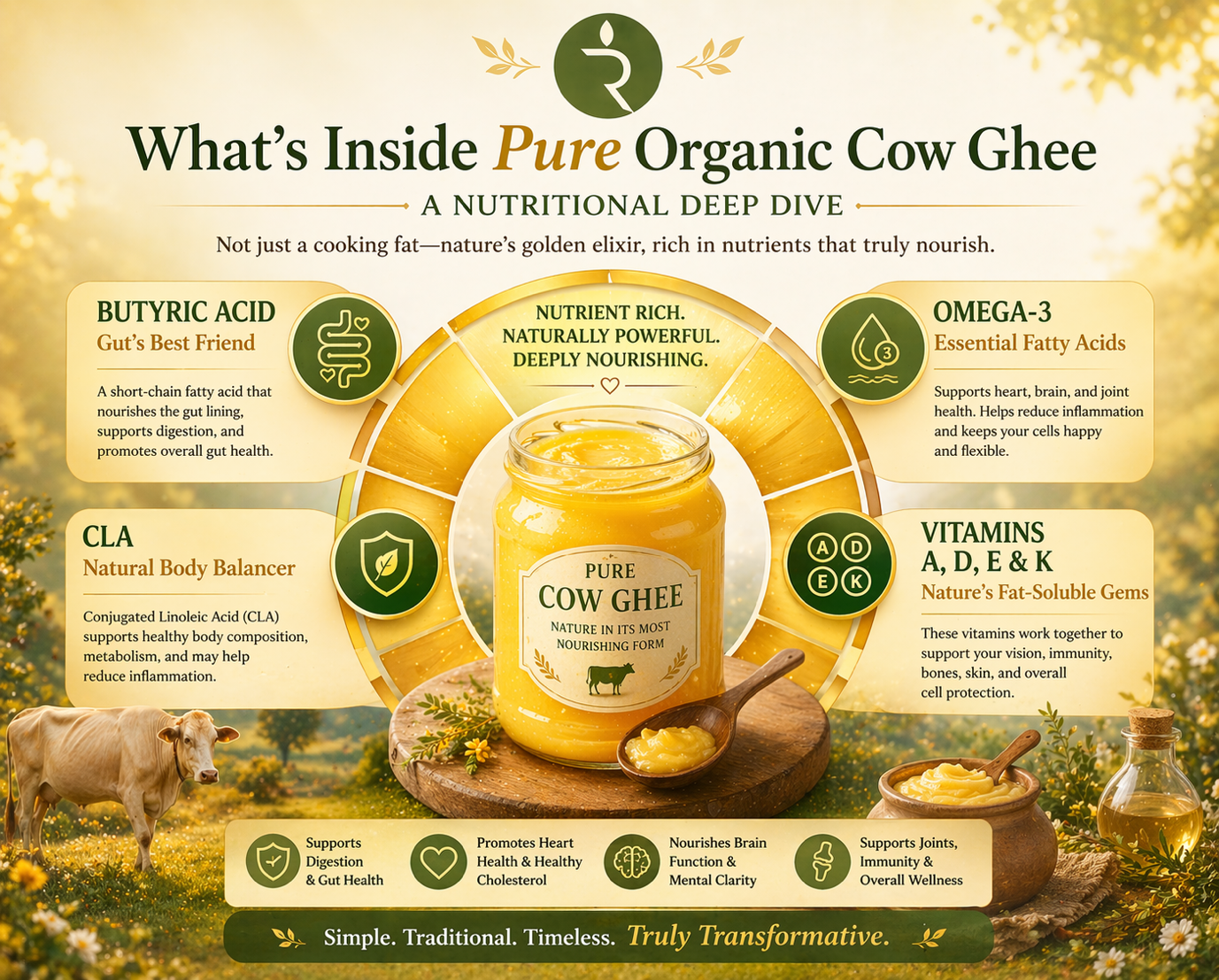
Butyric Acid: The Gut's Best Friend
Organic cow ghee is a natural digestive aid that can help soothe and support your digestive system. It stimulates the secretion of stomach acids necessary for breaking down food and absorbing nutrients, resulting in smoother and more efficient digestion with reduced chances of bloating, indigestion, or constipation. Additionally, ghee's anti-inflammatory properties work wonders for the gut, calming irritation in the digestive tract and allowing the body to absorb nutrients better.
The compound responsible for much of this is butyric acid, a short-chain fatty acid that is increasingly recognised by gut health researchers as one of the most important substances for maintaining the integrity of the gut lining. Studies show that the butyrate in ghee can soothe inflammation in the body.
CLA: The Fatty Acid That Works for You
Ghee is a significant source of conjugated linoleic acid, or CLA. Studies show that CLA may help fight obesity. CLA also plays a role in regulating metabolism and supporting healthy body composition…which goes against the deeply held but scientifically outdated belief that eating ghee makes you gain weight.
Fat-Soluble Vitamins That Your Body Can Actually Use
A2 cow ghee provides essential fat-soluble vitamins such as A, D, E, and K, which contribute to immune function, bone strength, and cellular repair. The critical distinction here is bioavailability. These vitamins require fat to be absorbed by the body. Ghee, being a pure fat, is one of the most efficient carriers for these nutrients, meaning you actually absorb what you consume.
Omega-3 Fatty Acids for Heart and Brain
Ghee has high concentrations of monounsaturated omega-3s. These healthful fatty acids support a healthy heart and blood vessels, and studies show that using ghee as part of a balanced diet can help reduce unhealthy cholesterol levels.
A High Smoke Point That Protects Your Food
This is a practical but profoundly important distinction. Unlike many vegetable oils, ghee does not oxidise easily when exposed to heat. When cooking oils break down at high temperatures, they release harmful free radicals that enter the food and subsequently your body. Ghee's stability at high cooking temperatures makes it one of the safest fats to use in modern UAE kitchens, where diverse cuisines and high-heat cooking are common.
What Ayurveda Knew That Science Is Only Now Confirming
A review of eleven important Ayurvedic texts spanning over 3,000 years found 774 mentions of ghee, the highest amongst all milk-based products. The top five benefit areas mentioned were cognitive health, gut health, nourishing benefits, vision and ENT health, and cleansing and respiratory health.
These are not vague, mystical claims. They are remarkably consistent with what modern research is now beginning to confirm about the role of healthy fats in brain function, the importance of butyrate for gut integrity, and the fat-soluble vitamin pathway for immunity and vision.
While recent research has primarily focused on ghee's connection with cardiovascular health, wound healing, and skin health, Ayurveda prioritised cognitive benefits, gastrointestinal health, and nourishment. These areas are of growing importance as chronic lifestyle diseases increase globally, including in the UAE.
The concept of ghee as a "rasayana" in Ayurveda, a substance that promotes longevity and rejuvenation, is not metaphor. It is a sophisticated, pre-scientific understanding of what a food rich in bioavailable fat-soluble nutrients, gut-healing butyrate, and anti-inflammatory compounds does to a body over a lifetime of regular, moderate consumption.
Your grandmother did not need a research paper. She already knew.

The A2 Difference: Why the Source of the Milk Matters
Not all ghee is made equal, and not all cow's milk is the same.
Desi cow breeds like Gir, Sahiwal, and Red Sindhi produce what is known as A2 milk, named after the A2 beta-casein protein it contains. Western cow breeds produce more A1 protein while desi Indian breeds produce more A2. Out of all, the most known is the Gir breed. A2 cow ghee is considered much healthier and more nutritious than normal ghee. That is why it is considered a superfood.
Organic A2 Ghee specifically comes from breeds of cows that secrete only A2 beta-casein proteins, making this milk fully digestible and super healthy. A2 ghee is completely organic and comes with no contribution of artificial hormones, pesticides, or chemicals, guaranteeing superior quality and purity.
When you choose organic cow ghee made from the milk of desi breeds, you are choosing a product that is rooted in the agricultural and nutritional heritage that is now increasingly valued across global wellness communities, including the UAE.
Organic desi cow ghee is a return to the original.
The Bilona Method: Why How It Is Made Is as Important as What It Is Made From
The traditional Bilona method of making ghee is not a marketing term. It is a specific, time-honoured process that directly affects the nutritional quality of the final product.
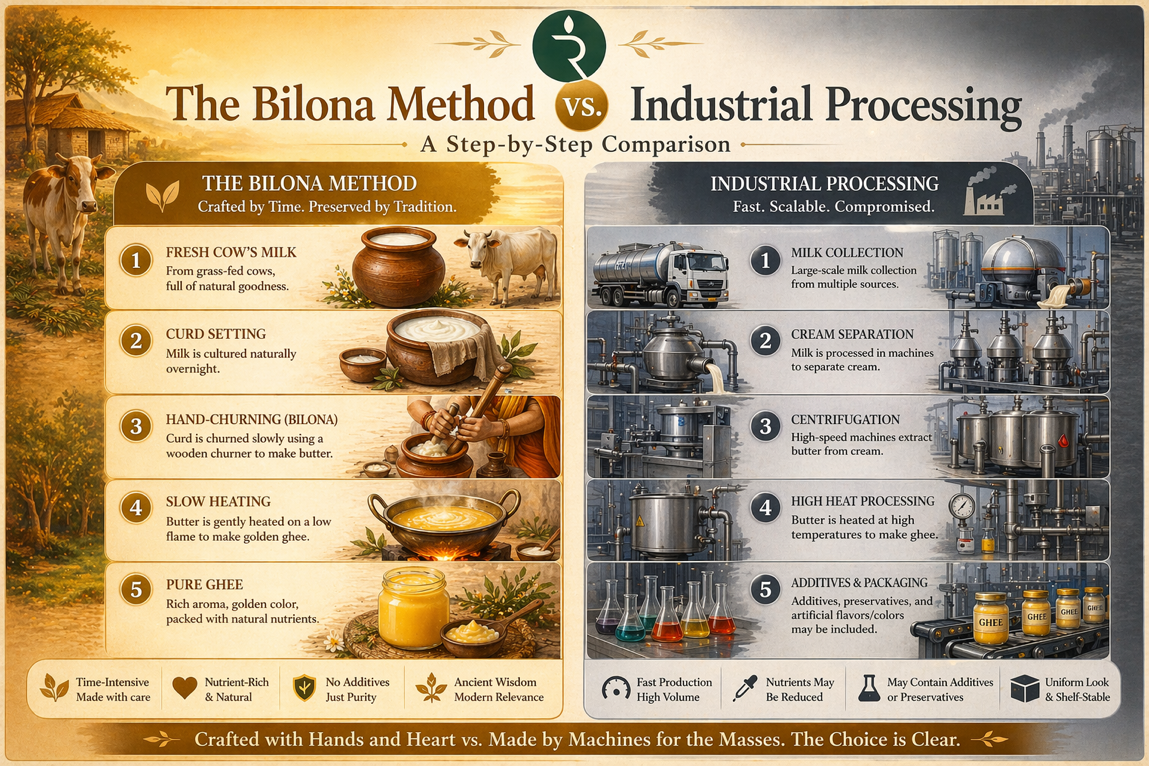
In the Bilona method, curd is made from full-fat cow's milk, then churned by hand using a wooden churner to separate the butter. This butter is then gently heated on a low flame until the milk solids separate and the pure golden ghee remains. The entire process is slow, careful, and deliberately low-heat.
This matters because heat is the enemy of certain nutrients. Industrial ghee production uses high-speed centrifugal separation and high-temperature processing that shortcuts the traditional method. What is lost is nutritional integrity.
Because ghee is treated with low heat, usually under 100 degrees Fahrenheit, it retains more nutrients than standard clarified butter. The Bilona method preserves as much of the milk's original nutrition as possible.
How to Use Organic Ghee in the UAE Kitchen
This is where organic cow ghee moves from conversation to practice. The good news is that incorporating it into daily cooking requires no new recipes, no special techniques, and no change to the rhythms of modern UAE households.
A spoonful in your morning dal as it comes off the stove. The base fat for your tadka. A spread on hot rotis or parathas instead of butter. Mixed into a child's khichdi as their first proper meal. Stirred into warm milk at bedtime for digestion and sleep. Drizzled over steamed rice before a meal.
These are not wellness experiments. They are the exact ways ghee has been used for generations.
Organic cow ghee is packed with Vitamins A, D, E, and K, which deeply nourish and hydrate the skin, keeping it smooth, radiant, and soft.
For joint health, regular consumption of organic cow ghee helps lubricate the joints, improving mobility and flexibility.
One important note: ghee is nutritionally dense and best consumed in moderation as part of a balanced diet.
How to Identify and Buy Genuine Organic Ghee in the UAE
Given how widespread adulteration is in the global ghee market, knowing what to look for is essential.
Pure ghee melts at room temperature in warm conditions and has a distinct nutty aroma. If it remains overly solid, smells synthetic, or appears unnaturally pale, these are warning signs.
When buying:
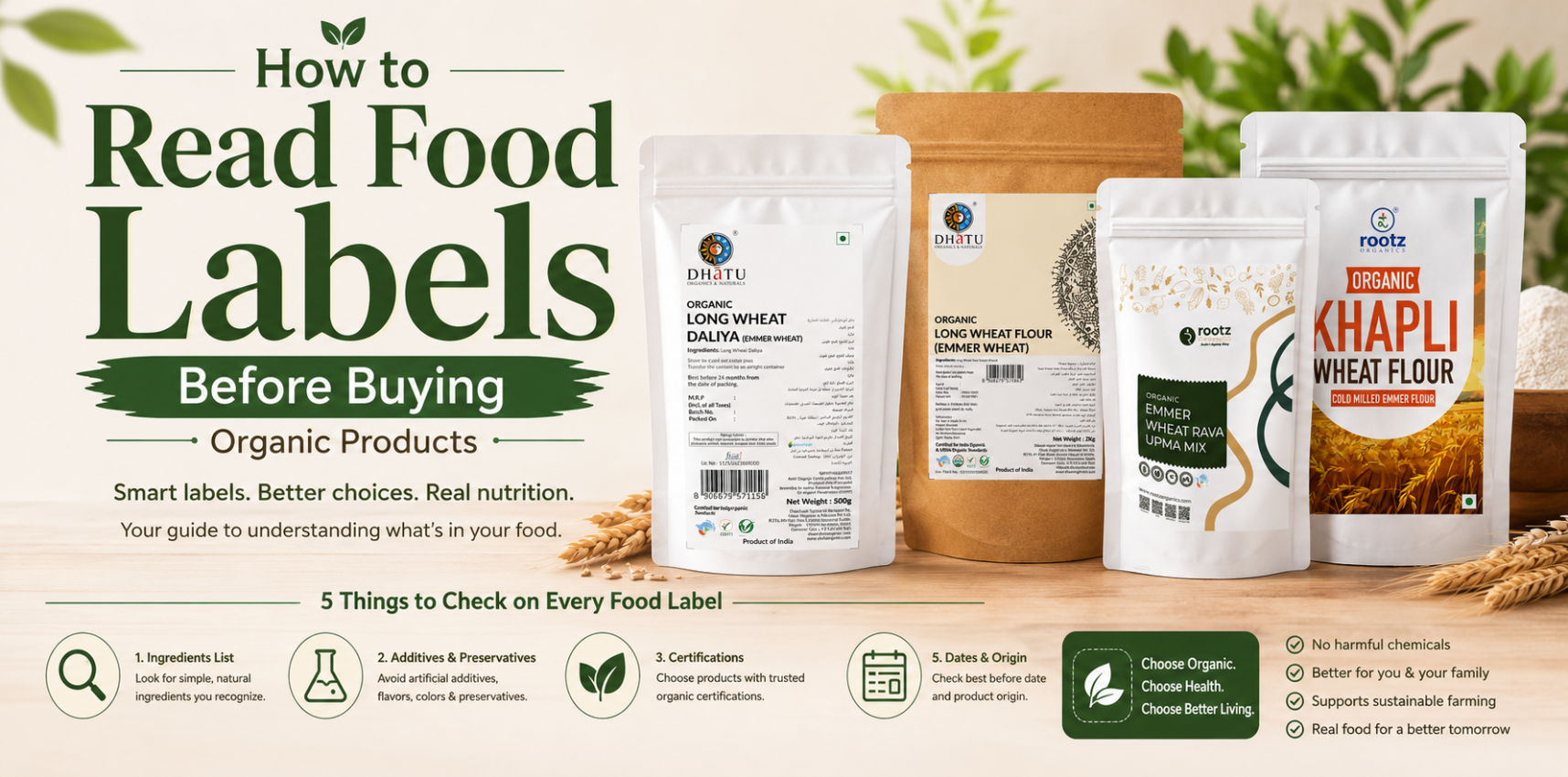
Look for certified organic labeling approved by UAE food safety authorities. The label should say only milk fat as its ingredient. Genuine desi cow ghee cannot be priced like refined oils. A2 Bilona ghee requires 30 to 40 litres of desi cow milk to produce just one litre of ghee.
At Rootz Organics, we believe transparency is not a selling point. It is a baseline. Our organic cow ghee is sourced from certified farms, made using traditional methods, and every batch carries full traceability from farm to kitchen.
Conclusion: The Jar Has Always Belonged on Your Stovetop
Pure organic cow ghee was never the problem. It was the solution that got quietly replaced by cheaper alternatives, and the health consequences of that shift are now visible globally, including in UAE lifestyle patterns.
Science has caught up with what traditional knowledge documented across thousands of years. The nutritional case for pure desi cow ghee is clear, well-researched, and deeply relevant to modern households.
Bring back the golden jar. Use it with the same unself-conscious generosity. Just make sure what is inside it is real.
Pure Ghee, From the Source You Can Trust
Rootz Organics brings you certified organic, A2 desi cow ghee made through traditional methods, sourced directly from verified farms, and delivered with complete transparency.
Shop Rootz Organic Cow Ghee | Traditionally made. Honestly sourced. Genuinely certified.
The golden jar, back where it belongs. That is the Rootz promise.
FAQs
Is organic cow ghee really a superfood?
Yes. Pure organic cow ghee is rich in butyric acid for gut health, CLA for metabolism, omega-3 fatty acids for heart and brain health, and fat-soluble vitamins A, D, E, and K.
What is the difference between organic ghee and regular commercial ghee?
Organic ghee is made from desi cows raised without hormones or antibiotics, while commercial ghee may contain adulterants or additives that reduce nutritional value.
Is it safe to cook with ghee every day?
Yes, in moderation. Ghee has a high smoke point making it one of the safest fats for everyday cooking.
What is A2 cow ghee and why is it better?
A2 Cow Ghee comes from cows that produce A2 beta-casein protein, which is easier to digest and considered more nutritious.
How do I know if my ghee is pure?
Pure ghee has a golden color, nutty aroma, melts easily, and contains only milk fat. Always check certification and sourcing transparency.
-
Psyllium Husk and Whole Seeds: The Simple Fibre Upgrade Every UAE Kitchen Needs
September 11th, 2026 -
 August 14th, 2026
 -
 August 14th, 2026