
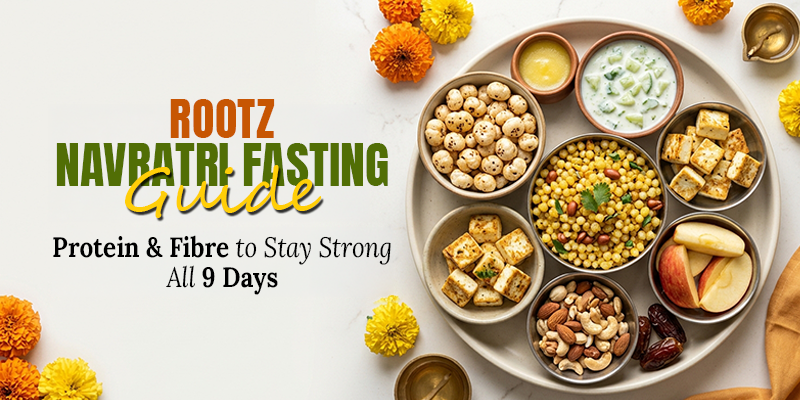
Navratri Fasting with Protein & Fibre: What to Eat to Stay Strong All Nine Days
Fast with devotion. Nourish with intention.
Every Navratri, our kitchens change. The regular atta goes back on the shelf, the sendha namak comes out, and the house fills with the smell of sabudana, kuttu and roasted makhana. For nine days, food becomes part of our prayer.
This year, Luke Coutinho shared a thoughtful reminder that resonated deeply with me: keep protein and fibre on your plate, even while you fast. I could not agree more. Fasting is an act of discipline and devotion. It was never meant to leave us depleted.
So in this guide, we want to share how we approach Navratri at home and in our Rootz community: what to eat, how to have it, and when, so your body keeps getting the nourishment it deserves for all nine days.
Why Protein and Fibre Matter, Even When You Fast
A traditional Navratri plate is beautiful, but it often leans heavily on starches: sabudana, potatoes, kuttu puris, and festive sweets. These foods give quick energy, yet on their own they burn fast. That is usually when the mid-afternoon slump, the headaches and the sudden cravings show up.
Adding protein and fibre changes how that same plate behaves in your body:
- Steadier energy. Protein and fibre slow down how quickly carbohydrates reach your bloodstream, so energy releases gently rather than in a spike and a dip.
- Longer fullness. Protein is the most satiating nutrient. A spoon of paneer or a handful of makhana can carry you much further than a plate of fried snacks.
- Strength you keep. Your muscles need a steady supply of protein to repair and maintain themselves. Nine days of low protein can leave you feeling weak and tired.
- A happy gut. Fibre feeds the beneficial bacteria in your gut microbiome. When fibre drops during a fast, digestion often slows too. Keeping it in keeps things moving and comfortable.
The intention is simple: honour the fast, and honour the body that is keeping it.
Fast-Friendly Picks: What to Eat, How, and When
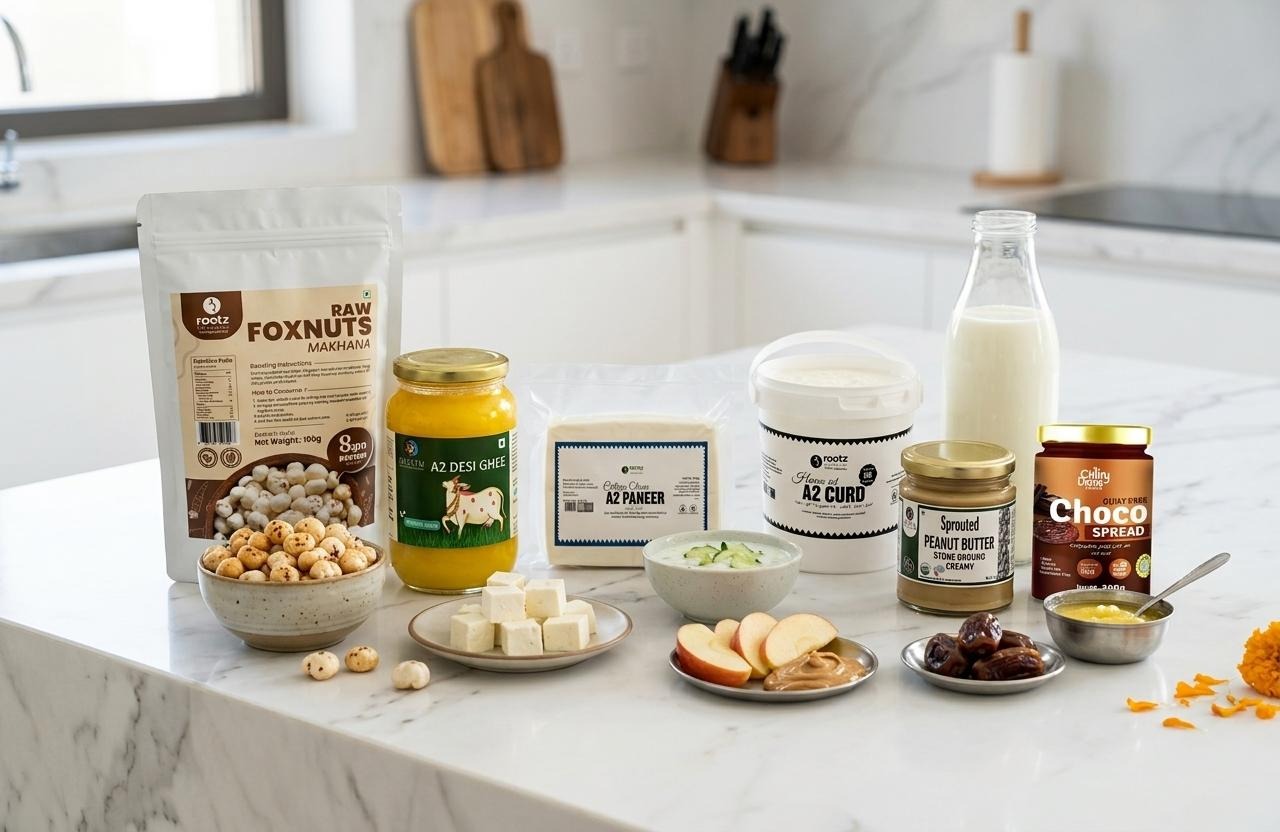
These options fit most Navratri traditions. Practices differ from family to family, so always follow what feels right for your home.
| Food | How to have it | When |
|---|---|---|
| Makhana mix nuts | Roast in a few drops of A2 ghee with sendha namak | Mid-morning, when the first hunger pangs arrive |
| A2 paneer | Pan-toss cubes in ghee with sendha namak and black pepper | Lunch, as your main protein |
| A2 curd | Cooling raita with cucumber or lauki | With lunch, or as an afternoon cool-down |
| A2 ghee | A spoon over sabudana, kuttu or rajgira dishes | With your main meals |
| Sprouted peanut butter | Spread on apple or banana slices | Around 4 pm, for the energy dip |
| Choco date spread | A small spoon on its own or with fruit | After dinner, for the sweet craving |
| Cassava chips | A small bowl in place of fried namkeen | Evening snack, with tea |
| A2 milk | Warm, with a pinch of elaichi or haldi | Bedtime, for calm sleep |
Makhana: the humble fasting hero
Makhana (fox nuts) is light, crunchy and naturally gluten-free, and it brings a little plant protein and fibre along with minerals like magnesium and potassium. Roasted in A2 ghee with sendha namak, it is far more nourishing than fried fasting namkeen, and a jar on the counter makes mindful snacking easy.
A2 paneer and A2 curd: protein you can trust
Paneer is one of the richest vegetarian protein sources allowed in most Navratri fasts. Our A2 paneer and A2 curd come from milk with the A2 beta-casein protein, which many people find gentler to digest. The curd also brings natural probiotic cultures, a gift for your gut on days when your diet is more restricted than usual.
A2 ghee: fat that helps you go the distance
Good fat is not the enemy of a fast. A spoon of bilona A2 ghee over your sabudana khichdi or kuttu roti slows digestion, keeps you full for longer and helps your body absorb fat-soluble vitamins. Cooking in ghee rather than deep frying is one of the simplest upgrades you can make this Navratri.
Sprouted peanut butter: a 4 pm lifesaver
Peanuts are widely used during fasts, and peanut butter turns them into the easiest protein snack you will ever make. Sprouting makes peanuts easier to digest. Spread it on apple slices and you have protein, healthy fat and fibre in a single bite.
For Those on a Flexible Fast
Not everyone follows a strict vrat. Some of us fast on specific days, or keep a lighter version for health or family reasons. If that is you, these additions bring an extra protein and fibre boost. Please note, most of these fall outside traditional Navratri rules.
| Food | How to have it | When |
|---|---|---|
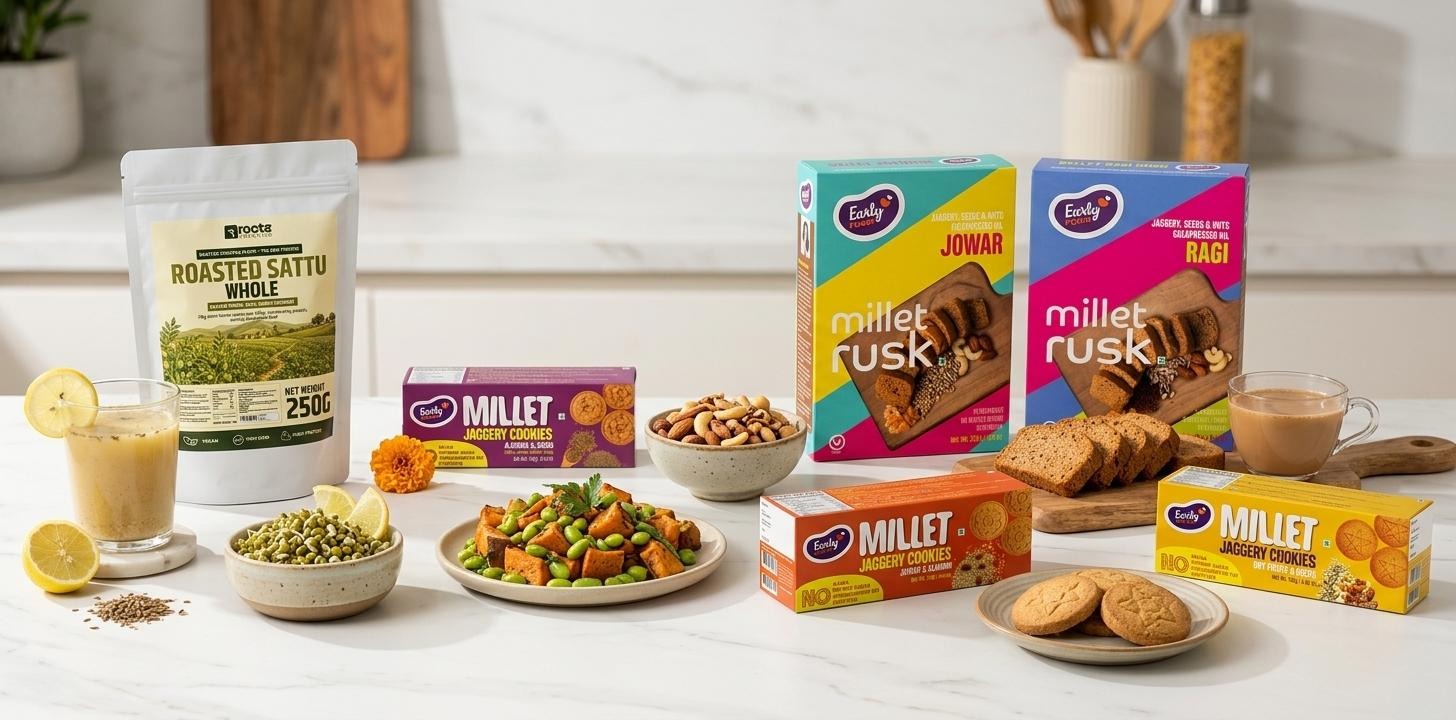
| Roasted sattu | Stir into chilled water or buttermilk with lemon and cumin | Morning, a cooling start in the UAE warmth |
| Green gram sprouts | Lightly steamed with lemon and a little salt | Lunch, alongside your meal |
| Sweet potato with edamame | Roasted together with ghee and herbs | Dinner, balanced and filling |
| Thai mixed nuts | A small handful in a pouch | On the go, between meetings or school runs |
| Millet rusk | Dunked in your evening chai | Evening, a comforting tea-time snack |
| Early Foods millet cookies | A couple for the little ones | Kids' snack time, a fun way to meet millets |
A Simple Day on a Nourishing Navratri Plate
Here is how a balanced fasting day can look. Adjust portions to your appetite and your family’s practice.
- Early morning: a glass of warm water, then a few soaked almonds or walnuts.
- Breakfast: fruit with a spoon of sprouted peanut butter, or a small bowl of A2 curd with pomegranate.
- Mid-morning: a handful of ghee-roasted makhana.
- Lunch: kuttu or rajgira roti, ghee-tossed A2 paneer, cucumber raita and a seasonal sabzi such as lauki or pumpkin.
- 4 pm: apple slices with peanut butter, or coconut water and a few dates.
- Dinner: sabudana khichdi with peanuts and a spoon of A2 ghee, or roasted sweet potato with curd.
- Bedtime: warm A2 milk with elaichi, and a small spoon of choco date spread if the sweet tooth calls.
Five Small Habits That Make a Big Difference
- Hydrate generously. October in the UAE is still warm. Coconut water, buttermilk, lemon water with sendha namak and plain water keep you going.
- Roast, don’t fry. Swap deep-fried snacks for ghee-roasted makhana, nuts and cassava chips.
- Pair every starch. Whenever sabudana, potato or kuttu goes on the plate, add paneer, curd, peanuts or nuts beside it.
- Eat slowly. Fasting is a beautiful time to practise mindful eating. Chew well and notice when you feel satisfied.
- Break the fast gently. On the final day, return to regular food with a light, home-cooked meal rather than a heavy feast.
If you are pregnant, managing diabetes, or living with any health condition, please speak with your doctor before fasting and adapt the plan to your needs.
Fasting the Rootz Way
At Rootz, we believe food is medicine and the kitchen is our first clinic. Our ancestors fasted with wisdom, choosing foods that cleansed and strengthened at the same time. When we bring that same wisdom to today’s plate with clean, organic ingredients, Navratri becomes a time when we feel lighter, clearer and stronger, not drained.
Every product in this guide is one we use in our own home. You will find them all, along with our Fasting Essentials range, at rootzorganics.com, with next-day delivery across the UAE.
Which of these is going into your Navratri thali this year? Share it with us in the comments or in our Drops of Health community. Let’s inspire each other to fast with devotion and nourish with intention.
Health & happiness. Always.
Team Rootz
Frequently Asked Questions
Build every meal around a fast-friendly protein: A2 paneer, A2 curd, A2 milk, peanuts or peanut butter, makhana and nuts. Pair them with starches like sabudana, potato or kuttu so your energy stays steady.
Yes, paneer is allowed in most Navratri traditions and is one of the best vegetarian protein sources for fasting days. Pan-toss it in A2 ghee with sendha namak for a simple, filling meal.
Yes. Makhana is light, gluten-free and naturally fast-friendly. It offers some plant protein, fibre and minerals, and roasting it in A2 ghee makes a far healthier snack than fried namkeen.
Include protein and fibre at every meal, drink plenty of fluids, choose roasted over fried foods, and avoid long gaps without eating. Healthy fats like A2 ghee also help you stay full for longer.
In most strict Navratri traditions, sattu and green gram sprouts are not eaten. They are excellent protein sources for those following a flexible fast, so check your own family practice.
Rootz Organics offers organic makhana, A2 ghee, A2 paneer, A2 curd, sprouted peanut butter and a dedicated Fasting Essentials range, with next-day delivery across the UAE at rootzorganics.com.
-
Foxtail Millet Tabbouleh: The Spain-Inspired, Gluten-Free Salad I Fell in Love With
September 25th, 2026 -
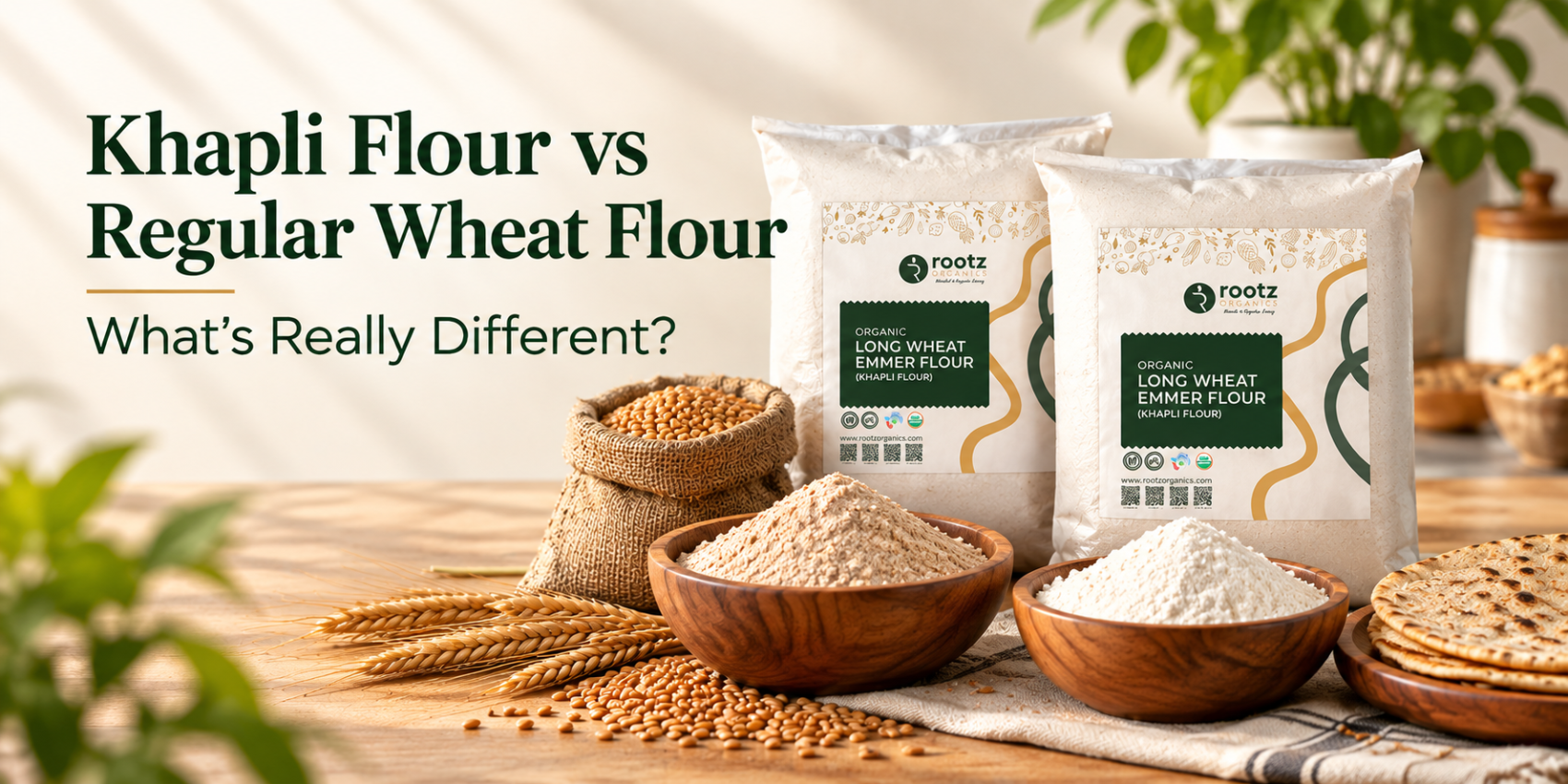
Khapli Flour vs Regular Wheat Flour: What’s Really Different?
September 23rd, 2026 -
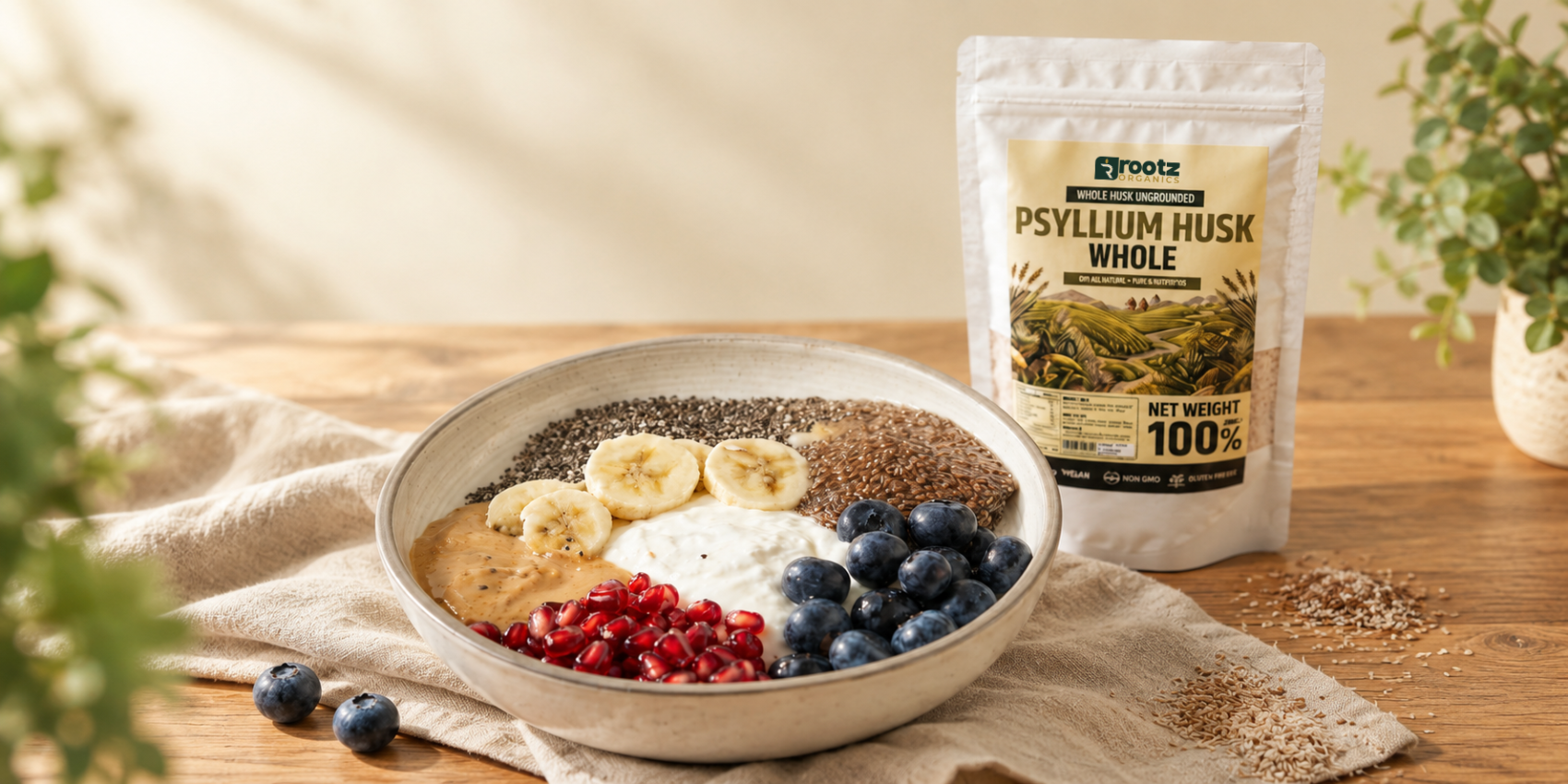
Psyllium Husk and Whole Seeds: The Simple Fibre Upgrade Every UAE Kitchen Needs
September 11th, 2026 -
 August 14th, 2026
 -
 August 14th, 2026