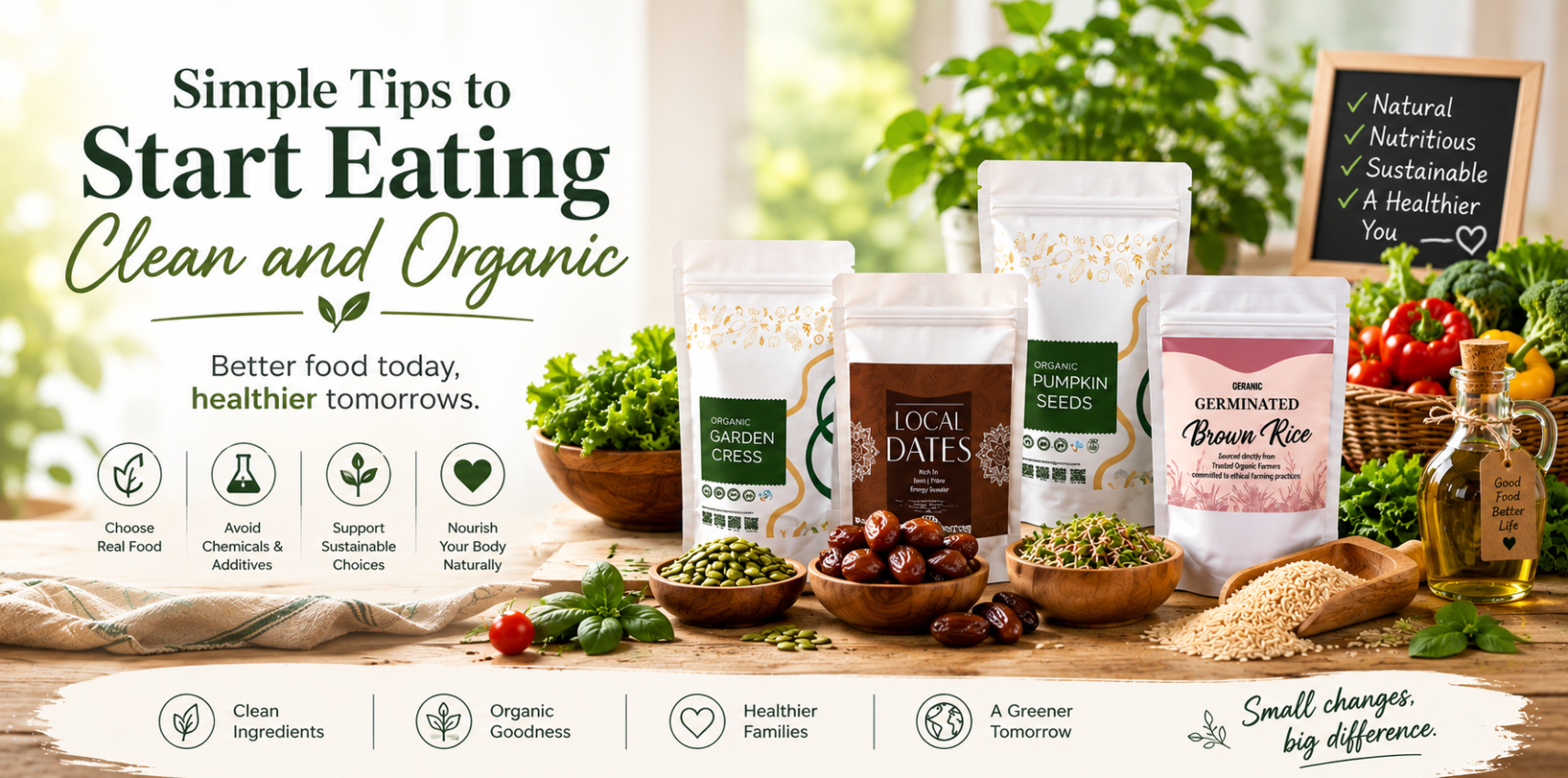
Simple Tips to Start Eating Clean and Organic
Clean and organic eating is less about strict rules and more about consistent, small choices. Building healthy eating habits starts with what enters your kitchen — the flour you bake with, the oil you cook in, and the snacks you reach for between meals. For UAE households juggling imported packaged goods, long shelf lives, and hidden additives, the shift to clean eating is both a health decision and a lifestyle reset.
Clean and organic eating means choosing foods grown without synthetic pesticides, chemical fertilisers, or artificial preservatives, and prepared with minimal processing. It prioritises whole grains, seasonal produce, and label transparency over convenience-driven packaged food, so the body absorbs nutrients rather than additives.
What Does Eating Clean and Organic Really Mean?
Eating clean and organic means selecting food closest to its natural state — grown without synthetic chemicals and processed as little as possible. It is not a diet plan with a start and end date; it is a sourcing and preparation standard applied to everyday meals.
In the UAE, "organic" is regulated under standards aligned with the Emirates Authority for Standardisation and Metrology (ESMA), which requires certified organic products to be free from GMOs, synthetic pesticides, and irradiation. This certification is what separates a genuine organic label from generic "natural" marketing claims on a package.
Clean eating goes a step further by also limiting refined sugar, hydrogenated oils, and artificial colours or flavours — even in products that are technically organic. A jar of organic biscuits with added refined sugar, for instance, is organic but not necessarily clean.
Why More People in the UAE Are Shifting to Organic Diets
UAE consumers are moving toward organic food primarily due to rising lifestyle-related health concerns and greater access to certified organic grocery options. Dubai and Abu Dhabi have seen a steady rise in organic retail outlets, farmers' markets, and home-delivery services over the past five years.
Several factors are driving this shift:
- Rising diabetes and obesity rates — the UAE has one of the higher rates of diet-related lifestyle conditions in the Gulf region, prompting closer attention to sugar and processed food intake.
- Greater dietary awareness — more residents are reading ingredient labels and asking where their food is sourced from.
- Demand for gluten-free and millet-based options — driven by rising gluten sensitivity diagnoses and interest in ancient grains.
- A growing expat and health-conscious population — many bring dietary habits from markets where organic food is mainstream, and continue that pattern locally.
This demand has made organic grocery online shopping a practical entry point for families who want certified products without visiting multiple specialty stores.
Simple Tips to Start Eating Clean and Organic
The easiest way to start eating clean and organic is through gradual substitution — replacing one processed staple at a time rather than overhauling the entire pantry at once. This approach is sustainable and avoids the common burnout that comes with sudden diet changes.
1. Start With Your Pantry Staples
Flour, rice, oil, and sugar form the base of most meals, so switching these first has the biggest impact. Replacing refined white flour with organic wheat flour retains more fibre, B vitamins, and minerals that are stripped away during commercial refining.
2. Read Labels Before Trusting Marketing Claims
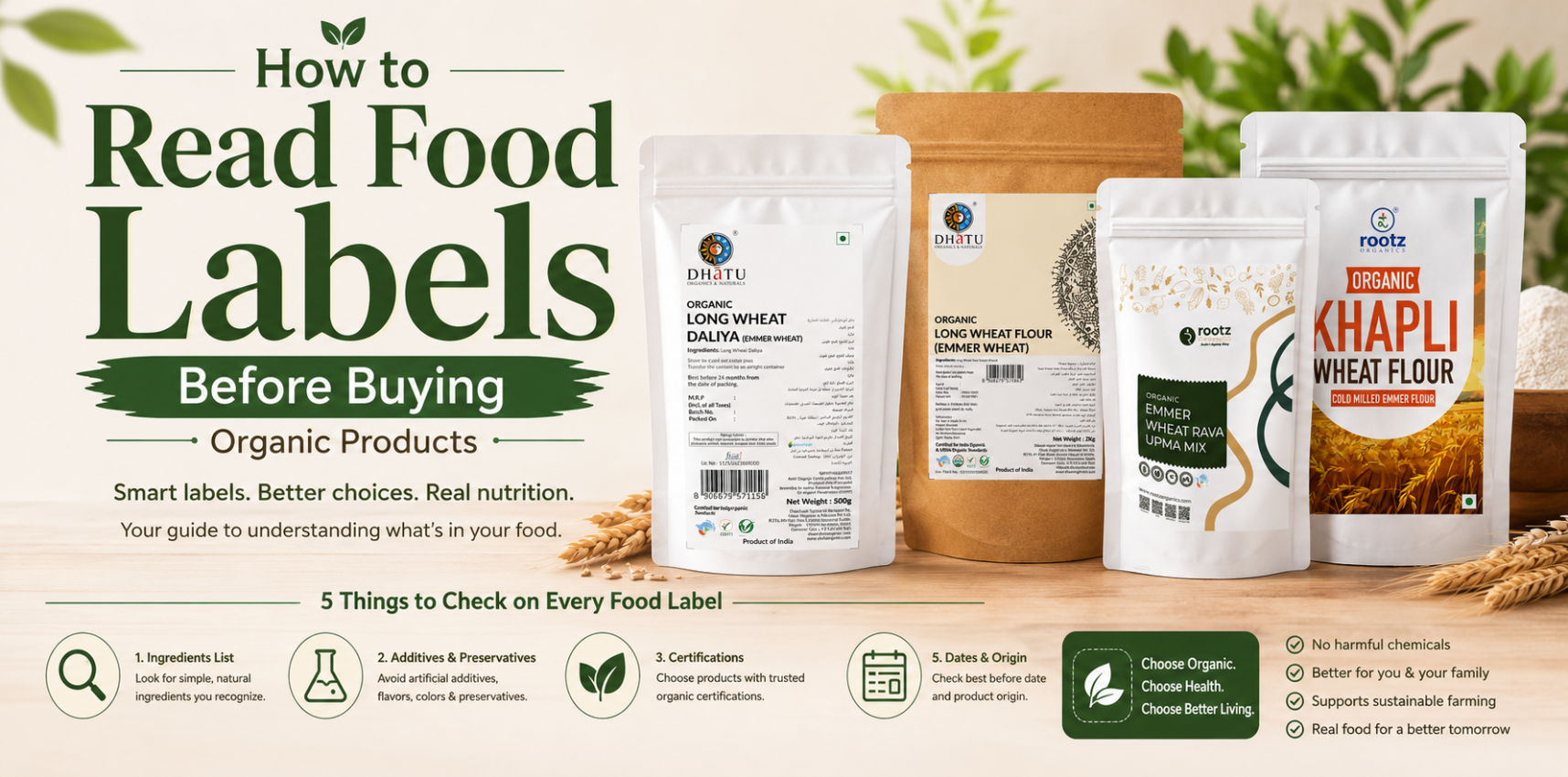
A product labelled "natural" is not the same as "certified organic." Look specifically for a recognised organic certification mark (such as USDA Organic, EU Organic, or an ESMA-compliant local certification) rather than relying on packaging language like "farm fresh" or "no preservatives added," which are not regulated terms.
3. Introduce One Gluten-Free or Millet Swap Per Week
Millets such as ragi, jowar, and bajra are naturally gluten-free, high in fibre, and have a lower glycaemic index than refined wheat. Trying one gluten-free flour variety weekly helps the palate adjust without feeling restrictive.
4. Snack on Whole Foods, Not Packaged Ones
Roasted seeds, dried fruit, and nut mixes replace processed chips and biscuits while adding protein, healthy fats, and micronutrients. A handful of organic pumpkin seeds delivers magnesium, zinc, and plant-based protein in a single serving — nutrients that are largely absent from processed snack alternatives.
5. Buy From Traceable, Certified Sources
Traceability — knowing the farm, region, and processing method of a product — is a stronger quality signal than price or packaging design. Ordering healthy foods online from a supplier that discloses sourcing details makes this verification easier than in-store shopping, where such information is rarely printed on shelf labels.
6. Cook in Small Batches With Minimal Processing
Fresh, small-batch cooking preserves nutrients that degrade during long storage or repeated reheating. Preparing meals a day or two in advance, rather than freezing large quantities for weeks, keeps vitamin content closer to that of freshly harvested produce.
Building Healthy Eating Habits at Home
Healthy eating habits are built through repeated daily structure, not occasional effort. A household that keeps organic staples visible and accessible in the kitchen is far more likely to sustain clean eating than one relying on willpower alone.
Practical structures that support this include:
- Keeping a weekly meal outline so grocery shopping stays intentional rather than reactive.
- Storing whole grains, seeds, and flours in clear containers at eye level, so they are the first option seen when reaching for ingredients.
- Batch-preparing one clean-eating staple, such as sprouted lentils or soaked millet, every few days.
- Involving children in grocery selection to build early familiarity with whole foods over packaged snacks.
This is also where sourcing organic food products from a single, reliable supplier simplifies the process — it removes the need to cross-check certification and freshness across multiple vendors every week.
Conventional Diet vs Clean Organic Diet: A Quick Comparison
Comparing conventional and clean organic diets side by side makes the practical differences easier to see, particularly around processing, additives, and sourcing.
- Sourcing: Conventional produce often relies on synthetic pesticides and fertilisers; organic produce is grown without these inputs and is independently certified.
- Processing: Conventional packaged food frequently contains preservatives, artificial colours, and flavour enhancers; clean eating limits processing to preserve the food's natural nutrient profile.
- Grains: Conventional diets lean on refined wheat and white rice; clean organic diets favour whole grains and millets with higher fibre content.
- Sugar: Conventional snacks commonly use refined sugar and syrups; clean alternatives use natural sweeteners in controlled amounts or none at all.
- Traceability: Conventional supply chains often pass through multiple intermediaries; organic suppliers typically disclose farm origin and certification.
Common Mistakes to Avoid When Switching to Organic
Most people abandon clean eating not because it fails, but because of a few avoidable early mistakes.
Overhauling everything at once is the most common one — replacing an entire pantry in a single week is expensive and hard to sustain. Assuming "organic" means unlimited is another — organic sugar and organic snacks are still calorie-dense and should be eaten in moderation. Ignoring expiry and storage guidance is a third — organic products without synthetic preservatives generally have a shorter shelf life and need proper storage to retain freshness and nutrients.
Expert Insight: Why Small-Batch Sourcing Matters
Products made in small batches — such as freshly milled flour or freshly roasted seeds — retain more of their natural oils and micronutrients than mass-produced, long-shelf-life versions. Freshly milled wheat flour, for example, begins losing certain B vitamins and healthy fats within weeks of milling due to oxidation, which is why sourcing from suppliers who mill or prepare in small batches makes a measurable difference in nutrient retention, not just taste.
Quick Summary
Eating clean and organic in the UAE starts with small, repeatable swaps: certified organic staples in place of refined ones, label literacy over marketing trust, and consistent sourcing from traceable suppliers. Building healthy eating habits is a gradual process of substitution and structure, not a single overnight change. Households that keep whole grains, millets, and minimally processed snacks accessible at home are best positioned to sustain the shift long-term.
Frequently Asked Questions
What is the easiest way to start eating clean and organic?
The easiest way is to replace one pantry staple at a time, starting with flour, oil, or sugar. This gradual substitution approach avoids the cost and effort of overhauling an entire kitchen at once while still building lasting healthy eating habits.
Is organic food more expensive in the UAE?
Organic food typically costs more than conventional alternatives due to certification, smaller-batch production, and pesticide-free farming practices. Buying staples in bulk and choosing seasonal, locally available organic produce can help manage the cost difference.
How can I tell if a product is genuinely organic?
Check for a recognised organic certification mark on the packaging rather than relying on terms like "natural" or "farm fresh," which are not regulated. Certified products will typically display a certifying body's logo along with a certification number.
Are gluten-free flours automatically healthier than wheat flour?
Not automatically — gluten-free flours are essential for people with gluten intolerance or celiac disease, but they are not inherently healthier for everyone. The nutritional value depends on the specific grain used, such as millet or ragi, rather than the absence of gluten alone.
How long does it take to build healthy eating habits?
Most nutrition research suggests it takes roughly two to three months of consistent practice for a new eating pattern to feel automatic rather than effortful. Starting with one or two changes and maintaining them consistently works better than attempting several changes simultaneously.
Can I order organic groceries online in the UAE?
Yes, several UAE-based suppliers now offer certified organic groceries, flours, seeds, and snacks with home delivery. Ordering online also makes it easier to check certification details and sourcing information before purchase.
-
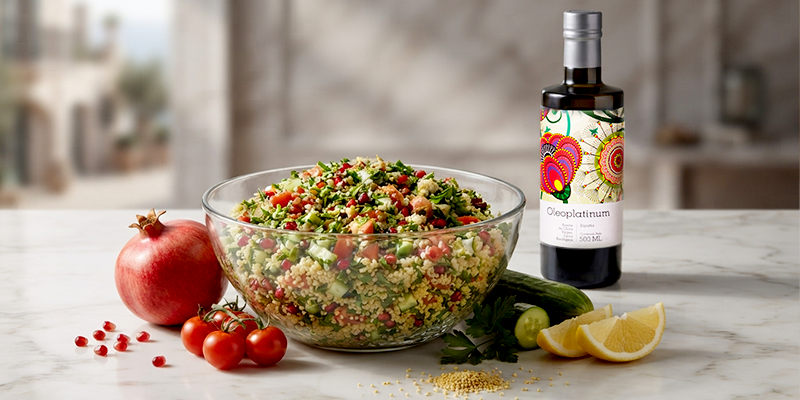
Foxtail Millet Tabbouleh: The Spain-Inspired, Gluten-Free Salad I Fell in Love With
September 25th, 2026 -
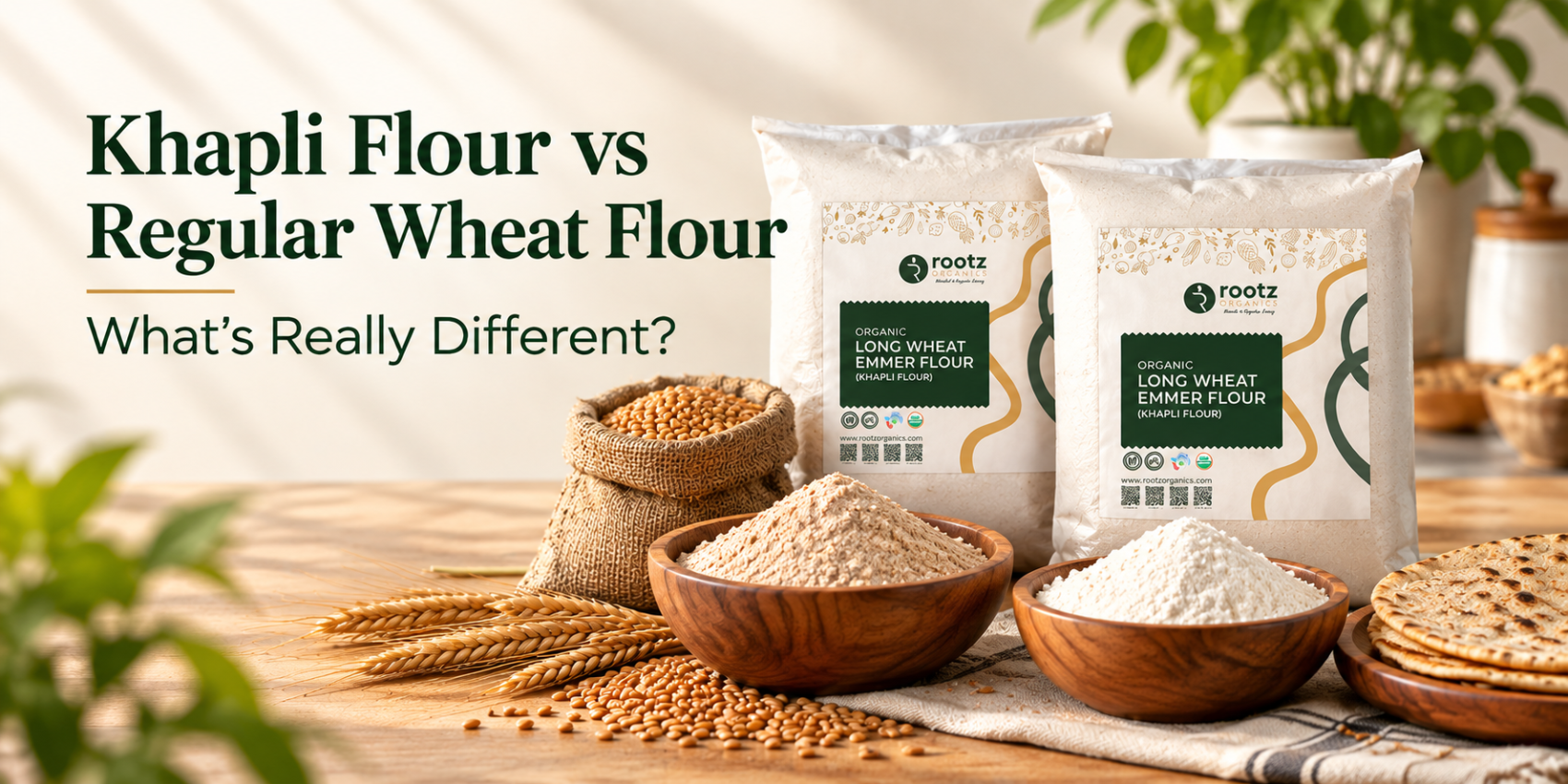
Khapli Flour vs Regular Wheat Flour: What’s Really Different?
September 23rd, 2026 -
Psyllium Husk and Whole Seeds: The Simple Fibre Upgrade Every UAE Kitchen Needs
September 11th, 2026 -
 August 14th, 2026