
Product description
THE MCT STORY
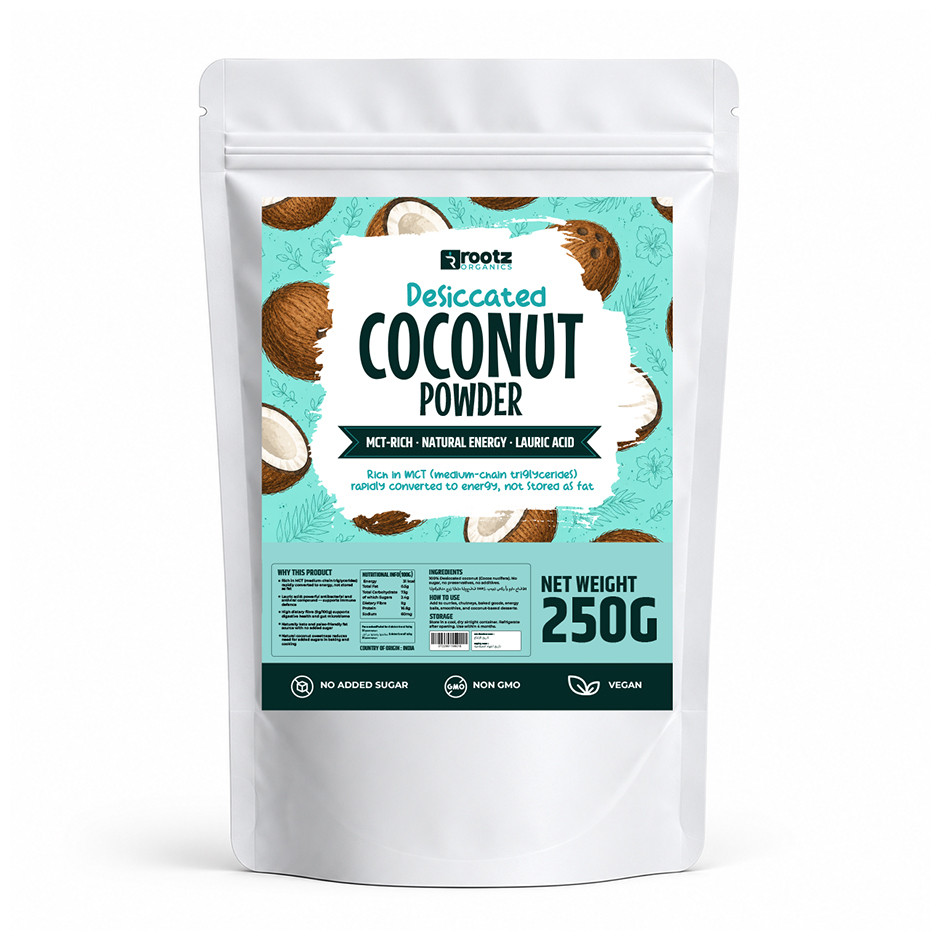
Coconut fat is ~92% saturated fat — but the specific type changes everything. Most is medium-chain triglycerides (MCTs): lauric acid (C12), caprylic acid (C8), capric acid (C10).
MCTs are metabolised completely differently from the long-chain saturated fats in meat and dairy:
— Absorbed directly from the gut into the portal blood, bypassing the lymphatic system
— Transported directly to the liver and rapidly converted to ketones and energy
— NOT stored as adipose fat in the same way as long-chain fats
Lauric acid specifically converts to monolaurin in the body — a compound with demonstrated antiviral and antibacterial activity against enveloped viruses (including influenza, RSV, HIV) and gram-positive bacteria.
FIBRE (9g/100g):
Mostly insoluble fibre with some lignin — feeds gut bacteria and supports bowel health. One tablespoon (~7g) adds almost 1g dietary fibre.
HOW TO USE:
Arabic & Gulf sweets: topping for basbousa, folded into maamoul and coconut sweets, and dusted over luqaimat and khabees
South Asian sweets: barfi, modak and coconut laddoo
South Indian & Kerala cooking: chutney base for idli/dosa, thengai sadam, avial, erissery and thoran; coconut-based curries
Coatings & curries: bind into a crust for fish or chicken, or thicken curries
Baking: macaroons, coconut cake, granola, flapjacks and energy balls
Smoothies & bowls: 1 tablespoon adds fibre and natural coconut sweetness
INGREDIENTS:
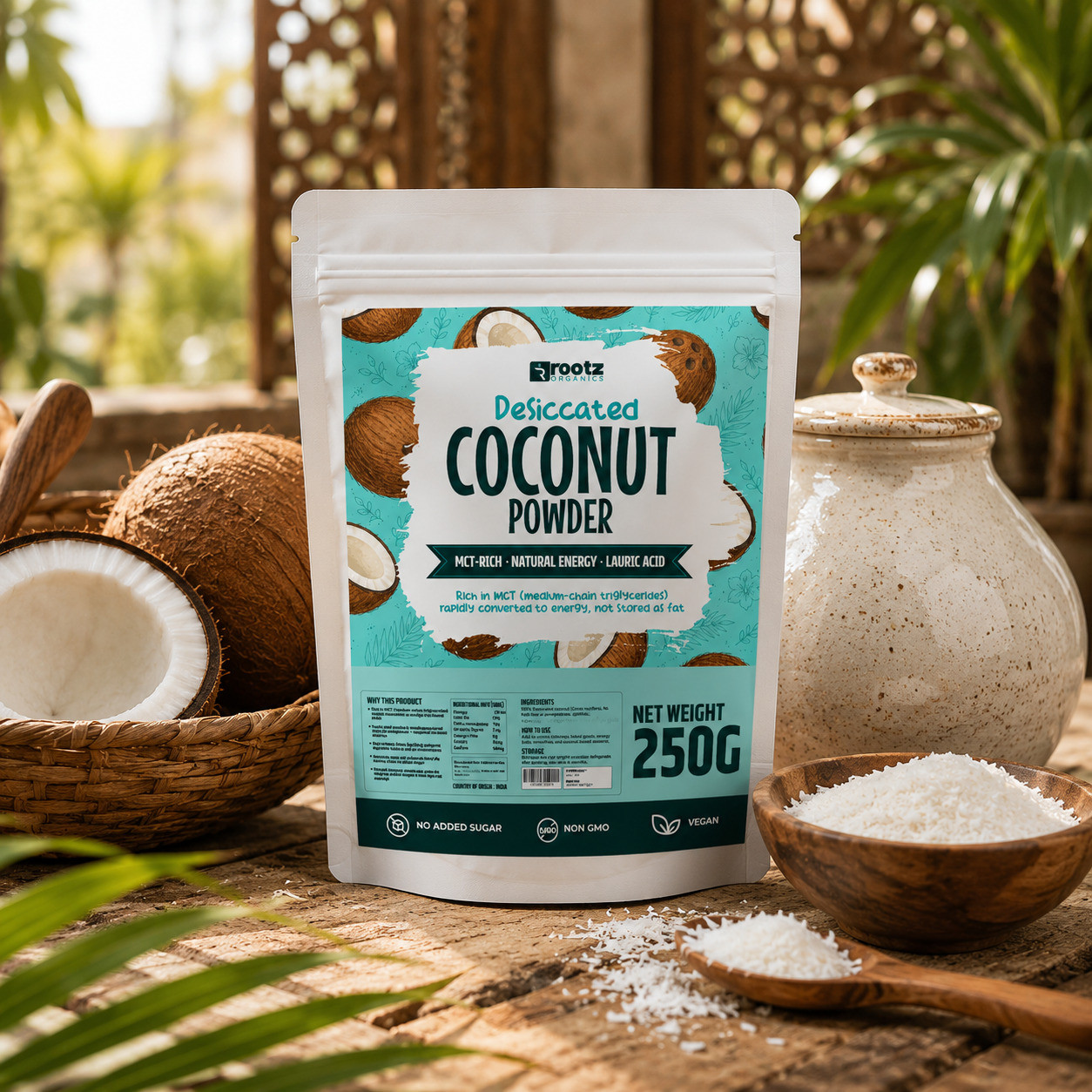
100% Desiccated coconut (Cocos nucifera). No sugar, no preservatives.
STORAGE:
Sealed airtight, cool dry place. Hygroscopic in humidity refrigerate after opening.
Reviews
Login
Don't have an account?
Sign UpNot all saturated fats are metabolically equivalent. Coconut's MCTs (C8, C10, C12) are absorbed directly into the portal blood system and converted to energy in the liver, not stored as fat. Population studies of Pacific Island communities with large coconut intake show normal cardiovascular disease rates.Not all saturated fats are metabolically equivalent. Coconut's MCTs (C8, C10, C12) are absorbed directly into the portal blood system and converted to energy in the liver, not stored as fat. Population studies of Pacific Island communities with large coconut intake show normal cardiovascular disease rates.
Desiccated coconut (this product): finely grated, dried, full fat. Shredded coconut: coarser cut, similar nutrition. Coconut flour: dried, defatted coconut meat — much higher fibre (40g+/100g), much lower fat, extremely absorbent, cannot substitute desiccated coconut directly.Desiccated coconut (this product): finely grated, dried, full fat. Shredded coconut: coarser cut, similar nutrition. Coconut flour: dried, defatted coconut meat — much higher fibre (40g+/100g), much lower fat, extremely absorbent, cannot substitute desiccated coconut directly.
2 cups desiccated coconut + ¾ cup jaggery + ¼ cup A2 milk + 2 tbsp A2 ghee + pinch cardamom. Cook on medium heat stirring continuously for 8–10 minutes until mixture leaves the sides of the pan. Pour into greased tray, press flat, set 30–45 minutes at room temperature. Cut into squares.2 cups desiccated coconut + ¾ cup jaggery + ¼ cup A2 milk + 2 tbsp A2 ghee + pinch cardamom. Cook on medium heat stirring continuously for 8–10 minutes until mixture leaves the sides of the pan. Pour into greased tray, press flat, set 30–45 minutes at room temperature. Cut into squares.


