
Product description
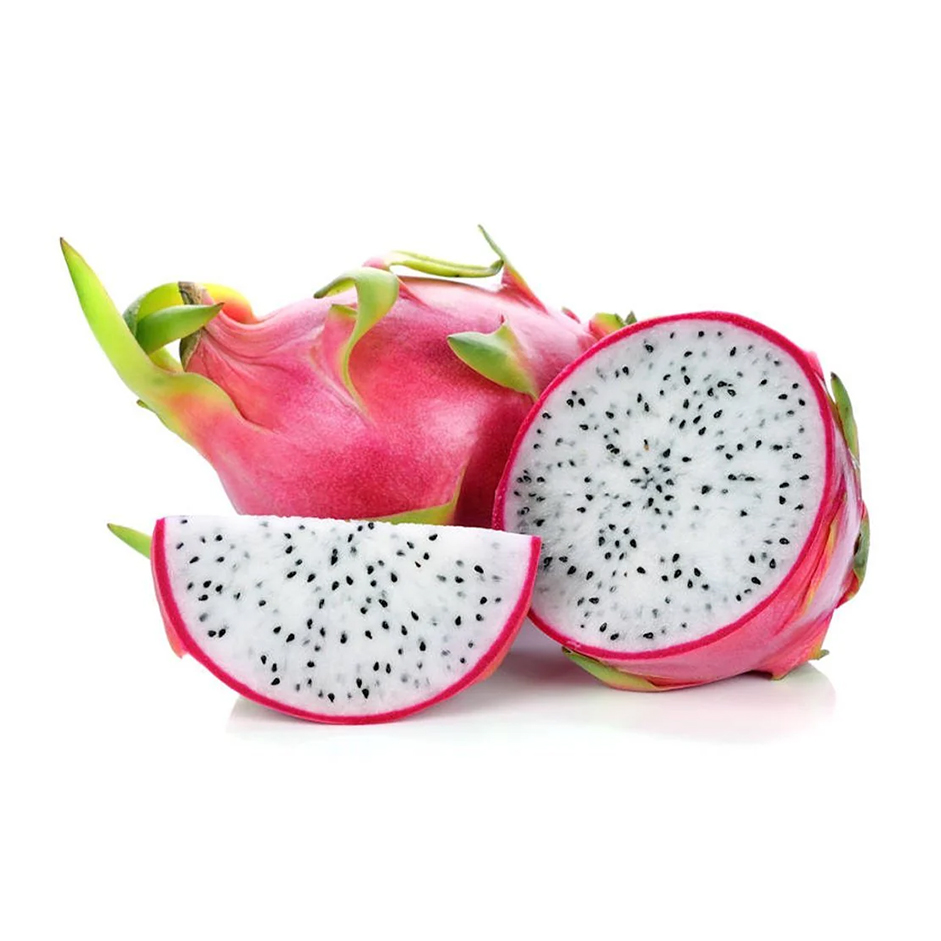
Few fruits turn heads like dragon fruit. Vivid pink skin opens to soft flesh flecked with tiny edible black seeds — mildly sweet, gently refreshing, and wonderfully hydrating in the Gulf heat.
WHAT MAKES IT SPECIAL
Dragon fruit is naturally low in calories, contains dietary fibre, and the seeds add a delicate crunch. The flesh may be white or deep magenta depending on variety, the colour coming from natural pigments called betacyanins.
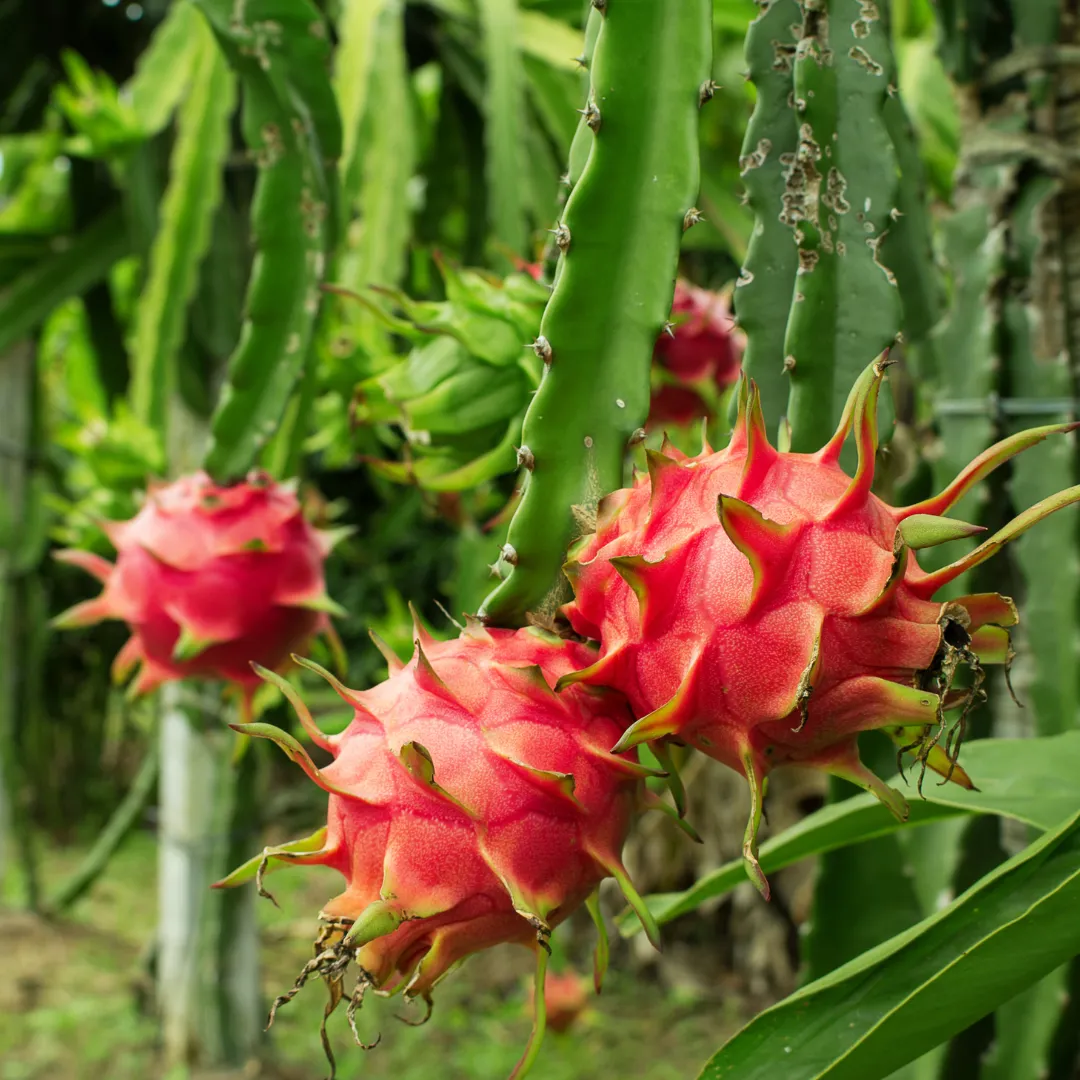
SOURCED FROM THAILAND
Thailand grows some of the most consistent, well-graded dragon fruit available. [Confirm variety (white or red flesh) and any organic certification with supplier before using in live copy.] Picked ripe and air-freighted to the UAE.
HOW TO SELECT & STORE
- Choose: bright, even-coloured skin that gives slightly to gentle pressure (like a ripe kiwi).
- Store: refrigerate and eat within 3-4 days.
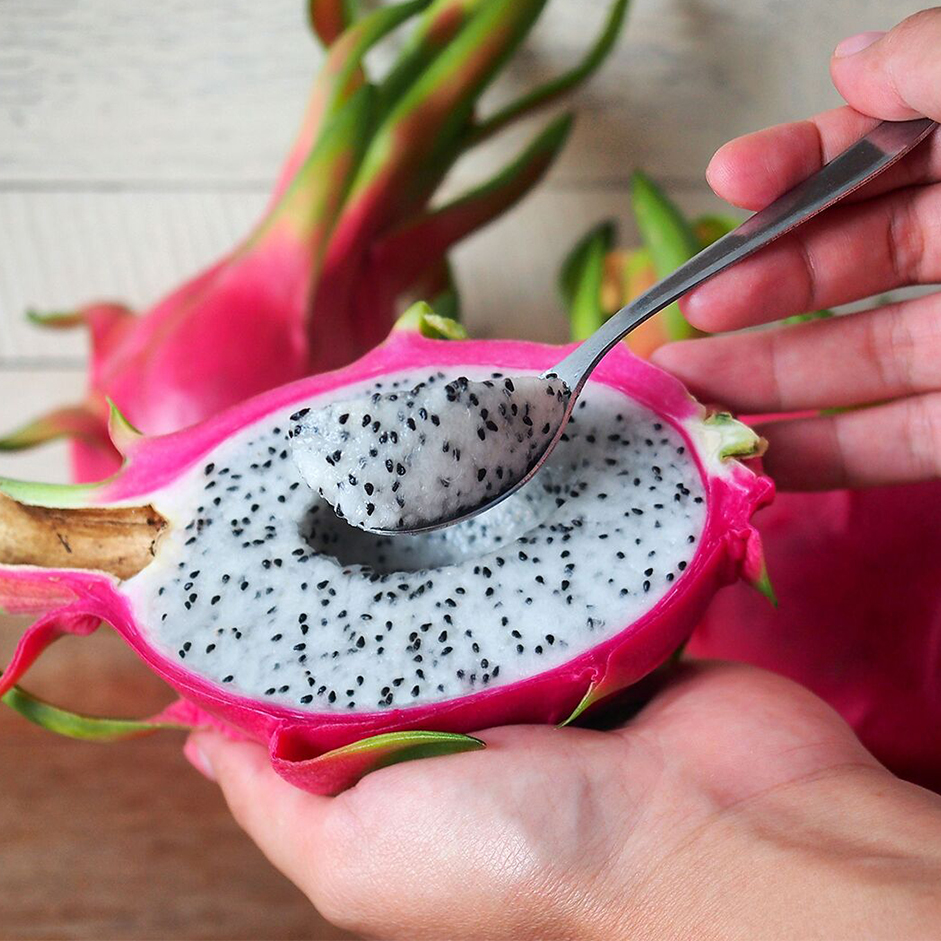
- To eat: halve and scoop the flesh with a spoon, or peel and cube.
- Best served chilled.
HOW TO USE & SERVE
- Dragon fruit is a favourite across UAE tables for its colour as much as its taste.
- The simplest way: halve, chill and scoop with a spoon.
- Fruit & smoothie bowls: cube over yoghurt or blend into a vivid pink smoothie bowl topped with seeds and granola.
- Entertaining: cubed or balled dragon fruit is a striking, colourful addition to iftar fruit platters and dessert tables.
- Drinks & mocktails: muddle into coolers and infused water for a beautiful natural colour.
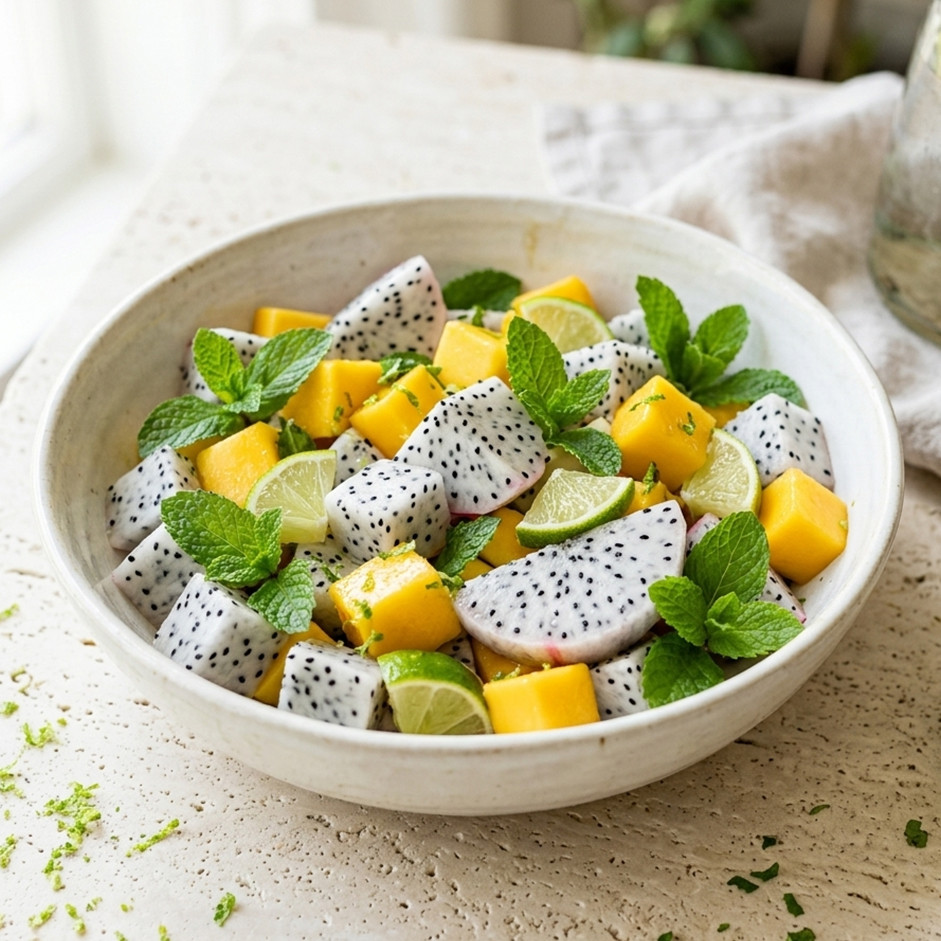
- Salads: pairs well with mango, lime and mint in a fresh fruit salad.
NUTRITION - per 100g
| Nutrient | Amount | % DV* |
|---|---|---|
| Energy | 60 kcal | — |
| Carbohydrates | 13 g | 5% |
| of which sugars | 8 g | — |
| Dietary fibre | 3 g | 11% |
| Protein | 1.2 g | 2% |
| Total fat | 0 g | 0% |
| Vitamin C | 3 mg | 3% |
| Magnesium | 40 mg | 10% |
| Iron | 0.7 mg | 4% |
| Calcium | 9 mg | 1% |
Reviews
Login
Don't have an account?
Sign UpDragon fruit (pitaya) has a mild, gently sweet flavour often compared to a cross between kiwi and pear, with a light, refreshing quality. The soft flesh is dotted with tiny edible black seeds that add a delicate crunch. It is best served chilled.Dragon fruit (pitaya) has a mild, gently sweet flavour often compared to a cross between kiwi and pear, with a light, refreshing quality. The soft flesh is dotted with tiny edible black seeds that add a delicate crunch. It is best served chilled.
The easiest way is to halve the fruit and scoop the flesh straight out with a spoon, or peel the skin and cube the flesh. The seeds are edible. It is lovely on its own, in fruit and smoothie bowls, fruit salads, or muddled into drinks for natural colour.The easiest way is to halve the fruit and scoop the flesh straight out with a spoon, or peel the skin and cube the flesh. The seeds are edible. It is lovely on its own, in fruit and smoothie bowls, fruit salads, or muddled into drinks for natural colour.
The easiest way is to halve the fruit and scoop the flesh straight out with a spoon, or peel the skin and cube the flesh. The seeds are edible. It is lovely on its own, in fruit and smoothie bowls, fruit salads, or muddled into drinks for natural colour.The easiest way is to halve the fruit and scoop the flesh straight out with a spoon, or peel the skin and cube the flesh. The seeds are edible. It is lovely on its own, in fruit and smoothie bowls, fruit salads, or muddled into drinks for natural colour.
Dragon fruit is naturally low in calories, around 60 kcal per 100g, and provides dietary fibre along with some magnesium and iron. Red-fleshed varieties contain natural betacyanin pigments. Values vary by variety and are approximate.Dragon fruit is naturally low in calories, around 60 kcal per 100g, and provides dietary fibre along with some magnesium and iron. Red-fleshed varieties contain natural betacyanin pigments. Values vary by variety and are approximate.


