
Product description
THE MANZANILLA VARIETY — WHY SINGLE-ORIGIN MATTERS
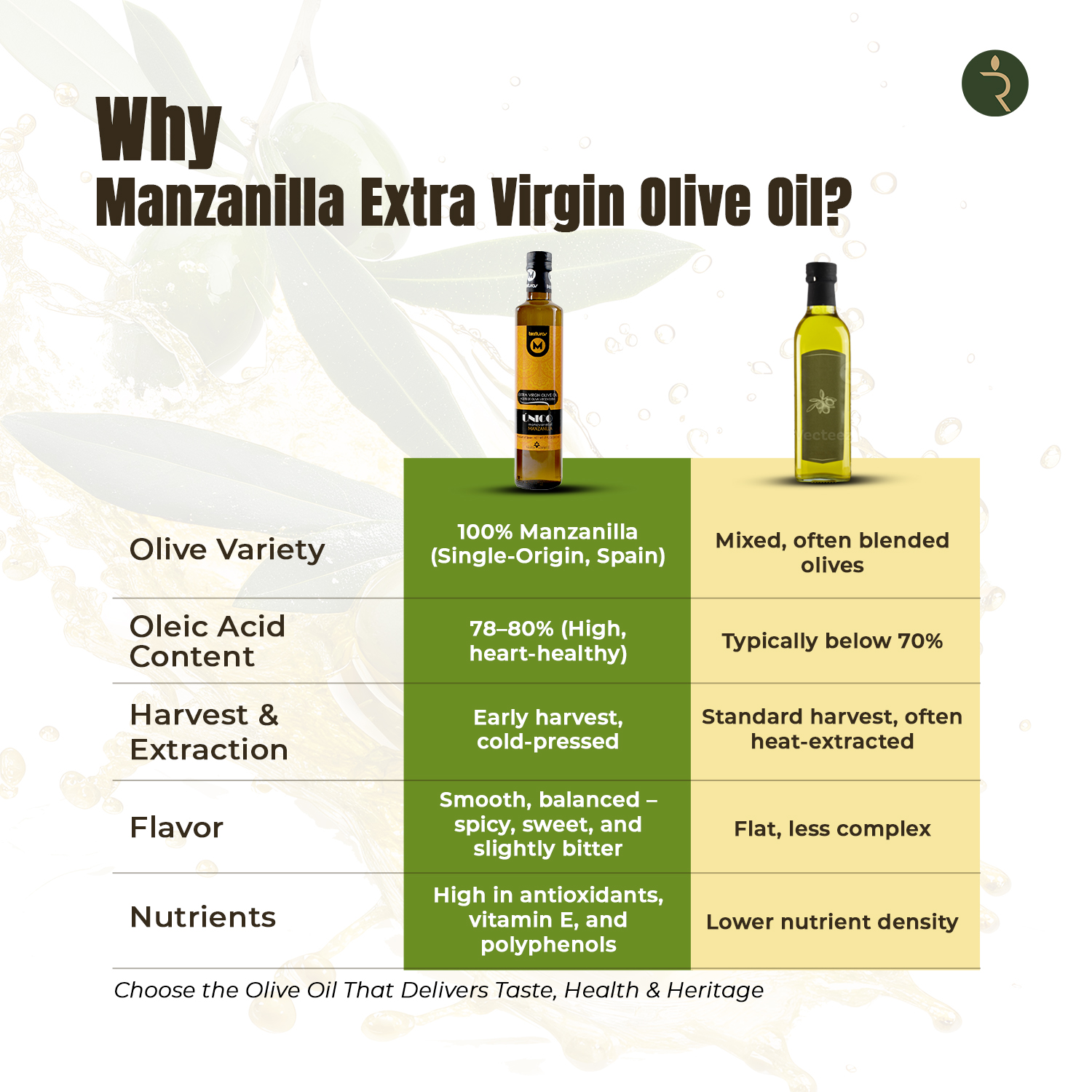
Spain is the world's largest producer of olive oil. Most of what reaches the UAE from Spain is a blend — Arbequina, Picual, Hojiblanca, and others combined in ratios that vary by season to produce a consistent, neutral oil. Blending is not dishonest. It is how you make an oil that tastes the same every year.
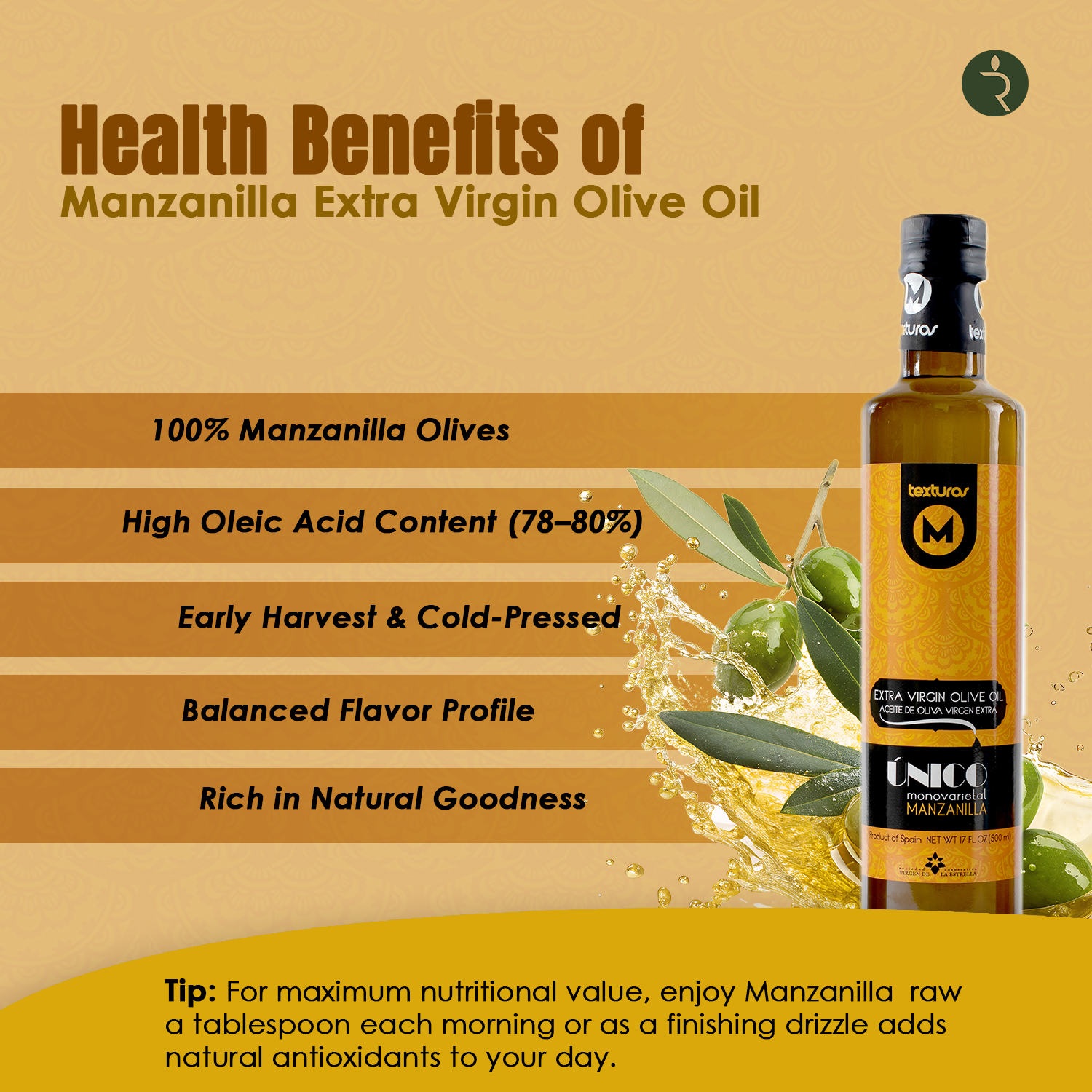
Single-variety is a different proposition. 100% Manzanilla olives means the tasting profile depends entirely on the olive — its terroir, its harvest window, its inherent chemistry. The Manzanilla olive (Olea europaea var. Manzanilla) is grown primarily in the province of Sevilla and parts of Badajoz in Spain. It is a small, round olive with a higher ratio of polyphenols relative to its oil yield — which is why it is more commonly known as a table olive and why Manzanilla EVOO is a specialty rather than a commodity.
The profile this produces: fruity at the front, clean grass and fresh herb at mid-palate, and a warm peppery finish. Not sharp bitterness — a rounded spice. The characteristic that distinguishes a high-polyphenol EVOO from a lower-quality one is that throat finish.
THE OLEOCANTHAL CONNECTION — WHAT THE PEPPERY FINISH ACTUALLY IS
The burning or stinging sensation at the back of the throat when you taste a high-quality extra virgin olive oil is not a flaw in the oil. It is oleocanthal — a phenolic compound that forms naturally during olive ripening and is preserved in cold-pressed EVOO.
Oleocanthal was first identified by researchers at the Monell Chemical Senses Center who noticed that high-quality olive oil created the same throat sensation as liquid ibuprofen. Subsequent research published in Nature confirmed that oleocanthal inhibits the same inflammatory enzymes (COX-1 and COX-2) as ibuprofen — the basis of the "liquid ibuprofen" description of EVOO that has appeared in nutritional research since 2005. The concentration in olive oil is far lower than a therapeutic dose of ibuprofen, but the mechanism is identical and meaningful at dietary amounts consumed daily.
Intensity of throat sting = proxy for oleocanthal concentration = indicator of polyphenol quality.
This is why tasting extra virgin olive oil raw — not cooking with it, not blending it into a sauce, but putting it on a piece of bread or a spoon and tasting it — is how chefs and sommeliers evaluate quality.
OLEIC ACID 78–80% — WHAT IT MEANS NUTRITIONALLY
Olive oil's principal fatty acid is oleic acid (Omega-9 monounsaturated). Manzanilla EVOO contains 78–80% oleic acid — at the upper end of the EVOO spectrum.
Oleic acid has three functional properties relevant to daily consumption:
- Stability: monounsaturated fats are more oxidatively stable than polyunsaturated (like sunflower or rapeseed), which means they degrade more slowly with heat and light exposure.
- Cardiovascular: the Mediterranean diet's association with reduced cardiovascular disease risk is substantially attributed to oleic acid's role in reducing LDL oxidation and maintaining HDL levels.
- Anti-inflammatory: oleic acid itself has modest anti-inflammatory properties independent of polyphenols, via inhibition of certain inflammatory gene expression pathways.
High oleic acid content is also why high-quality EVOO has a longer shelf life than lower oleic alternatives — it does not go rancid quickly.
FREE ACIDITY — THE EVOO QUALITY THRESHOLD
Free acidity is the technical measure of olive oil quality. It measures the percentage of free fatty acids (expressed as oleic acid) — a consequence of enzymatic degradation that begins the moment an olive is damaged.
EVOO standard: maximum 0.8% free acidity (EU standard) Premium EVOO: below 0.5% This oil: below 0.5%
Lower acidity means the olives were processed quickly after harvest, handled with minimal damage, and pressed cold without extended maceration. It is the single most objective quality measurement in olive oil.
The "extra virgin" designation requires below 0.8%. This oil at below 0.5% is in the premium tier within extra virgin.
HOW TO USE
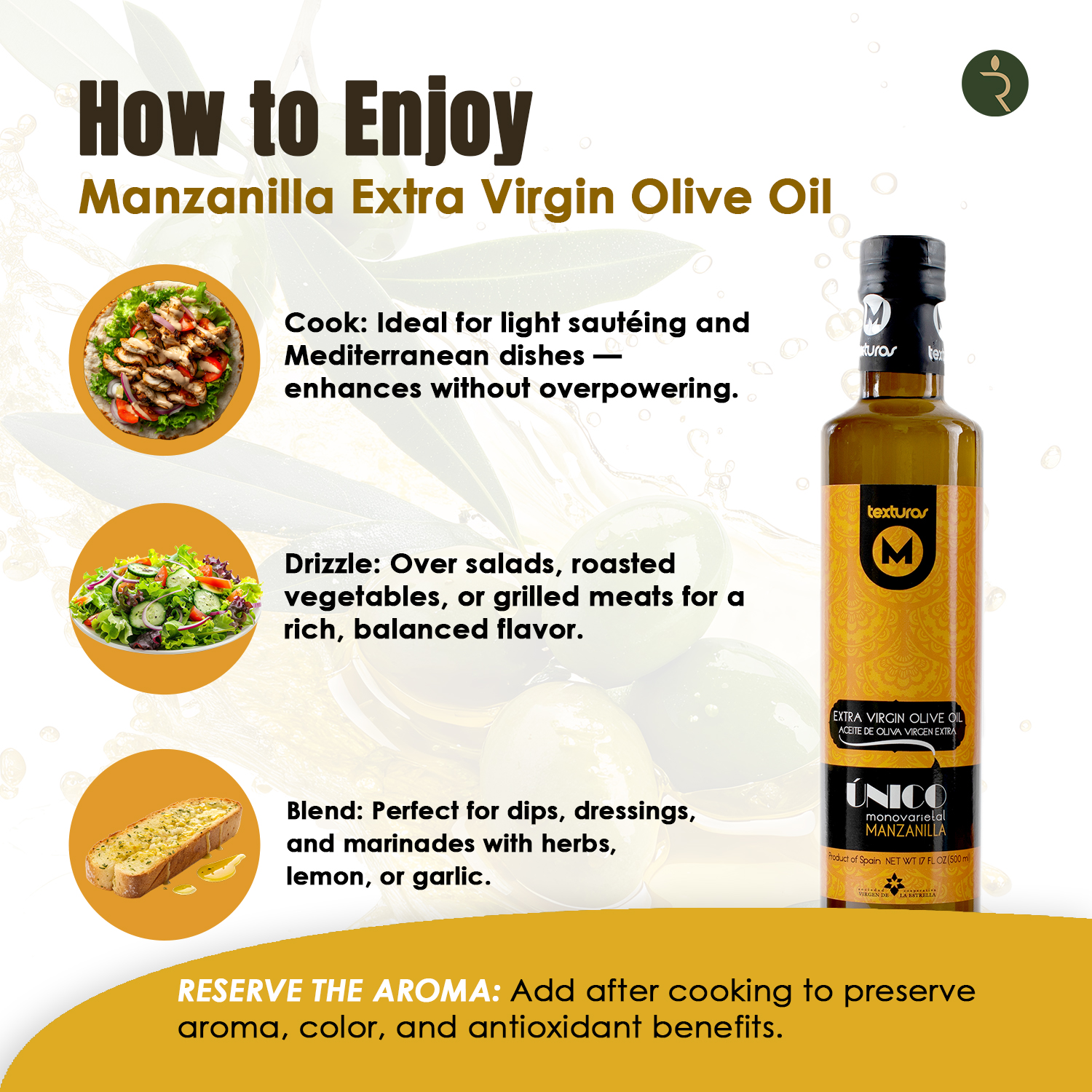
This is a finishing oil and a raw oil. Its polyphenols are best preserved unheated. Use it where you taste the oil directly.
- Bread dipping:
Pour a small pool in a shallow bowl. Add a pinch of flaky sea salt. Dip good bread — sourdough, ciabatta, baguette. This is the single most revealing way to taste olive oil quality. The fruity front note, the grassy mid-palate, and the oleocanthal finish are all present. A clean, good EVOO needs nothing added to be remarkable on bread. - Finishing on grilled or roasted proteins:
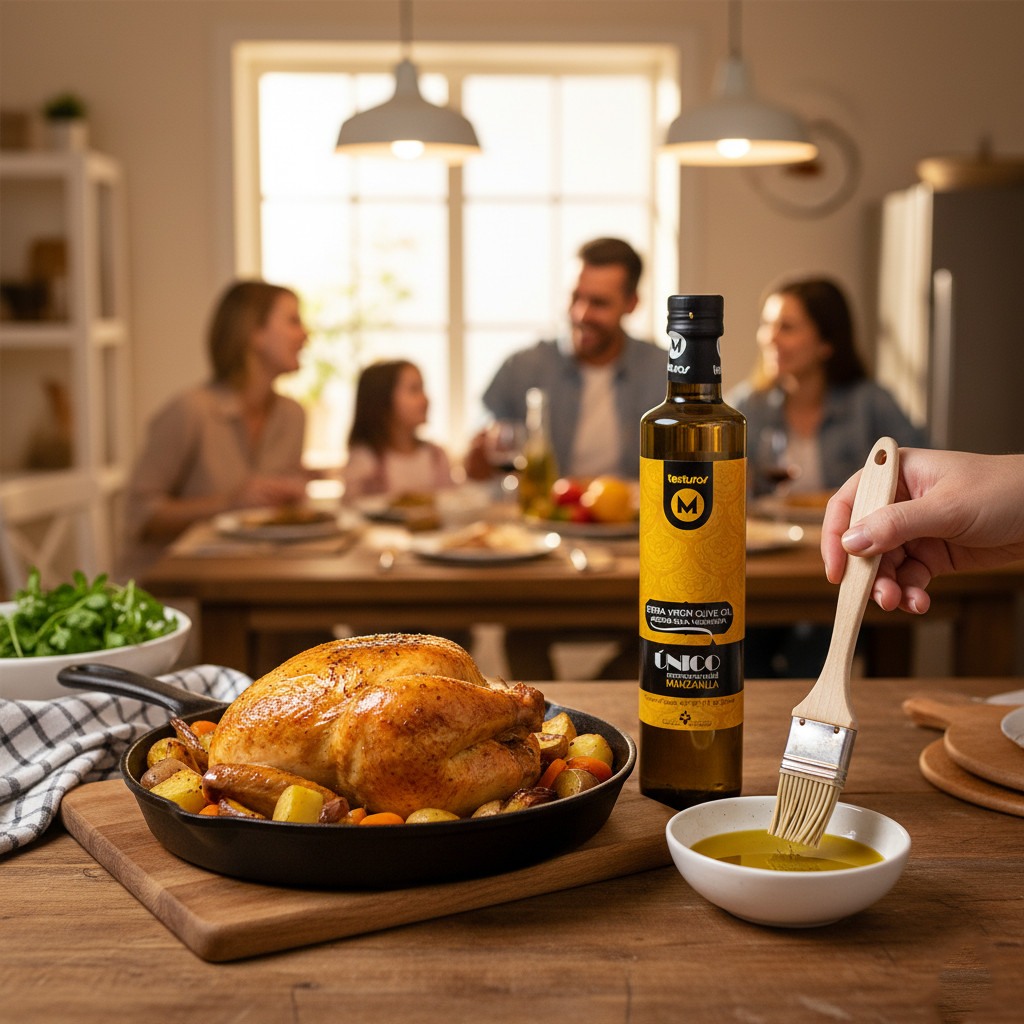
Drizzle 1–2 tsp over a grilled chicken breast, roasted salmon, or seared tuna immediately after it comes off the heat. The residual heat releases the aroma without destroying the polyphenols. The oil integrates with the meat juices and creates a natural pan sauce character without any additional work. - Raw pasta:
Cook pasta al dente. Reserve 2 tbsp pasta water. Drain. In the warm pan: 2 tbsp EVOO, the pasta water, toss vigorously. The starchy water and olive oil emulsify into a light, glossy coating. Add freshly ground black pepper and Parmesan or pecorino. This is the foundation of aglio e olio and cacio e pepe — both of which depend entirely on the quality of the olive oil. - Carpaccio and crudo:
For beef carpaccio: thin-sliced raw beef, Parmesan shavings, capers, arugula — finish with a generous drizzle. The oleocanthal finish of Manzanilla provides the counterpoint to the richness of the beef. For fish crudo (raw fish): the clean fruitiness of Manzanilla works particularly well with white fish (bass, bream, halibut). A drizzle, sea salt, lemon zest. - Vinaigrette and emulsified dressings:
3 parts EVOO : 1 part acid (lemon juice, white wine vinegar, or sherry vinegar). Whisk vigorously or blend. Add a small amount of mustard as emulsifier. The Manzanilla profile — sweet front, peppery finish — creates a balanced vinaigrette that does not require sugar to balance. Add honey only if the acid used is particularly sharp. - Soup garnish:
A tablespoon of raw EVOO over a bowl of tomato soup, lentil soup, gazpacho, or minestrone just before serving. The oil forms a glossy pool that carries aroma into every spoonful. This is standard practice in Spanish and Italian restaurants and one of the simplest quality upgrades you can make to any home-cooked soup. - Eggs:
The simplest test of any good olive oil. Fry two eggs in 1.5 tbsp EVOO over medium heat — the oil should sizzle actively but not smoke. The egg whites develop a lacy, crispy edge from the oil. Finish with flaky salt. The olive oil flavour is the dominant taste. Use a good one. - Cheese and charcuterie:
Drizzle EVOO directly over fresh cheeses — burrata, buffalo mozzarella, ricotta, labneh — before serving. The oil's fruity notes complement the milky freshness of soft cheese in a way that nothing else does. Similarly over cured meats on a board: a small pour of Manzanilla EVOO elevates the presentation and adds a Mediterranean character.
UNDERSTANDING MANZANILLA FLAVOUR — THE TASTING PROFILE
- Front palate: clean fruitiness — ripe green olive, slight apple, fresh-cut grass Mid-palate: herbal notes — artichoke, light tomato leaf Finish: warm peppery sting (oleocanthal) — not sharp, not harsh, but present and sustained
- Colour: greenish-gold with visible clarity Aroma: fresh and grassy, medium intensity Intensity: medium-fruity
- This profile makes Manzanilla versatile: gentle enough for raw applications where delicate ingredients are involved (fish, burrata, fresh vegetables), yet characterful enough to hold its own against robust flavours (grilled meat, aged cheese, vinegar-based dressings).
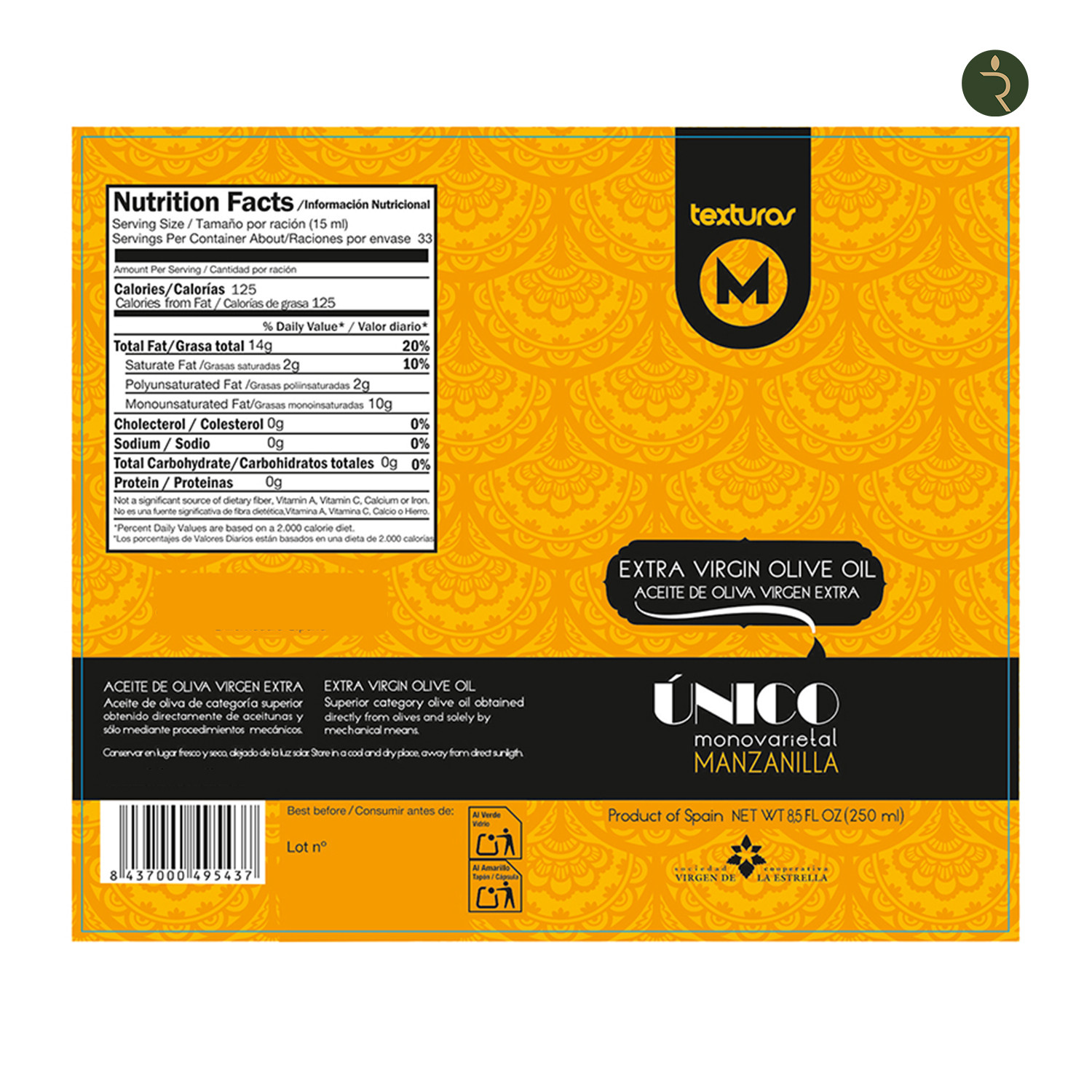
NUTRITION
Serving size: 1 tablespoon (15ml)
| Nutrient | Per 1 tbsp (14g) | Per 100g | % Daily Value* |
|---|---|---|---|
| Energy | 119 kcal / 497 kJ | 796 kcal | 6% |
| Total fat | 14g | 91.6g | 18% |
| — Saturated fat | 1.9g | 12.8g | 10% |
| — Monounsaturated fat (Omega-9) | 10.2g | 68g | — |
| of which Oleic acid (78–80%) | ~10g | ~68g | — |
| — Polyunsaturated fat (Omega-6) | 1.4g | 9.6g | — |
| — Trans fat | 0g | 0g | — |
| Total carbohydrates | 0g | 0g | 0% |
| Protein | 0g | 0g | 0% |
| Sodium | 0mg | 0mg | 0% |
| Vitamin E (alpha-tocopherol) | 1.9mg | 12.4mg | 13% |
| Vitamin K | 8.1 mcg | 54 mcg | 7% |
| Polyphenols (total) | ~1–3mg | ~8–20mg | — (no DV) |
| Oleocanthal (anti-inflammatory phenol) | Present | Present | — (no DV) |
| Free acidity | < 0.5% (premium EVOO threshold) | — | — |
STORAGE
Store in a cool, dark place — away from heat and direct sunlight. Light and heat degrade polyphenols faster than anything else. Best consumed within 12–18 months of pressing.
Do not refrigerate: refrigeration causes clouding and crystallisation (normal and reversible) but cold temperatures slow the aromatic release — the oil tastes flat. Room temperature is optimal.
Keep cap tightly closed: exposure to air oxidises polyphenols.
250ml bottle: designed for freshness. At typical usage of 1–2 tbsp per day, a 250ml bottle is consumed in 8–16 days — well within the quality window.
Reviews
Login
Don't have an account?
Sign UpManzanilla is a single olive variety (Olea europaea var. Manzanilla) grown in Spain’s Sevilla and Badajoz provinces, better known globally as a table olive than an oil olive because of its lower yield and higher polyphenol density. Most Spanish EVOO sold in the UAE is a blend of Arbequina, Picual and Hojiblanca, chosen for consistent flavour and higher oil yield. A single-variety Manzanilla EVOO is a specialty rather than a commodity — it carries a distinct sweet-front, grassy-mid, peppery-finish tasting profile that cannot be replicated in a blend.
Free acidity measures the percentage of free fatty acids released when an olive is bruised or sits too long before pressing — it is the most objective quality indicator in olive oil. The EU legal ceiling for “extra virgin” is 0.8%; premium producers target under 0.5%. This Manzanilla is verified by supplier lab analysis at under 0.3%, placing it well inside the premium tier and indicating fast, careful harvesting and cold-pressing.
Free acidity measures the percentage of free fatty acids released when an olive is bruised or sits too long before pressing — it is the most objective quality indicator in olive oil. The EU legal ceiling for “extra virgin” is 0.8%; premium producers target under 0.5%. This Manzanilla is verified by supplier lab analysis at under 0.3%, placing it well inside the premium tier and indicating fast, careful harvesting and cold-pressing.
This oil is best used raw or as a finishing oil. Its oleocanthal and other polyphenols begin to degrade at sustained temperatures above roughly 180°C, so the value of a polyphenol-rich EVOO is best preserved in bread dipping, finishing drizzles, vinaigrettes, and light sautéing rather than deep frying or high-heat searing, where a neutral oil or ghee performs better.
Arbequina is a small, round olive originally from Catalonia, Spain, prized for producing one of the mildest, smoothest single-variety EVOOs available — fruity notes of green apple and almond, a gentle sweetness, and a very soft finish. This is the opposite of bolder varieties like Manzanilla or Picual, which are valued for their peppery intensity and stronger bitterness. Both are genuine single-variety EVOOs with verified <0.3% acidity from the same Texturas range — the difference is purely tasting profile and intensity, not quality. Arbequina is typically the better starting point for households new to single-variety EVOO, and the most common first oil introduced to children.


