
Product description
THE NYIOOC GOLD MEDAL — WHAT IT ACTUALLY MEANS
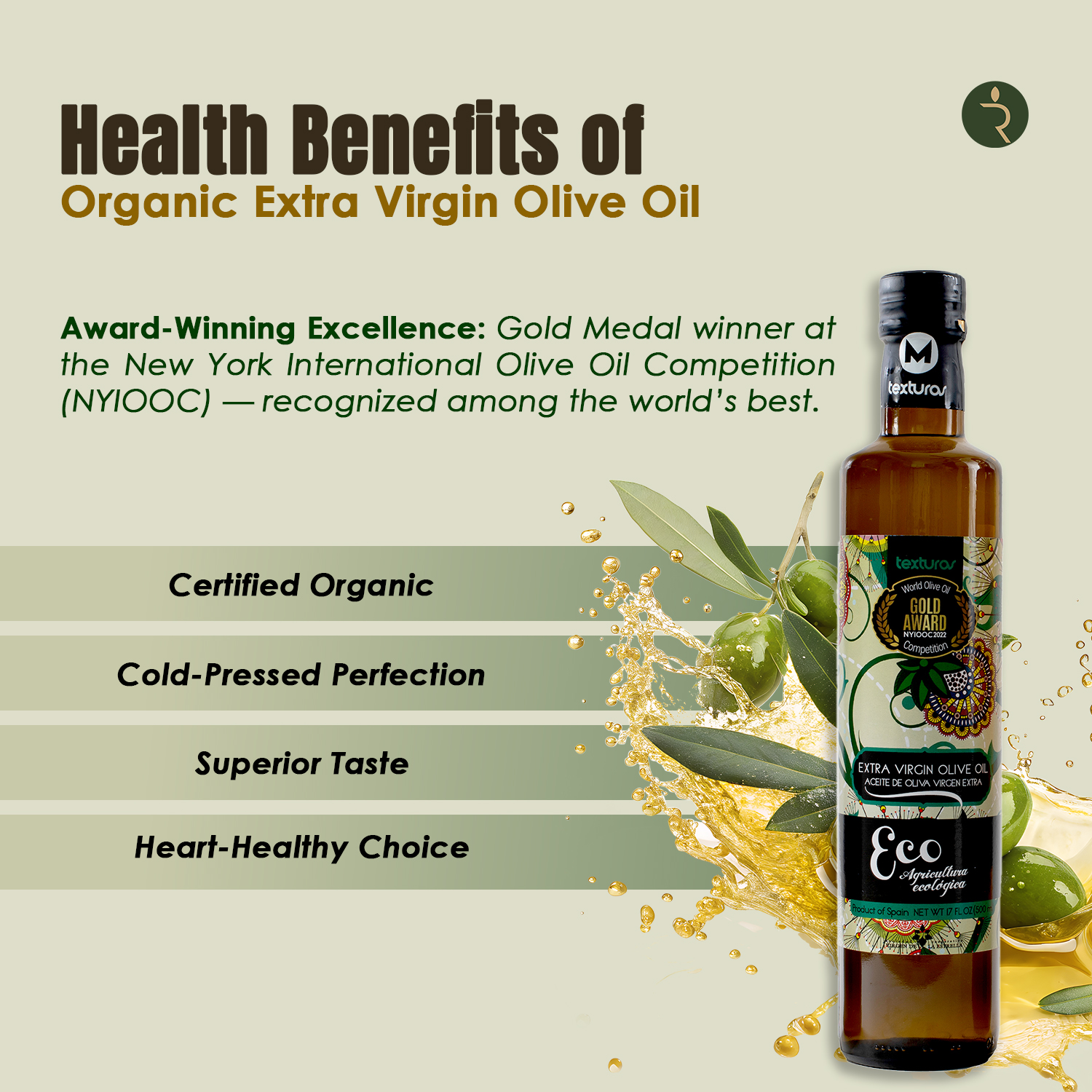
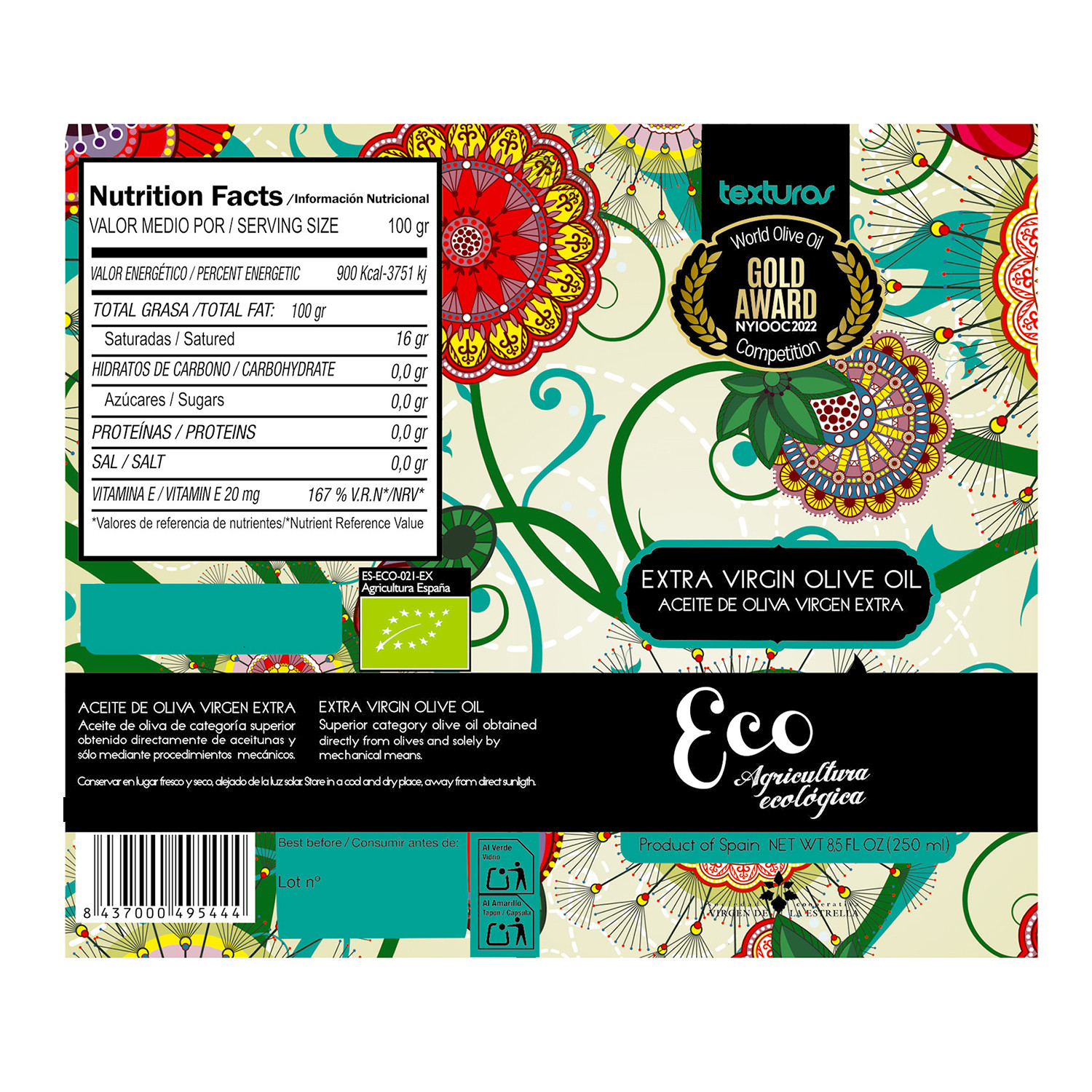
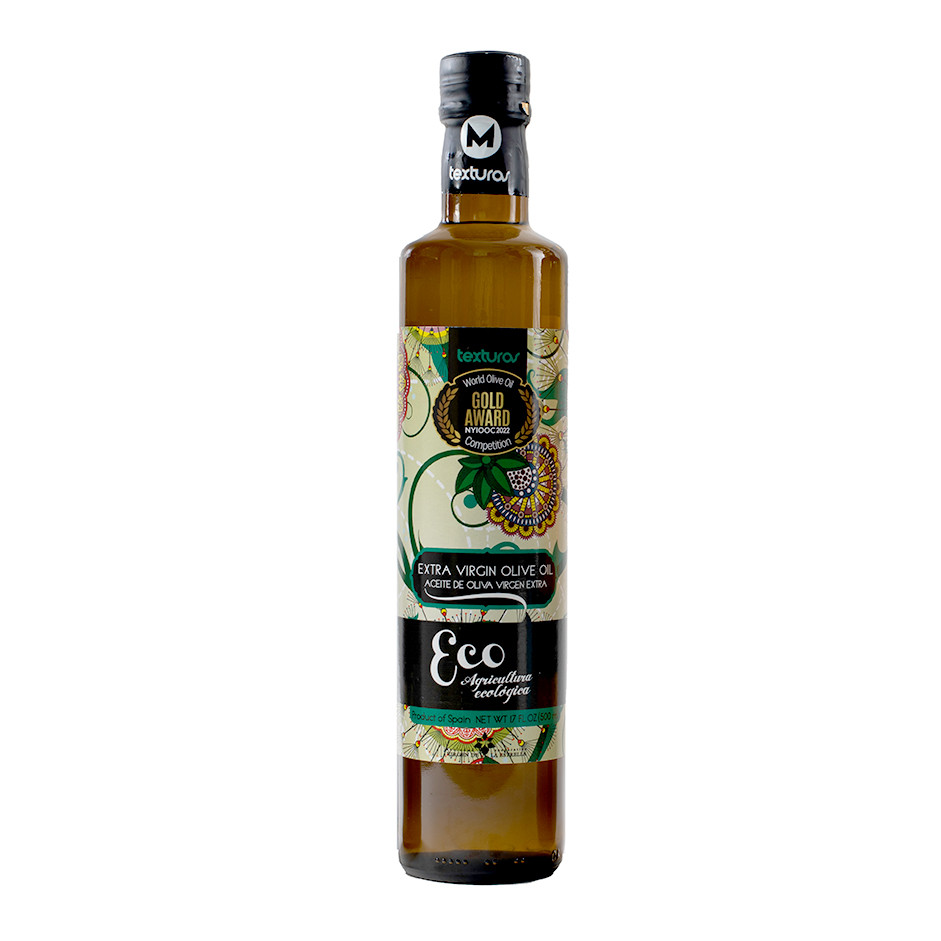
The New York International Olive Oil Competition is the largest and most closely watched olive oil quality competition in the world — over a thousand entries from more than thirty producing countries judged every spring. Entries are tasted blind by an international panel of IOC-accredited sensory experts, evaluating fruity aroma, flavour complexity, balance, mouthfeel, and the complete absence of defects like rancidity or mustiness. A Gold Medal requires scoring above threshold in every category with zero defects detected across all judges. This is a harder bar to clear than most national or regional awards, many of which weigh marketing or category criteria alongside taste. This Texturas oil cleared it.
CERTIFIED ORGANIC — WHY IT MATTERS MORE FOR OLIVE OIL THAN MOST FOODS
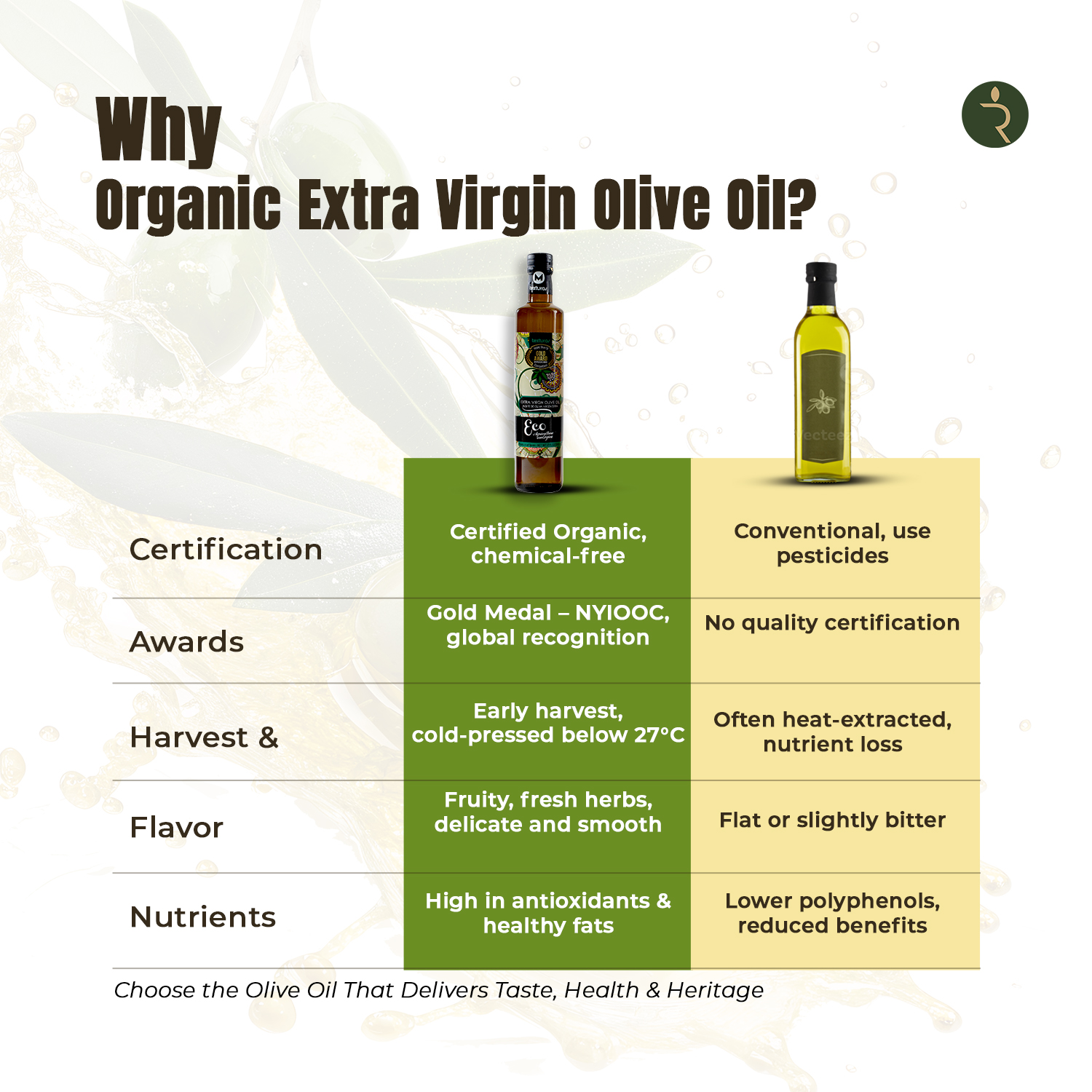
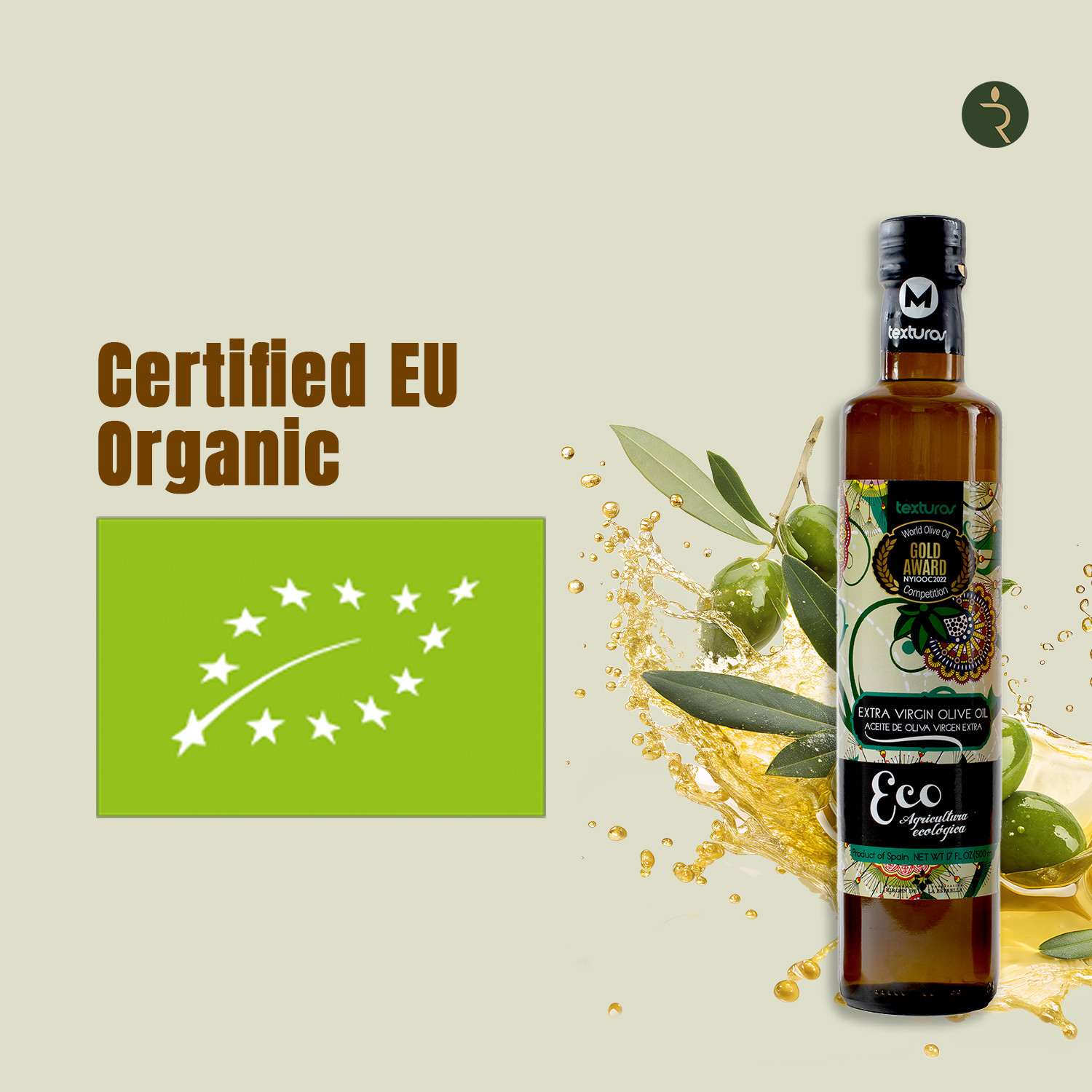
This oil is certified under Spanish and EU Organic standards (Eco Agricultura Ecológica) — no synthetic pesticides, herbicides, or chemical fertilisers, biologically managed soil, and annual independent audits. Organic certification matters more for olive oil than for most foods, because oil is extracted from the whole olive including the skin, where fat-soluble pesticide residues concentrate during pressing. Conventional farming’s residue pathway simply doesn’t exist here. Some research also associates organically managed olive trees with higher polyphenol concentration — the compounds responsible for peppery finish, balanced bitterness, and antioxidant activity that competition judges reward.
FREE ACIDITY <0.3% — “SUPERIOR CATEGORY,” NOT JUST “EXTRA VIRGIN”
EU law sets 0.8% free acidity as the ceiling for any oil labelled “extra virgin.” Superior Category (Categoría Superior) is a voluntary Spanish producer commitment that goes well beyond that legal floor — typically under 0.3% free acidity, with higher polyphenol specifications and stricter sensory panel requirements with no defect tolerance. This oil tests below 0.3%, the same verified threshold as every other Texturas single-varietal bottle in the Rootz range, indicating rapid processing and exceptional care from harvest to bottling.
COLD-PRESSED BELOW 27°C — PRESERVING WHAT HEAT DESTROYS
Extraction temperature is kept below 27°C, in line with international cold-extraction standards. This preserves natural flavour and aroma compounds, polyphenols and antioxidants, and the fresh, peppery character that heat processing destroys. Combined with the organic, pesticide-free input, the result is what the live product page accurately calls “the cleanest possible flavour signal” — no chemical residue interference with taste, no pesticide contamination of the polyphenol profile.
HOW TO USE — EVERYDAY KITCHEN ESSENTIAL
Versatile enough for daily cooking, clean enough to use raw without a second thought about what's in the bottle.
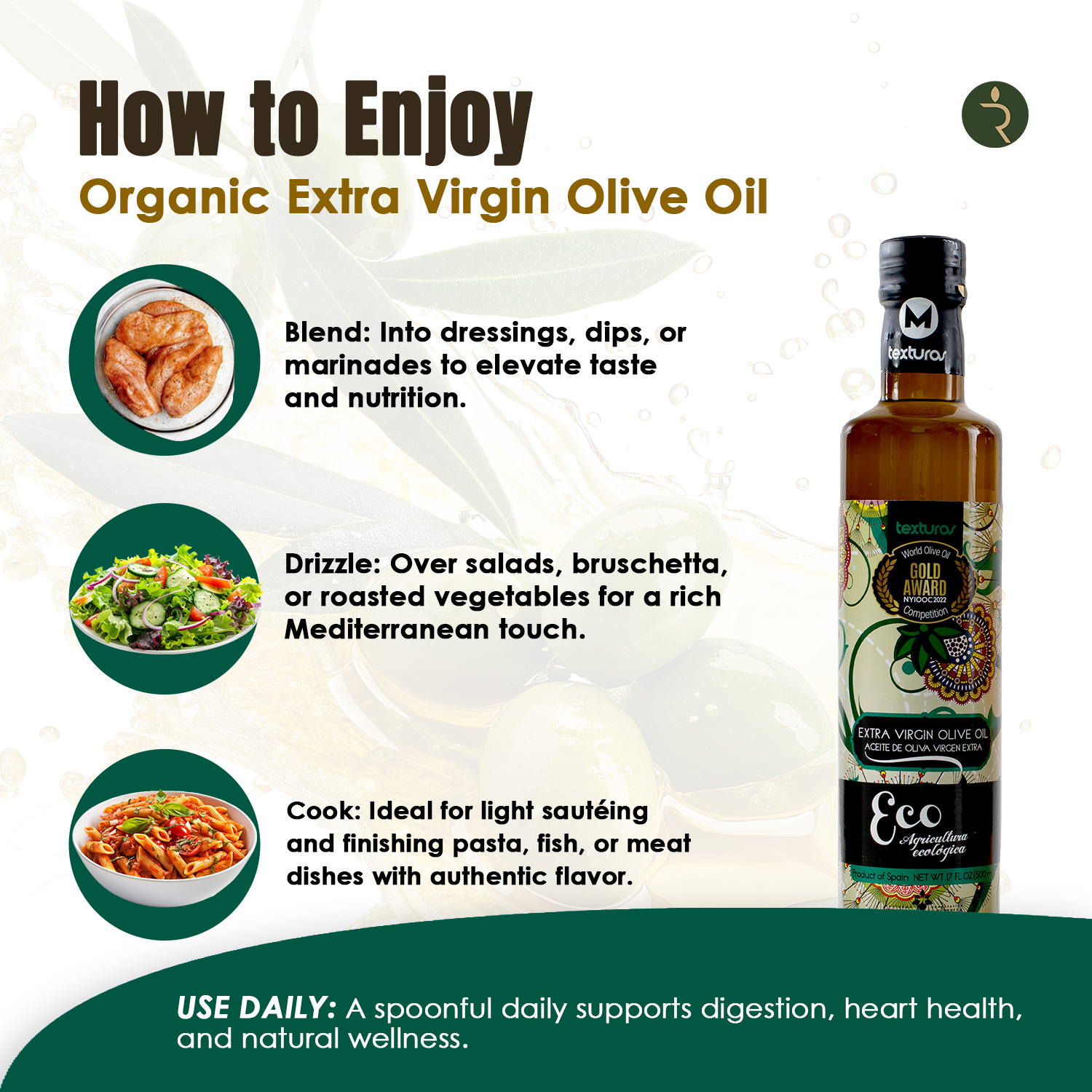
- Everyday sautééing and roasting: smoke point of approximately 190–210°C makes it well suited to normal cooking temperatures, far above what home cooking typically requires.
- Salad dressings and marinades: 3 parts oil to 1 part acid for a vinaigrette with no pesticide-residue interference in the flavour.
- Bread dipping and finishing: a shallow pool with good bread — the most direct way to taste the oil’s competition-winning character.
- Pasta and risotto: stirred through at the end of cooking for a clean, rounded finish.
- Roasted vegetables: tossed before roasting — stable at oven temperatures while contributing genuine flavour.
- Hummus and dips: drizzled on top as a finishing touch — a Mediterranean pairing the live page already highlights.
- Grilled or pan-seared proteins: 1–2 tsp finishing drizzle for chicken, fish, or seafood right off the heat.
- Daily wellness use: 1 tablespoon daily as a general wellness habit, consistent with Mediterranean diet research on monounsaturated fat intake.
Store in a cool, dark place away from heat and sunlight. Keep tightly sealed after opening for best flavour and freshness
NUTRITION
Serving size: 1 tablespoon (15ml)
| Nutrient | Per 1 tbsp (14g) | Per 100g | % Daily Value* |
|---|---|---|---|
| Energy | 119 kcal / 497 kJ | 796 kcal | 6% |
| Total fat | 14g | 91.6g | 18% |
| — Saturated fat | 1.9g | 12.8g | 10% |
| — Monounsaturated fat (Omega-9) | 10.2g | 68g | — |
| of which Oleic acid (78–80%) | ~10g | ~68g | — |
| — Polyunsaturated fat (Omega-6) | 1.4g | 9.6g | — |
| — Trans fat | 0g | 0g | — |
| Total carbohydrates | 0g | 0g | 0% |
| Protein | 0g | 0g | 0% |
| Sodium | 0mg | 0mg | 0% |
| Vitamin E (alpha-tocopherol) | 1.9mg | 12.4mg | 13% |
| Vitamin K | 8.1 mcg | 54 mcg | 7% |
| Polyphenols (total) | ~1–3mg | ~8–20mg | — |
| Oleocanthal (anti-inflammatory phenol) | Present | Present | — |
| Free acidity | < 0.3% (Superior category) | — | — |
Reviews
Login
Don't have an account?
Sign UpThe NYIOOC (New York International Olive Oil Competition) is the world's largest and most prestigious annual olive oil competition. It was established in 2012 and is held in New York City. Entries are judged blind by an international panel of IOC (International Olive Council) accredited olive oil tasters — certified sensory analysts who evaluate oils without seeing any label information. Judging criteria include: fruity aroma, positive attributes (flavour complexity, balance, mouthfeel), absence of defects (rancidity, mustiness, winey notes), and finish quality. A Gold Medal requires scoring above the threshold in all categories with zero defect detection across all judges. In competition years with over 1,000 entries, a Gold Medal represents the top percentile of olive oils from 30+ producing countries worldwide. This is a harder standard to meet than most national or regional awards, which often include category adjustments or marketing criteria.
Both must meet the same "extra virgin" quality standards — acidity below 0.8%, zero sensory defects. The difference is in how the olives were grown. Conventional olive farming typically uses synthetic pesticides, herbicides, and chemical fertilisers to maximise yield and manage pests. Certified organic farming (under EU Eco Agricultura Ecológica standards) prohibits all synthetic inputs — pest management is biological, weed management is mechanical, and soil fertility is maintained through composting and natural methods. For olive oil specifically, organic certification matters more than for many foods. Oil is extracted from the whole olive including the skin, where fat-soluble pesticide residues concentrate during pressing. Organic certification eliminates this pathway. Additionally, some research indicates that organically managed olive trees produce olives with higher polyphenol concentrations — the compounds responsible for the peppery finish, bitterness, antioxidant activity, and the specific flavour profile that wins quality competitions.
Both — and the 500ml size is specifically calibrated for daily cooking use. A household of 2–4 people using 1–2 tablespoons per day will consume a 500ml bottle in 2–4 weeks, well within the quality window. Extra virgin olive oil is safe for everyday sautéing, roasting at up to 200°C, and pan-frying on medium heat. Its smoke point is approximately 190–210°C — well above the temperatures used for most everyday cooking. The misconception that EVOO cannot be cooked with comes from comparing it to refined seed oils with higher smoke points (220–230°C); while EVOO is not suitable for deep frying or very high heat searing, it outperforms most seed oils for everyday cooking at normal temperatures. For maximum polyphenol preservation and flavour, raw applications (finishing drizzle, vinaigrette, bread dipping) are ideal. For everyday cooking (roasting, sautéing, marinades, pan sauces), this EVOO performs excellently and the organic certification ensures no residue interference with flavour at any cooking temperature.
"Superior Category" (Categoría Superior) is a Spanish quality designation that exceeds the minimum "extra virgin" standard. It requires stricter limits on free acidity (typically below 0.3% vs the 0.8% extra virgin threshold), higher polyphenol content specifications, and more stringent sensory panel requirements with no defect tolerance. The European Union "extra virgin" standard is the legal floor; "Superior Category" is a voluntary producer commitment to a higher quality ceiling. Combined with the NYIOOC Gold Medal (a blind tasted competition result) and Eco Agricultura Ecológica certification (organic farming verification), this product carries three independent quality validations — each assessed by a different body using different methods. This is unusual even among premium olive oils.
Both. The 250ml size suits daily use — a household using 1–2 tablespoons per day will finish the bottle in roughly 5–7 weeks, comfortably within its freshness window. EVOO is safe for everyday sautéing, roasting up to around 200°C, and medium-heat pan-frying, with a smoke point of approximately 190–210°C — well above normal home cooking temperatures. It is not intended for deep frying or very high-heat searing, where a neutral oil or ghee performs better. For maximum polyphenol preservation, raw applications (finishing drizzle, vinaigrette, bread dipping) remain ideal.
Superior Category (Categoría Superior) is a voluntary Spanish quality designation that exceeds the minimum extra virgin standard — typically requiring free acidity below 0.3% rather than the legal 0.8% ceiling, higher polyphenol specifications, and stricter sensory panel requirements with no defect tolerance. The EU extra virgin standard is the legal floor; Superior Category is a producer's voluntary commitment to a higher ceiling. Combined with the NYIOOC Gold Medal and organic certification, this oil carries three independently assessed quality validations — a competition result, a certifying body, and a lab measurement — which is unusual even among premium olive oils.


