5 Questions People Ask When They See My Morning Bowl — And What They Reveal About Eating Right
Introduction
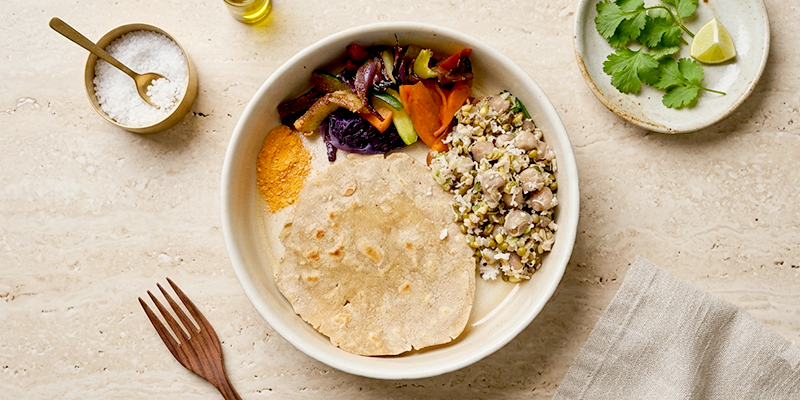
Every morning, before the city wakes up, I build this bowl. It takes 20 minutes. It cost me eight years of conversations with farmers, nutritionists, and my own gut to get right. When I posted a photo recently, five questions came up again and again — from people curious, skeptical, or just genuinely eager to understand what they were looking at. So I decided to answer them properly. Not with a recipe. With context.
Q1: What is the sprouted mixture? Why not just regular dal?
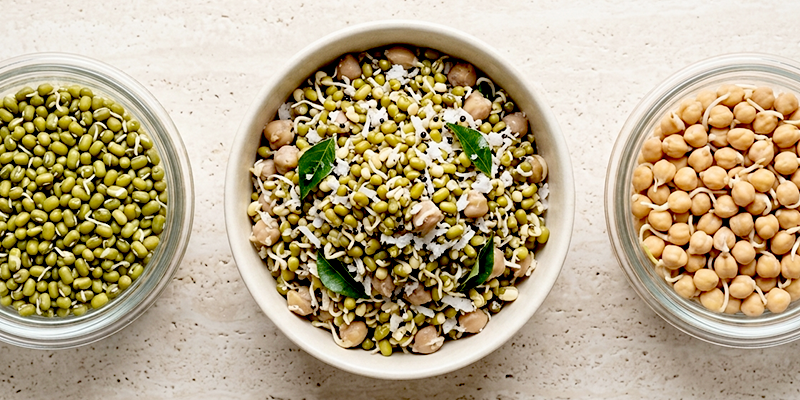
The mixture on the right is sprouted green gram (moong) combined with steamed chickpea, finished with grated fresh coconut and a tempering of A2 ghee, mustard seeds, and curry leaves.
Why sprouted? Sprouting activates enzymes that break down phytic acid — the compound in legumes that blocks mineral absorption. After sprouting, the protein bioavailability of moong increases significantly, and the carbohydrate structure changes to feed beneficial gut bacteria instead of spiking blood sugar.
Why chickpea alongside? The amino acid profiles of moong and chickpea are complementary. Together, they approach a complete protein profile — meaning your body gets all the essential building blocks it needs from a single bowl.
Why A2 ghee in the tempering? A2 ghee is rich in butyrate — a short-chain fatty acid that literally feeds the cells lining your gut wall. It's not just a cooking medium. It's gut medicine.
Q2: What is that orange powder, and why does it look like spice, not food?
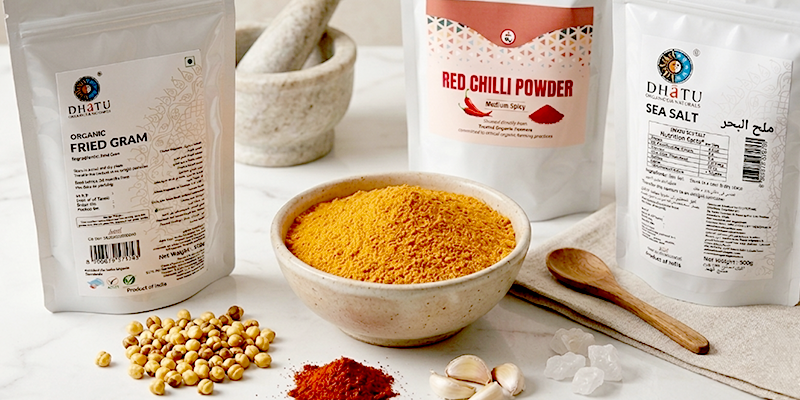
That's Sattu chutney powder — a traditional South Indian preparation made from roasted chana dal, dried coconut, red chilli, garlic, and cumin.
Sattu (roasted chana flour) has been used in Ayurvedic practice for centuries as a cooling, energising food. Modern nutritional analysis confirms what our grandmothers already knew: it's high in slow-release protein, prebiotic fibre, and iron.
In this bowl, it serves three roles: flavour, pre-biotic fibre for the microbiome, and a blood-sugar buffer that slows the absorption of carbohydrates from the roti.
Q3: Aren't roasted vegetables less nutritious than raw?
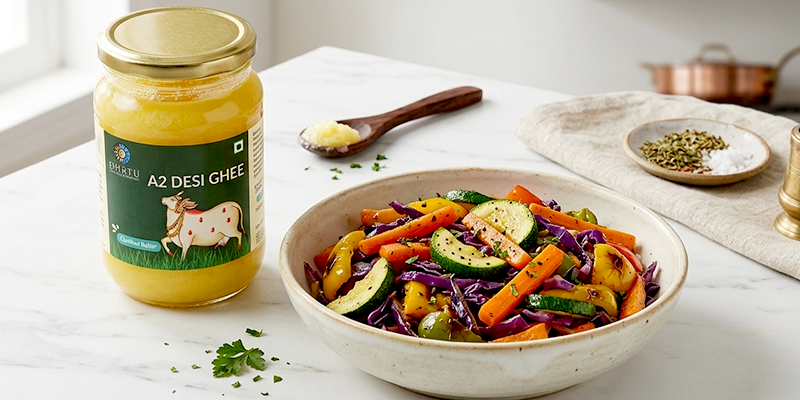
This is one of the most common myths in wellness culture, and it deserves a direct answer. The relationship between heat and nutrition is not linear. For some vegetables, light roasting increases bioavailability. Lycopene in tomatoes and carrots becomes more absorbable when heated. The fat in A2 ghee further enhances absorption of fat-soluble nutrients like beta-carotene and Vitamin K.
The vegetables in this bowl — carrot, zucchini, red cabbage, capsicum — are roasted at moderate heat with A2 ghee. This is not destruction. This is activation.
The char you see is the Maillard reaction — a chemical process that creates antioxidant compounds, not damages them. What looks slightly burnt is actually flavour chemistry doing its work.
Q4: Why Jowar roti specifically? Why not whole wheat or multigrain?
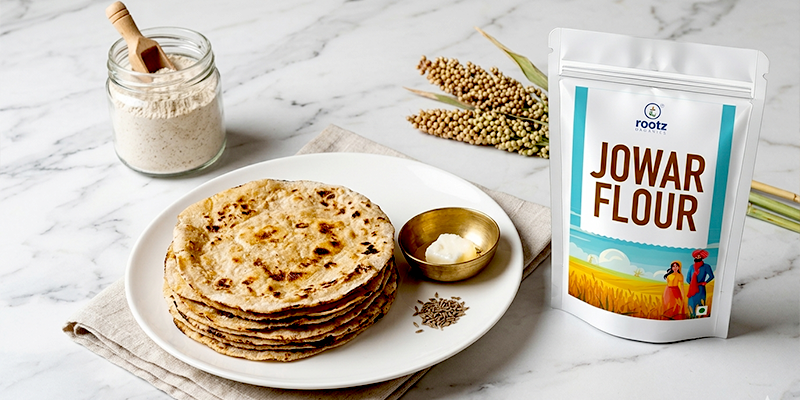
Jowar (sorghum) is one of the oldest cultivated grains in the world, and one of the most underrated in modern kitchens.
Here's why it earns its place in this bowl:
Glycemic Index: Jowar has a lower GI than wheat, meaning it releases glucose into the bloodstream more slowly — no spike, no crash.
Policosanols: Jowar contains a class of compounds called policosanols, which have been studied for their anti-inflammatory and cholesterol-modulating properties.
Gluten-free: For anyone with wheat sensitivity or a compromised gut lining, Jowar offers all the satisfaction of a roti without the inflammatory trigger.
Two small rotis here are not 'carbs to feel guilty about.' They're the structural carbohydrate backbone that sustains energy for 4-5 hours.
Q5: Is this actually enough for breakfast? It looks quite small.
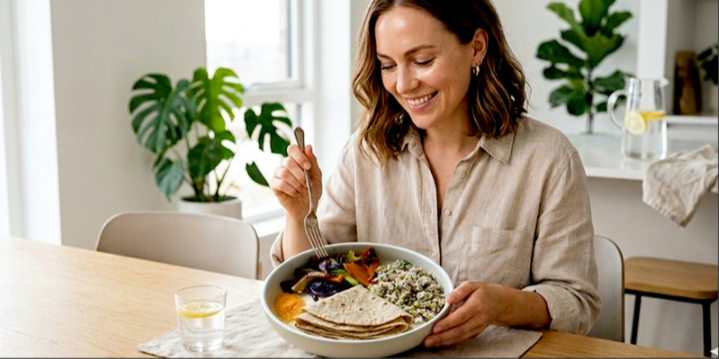
Let's look at what this bowl actually delivers:
Protein: Approximately 22-25g from sprouted moong, chickpea, and Sattu — comparable to two eggs plus a protein shake, but from whole food plant sources.
Fibre: 12g+, from legumes, vegetables, coconut, and Jowar. This is nearly half the daily recommended intake before 9am.
Healthy fats: From A2 ghee and fresh coconut, supporting hormone production, fat-soluble vitamin absorption, and sustained satiety.
Complex carbohydrates: From Jowar roti — slow-release, anti-inflammatory, gut-friendly. The combination of fibre and protein suppresses ghrelin (the hunger hormone) and sustains leptin (the satiety signal) for 4-5 hours. This is not a 'light' breakfast. It is a precisely constructed metabolic strategy disguised as a simple bowl.
Conclusion
This is what 80/20 clean eating looks like in practice. Not perfection ,intention. Every ingredient in this bowl was chosen to do something: reduce inflammation, feed the microbiome, sustain energy, and taste like a meal worth eating.
All of it — the sprouted moong, Jowar flour, organic vegetables, and A2 ghee — is available through Rootz Organics, sourced from certified farmers across India and the UAE. Health and Happiness, Always.
Shop the ingredients: rootzorganics.com
-
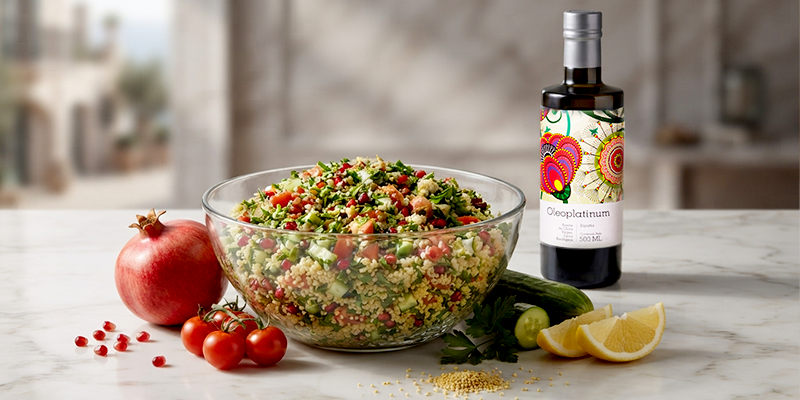
Foxtail Millet Tabbouleh: The Spain-Inspired, Gluten-Free Salad I Fell in Love With
September 25th, 2026 -
Khapli Flour vs Regular Wheat Flour: What’s Really Different?
September 23rd, 2026 -
Psyllium Husk and Whole Seeds: The Simple Fibre Upgrade Every UAE Kitchen Needs
September 11th, 2026 -
 August 14th, 2026