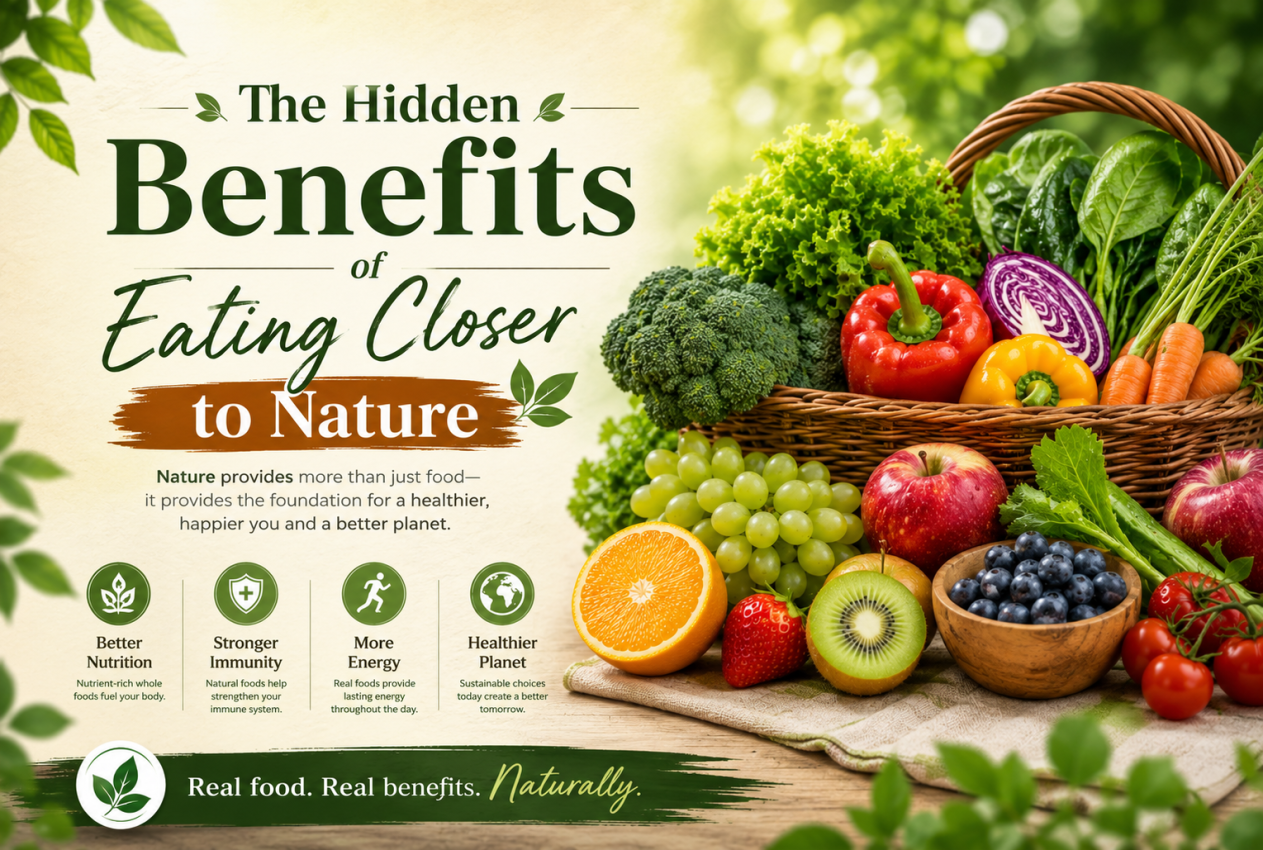
The Hidden Benefits of Eating Closer to Nature
The Art of Eating Closer to Nature: A Modern Approach to Wellness
Walk into any supermarket in Dubai or Abu Dhabi today and you'll find shelves stacked with foods that barely resemble what grew in soil. Bright packaging, long shelf lives, and ingredient lists that read like chemistry homework have quietly become "normal." Yet across the UAE, more families are pausing at the produce aisle and asking a simple question: what did this food look like before it reached me?
That question is the heart of eating closer to nature — choosing food in a form as close as possible to how it grows, with minimal processing, minimal additives, and maximum nutrition intact. It isn't a diet trend. It's closer to how humans ate for most of history, and emerging research suggests our bodies are still wired for it.
This guide looks at what the science actually says, why this matters more in a desert nation that imports most of its food, and how small, practical shifts at home can produce outsized benefits for energy, digestion, immunity, and long-term health.
What Does It Really Mean to Eat Closer to Nature?
It's tempting to think this is just another word for "organic," but the idea is broader. This way of eating means favouring whole, minimally processed foods — vegetables, fruits, whole grains, legumes, nuts, and naturally raised dairy — over ultra-processed alternatives engineered for shelf stability rather than nourishment.
Think of it on a spectrum. On one end sits a fresh tomato picked at ripeness. On the other sits a tomato-flavoured snack with stabilisers, colourants, and preservatives. Both might technically contain "tomato," but only one delivers the fibre, antioxidants, and micronutrients your body recognises and uses efficiently.
Three principles define this way of eating:
- Minimal processing — food that hasn't been stripped of fibre, fortified artificially, or loaded with additives
- Seasonal and local sourcing — produce harvested at peak ripeness rather than picked early and ripened in transit
- Transparency — knowing what's in your food and, ideally, where it came from
Why This Conversation Matters More in the UAE
The UAE imports roughly 80–90% of its food, much of it travelling long distances before reaching a plate. Long supply chains often mean produce is harvested early, refrigerated for weeks, and treated to survive transit — all of which can reduce nutrient density by the time it's consumed.
Add to this a climate that limits large-scale local farming, a fast-paced urban lifestyle that favours convenience food, and a population increasingly affected by lifestyle conditions like diabetes and obesity, and the case for intentional, nature-aligned eating becomes far more urgent here than in many other regions.
This is also why sourcing matters as much as food choice itself. Buying organic vegetables online from a supplier that prioritises freshness and shorter supply chains can meaningfully change what actually lands on your plate, compared to produce that has spent weeks in transit.
The Nutritional Case: What Happens Inside Your Body
Higher Nutrient Density in Whole Foods
Processing food — milling grains, refining sugars, extracting and re-adding isolated nutrients — strips away much of what made the original food valuable. Whole grains lose fibre and B-vitamins when refined into white flour. Cold-pressed oils retain compounds that high-heat industrial extraction destroys. Eating food in a form closer to its natural state preserves these nutrients rather than requiring you to source them separately through supplements.
Better Gut Health and Microbiome Diversity
Your gut hosts trillions of bacteria that influence digestion, immunity, and even mood. Research in nutritional science consistently links a diverse, fibre-rich, minimally processed diet to a healthier gut microbiome, while diets high in ultra-processed foods are associated with reduced microbial diversity. Fermented foods, whole legumes, and fibrous vegetables — staples of nature-aligned eating — feed beneficial bacteria in ways that processed snacks simply cannot.
Lower Exposure to Additives and Synthetic Residues
Ultra-processed foods often rely on emulsifiers, artificial colours, preservatives, and flavour enhancers to extend shelf life and intensify taste. Choosing whole foods naturally reduces exposure to these additives. Similarly, opting for produce grown without synthetic pesticide regimes lowers chemical residue intake — one of the most cited reasons UAE households increasingly browse organic food online rather than relying solely on conventional supermarket aisles.
Steadier Blood Sugar and Energy Levels
Whole foods retain their natural fibre matrix, which slows sugar absorption into the bloodstream. A whole apple, for instance, releases its sugars far more gradually than apple juice. This translates into steadier energy throughout the day and fewer of the energy crashes associated with refined-carbohydrate-heavy diets — a relevant concern in a region with rising rates of insulin resistance.
The Lesser-Known Benefits Nobody Talks About
Most articles stop at "organic is healthier." But the benefits of this nature-aligned approach extend well beyond nutrition labels.
It Reconnects Eating With the Seasons
Eating seasonally — root vegetables in cooler months, water-rich fruits in summer heat — aligns naturally with what the body needs at different times of year. Ayurvedic tradition has emphasised this for centuries, recommending cooling foods in summer and warming, grounding foods in winter. Modern nutrition is only now catching up to wisdom that traditional food cultures across India, the Middle East, and the Mediterranean have practised for generations.
It Restores a Sense of Food Provenance
When you know a date came from a UAE farm or a vegetable was harvested days — not weeks — ago, eating becomes less transactional. Families report feeling more connected to mealtimes when they understand where ingredients originate, a shift that often improves mindful eating habits and reduces impulsive snacking on processed convenience food.
It Naturally Reduces Sugar and Salt Intake
Whole foods are rarely engineered to be "hyper-palatable" the way processed snacks are. As whole food intake increases, most people naturally consume less added sugar and sodium — without consciously restricting anything. This is one reason nature-aligned eating tends to be more sustainable long-term than calorie-counting diets.
It Supports Better Sleep and Mood Regulation
Emerging research links gut health to neurotransmitter production, including serotonin, much of which is synthesised in the digestive tract. A gut nourished by fibre-rich, whole foods may support better mood stability and sleep quality — an angle rarely covered in mainstream organic-food content but increasingly supported by gut-brain-axis research.
Common Myths That Hold People Back
"It's Too Expensive"
Whole, minimally processed staples — lentils, seasonal vegetables, whole grains — are often cheaper per meal than packaged convenience food once you account for portion size and nutrient value. Buying in bulk and choosing seasonal produce keeps costs manageable.
"It Takes Too Much Time"
Batch-cooking grains and legumes, keeping pre-washed greens on hand, and relying on simple preparations like roasting or steaming can make whole-food meals just as fast as reheating packaged alternatives.
"Organic and Natural Are the Same Thing"
Not quite. "Organic" refers to a certified farming method free of synthetic pesticides and fertilisers. "Natural" is a broader, less regulated term. The two often overlap, but it's worth checking certifications rather than assuming a label guarantees a chemical-free product.
Practical Ways to Eat Closer to Nature in the UAE
Start With Your Pantry Staples
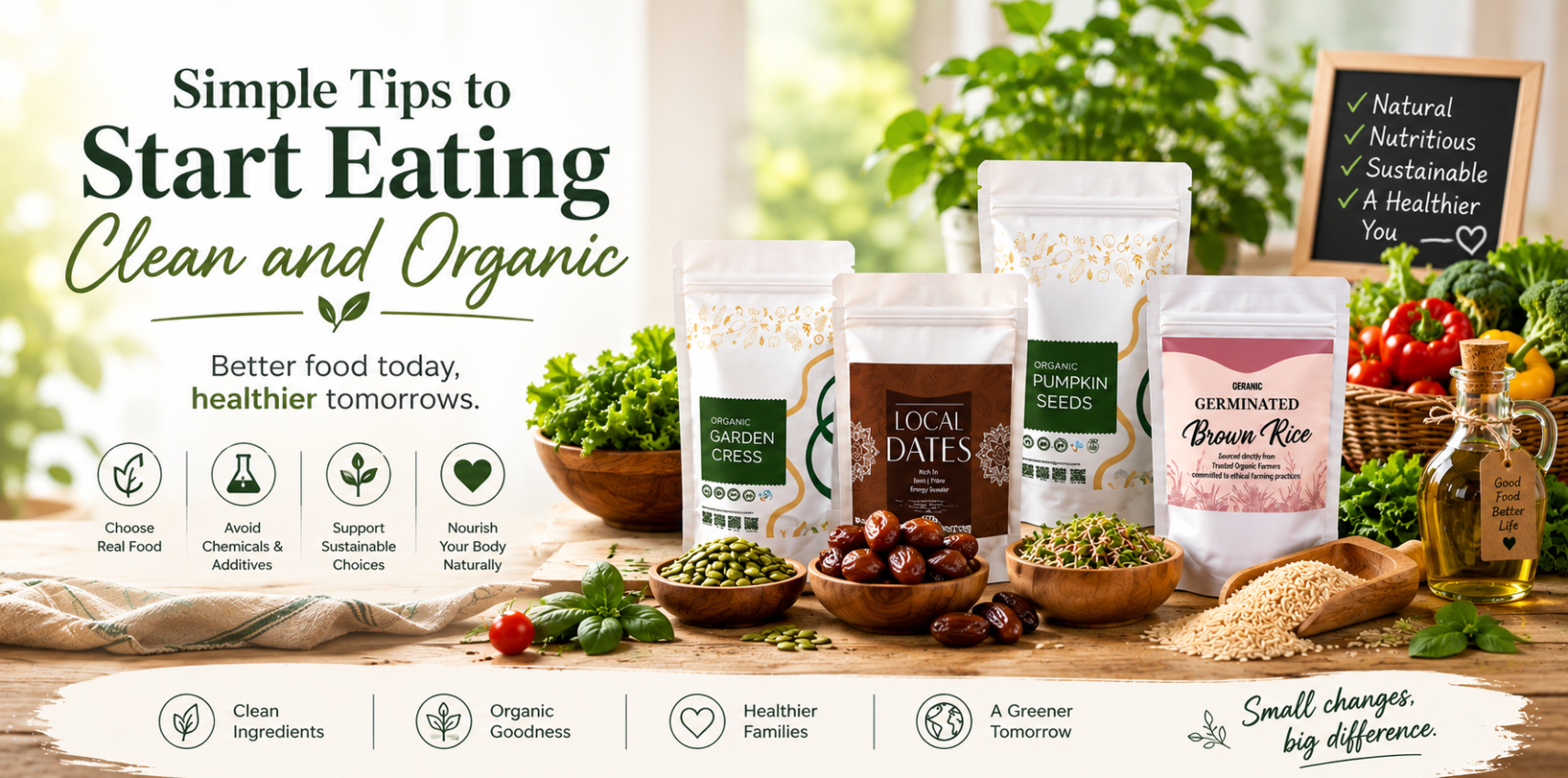
Swap refined grains for whole alternatives, choose cold-pressed oils over refined ones, and replace processed sweeteners with natural options. Exploring a curated range of organic food products makes it easier to rebuild a pantry around clean-label staples rather than ingredient lists you can't pronounce.
Snack on Whole Foods Instead of Packaged Snacks
Nuts, seeds, and dried fruit are some of the easiest swaps for processed snacking. A handful of organic sunflower seeds delivers healthy fats, plant protein, and vitamin E — without the preservatives found in most packaged snack mixes. Similarly, naturally sweet, fibre-rich options like organic dates are a traditional Gulf staple that offers sustained energy without the sugar crash of confectionery.
Embrace Sprouted and Traditional Foods
Sprouting grains and legumes increases nutrient bioavailability and makes them easier to digest — a practice rooted in Ayurvedic food preparation that's gaining renewed scientific interest. Sprouted flours and grains are an easy way to bring this traditional wisdom into modern kitchens.
Read Labels Like a Detective
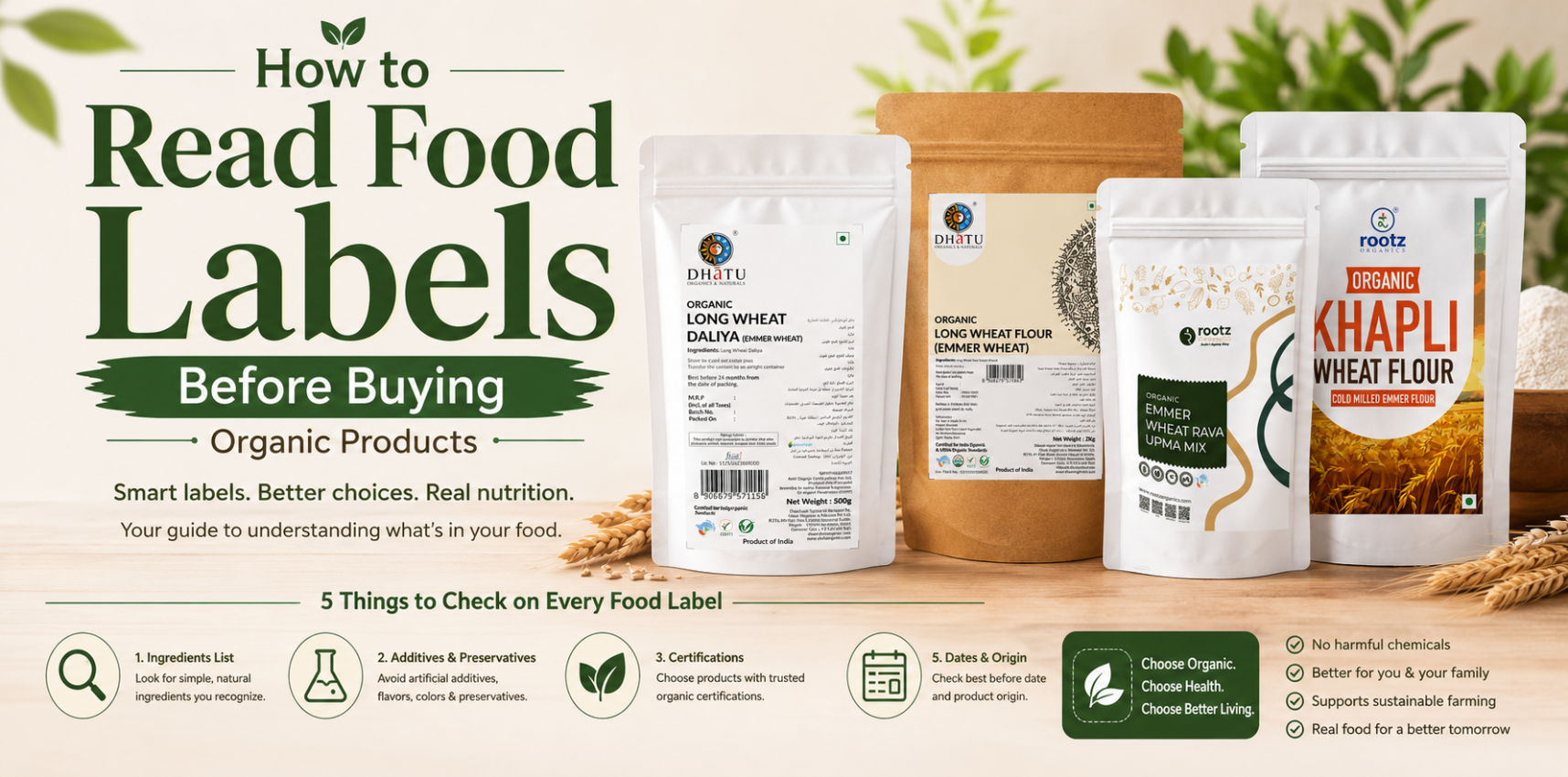
A short ingredient list is usually a good sign. If a product contains additives you don't recognise, or more than five to six ingredients for a simple food item, it's worth pausing before adding it to your basket.
Build a Weekly Rhythm Around Fresh Produce
Rather than a single big grocery trip, many UAE households now order fresh vegetables and fruit more frequently to reduce spoilage and preserve nutrient value — a habit made easier by subscription-style delivery from organic-focused grocers.
Bringing It All Together
Eating in a way that honours these natural rhythms isn't about perfection or eliminating every processed item from your kitchen overnight. It's a direction, not a destination — a steady shift toward food your body recognises, sourced with more transparency and less chemical interference. In a country where most food travels thousands of kilometres before reaching your table, that shift carries even more weight.
Small, consistent choices — a sprouted grain here, a seasonal vegetable there, a handful of nuts instead of a packaged snack — compound over time into meaningfully better digestion, steadier energy, and a stronger relationship with what you eat.
Frequently Asked Questions
1. What is the easiest way to start eating closer to nature?
Begin with one meal a day. Replace a processed breakfast item with whole foods like fruit, nuts, or whole-grain options, then gradually extend the habit to lunch and dinner as it becomes routine.
2. Is this the same as following an organic diet?
Not exactly. Organic refers to certified farming practices, while this nature-aligned style of eating is broader and focuses on choosing whole, minimally processed foods regardless of certification, though the two frequently overlap.
3. Does eating more whole foods really improve digestion?
Yes. Whole foods retain natural fibre that feeds beneficial gut bacteria and supports regular digestion, whereas heavily processed foods often lack this fibre matrix and can disrupt gut balance over time.
4. Are frozen fruits and vegetables still considered "close to nature"?
Generally, yes. Produce frozen shortly after harvest often retains comparable nutrient levels to fresh produce, and can sometimes be more nutrient-dense than fresh items that have spent weeks in transit before reaching the shelf.
5. How can UAE residents access fresh, nature-aligned food without daily grocery trips?
Many residents now rely on online grocers that specialise in fresh produce and clean-label staples, allowing scheduled deliveries of seasonal vegetables, fruits, and pantry essentials without compromising on freshness or convenience.
-
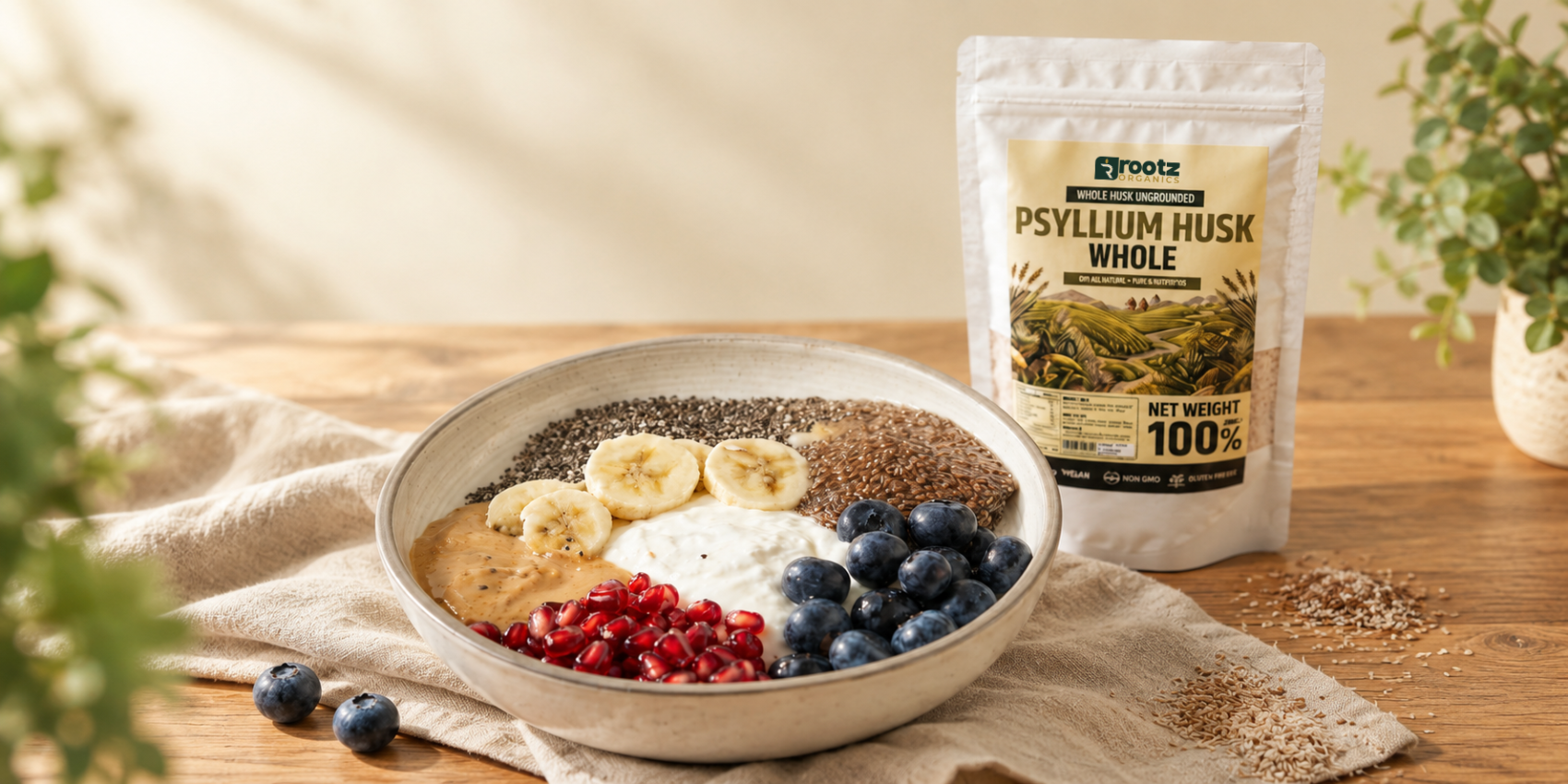
Psyllium Husk and Whole Seeds: The Simple Fibre Upgrade Every UAE Kitchen Needs
September 11th, 2026 -
 August 14th, 2026
 -
 August 14th, 2026