
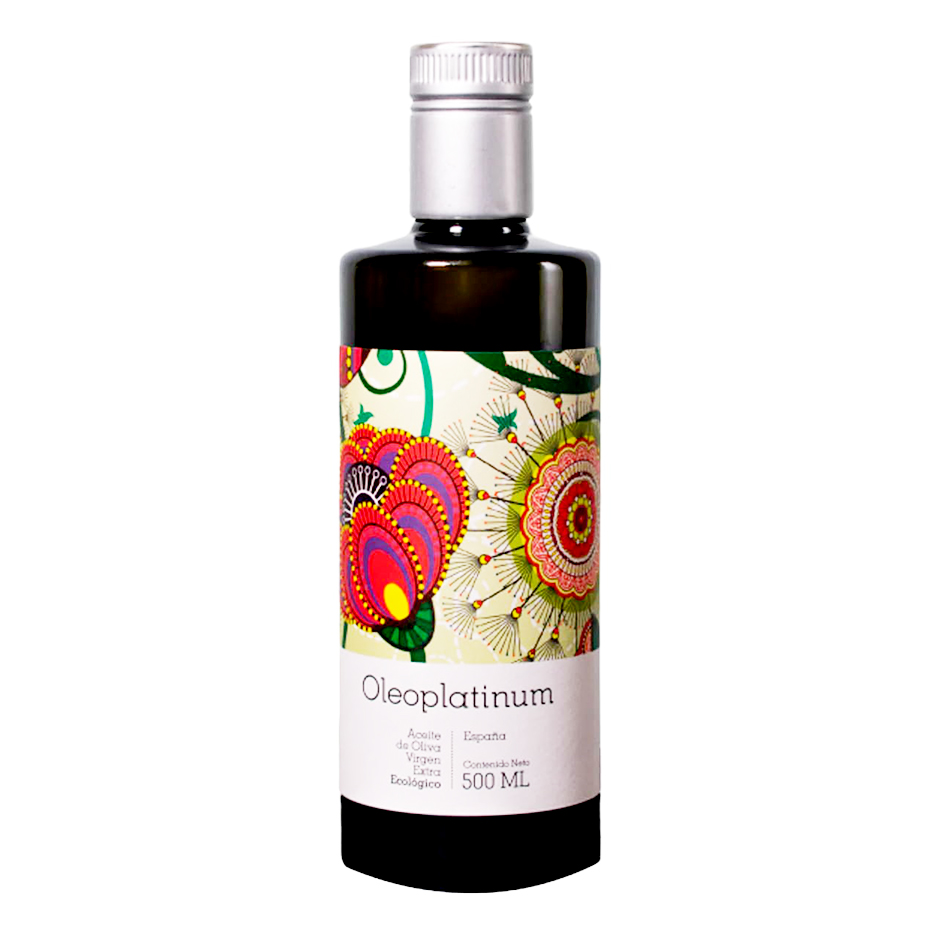

Product description
| CENTENARY OLIVE TREES — WHAT THIS ACTUALLY MEANS |
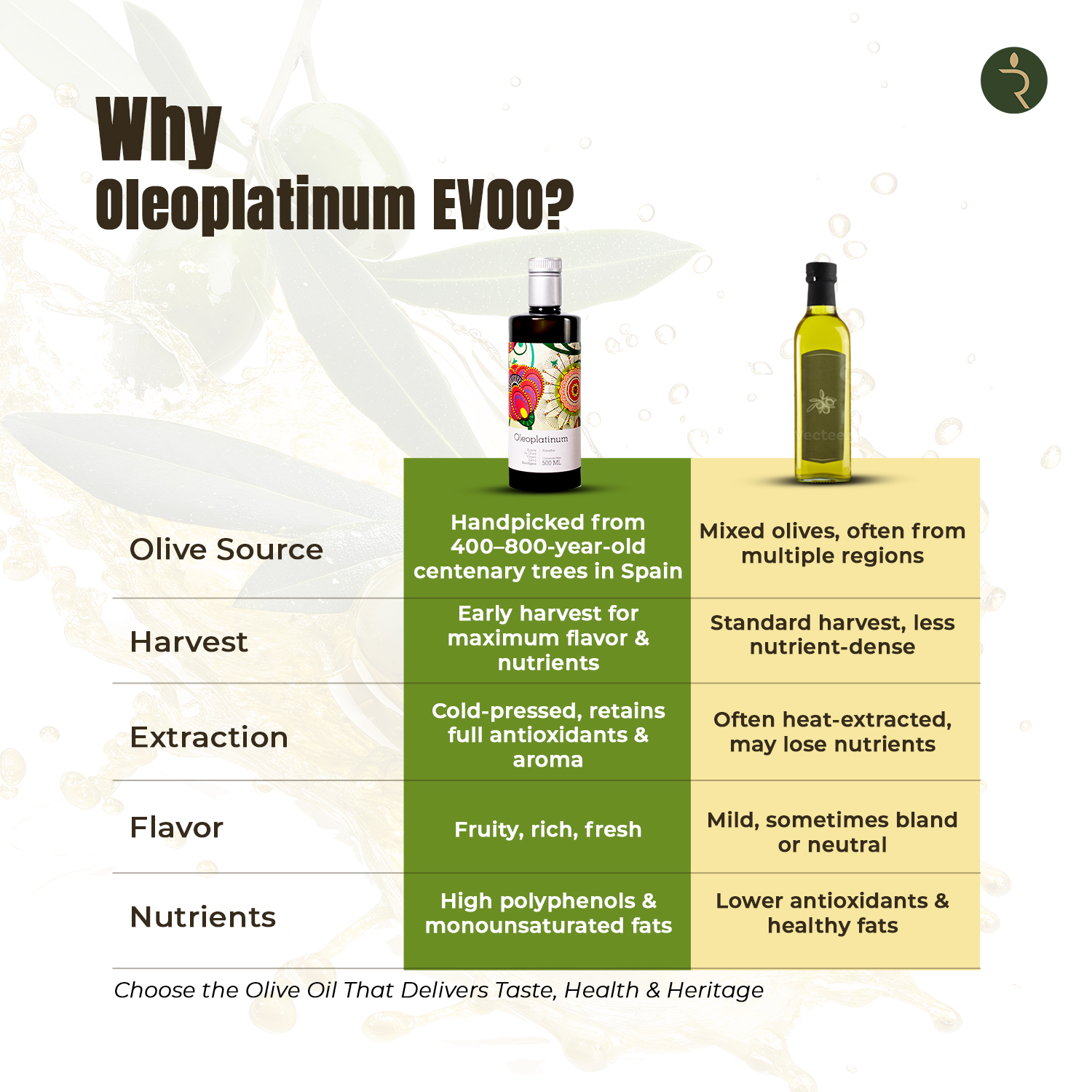
| Centenary and millenary olive trees are a genuinely recognised category in Spanish olive oil production — ancient specimens, some registered and protected by regional governments as “monumental trees,” that continue to bear fruit centuries after planting. Oleoplatinum is sourced from trees in this category, reported at 400 to 800 years old. Harvesting these trees is inherently more labour-intensive than commercial groves: older trees produce fewer olives, are often scattered across rugged or traditional terrain rather than uniform plantations, and require careful, often hand-picked harvesting. |
| DOES TREE AGE ACTUALLY MAKE BETTER OIL? AN HONEST ANSWER |
| Tree age alone does not guarantee superior oil — olive variety, soil and microclimate, farming practices, harvest timing, and how quickly and carefully olives are pressed after picking all play at least as significant a role as the tree's age. What centenary trees do offer is a different kind of story and, often, a different character: deeper root systems developed over centuries, and fruit grown without the intensive replanting cycles of modern commercial groves. This is a heritage and character proposition as much as a guaranteed quality multiplier — and that honesty is part of why it's worth choosing deliberately rather than assuming “older is automatically better.” |
| THE TASTING PROFILE |
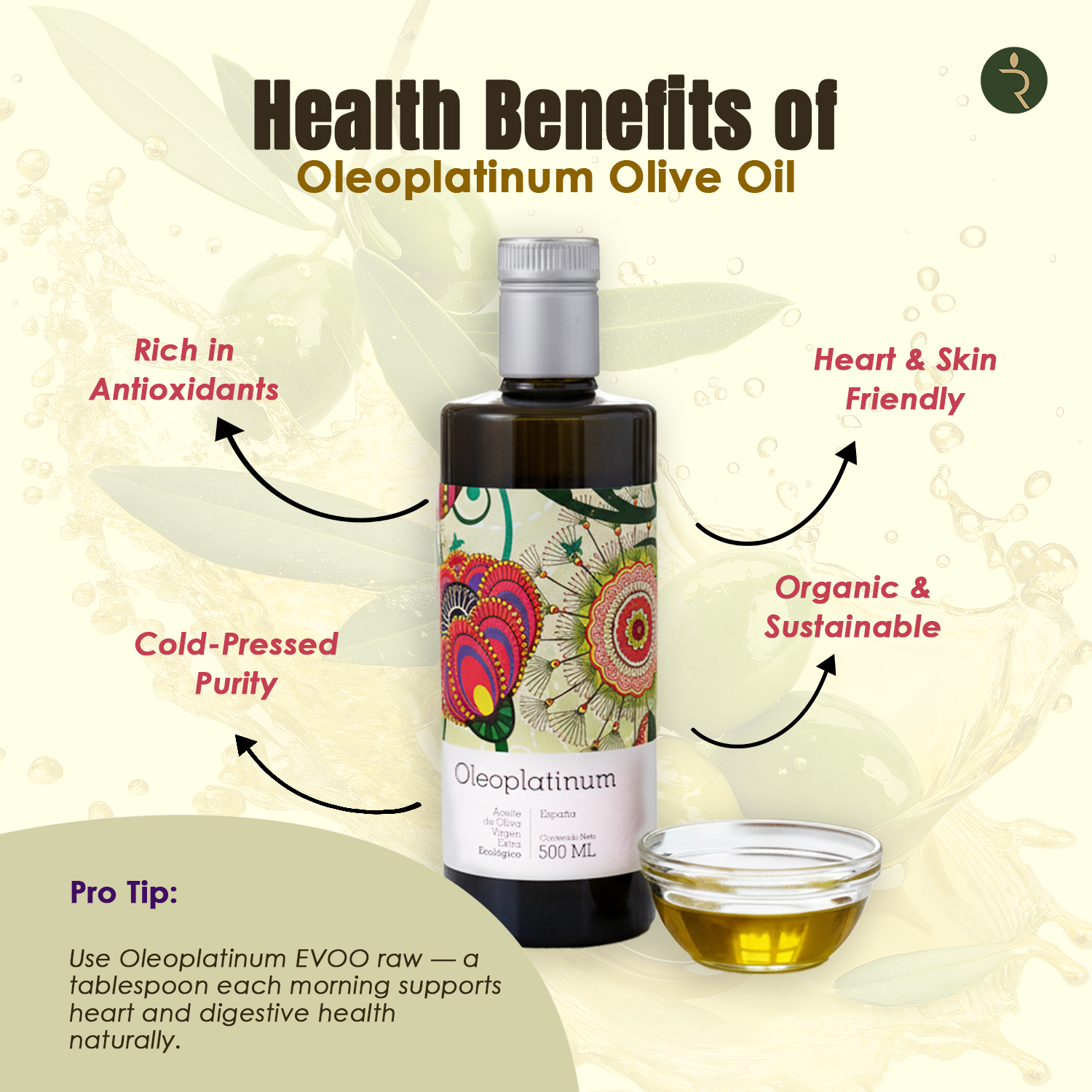
| A rich, fruity flavour with a balanced peppery finish, per the product's own description — consistent with an early-harvest, cold-pressed EVOO. |
| EARLY HARVEST & COLD-PRESSED PROCESSING |
| Olives are handpicked during early harvest and cold-pressed, preserving flavour, aroma, and nutritional value better than later-harvest or heat-processed alternatives. As with the rest of the Rootz olive oil range, early harvest generally indicates a higher polyphenol concentration than later-harvest oil, though Oleoplatinum-specific lab figures are not currently available to confirm an exact value. |
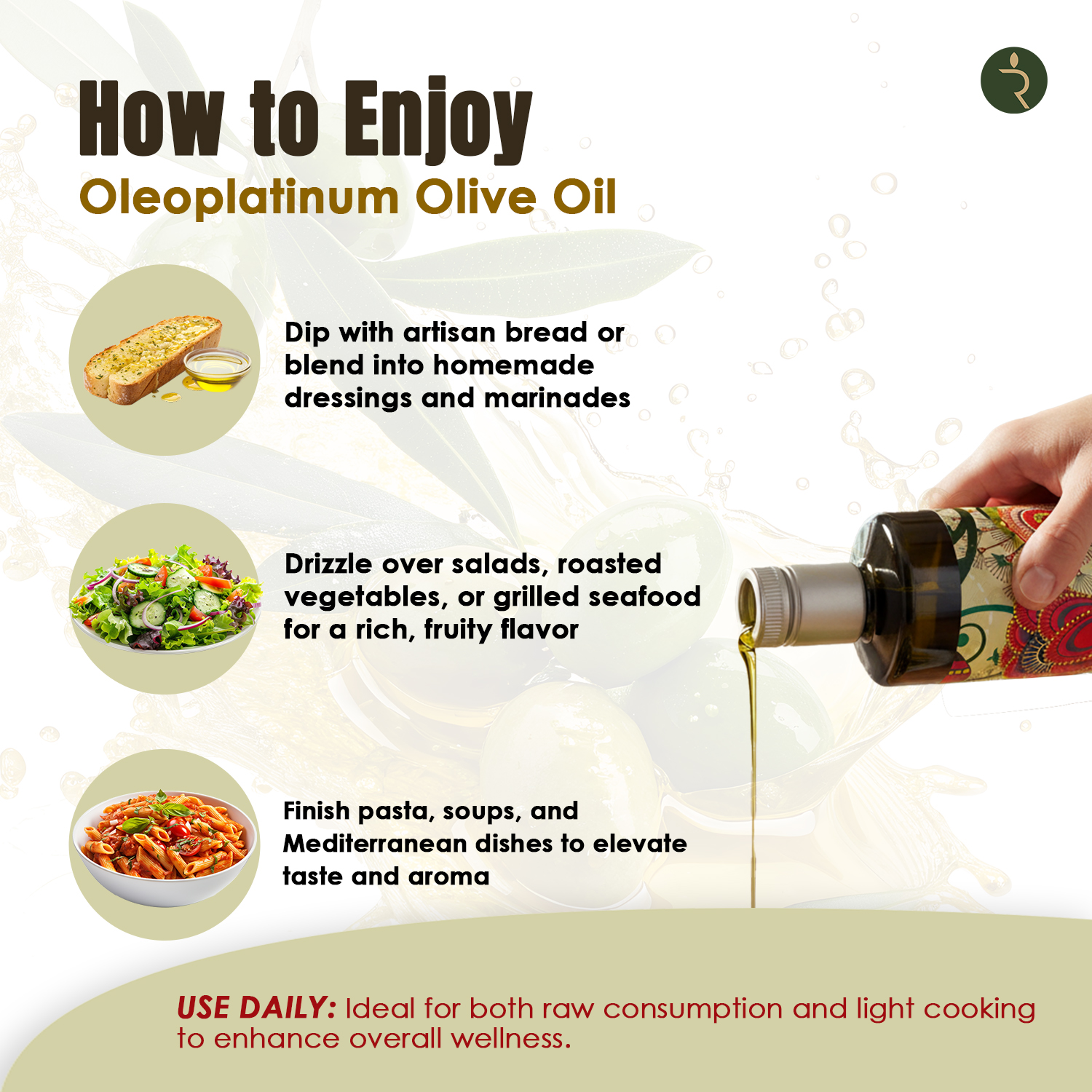
HOW TO USE
|
| Store in a cool, dry place away from direct sunlight. Keep the bottle tightly closed after use. |
NUTRITION TABLE
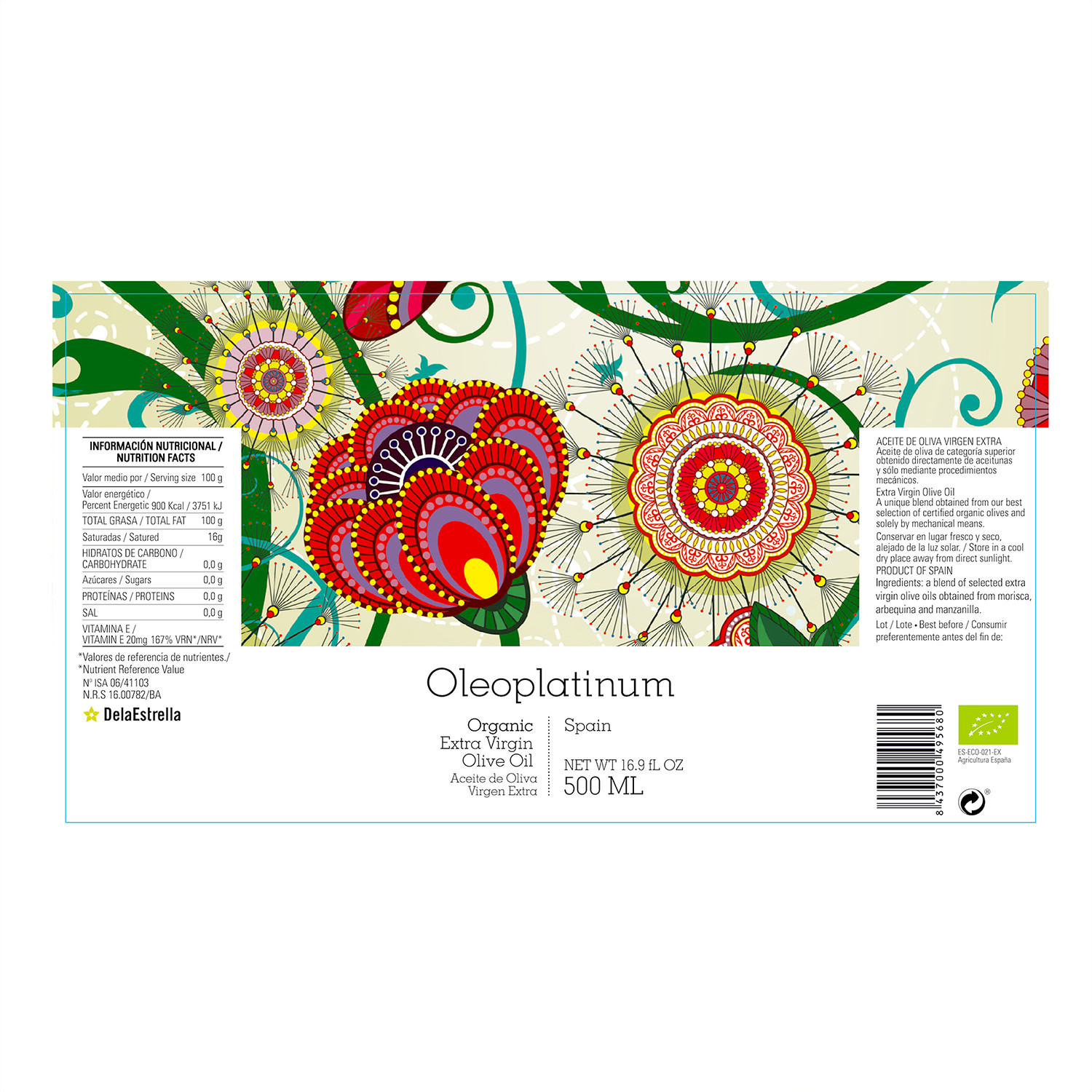
Basis: Per 1 tbsp (14g) / Per 100g — approx. 35 servings per 500ml bottle
| Nutrient | Per 1 tbsp (14g) | Per 100g | % Daily Value* |
|---|---|---|---|
| Energy | 119 kcal / 497 kJ | 796 kcal | 6% |
| Total fat | 14g | 91.6g | 18% |
| — Saturated fat | 1.9g | 12.8g | 10% |
| — Monounsaturated fat (Omega-9) | 10.2g | 68g | — |
| of which Oleic acid (78–80%) | ~10g | ~68g | — |
| — Polyunsaturated fat (Omega-6) | 1.4g | 9.6g | — |
| — Trans fat | 0g | 0g | — |
| Total carbohydrates | 0g | 0g | 0% |
| Protein | 0g | 0g | 0% |
| Sodium | 0mg | 0mg | 0% |
| Vitamin E (alpha-tocopherol) | 1.9mg | 12.4mg | 13% |
| Vitamin K | 8.1 mcg | 54 mcg | 7% |
| Polyphenols (total) | ~1–3mg | ~8–20mg | — |
| Oleocanthal (anti-inflammatory phenol) | Present | Present | — |
| Free acidity | < 0.5% (premium EVOO threshold) | — | — |
Reviews
Login
Don't have an account?
Sign UpCentenary and millenary olive trees are a recognised category in Spanish olive oil production — ancient trees, some registered and protected by regional governments as monumental trees, that continue to bear fruit centuries after planting. Oleoplatinum is sourced from trees reported at 400 to 800 years old. Harvesting these trees is more labour-intensive than commercial groves, since older trees yield fewer olives and are often scattered across traditional terrain rather than uniform plantations, frequently requiring hand-picking.
Not automatically. Tree age is one factor among several that determine oil quality — olive variety, soil and climate, farming practices, harvest timing, and how quickly the olives are pressed after picking all play a significant role, sometimes a larger one than tree age alone. What centenary trees offer is a distinctive heritage story and, often, fruit grown without the intensive replanting cycles of modern commercial groves — a genuine point of character and rarity, presented honestly rather than as a guaranteed quality multiplier.
At AED 99.95, this sits at a premium relative to the Texturas single-varietal range, reflecting the more labour-intensive harvesting associated with centenary trees — lower yield per tree, more difficult terrain, and often hand-picking rather than mechanical harvesting. This is a different kind of premium positioning from the Texturas range's lab-verified acidity and certification story: here, the premium is rooted in heritage, rarity, and the genuine difficulty of harvesting from centuries-old trees.


