
Product description
NUTRITION — per 100g
| Nutrient | Amount | % DV* |
|---|---|---|
| Energy | 336 kcal | — |
| Carbohydrates | 72 g | 26% |
| of which sugars | 1 g | — |
| Dietary fibre | 11 g | 39% |
| Protein | 7.3 g | 15% |
| Total fat | 1.3 g | 2% |
| Calcium | 344 mg | 26% |
| Iron | 3.9 mg | 22% |
| Magnesium | 137 mg | 33% |
| Potassium | 408 mg | 9% |
*%DV on a 2,000 kcal adult reference diet. Ragi (finger millet) is naturally gluten-free and is one of the richest cereal sources of calcium; it also provides iron, magnesium and fibre
HOW TO STORE
- Store: keep in an airtight container in a cool, dry place, away from sunlight.
- Reseal the pouch after opening.
- Use within the best-before date; wholegrain flours are best used fresh.
- Refrigerate in humid conditions to extend freshness.
- Porridge & drink: whisk into water or milk and cook to a smooth porridge; sweeten with a little jaggery or honey for a comforting ragi drink.
- Flatbreads: make soft ragi rotis - mix with hot water to help the gluten-free dough bind.
- Pancakes & muffins: use in pancakes, muffins and energy bars for a wholesome, nutty base.
- Baking: blend into gluten-free bakes, alone or with other gluten-free flours.
- Multigrain blends: mix with wheat, rice or other flours for multigrain rotis and batters.
- Thickener: stir into soups and sauces to thicken.
Tip: gluten-free doughs need hot water or a binder to hold together.
Naturally gluten-free. Store airtight in a cool, dry place.
Watch Videos
Reviews
Login
Don't have an account?
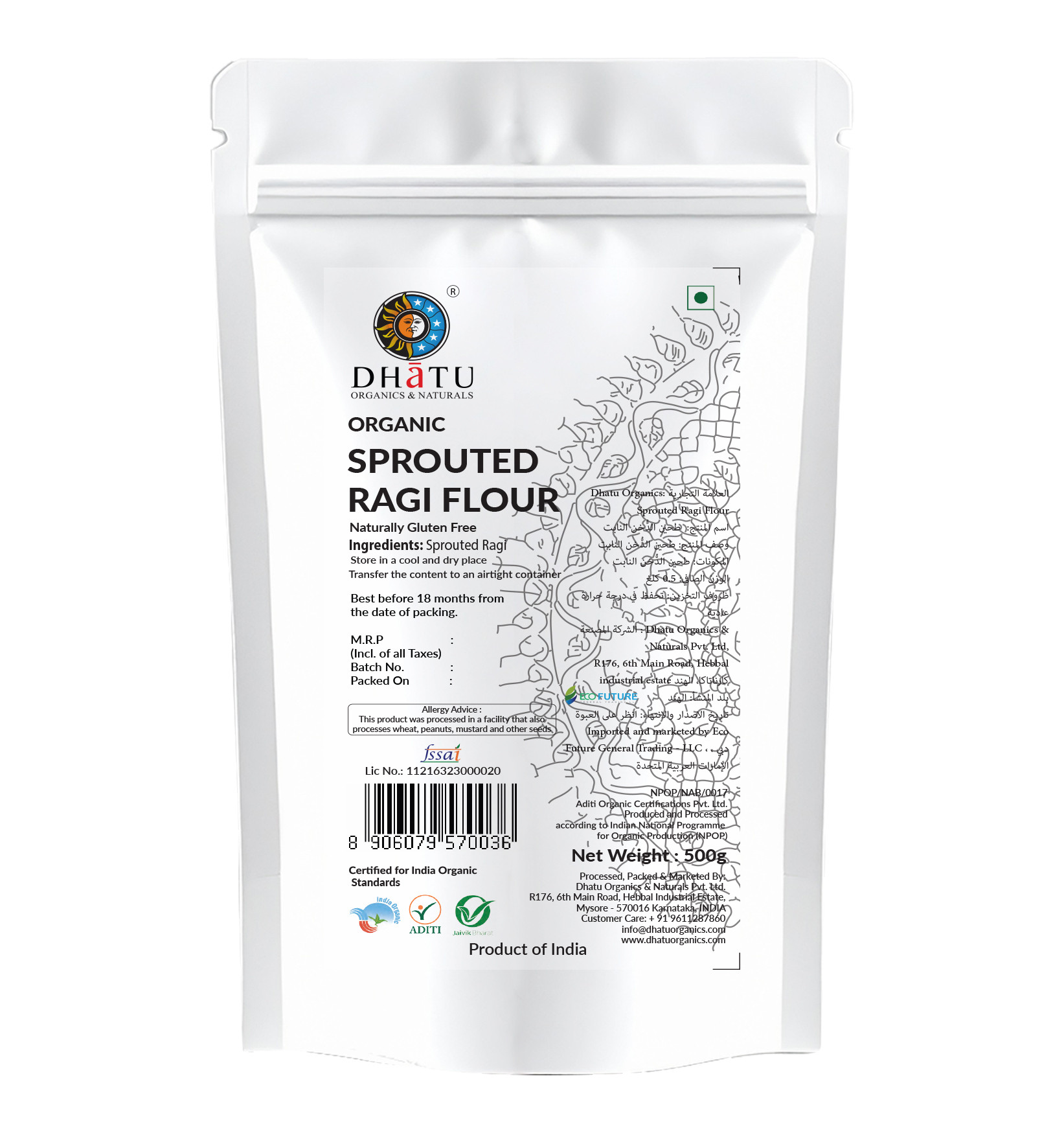
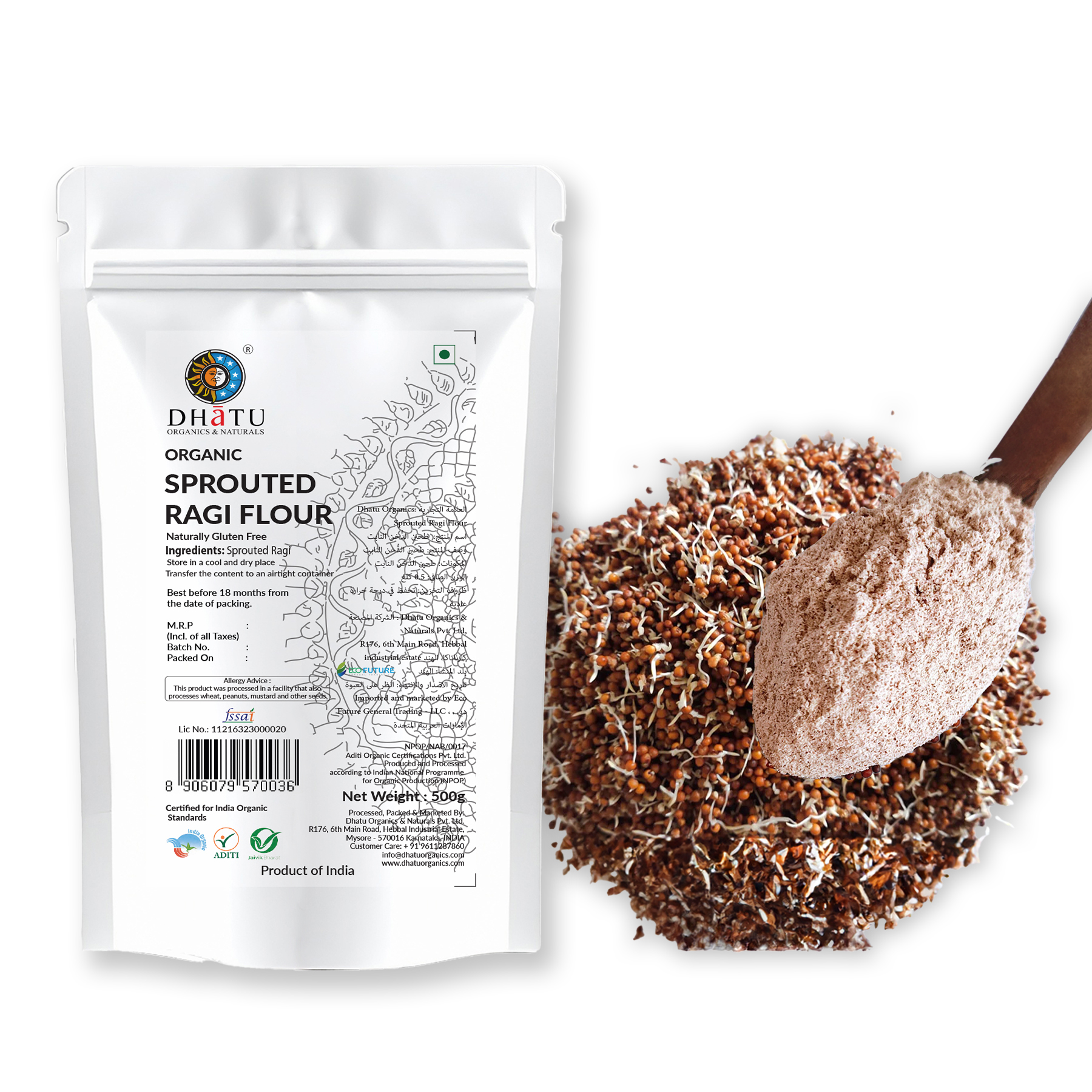
Sign UpSprouted ragi flour is made from finger millet (ragi) grains that are soaked, sprouted, dried and then stone-ground into a fine flour. Sprouting is a traditional preparation step that softens the grain, gives a milder, nuttier flavour, and naturally reduces the grain's phytic acid. The result is a fine, versatile, naturally gluten-free flour.
Yes — ragi, or finger millet, is naturally gluten-free, which makes this flour suitable for gluten-free cooking and baking. As with any gluten-free product, if you have coeliac disease, check the packaging for your needs and look out for certified options.Yes — ragi, or finger millet, is naturally gluten-free, which makes this flour suitable for gluten-free cooking and baking. As with any gluten-free product, if you have coeliac disease, check the packaging for your needs and look out for certified options.
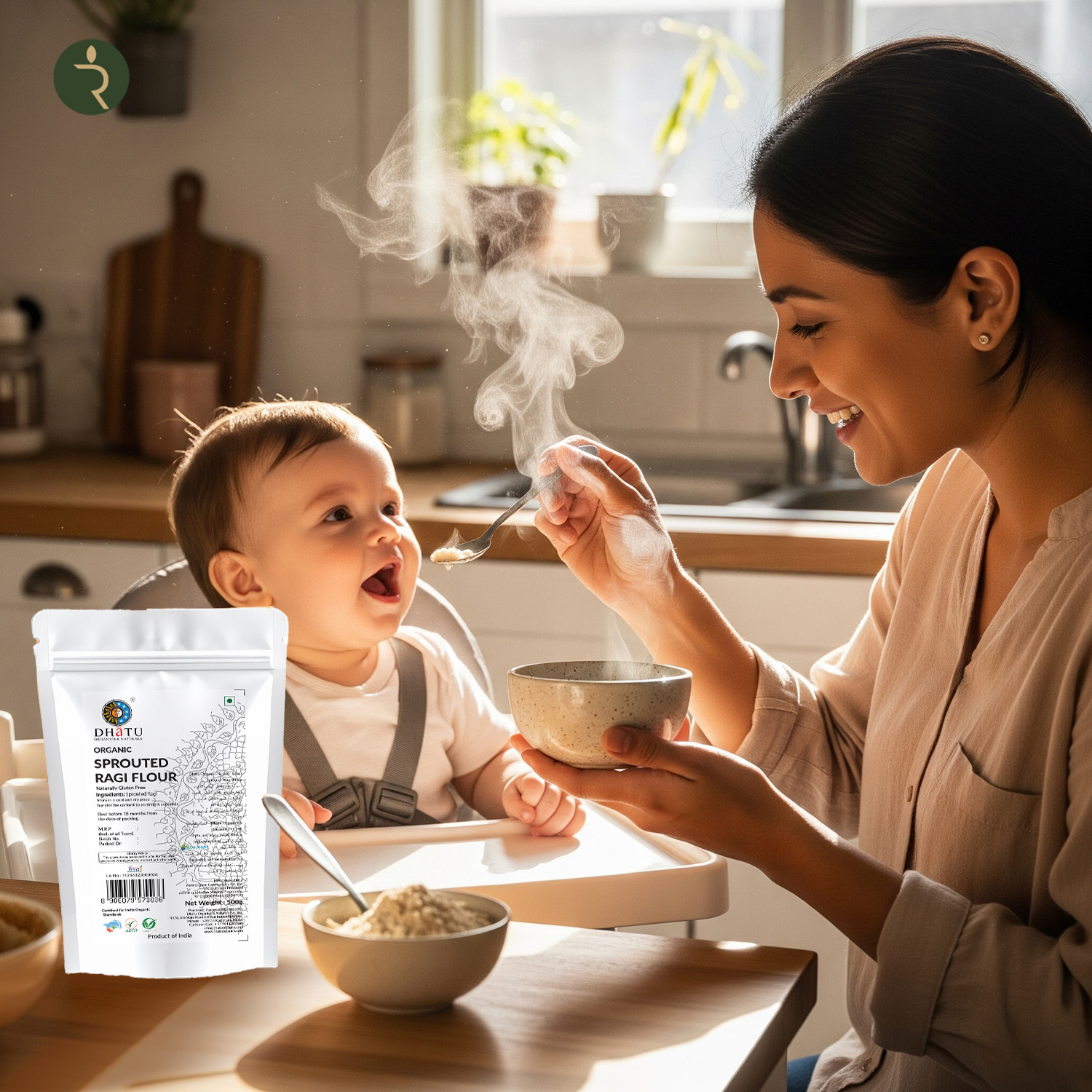
Ragi is wonderfully versatile. Whisk it into water or milk and cook to a smooth porridge or a jaggery-sweetened drink; make soft ragi rotis by mixing with hot water so the gluten-free dough binds; use it in pancakes, muffins and energy bars; or blend it with wheat, rice or other flours for multigrain recipes. Add liquid gradually for a smooth, lump-free consistency.
Ragi is naturally gluten-free and is one of the richest cereal sources of calcium, gram for gram, and also provides iron, magnesium and good dietary fibre. We share this for general information only; for personalised dietary advice, please consult a qualified professional. Values are approximate references and vary by batch.


