
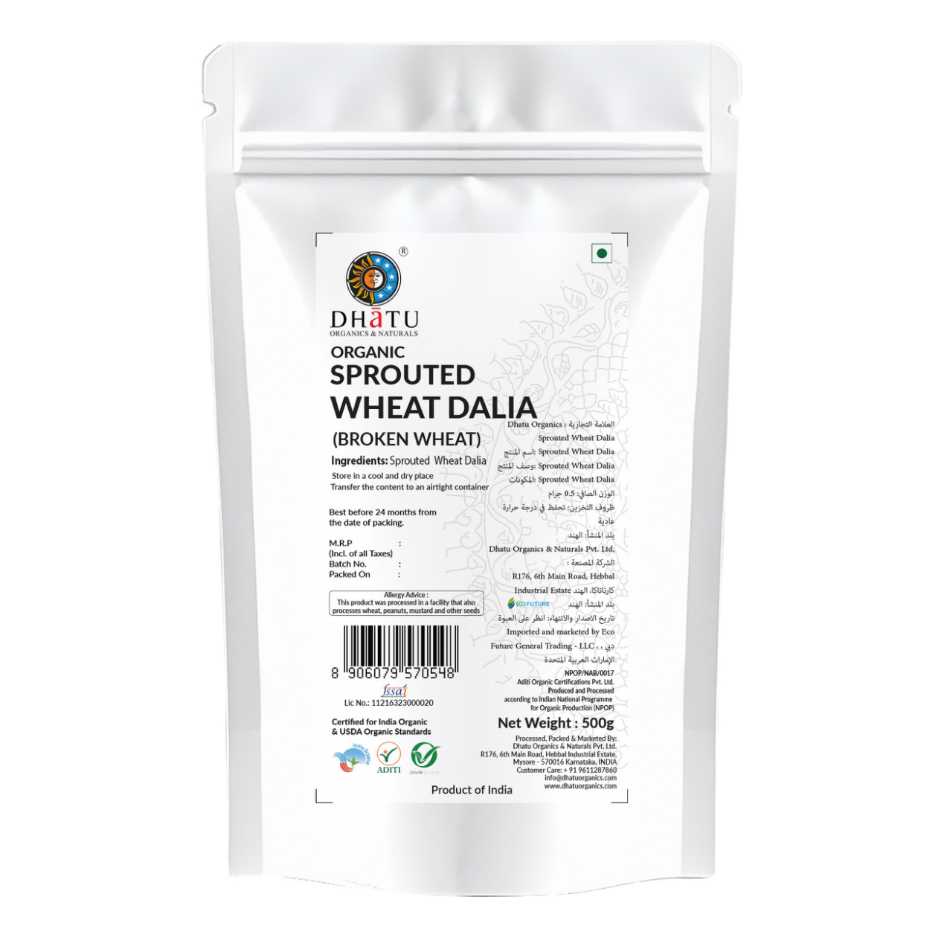
Product description
DALIYA AND BURGHUL — THE SAME GRAIN, TWO CULINARY TRADITIONS
This product is cracked (broken) wheat — whole wheat grain that has been sprouted, then gently cracked into small pieces and dried. It goes by different names depending on cultural context. In South Asian cooking (Indian, Pakistani, Sri Lankan) it is daliya or dalia, used for breakfast porridge, upma, and khichdi. In Middle Eastern cooking it is burghul or bulgur, used for tabbouleh, kibbeh, stuffed vegetables, and pilafs. The grain is identical; the preparation and seasoning differ. Both traditions are represented in the recipes below.
WHAT SPROUTING ACTUALLY DOES TO THE WHEAT
Sprouting begins when whole wheat grains are soaked under controlled conditions until the grain’s embryo begins to germinate. This activates dormant enzymes within the grain that produce several well-documented nutritional changes: phytic acid (a naturally occurring antinutrient that binds minerals and limits absorption) is broken down, improving the bioavailability of iron, zinc, and magnesium; gluten proteins are partially broken down, improving digestibility compared to unsprouted wheat; B vitamins — particularly B1 (thiamine) and B2 (riboflavin) — increase; and GABA (gamma-aminobutyric acid) accumulates. The grain is then cracked and dried, locking in these nutritional improvements while producing the same texture and cook time as regular daliya or burghul.
CONTAINS GLUTEN
Wheat is a gluten-containing grain. This product is not suitable for those with coeliac disease or gluten sensitivity. While the sprouting process partially breaks down gluten proteins, this does not make sprouted wheat suitable for those who medically need to avoid gluten — the gluten is reduced in structure but not eliminated. If you are looking for gluten-free grain alternatives in the Rootz range, our millets, ragi, and rice products are well-suited options.
HIGH FIBRE, PROTEIN, AND COMPLEX CARBOHYDRATES
Broken wheat provides approximately 10–12g fibre and 12–13g protein per 100g, significantly more than refined wheat products like white bread or white pasta. Its complex carbohydrates digest gradually rather than rapidly, contributing to a more sustained energy release. Sprouting improves the bioavailability of these nutrients beyond what plain cracked wheat offers.
ORGANIC, CHEMICAL-FREE, UNREFINED
Made from 100% organically grown whole wheat, produced without synthetic pesticides, fertilisers, additives, or preservatives.
HOW TO USE — SOUTH ASIAN AND MIDDLE EASTERN PREPARATIONS
- Rinse before cooking. No soaking required — cooks in 15–25 minutes depending on the preparation.
- Daliya porridge (sweet): boil 1/2 cup daliya in 2 cups water or milk, add jaggery or honey and cardamom, simmer until soft. Top with nuts or dried fruit.
- Vegetable upma (savoury): dry-roast daliya in 1 tsp ghee, sauté mustard seeds, curry leaves, onions, and vegetables, add daliya and 1 cup water, cook until soft and fluffy.
- Daliya khichdi: cook daliya with moong dal, turmeric, cumin, and ghee for a light, nourishing one-pot meal.
- Middle Eastern tabbouleh (burghul salad): soak daliya in warm water for 15–20 minutes, drain, mix with chopped parsley, tomatoes, cucumber, lemon juice, extra virgin olive oil, salt, and pepper. Serve chilled.
- Burghul pilaf: cook daliya with onions, whole spices, and vegetable or chicken stock for a Middle Eastern-style side dish.
- Soup thickener: stir 2–3 tablespoons into vegetable or lentil soups in the last 15 minutes for added texture and nutrition.
STORAGE
Store in an airtight container in a cool, dry place away from moisture and sunlight. Consume within 6 months for best quality.
| Nutrient | Per 100g | % DV* |
|---|---|---|
| Energy | ~345 kcal | 8% |
| Total fat | ~1.5g | 2% |
| Total carbohydrates | ~70g | 25% |
| Dietary fibre | ~10–12g | 19% |
| Protein | ~12–13g | 24% |
| Iron | ~3.5–4mg | 20% |
| Magnesium | ~110mg | 26% |
| Manganese | Good source | — |
| B Vitamins (B1, B2 — elevated by sprouting) | Higher than unsprouted | — |
| GABA | Present | No DV |
Reviews
Login
Don't have an account?
Sign UpYes — wheat contains gluten, and the sprouting process does not eliminate it. While sprouting partially breaks down gluten proteins, which may improve digestibility for some people, it does not make this product suitable for those with coeliac disease or medically diagnosed gluten sensitivity. If you need to avoid gluten for health reasons, Rootz’s millet, ragi, and rice range are appropriate alternatives.
Regular broken wheat is simply cracked whole wheat. Sprouted wheat daliya is made from whole wheat grains that have first been germinated (sprouted) before being cracked and dried. The sprouting process reduces phytic acid (improving mineral absorption), partially breaks down gluten proteins (improving digestibility), increases B vitamins, and elevates GABA content. The cooking method and texture are the same; the nutritional profile and digestibility are meaningfully better.
Yes — daliya and burghul (bulgur) are both names for cracked/broken wheat, used in different culinary traditions. South Asian cooking calls it daliya and uses it for porridge, upma, and khichdi. Middle Eastern cooking calls it burghul or bulgur and uses it for tabbouleh, kibbeh, and pilafs. This product can be used in all of these preparations. The three recipes on this page cover both traditions.
Yes, directly. The cook time and water ratio are the same as regular daliya or burghul. The only difference is that sprouted wheat may feel slightly lighter to digest. For tabbouleh specifically, the traditional method of soaking rather than boiling (soak in warm water for 15–20 minutes, drain) also works exactly the same way.


