
Product description
WHAT BARLEY DALIYA IS — AND HOW IT DIFFERS FROM WHOLE GRAIN BARLEY
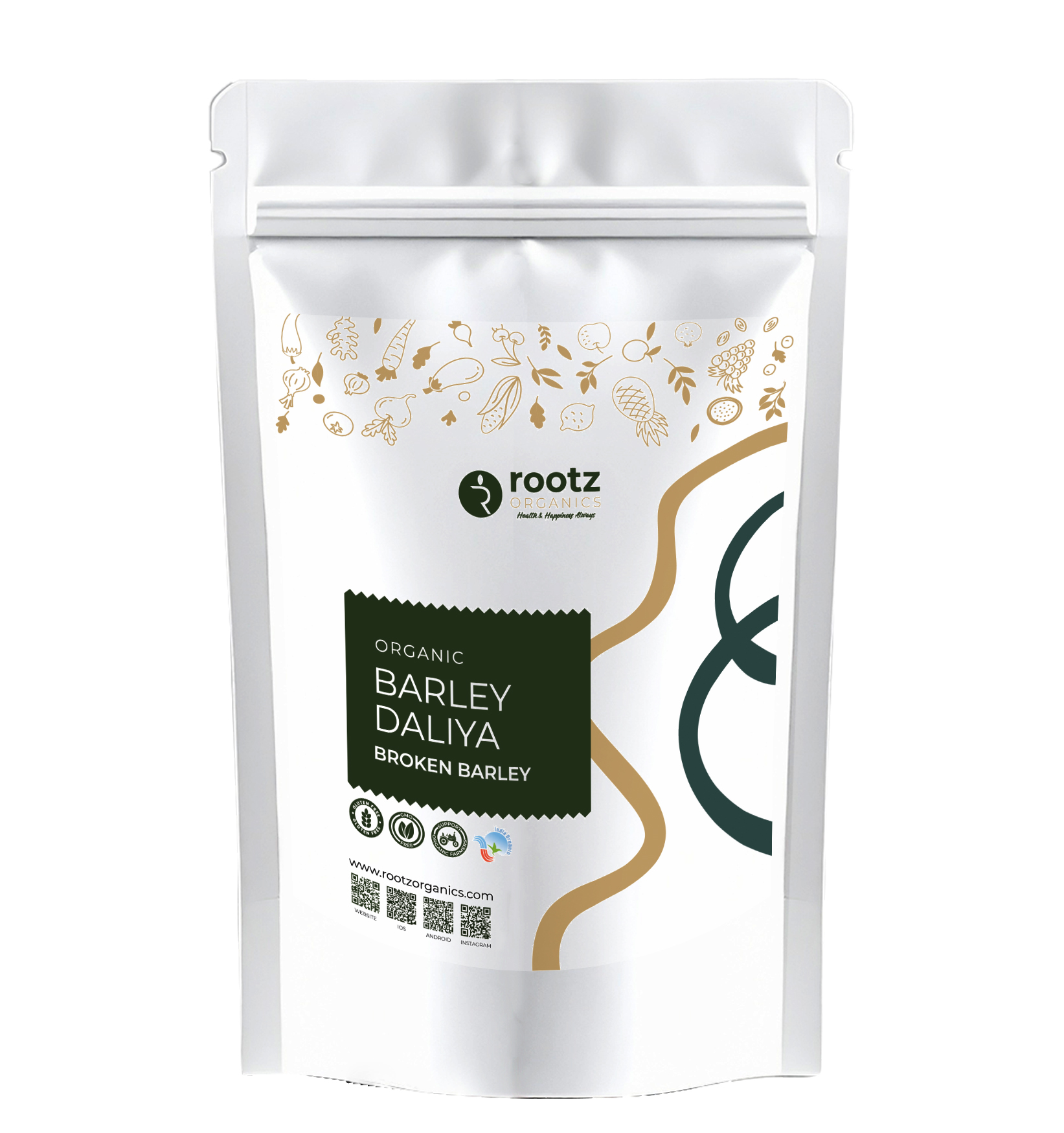
Daliya means cracked or broken grain — the same grain as barley, but cleaned, roasted, and coarsely ground before packaging. Roasting adds a mild nutty flavour and breaks down the outer structure, significantly shortening cook time compared to whole barley grains. Rootz also carries Organic Barley 500g in whole grain form, which suits slow-cooked soups, stews, and pilafs where the grain simmers for 40–60 minutes. This daliya format cooks in 15–20 minutes and is suited to porridge, upma, and khichdi — faster, lighter preparations where texture and speed matter more than the chew of a whole grain.
BETA-GLUCAN — THE MOST RIGOROUSLY EVIDENCED BARLEY HEALTH CLAIM
Barley is naturally rich in beta-glucan, a soluble fibre with one of the strongest evidence bases of any food health claim. Both the US FDA and the European Food Safety Authority (EFSA) have formally approved a claim that consuming approximately 3g or more of beta-glucan per day, from oats and/or barley, as part of a diet low in saturated fat, may help lower LDL (“bad”) cholesterol. This is backed by dozens of randomised controlled trials. Beta-glucan works by binding to bile acids in the gut, which causes the body to use circulating cholesterol to produce more, lowering blood levels. Reaching the studied threshold generally requires a regular, generous serving as part of an overall balanced diet.
CONTAINS GLUTEN
Barley is a true cereal grain related to wheat and naturally contains gluten. This product is not suitable for those with coeliac disease or gluten sensitivity. If you are shopping this category specifically for gluten-free options, our millets, rice, and ragi products are well-suited alternatives.
FIBRE, PROTEIN, AND DIGESTIVE SUPPORT
Beyond beta-glucan, barley provides both soluble and insoluble fibre — supporting digestive regularity and contributing to a sustained feeling of fullness after meals. Its protein content (approximately 10–13g per 100g) is notably higher than white rice, and it provides a range of B vitamins, magnesium, selenium, and manganese. The cracking process in daliya preparation does not meaningfully reduce the beta-glucan or fibre content relative to whole barley.
ORGANIC AND CHEMICAL-FREE
Made from 100% organically grown barley, produced using sustainable and chemical-free farming practices, free from pesticides, additives, and preservatives.
HOW TO USE
Quick-cooking and versatile. Use as a direct nutritional upgrade from wheat daliya in any preparation.
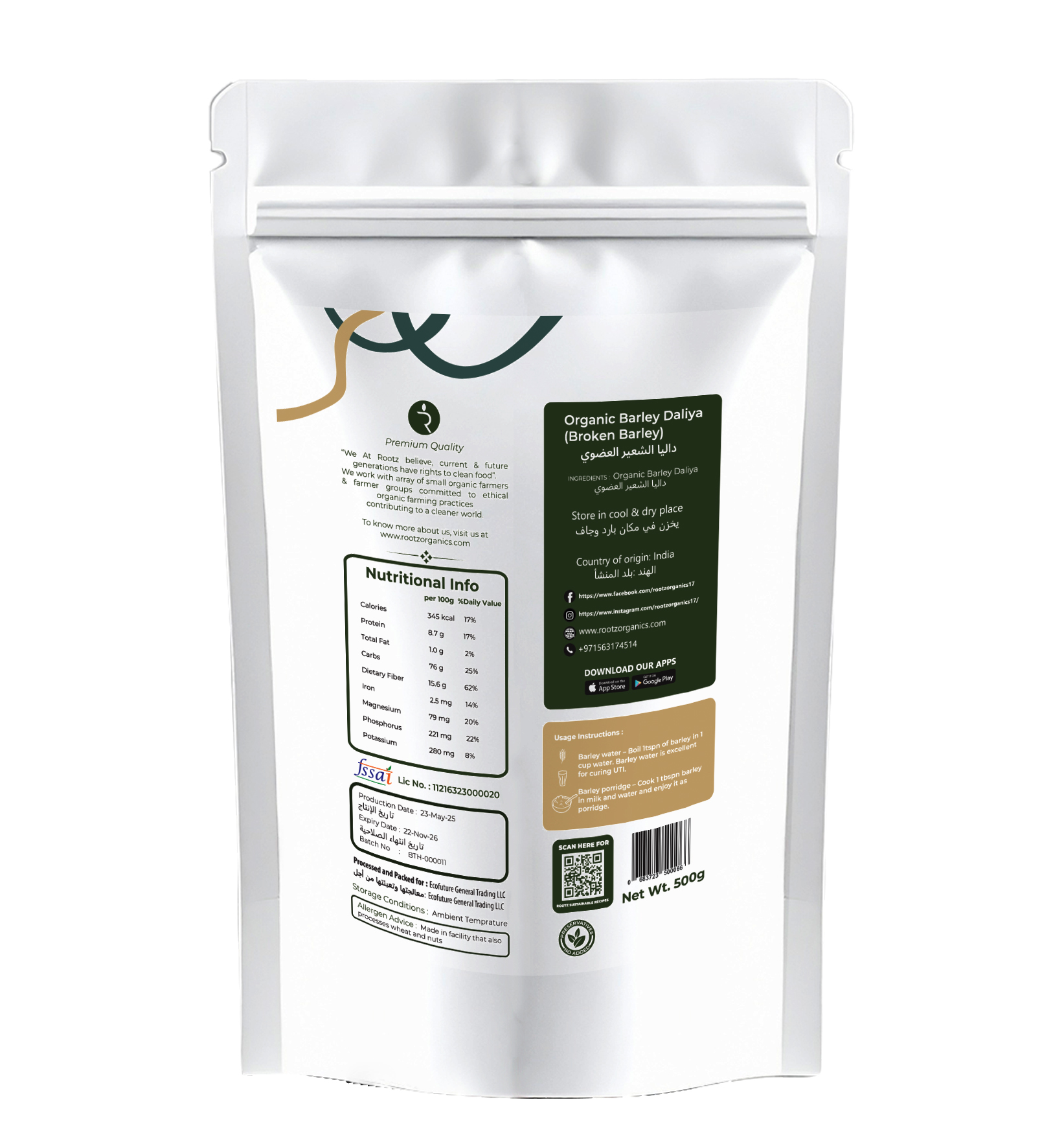
- Breakfast porridge: cook 1 cup barley daliya with 3 cups water or milk for 15–20 minutes, stirring occasionally. Add honey, fruit, or nuts to serve.
- Khichdi: cook with moong dal, turmeric, cumin, and a spoon of ghee for a warming, satisfying one-pot meal.
- Upma: dry-roast first, then cook with tempered spices, onion, and vegetables for a savoury breakfast.
- Soup thickener: stir 2–3 tablespoons into vegetable or lentil soups in the last 15 minutes for added texture, nutrition, and body.
- Grain substitute: use in place of rice or bulgur in any preparation where a soft, nutty-flavoured whole grain is appropriate
STORAGE
Store in an airtight container in a cool, dry place away from moisture and direct sunlight. Consume within 6–8 months for best quality.
Nutrition Table Basis:
Per 1 serving (40g / approx. ¼ cup dry) / Per 100g — general values for cracked barley (daliya)
| Nutrient | Per Serving | Per 100g | % DV* |
|---|---|---|---|
| Energy | ~136 kcal | ~340 kcal | 7% |
| Total fat | ~0.9g | ~2.3g | 3% |
| Total carbohydrates | ~28g | ~70g | 25% |
| — Dietary fibre (incl. beta-glucan) | ~4g | ~10–17g | — |
| Protein | ~4–5g | ~10–13g | 19% |
| Beta-glucan (soluble fibre) | Present | Significant source | — (FDA/EFSA ~3g/day threshold) |
| Selenium | Excellent source | Excellent source | — |
| Manganese & Magnesium | Good source | Good source | — |
| B Vitamins (Thiamine, Niacin) | Present | Present | — |
Reviews
Login
Don't have an account?
Sign UpYes — barley is a true cereal grain related to wheat and naturally contains gluten. This product is not suitable for those with coeliac disease or gluten sensitivity. This is the same position taken on the Organic Barley 500g whole grain product in the Rootz range. If you are looking for a gluten-free porridge or khichdi grain, ragi, foxtail millet, or kodo millet are well-suited alternatives in our range.
Both are organic barley, but in different forms suited to different preparations. The whole grain barley (500g) is used in slow-cooked soups, stews, and pilafs where the grain simmers for 40–60 minutes and maintains its shape. This daliya is cracked and roasted barley that cooks in 15–20 minutes, suited to porridge, upma, and khichdi. The beta-glucan fibre content and health benefits apply to both; the difference is texture, cook time, and application.
The FDA- and EFSA-approved health claim for barley beta-glucan is based on consuming approximately 3g or more of beta-glucan per day from oats and/or barley, as part of a diet low in saturated fat. A generous daily serving of barley daliya — approximately 40–60g dry weight — can contribute meaningfully toward this threshold. Overall diet pattern matters significantly more than any single ingredient; the daliya is most effective as part of a consistent, balanced approach rather than as a one-off supplement.
Yes, directly. Barley daliya can substitute for wheat daliya in the same ratio and with approximately the same cook time. It has a mild, slightly nutty flavour from roasting that most people find agreeable. It can also replace oats in savoury breakfast preparations, though oats produce a smoother, creamier consistency; barley daliya is slightly coarser with more texture.


