
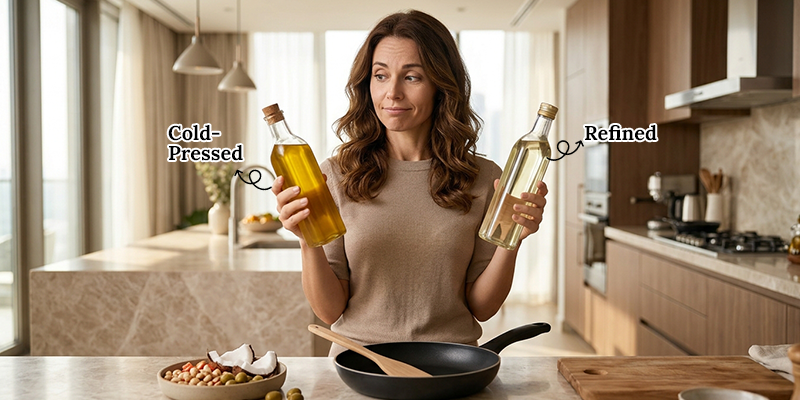
Cold-Pressed Oil vs Refined Oil: Which Is Better for Everyday Cooking in the UAE?
Every UAE kitchen, from a Dubai apartment to a family home in Sharjah, relies on cooking oil daily. Yet the choice between cold-pressed and refined oil is rarely explained clearly. This guide covers how each is made, how they differ in nutrition and heat tolerance, and which one suits everyday cooking.
What Is Cold-Pressed Oil?
Cold pressed oil is made by mechanically pressing seeds, nuts or fruits at low temperatures, typically below 50°C, with no chemical solvents. Because heat is minimal, the oil keeps its natural aroma, colour, antioxidants and vitamin E.
The oil is usually left unbleached and lightly filtered, so it tastes richer and looks deeper in colour than refined oil.
How Is Refined Oil Made?
Refined oil is extracted using high heat and, in most commercial processes, solvents such as hexane. The crude oil is then degummed, neutralised, bleached and deodorised.
This produces a pale, neutral-tasting oil with a long shelf life and a high smoke point. However, the process also strips out many natural compounds, including polyphenols, phytosterols and vitamin E.
Cold-Pressed vs Refined Oil at a Glance
Feature | Cold-Pressed Oil | Refined Oil |
Extraction | Mechanical pressing, low heat | High heat, often solvents |
Processing | Minimal | Bleached, deodorised, degummed |
Nutrients | Antioxidants and vitamin E retained | Largely reduced |
Flavour | Natural, distinctive | Neutral |
Smoke point | Moderate to medium-high | High |
Shelf life | Shorter | Longer |
Price | Higher | Lower |
Nutrition: What Do You Actually Gain?
Minimally processed oils retain plant compounds such as polyphenols, phytosterols and tocopherols (vitamin E). These support heart health and help the body manage oxidative stress. Refined oils lose much of this content during processing.
Every oil is still calorie-dense, at roughly 120 calories per tablespoon. The healthiest approach is to use modest amounts and vary your oils rather than rely on one.
Understanding Smoke Point
Oil | Approximate Smoke Point |
Refined sunflower or groundnut oil | 220–230°C |
Cold-pressed olive oil | 180–200°C |
Cold-pressed coconut oil | 175°C |
Cold-pressed groundnut oil | 160–180°C |
Smoke point is the temperature at which an oil starts to break down and release smoke and unpleasant compounds. These are approximate ranges:
Most daily dishes, including dals, curries, vegetable stir-fries, rice dishes and shallow-fried snacks, are cooked between 120°C and 180°C. Cold-pressed oils handle this range comfortably. Only prolonged deep frying truly needs a higher smoke point.
Which Cold-Pressed Oil Suits Which Dish? For Salads, Roasting and Light Sautéing
Cold pressed olive oil is a natural fit for Middle Eastern cooking. Its fruity, slightly peppery flavour lifts dressings, hummus, roasted vegetables and grilled fish, and it is excellent drizzled over labneh or warm bread.
For South Indian, Sri Lankan and Baked Dishes
Cold pressed coconut oil has a gentle sweet aroma that suits tempering, coconut curries, baking and desserts. It is widely used in the cuisines popular across the Emirates.
For Curries, Parathas and Shallow Frying
Organic cold pressed groundnut oil has a mild, nutty taste and good stability at medium heat. It works well for curries, parathas, pakoras and stir-fries, and organic sourcing appeals to households that prefer ingredients grown without synthetic pesticides.
How to Buy Cold-Pressed Oil in the UAE
Not every bottle labelled “natural” is genuinely cold-pressed. When shopping, look for:
- Clear extraction method: The label should say “cold-pressed” or “cold-extracted.”
- Single-ingredient list: The oil should contain nothing added.
- Packaging date or expiry date:Fresher oil performs better.
- Dark glass or tin packaging: This protects the oil from light.
- Transparent sourcing and certification: Look for origin details and organic certification where claimed.
How to Store Oils in the UAE Climate
Heat and light speed up rancidity, so keep oils in a cool, dark cupboard away from the stove, seal them tightly after use and buy quantities you can finish within a few months. Discard any oil that smells sharp, bitter or stale. Since cold-pressed oils have a shorter shelf life, good storage matters even more.
The Verdict
For daily home cooking, cold-pressed oil is the better choice. It is less processed, richer in natural nutrients and noticeably more flavourful. Refined oil remains useful for deep frying and for recipes that need a neutral taste. Many households keep both: cold-pressed oils for everyday meals and a small bottle of refined oil for occasional high-heat cooking.
Frequently Asked Questions
Generally, yes. It retains more antioxidants, vitamin E and plant compounds because it avoids high heat and chemical solvents. Use it in moderation.
Yes, for sautéing and shallow frying at moderate temperatures. For prolonged deep frying, a higher smoke point oil is more suitable.
Cold pressing yields less oil per batch and uses higher-quality raw ingredients, which raises the cost.
Stored in a cool, dark place with the cap closed, it usually stays fresh for around six months.
No. It is safe to consume and practical for high-heat cooking, but it contains fewer natural nutrients than cold-pressed oil.
-
Make Healthy Dry Fruit Ladoo with Natural Ingredients This Diwali
November 7th, 2026 -

This Diwali, Let's Bring Back the Tradition of Gifting Goodness
October 27th, 2026 -
Foxtail Millet Tabbouleh: The Spain-Inspired, Gluten-Free Salad I Fell in Love With
September 25th, 2026