
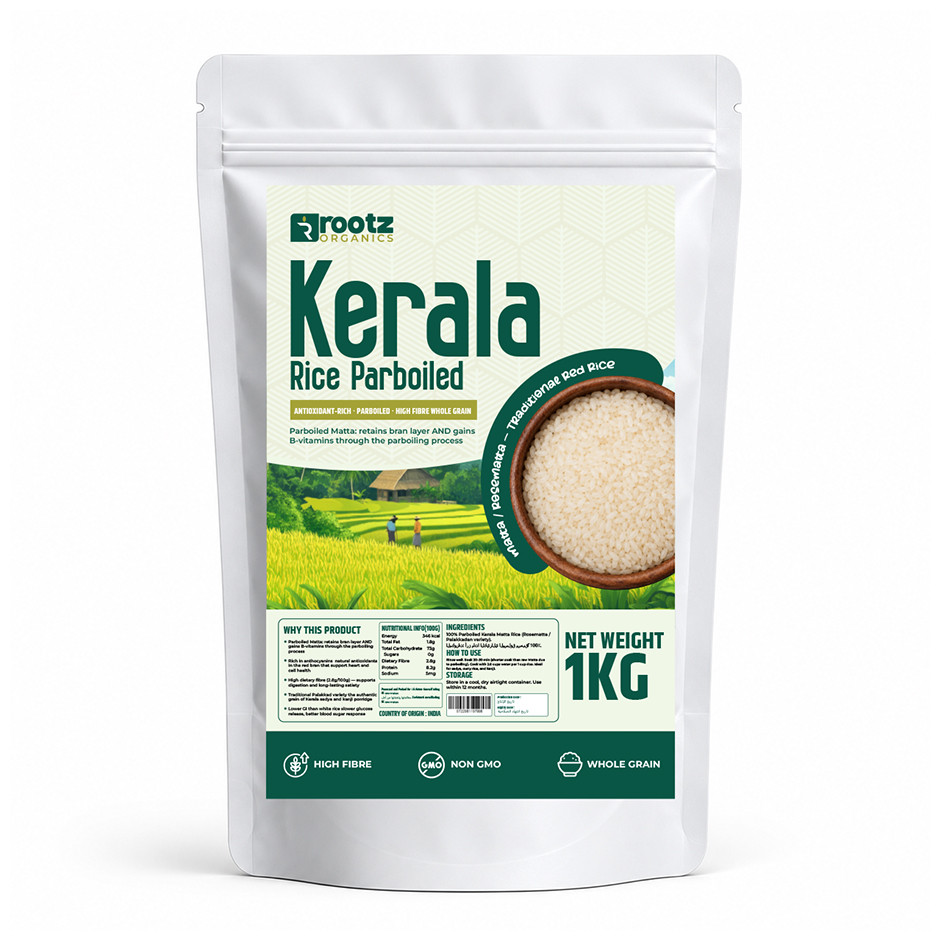
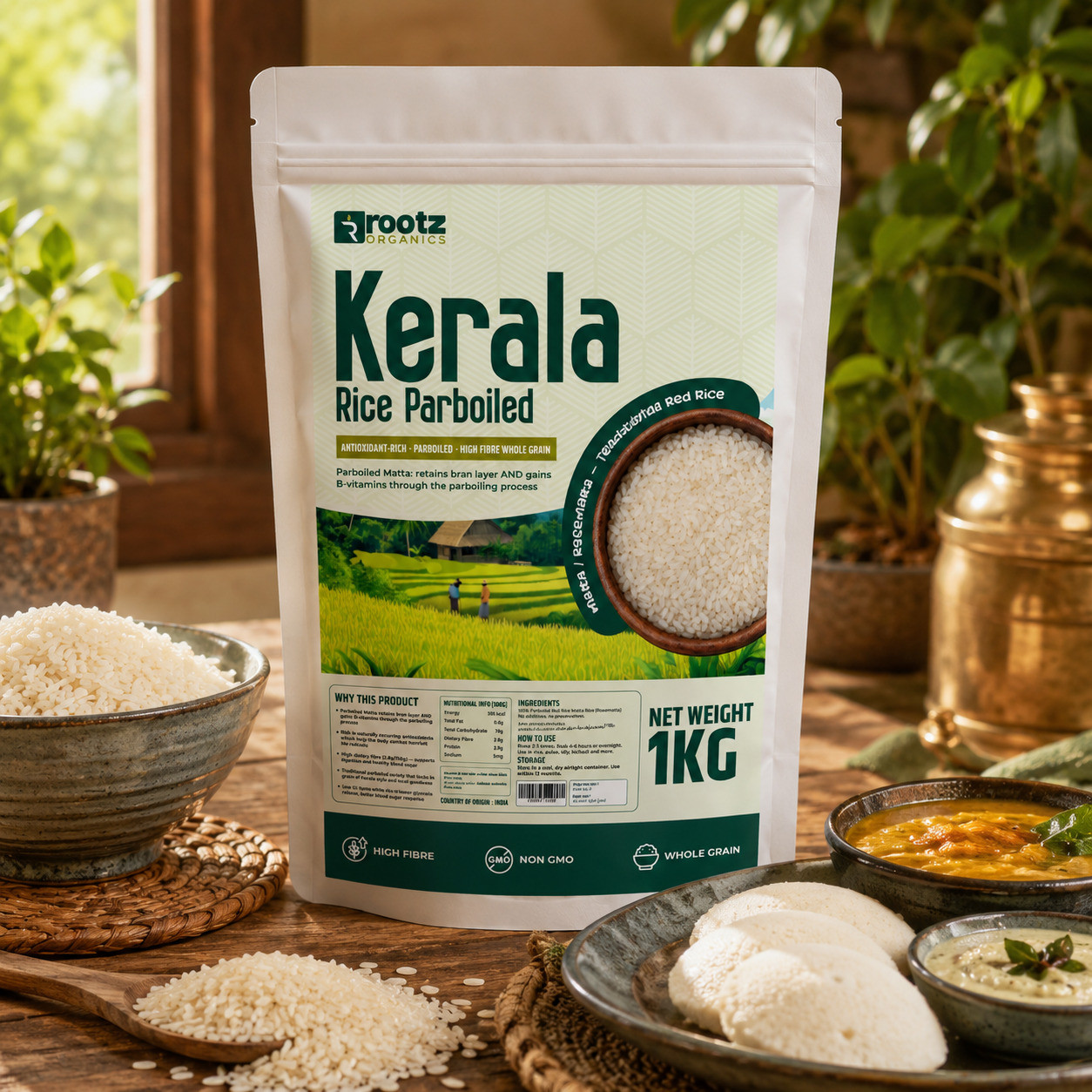
Product description
WHAT MAKES MATTA UNIQUE
Red bran layer (anthocyanins): same antioxidant pigments found in blueberries, red cabbage, and black rice. Associated with cardiovascular protection, cognitive health, and anti-inflammatory activity. The pink colour of Matta cooking water is pure anthocyanin.
- Parboiled + whole grain: an unusual and valuable combination:
- Whole grain rices retain bran but don't gain B-vitamins
- Parboiled rices gain B-vitamins but have bran removed
- Matta does BOTH
- Lower GI: bran layer + higher fibre (2.8g/100g) + parboiled starch structure gives Matta a GI of ~52–58 — significantly lower than white rice (64–72).
- Earthy, nutty flavour: pronounced grain character stronger than white rice. Needs more water and longer cooking. Adjustment period of 2–3 meals for those unfamiliar.
How to Cook & Use Matta Rice
- Traditional Rice Porridge: Simmer 1 cup of Matta rice in 4–5 cups of water for 25–30 minutes until soft and comforting. Enjoy as a wholesome breakfast or light meal.
- Cooked Rice: Use a 1:3 rice-to-water ratio. Pressure cook for 3 whistles or simmer covered for 30–35 minutes until tender.
- Pilafs & Rice Dishes: Its distinctive nutty flavour and firm texture make it ideal for pilafs, spiced rice dishes and hearty one-pot meals.
- Perfect with Regional Cuisine: A great accompaniment to Gulf-style stews, grilled meats, roasted vegetables and Mediterranean-inspired dishes.
- Grain Bowls & Salads: Use cooked Matta rice as the base for warm grain bowls or mix into salads for added texture, fibre and wholegrain goodness.
Cooking Water (Kanji Water)
The naturally pink-tinted cooking water contains beneficial plant compounds from the rice bran layer. Traditionally enjoyed as a warm beverage, it can also be served on its own or used as a nourishing base for soups and broths.
Reviews
Login
Don't have an account?
Sign UpThe pink colour is anthocyanin — water-soluble antioxidants from the red bran layer. These are the same compounds in blueberries and red cabbage. Normal and expected. Many Kerala households drink the strained cooking water (kanji vellam) as an antioxidant drink.The pink colour is anthocyanin — water-soluble antioxidants from the red bran layer. These are the same compounds in blueberries and red cabbage. Normal and expected. Many Kerala households drink the strained cooking water (kanji vellam) as an antioxidant drink.
Yes — earthier, nuttier, slightly grainy texture from the red bran. Adjustment period of 2–5 meals is typical. Common progression: unfamiliar first time, neutral second meal, preferred by fifth meal.Yes — earthier, nuttier, slightly grainy texture from the red bran. Adjustment period of 2–5 meals is typical. Common progression: unfamiliar first time, neutral second meal, preferred by fifth meal.
Yes — GI ~52–58 vs white rice ~64–72. The traditional Kerala preparation (kanji with coconut oil and dal) further reduces the glycaemic response. Better choice than white rice for diabetics or pre-diabetics, consumed in normal portion sizes.Yes — GI ~52–58 vs white rice ~64–72. The traditional Kerala preparation (kanji with coconut oil and dal) further reduces the glycaemic response. Better choice than white rice for diabetics or pre-diabetics, consumed in normal portion sizes.


