
Product description
KEY BENEFITS
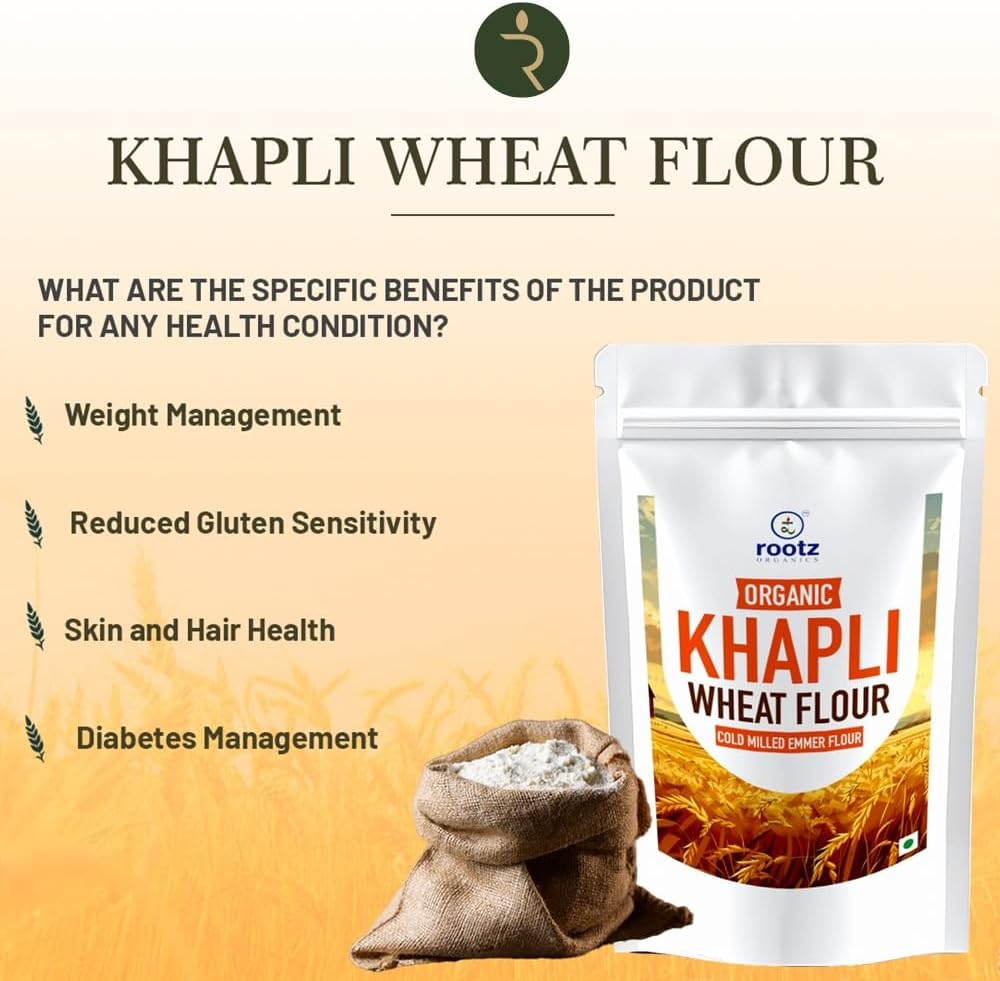
- Nutrient-Dense Supergrain
- Low Glycemic & Blood Sugar Friendly
- Supports Digestion & Gut Health
- Aids Weight Management
- Heart Health — Regulates BP & Cholesterol
- Rich in Antioxidants
- Supports Immune Function (Zinc-Rich)
- Bone Health — Magnesium & Phosphorus
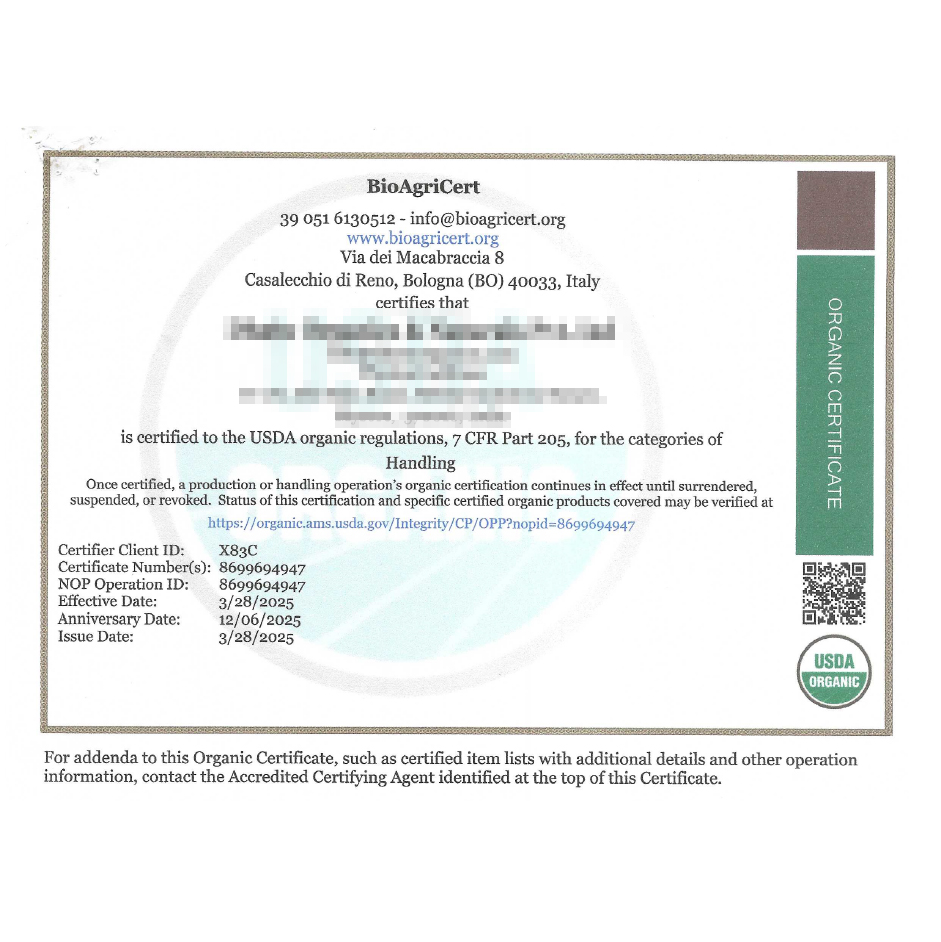
- Pure, Organic & Chemical-Free (No GMO)
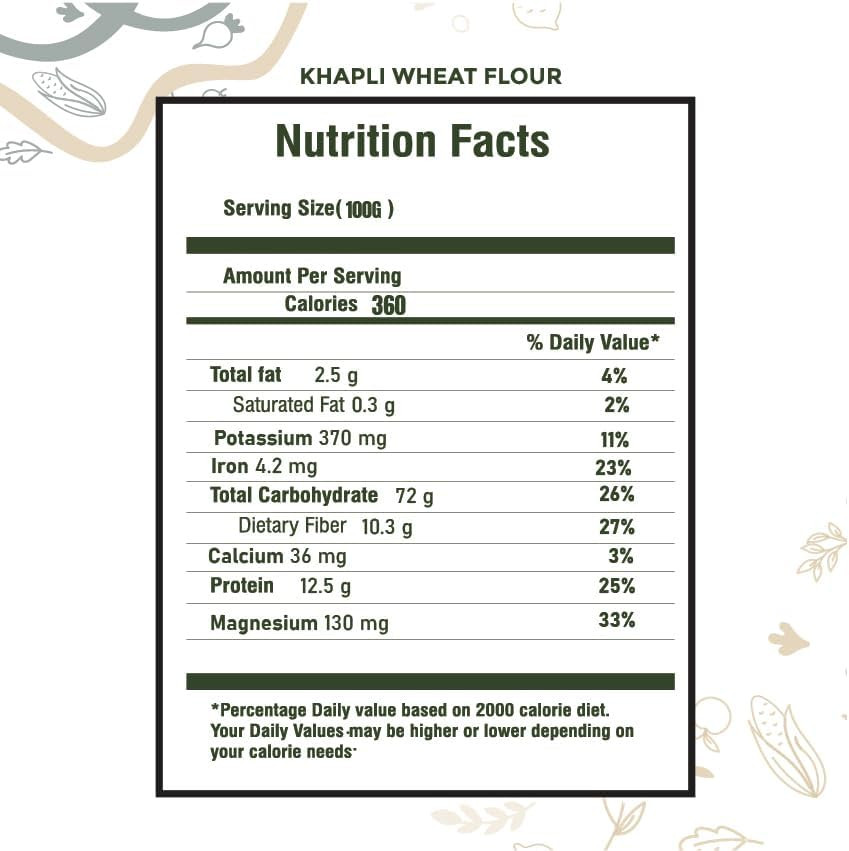
Nutrition
| Nutrient | Value | % Daily Value |
|---|---|---|
| Energy | 360 kcal | --- |
| Saturated Fat | 0.3 g | 2% |
| Potassium | 370 mg | 11% |
| Iron | 4.2 mg | 23% |
| Total Carbohydrate | 72 g | 26% |
| Dietary Fiber | 10.3 g | 27% |
| Calcium | 36 mg | 3% |
| Protein | 12.5 g | 25% |
| Magnesium | 130 mg | 33% |
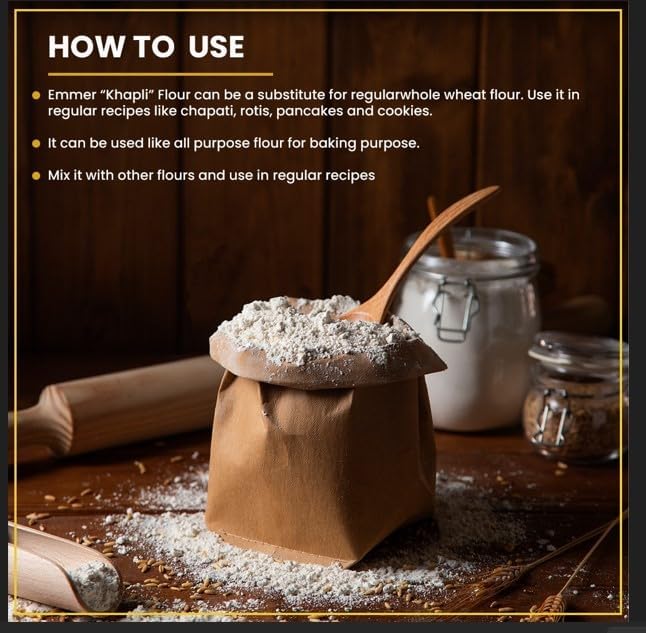
How to Use
High fiber content supports digestion and gut health
Watch Videos
Reviews
Login
Don't have an account?
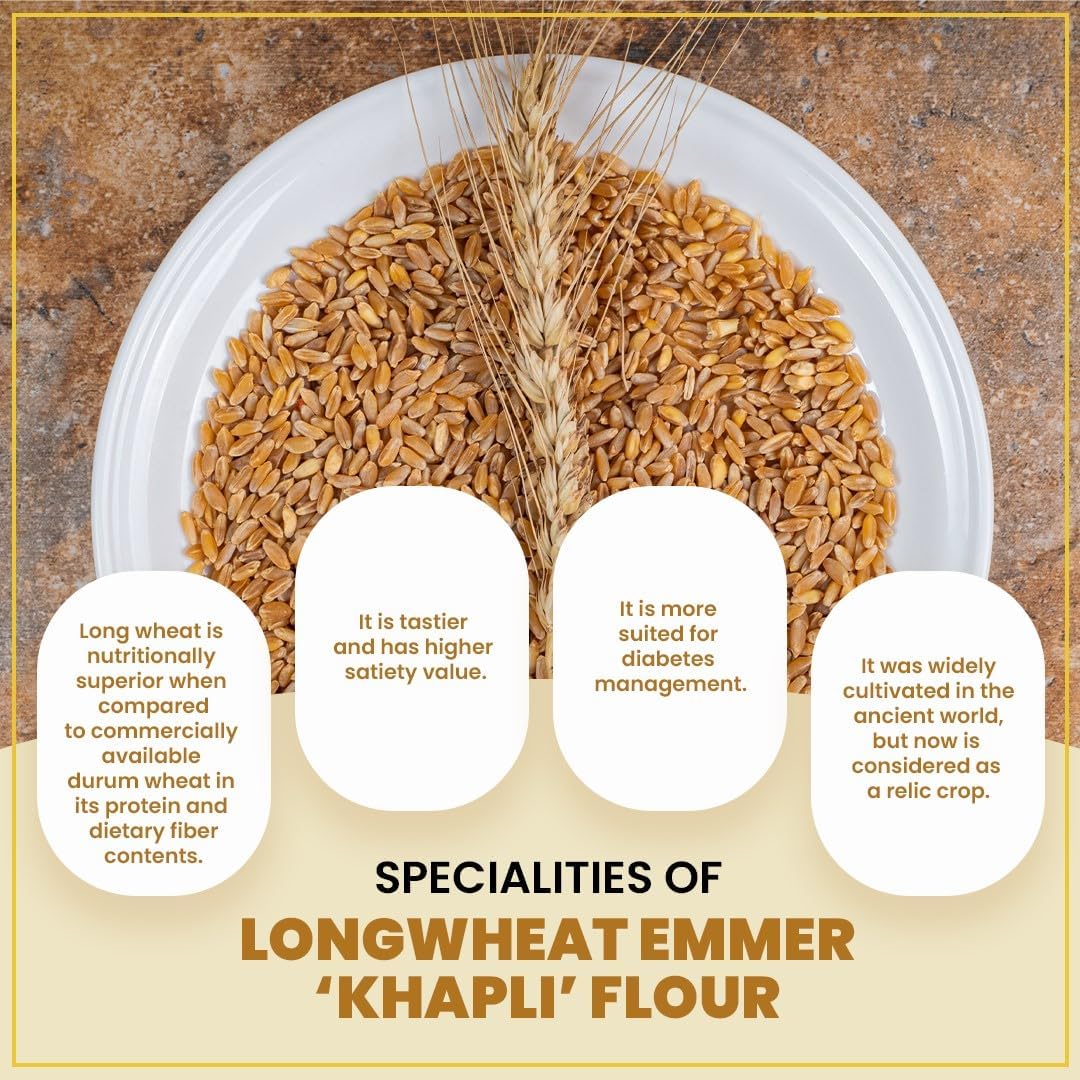
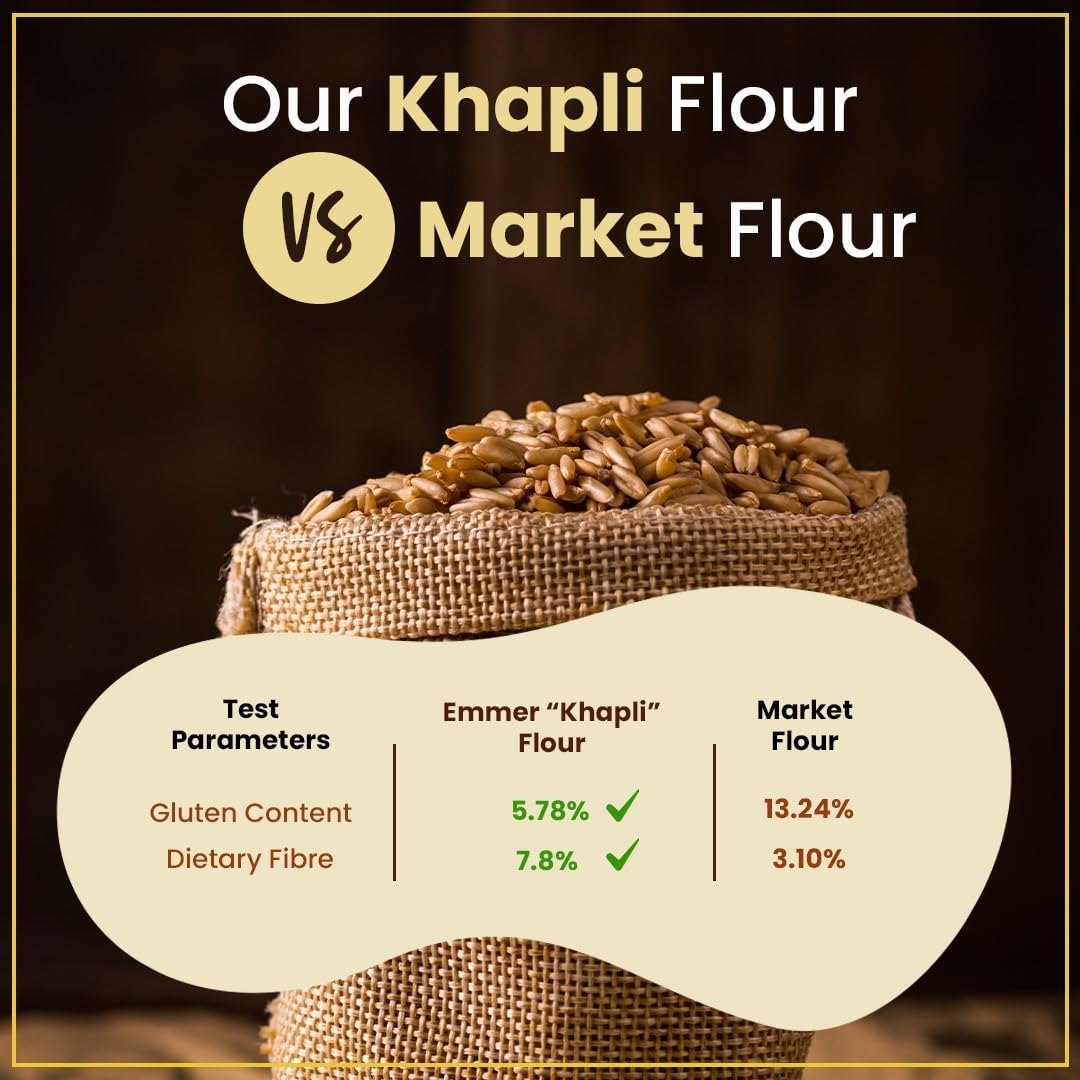
Sign UpKhapli (also known as Emmer or Long wheat) is one of India's oldest grain varieties — never hybridised or genetically modified. Unlike modern wheat bred for yield and high gluten, Khapli has a naturally lower glycemic index, higher protein and fibre, and more bioavailable minerals. It is also easier to digest for many people who experience discomfort with regular wheat. Our Khapli is stone-ground at low heat, preserving the bran, germ, and every nutrient a high-speed mill would destroy.
Khapli (also known as Emmer or Long wheat) is one of India's oldest grain varieties — never hybridised or genetically modified. Unlike modern wheat bred for yield and high gluten, Khapli has a naturally lower glycemic index, higher protein and fibre, and more bioavailable minerals. It is also easier to digest for many people who experience discomfort with regular wheat. Our Khapli is stone-ground at low heat, preserving the bran, germ, and every nutrient a high-speed mill would destroy.
Yes — 1:1 in chapati, roti, paratha, and bhakri. For baking (bread, muffins, pancakes) start with a 50% substitution, as the flour absorbs water slightly differently and produces a denser crumb. The texture is a little coarser, the flavour nuttier, and the rotis will hold their softness longer. Most families find the transition seamless within a week.
Yes — 1:1 in chapati, roti, paratha, and bhakri. For baking (bread, muffins, pancakes) start with a 50% substitution, as the flour absorbs water slightly differently and produces a denser crumb. The texture is a little coarser, the flavour nuttier, and the rotis will hold their softness longer. Most families find the transition seamless within a week.
Khapli wheat flour has a naturally lower glycemic index compared to modern refined wheat flour, meaning it releases glucose into the bloodstream more slowly. The higher fibre content also supports steadier energy and better satiety. It is a suitable choice for those following a blood sugar-conscious diet. If you have a diagnosed condition, please consult your healthcare provider before making changes to your diet.
Khapli wheat flour has a naturally lower glycemic index compared to modern refined wheat flour, meaning it releases glucose into the bloodstream more slowly. The higher fibre content also supports steadier energy and better satiety. It is a suitable choice for those following a blood sugar-conscious diet. If you have a diagnosed condition, please consult your healthcare provider before making changes to your diet.
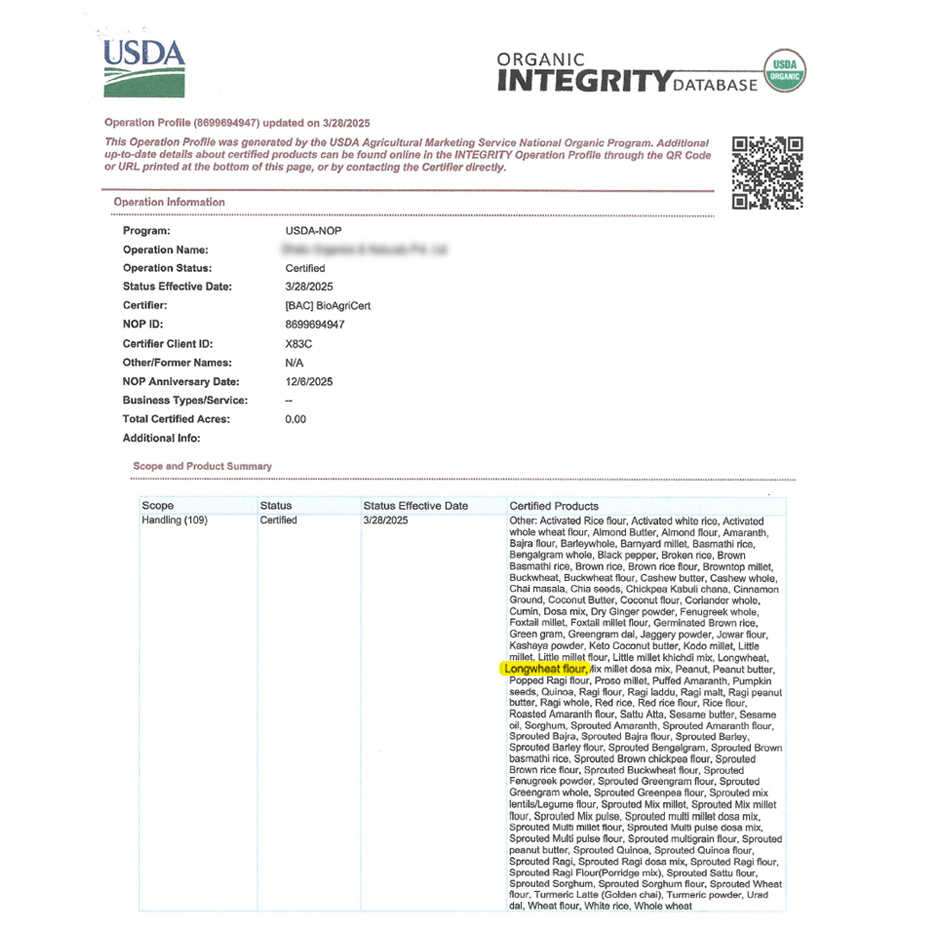
We source Khapli wheat from a network of 200+ certified organic farmer groups — farmers who use no synthetic fertilisers, no urea, and no pesticides. The grain is stone-ground slowly at low heat to preserve the bran, germ, and all nutrients that a high-speed commercial mill would destroy. No bleaching. No maida blending. No additives of any kind.
We source Khapli wheat from a network of 200+ certified organic farmer groups — farmers who use no synthetic fertilisers, no urea, and no pesticides. The grain is stone-ground slowly at low heat to preserve the bran, germ, and all nutrients that a high-speed commercial mill would destroy. No bleaching. No maida blending. No additives of any kind.


