
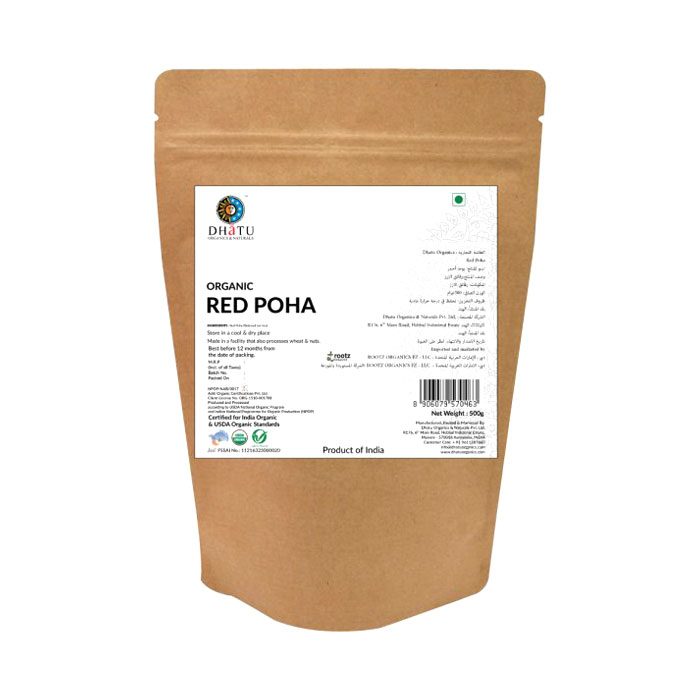
Product description
WHY THIS EXISTS ALONGSIDE THE NON-ORGANIC RED POHA
Rootz carries two red poha products: this certified organic version, and a separate non-organic Red Poha Rice 500gm listing. The products are made the same way — parboiled and flattened red rice — but the underlying crop is grown differently. This organic version is produced from red rice grown without synthetic pesticides or fertilisers, certified accordingly. If you already buy the non-organic version and want the organic equivalent, this is it.
CERTIFIED ORGANIC RED RICE
Made from organically grown red rice, produced without synthetic pesticides, fertilisers, or chemical inputs.
RED RICE, NOT WHITE — WHY IT MATTERS
This poha is made from red rice, which retains more of its natural bran layer than the polished white rice used in standard white poha. The bran layer is where the iron, fibre, and antioxidant compounds (including anthocyanins, which give red rice its colour) are concentrated. White poha has had most of this layer removed; red poha hasn’t. This is a genuine, meaningful nutritional distinction between the two poha varieties, independent of organic status.
QUICK-COOKING, GENUINELY EASY TO DIGEST
Like all poha, this product is made by parboiling red rice before flattening and drying it — a process that partially gelatinises the starch, which is the genuine reason poha cooks so quickly and is traditionally considered easy on digestion, rather than just a marketing phrase.
NATURALLY GLUTEN-FREE
Made entirely from rice, this poha is naturally gluten-free. Those with coeliac disease or severe gluten sensitivity should confirm cross-contamination controls directly with us if that’s a specific concern.
HOW TO USE
Same versatility as any red poha, prepared the same way.
- Rinse lightly under water until the flakes soften.
- Soak for 5–10 minutes if needed, depending on the dish.
- Red Poha Breakfast: sauté onions, green chillies, and spices in oil, add the soaked poha with salt and turmeric, garnish with coriander and lemon.
- Upma: sauté mustard seeds, curry leaves, and vegetables, add soaked poha and a little water, cook until soft and fluffy.
- Chivda (snack): dry-roast lightly with curry leaves, peanuts, and a pinch of turmeric and salt.
- Sweetened milk preparation: a simple, traditional addition to sweetened milk.
STORAGE
Store in a cool, dry place in an airtight container, away from moisture and sunlight. Consume within 6 months for best quality.
Nutrition Table
Basis: Per 100g — general values for red rice poha| Nutrient | Per Serving | Per 100g/ml | % DV* |
| Energy | — | ~340–350 kcal | 17% |
| Total fat | — | ~1–4g | 4% |
| Total carbohydrates | — | ~70–73g | 26% |
| — Dietary fibre | — | Higher than white poha (bran retained) | — |
| Protein | — | ~6–8g | 14% |
| Iron | — | Notably higher than white poha | — |
| Antioxidants (anthocyanins) | — | Present (red bran layer retained, absent in white poha) | — |
| B Vitamins (B1, B3) | — | Higher than plain milled white rice, due to parboiling | — |
Reviews
Login
Don't have an account?
Sign UpRed poha is made from red rice, which retains more of its natural bran layer than polished white rice. The bran layer holds more iron, fibre, and antioxidant compounds (including anthocyanins, which give the rice its colour) than the starchy white endosperm. White poha has had most of this layer removed; red poha hasn’t — a genuine nutritional distinction.
Both are flattened red rice products, made the same way. This version is made from organically certified red rice — grown without synthetic pesticides or fertilisers. The non-organic listing costs the same, has more content on-site (recipes, images), and is a well-sourced product in its own right. The choice between them comes down to whether organic certification matters to your household.
Yes — naturally gluten-free, since it’s made entirely from rice. Poha’s parboiling process also partially gelatinises the starch, which is the genuine, food-science reason it’s traditionally considered easy to digest. Those managing coeliac disease or severe gluten sensitivity should check cross-contamination controls directly with us.
Rinse lightly under water until the flakes soften, then soak for 5–10 minutes if needed. Use in classic breakfast poha with onions and spices, upma, dry-roasted chivda, or add to sweetened milk for a simple traditional preparation.


