
Product description
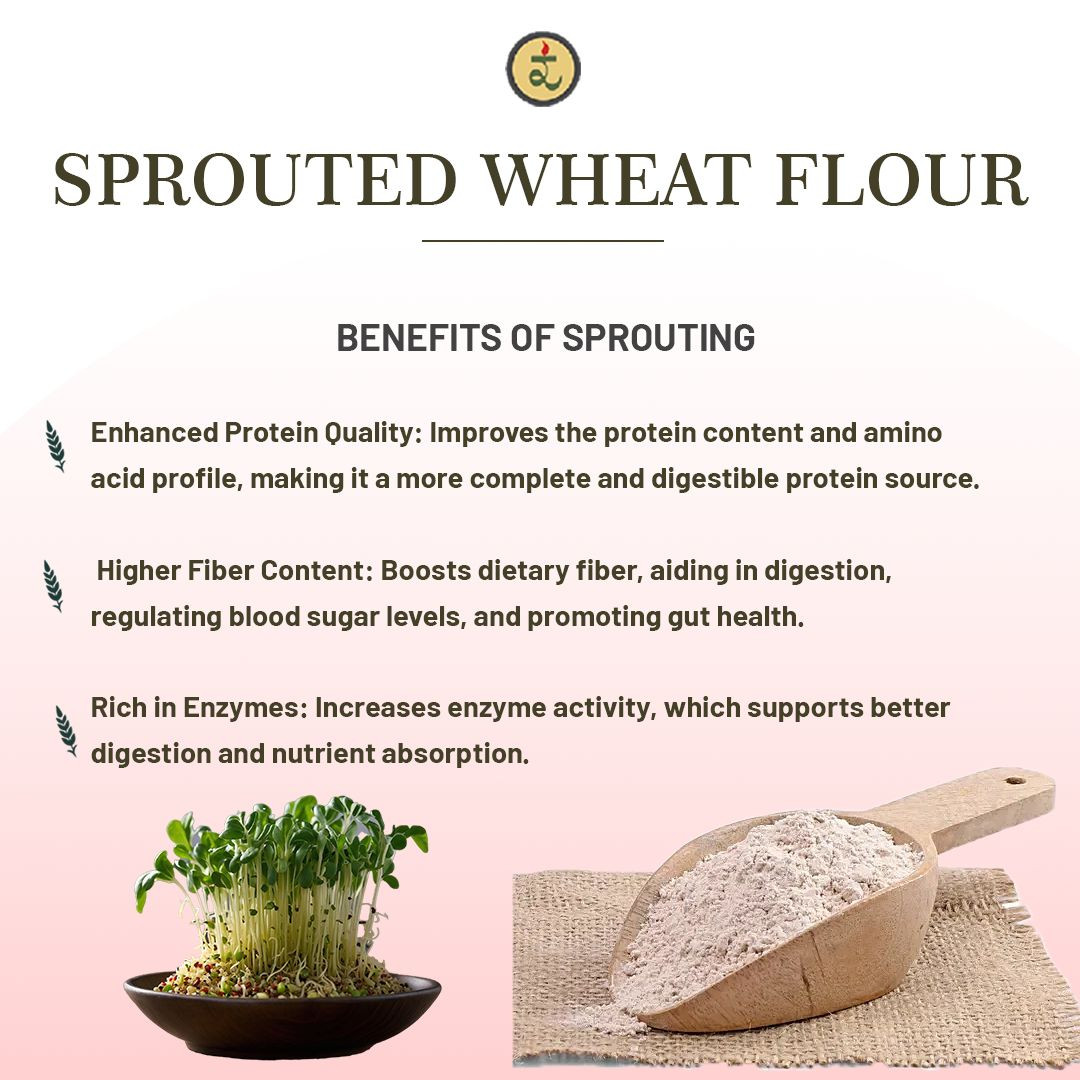
WHY SPROUTING CHANGES EVERYTHING A grain in its dormant state is protected by enzyme inhibitors and phytic acid compounds that help the seed survive in storage but also bind to minerals like iron, zinc, magnesium, and calcium, making them harder for your body to absorb. This is why many people eating "healthy whole wheat" still feel bloated, sluggish, or nutritionally depleted. Sprouting is nature's unlock mechanism. When a grain germinates, it neutralizes phytic acid, deactivates enzyme inhibitors, and dramatically increases the bioavailability of its nutrients. Proteins begin to pre-digest. Starches convert to simpler forms. The grain comes alive — and so does its nutrition. We then dry the sprouted berries gently at low temperature to preserve the live enzymes and heat-sensitive vitamins, before cold-milling them into flour. No high-heat milling. No bleaching. No Maida blending. Nothing added, nothing destroyed. HOW IT COMPARES TO REGULAR WHOLE WHEAT FLOUR
- Higher protein: sprouting increases protein content and amino acid availability
- Lower phytic acid: minerals are 2–3x more bioavailable after sprouting
- More B vitamins: particularly folate, B1 (thiamine), and B6 — all increased during germination
- Better for digestion: enzyme inhibitors are deactivated; natural digestive enzymes are activated
- Lower effective glycemic response: complex starches are partially broken down, reducing the blood sugar spike vs. regular whole wheat flour
- Natural sweetness: germination converts some starch to maltose, giving the flour a subtle, earthy sweetness without any added sugar
WHAT IT DOES FOR YOUR BODY
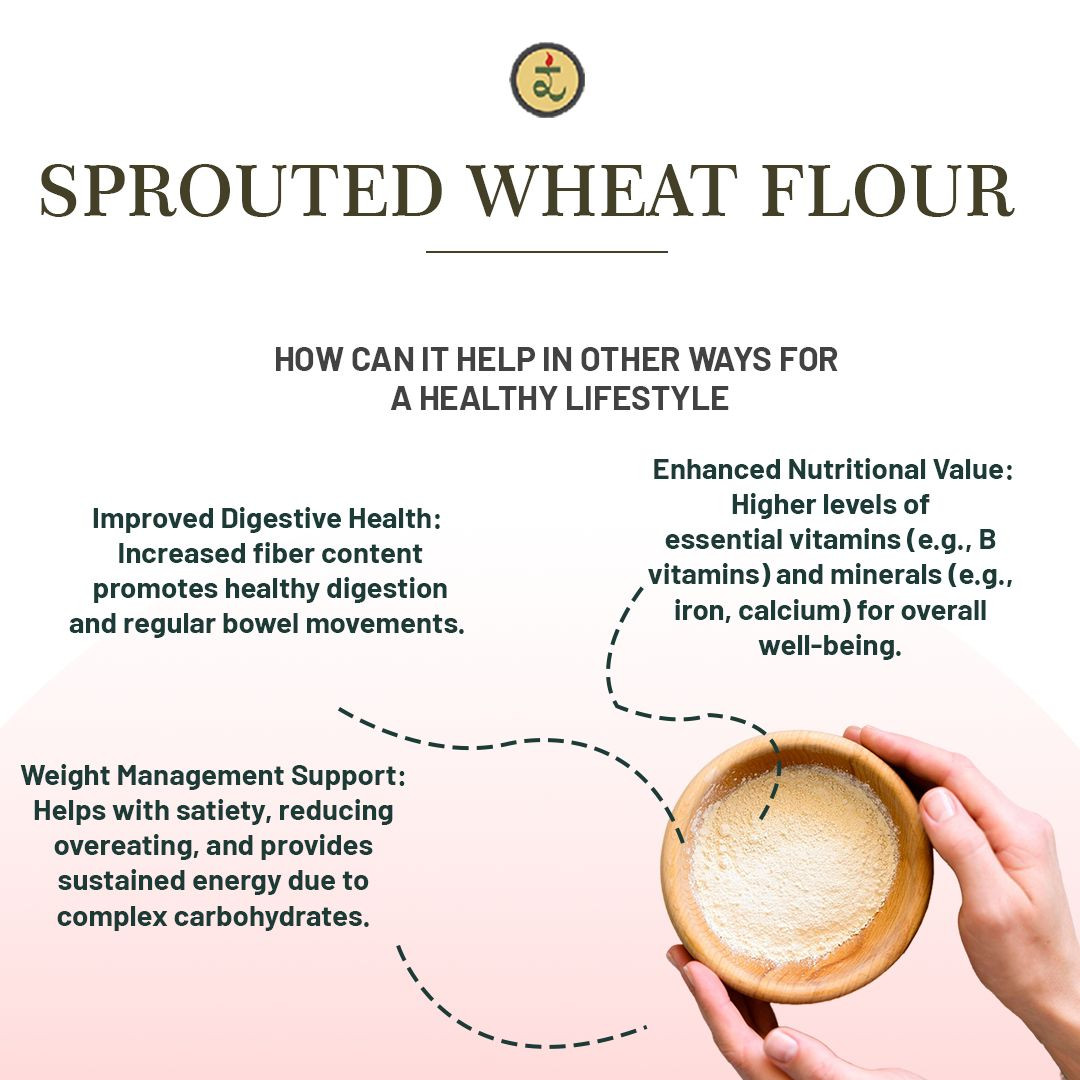
- Gut health: the active enzymes and reduced anti-nutrients support smoother digestion and better nutrient absorption
- Energy levels: B vitamins are essential for converting food into energy — this flour delivers them in higher, more bioavailable quantities
- Immune support: zinc and folate — both increased through sprouting — are critical for immune cell function
- Bone density: calcium and magnesium absorption improves significantly when phytic acid is reduced
- Blood sugar balance: the modified starch structure produces a gentler glucose response compared to regular atta
- Satiety: higher protein and fiber content keeps you fuller for longer
INGREDIENTS 100% Organic Sprouted Whole Wheat (Triticum aestivum). No additives. No preservatives. No bleaching agents. No Maida. Non-GMO.
NUTRITION
Servings per 100g
| Nutrient | Value | % Daily Value |
|---|---|---|
| Energy | 338 Kcl | --- |
| Saturated Fat | 0.5 g | 2% |
| Total carbohydrates | 68g | 7% |
| Protein | 14g | 8% |
| Sodium | 4mg | 0% |
| Iron | 4mg | 7% |
| Magnesium | 108mg | 8% |
| Folate (Vitamin B9) — sprouting-enhanced | 54 mcg | 14% |
| Vitamin B6 — sprouting-enhanced | 0.4mg | 6% |
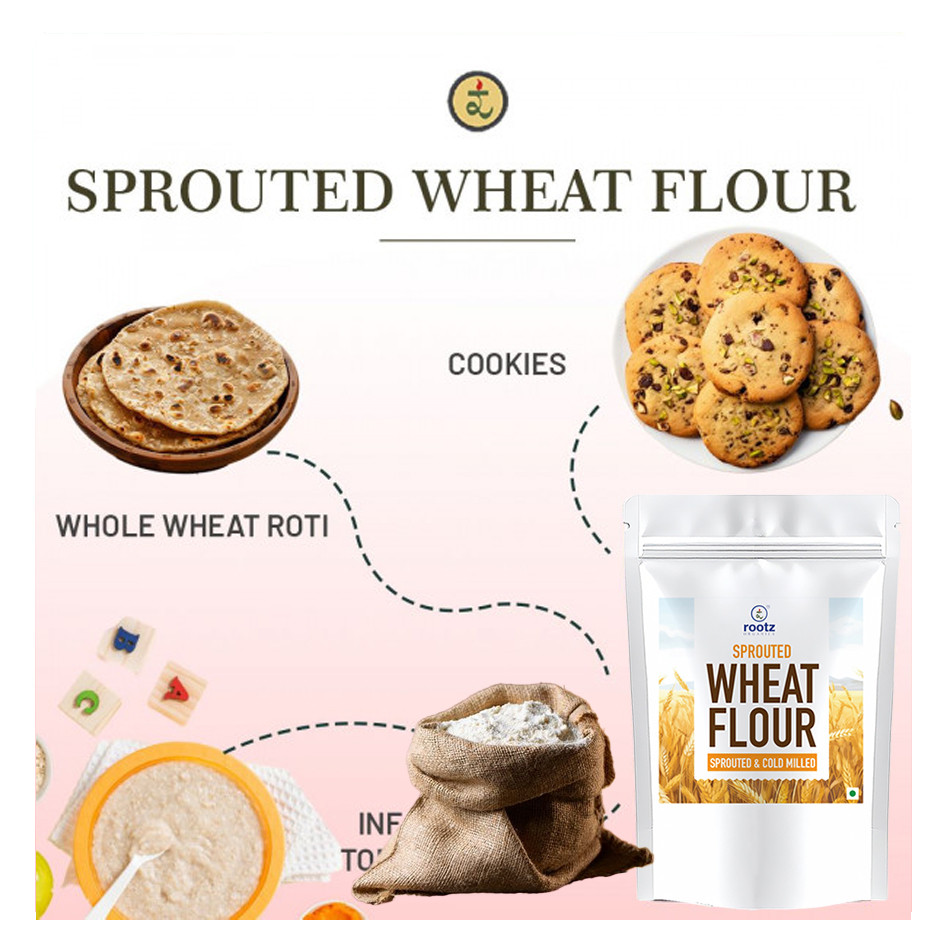
HOW TO USE IT Sprouted Wheat Flour works as a direct 1:1 substitute for whole wheat flour in nearly every application.
- Chapati and roti: The dough needs slightly less water than regular atta. Knead well with warm water and let it rest for 10 minutes before rolling — it will be softer and hold moisture longer.
- Sourdough bread: This flour is particularly prized for sourdough because its high enzymatic activity feeds the sourdough starter and creates a better crumb structure. Use at 70–100% of your flour blend.
- Baking (muffins, pancakes, cookies): Substitute 1:1. The natural sweetness of sprouted flour means you can reduce added sugar by 10–15%. Expect a slightly denser crumb and a warmer, nuttier flavour.
- Blending: Mix with millet flour, oat flour, or barley flour for added nutritional diversity. A 70% sprouted wheat / 30% millet blend works well for both chapati and bread.
- Thickening: Use in place of regular flour to thicken soups, gravies, and dals — it adds flavor and nutrition without altering the dish significantly.
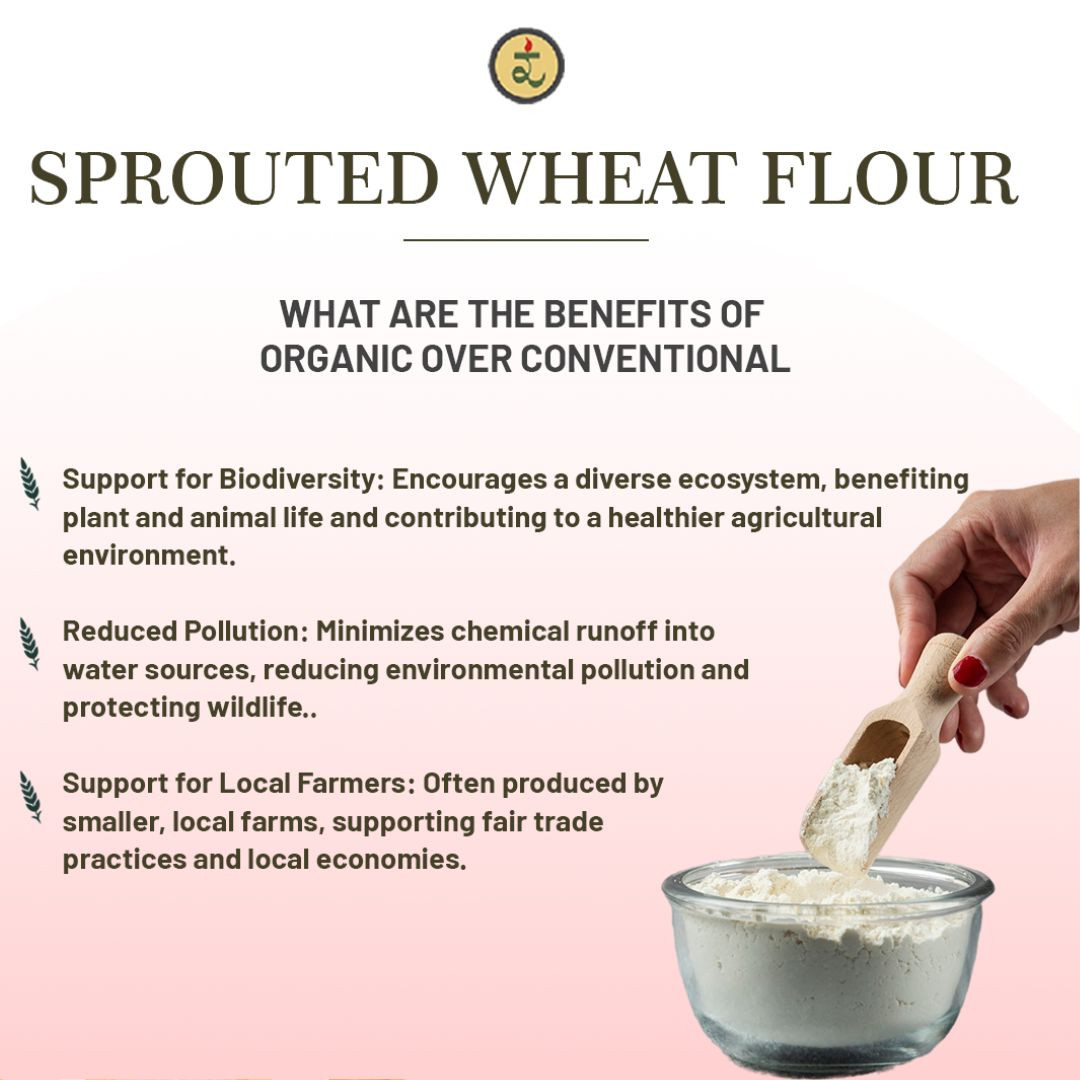
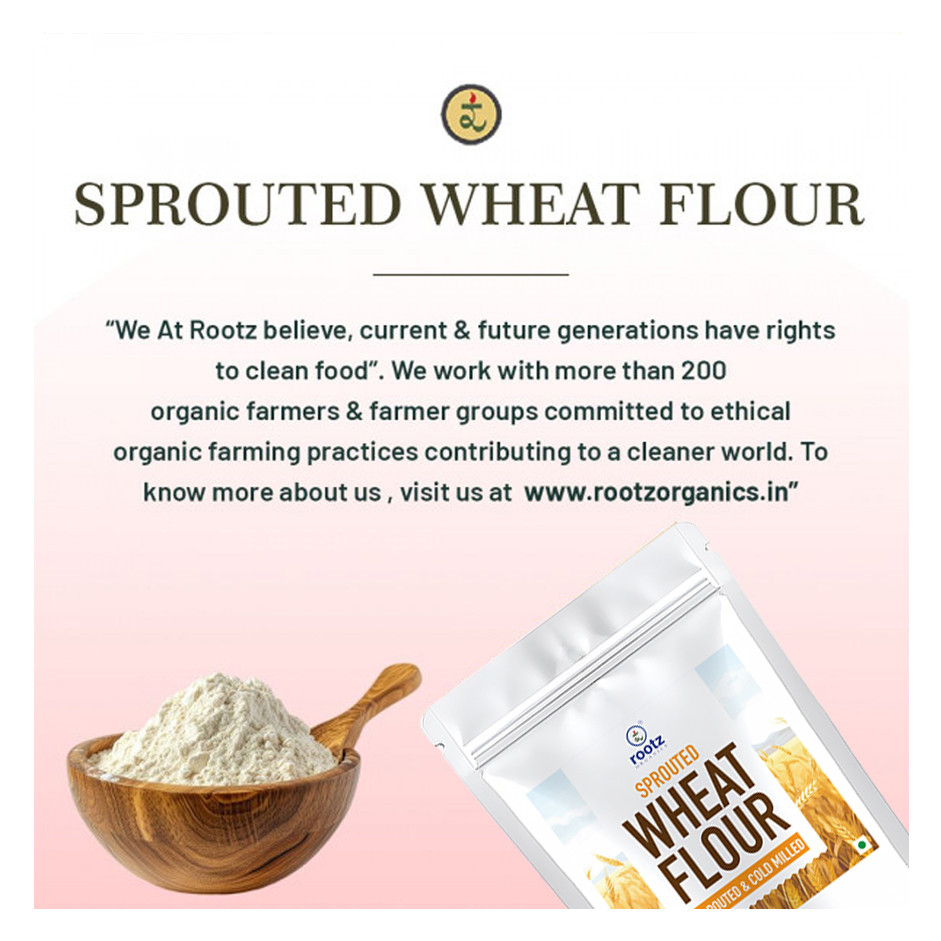
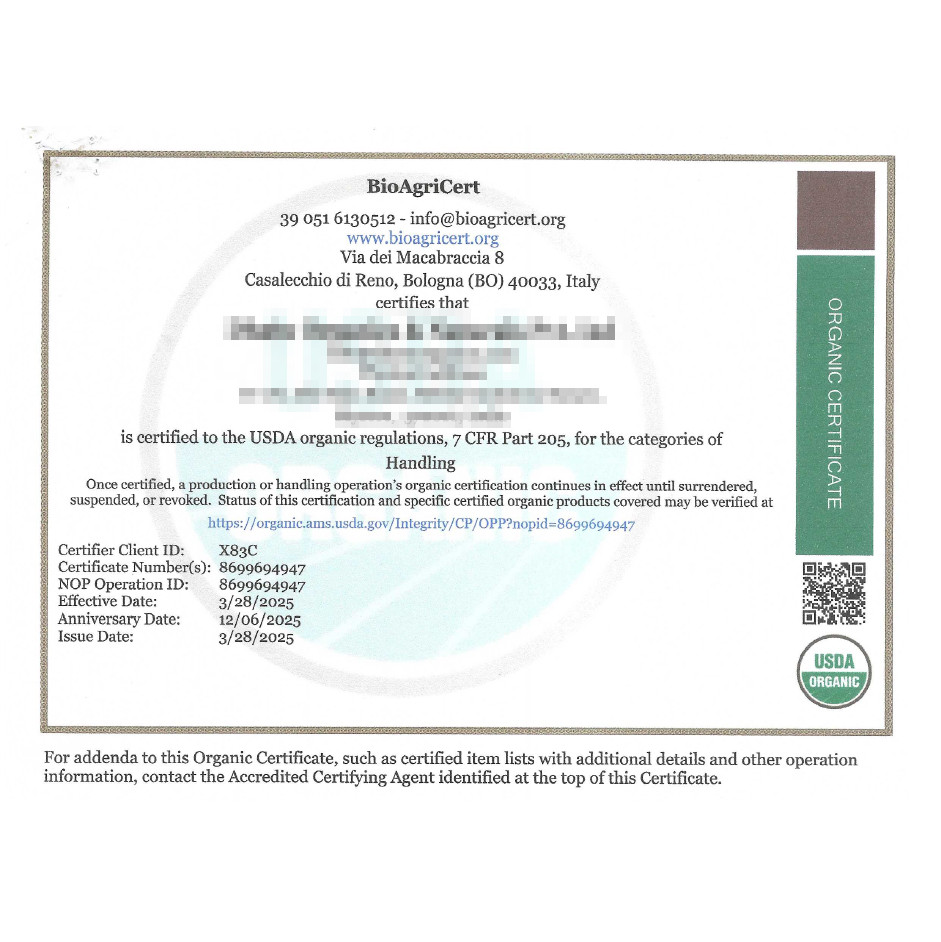
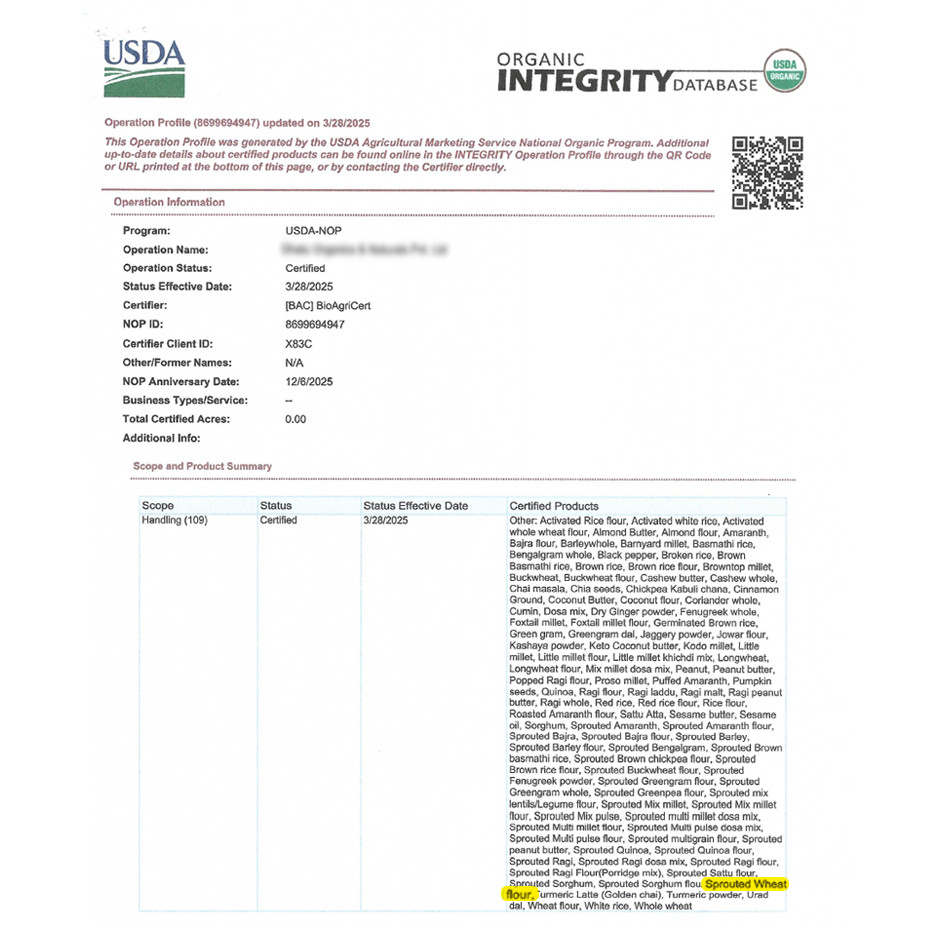
SOURCING AND PRODUCTION Our sprouted wheat flour is certified organic from seed to bag. The wheat berries are sourced from organic farms using no synthetic fertilisers, pesticides, or GMO seeds. Sprouting, drying, and milling are done under monitored conditions to ensure enzymatic activity is preserved. The flour is cold-milled — never exposed to high-friction heat that would degrade what sprouting worked to build. This is a small-batch, living food product. Color and aroma may vary slightly between batches — this is natural, not a quality issue.
Watch Videos
Reviews
Login
Don't have an account?
Sign UpWe take organic wheat berries and allow them to germinate — to begin sprouting — before drying and milling them into flour. During germination, the grain activates its own enzymes, neutralises phytic acid (which normally blocks mineral absorption), and significantly increases the bioavailability of iron, zinc, magnesium, folate, and B vitamins. You get the same flour format, but your body absorbs far more of what is in it.
We take organic wheat berries and allow them to germinate — to begin sprouting — before drying and milling them into flour. During germination, the grain activates its own enzymes, neutralises phytic acid (which normally blocks mineral absorption), and significantly increases the bioavailability of iron, zinc, magnesium, folate, and B vitamins. You get the same flour format, but your body absorbs far more of what is in it.
Sprouting requires additional time, controlled conditions, careful drying, and cold-milling — processes that a standard flour mill does not use. The resulting flour is nutritionally superior: more bioavailable protein, more absorbable minerals, more active B vitamins, and no phytic acid blocking your gut from using any of it. You are paying for a living food, not a commodity grain product. The 2kg bag works out to AED 37.48 per kg — comparable to other premium organic flours, and significantly less than the health cost of nutrient-poor alternatives.
Sprouting requires additional time, controlled conditions, careful drying, and cold-milling — processes that a standard flour mill does not use. The resulting flour is nutritionally superior: more bioavailable protein, more absorbable minerals, more active B vitamins, and no phytic acid blocking your gut from using any of it. You are paying for a living food, not a commodity grain product. The 2kg bag works out to AED 37.48 per kg — comparable to other premium organic flours, and significantly less than the health cost of nutrient-poor alternatives.
Sprouted wheat flour is not gluten-free and is not suitable for people with coeliac disease. However, many people with mild wheat sensitivity — not a diagnosed condition — find it significantly easier to tolerate than regular whole wheat, because sprouting partially breaks down gluten proteins and deactivates enzyme inhibitors that contribute to digestive discomfort. If you have a confirmed diagnosis, please consult your healthcare provider before trying.
Sprouted wheat flour is not gluten-free and is not suitable for people with coeliac disease. However, many people with mild wheat sensitivity — not a diagnosed condition — find it significantly easier to tolerate than regular whole wheat, because sprouting partially breaks down gluten proteins and deactivates enzyme inhibitors that contribute to digestive discomfort. If you have a confirmed diagnosis, please consult your healthcare provider before trying.


