
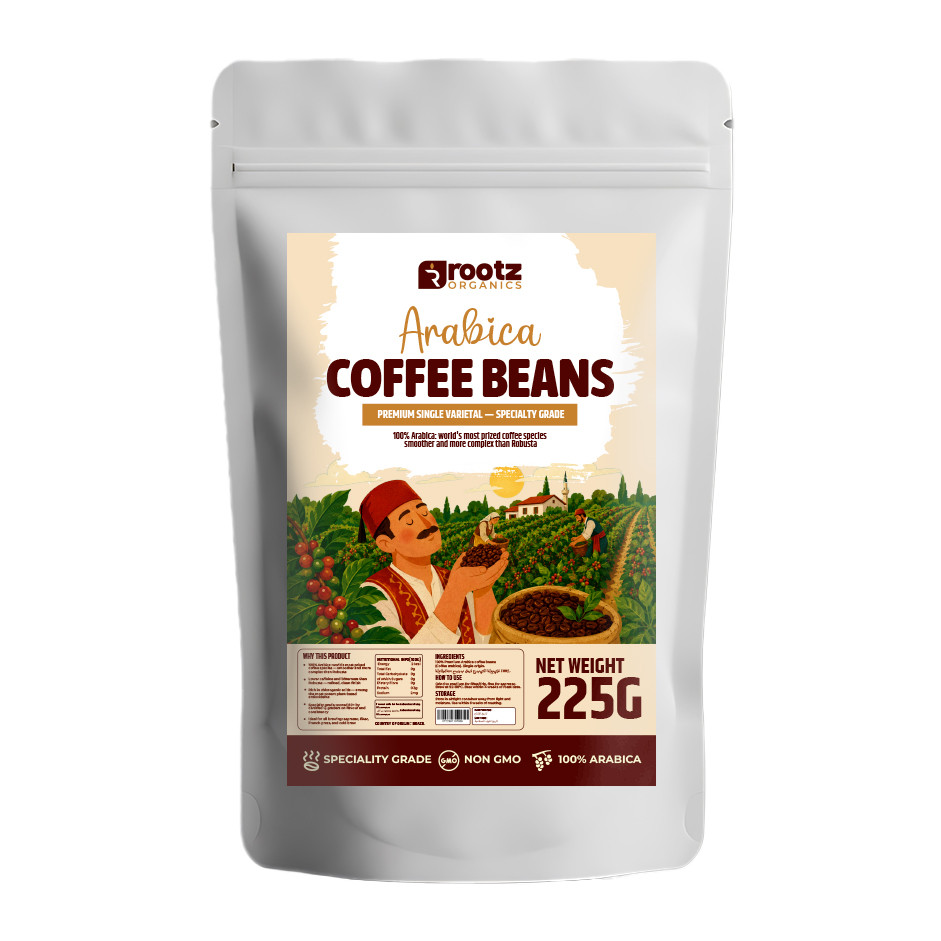
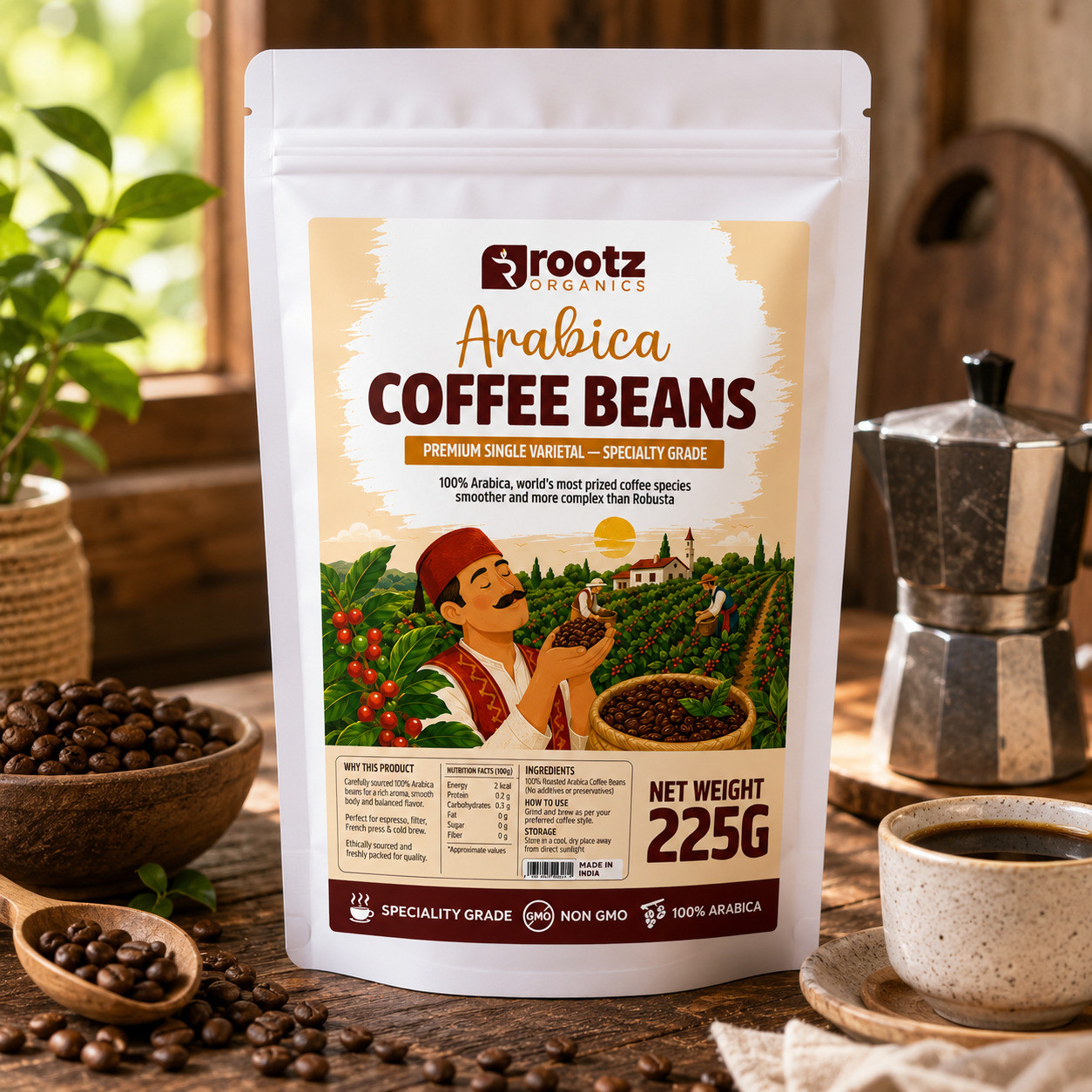
Product description
WHAT 'SPECIALTY GRADE' ACTUALLY MEANS
Coffee is graded globally by the Specialty Coffee Association (SCA). To qualify as specialty grade:
— No primary defects (mould, full black beans, stones)
— Fewer than 5 secondary defects per 350g sample
— Moisture content between 10–12%
— A cupping score of 80 or above from a licensed Q-Grader
Most supermarket coffees score 60–70 on this scale. Specialty grade coffee tastes the difference — more complex aromatic profile, brighter acidity, cleaner finish.
HEALTH PROPERTIES
Chlorogenic acids (CGA): among the most potent plant-based antioxidants known. Associated with reduced Type 2 diabetes risk, improved insulin sensitivity, and blood pressure regulation. Present at higher concentrations in Arabica than Robusta and preserved best at lighter roasts.
Cafestol and kahweol (in unfiltered preparations): diterpene compounds associated with anti-cancer and neuroprotective activity. Present in espresso and French press; largely removed by paper filters.
Cognitive support: caffeine (~60mg per serving) combined with L-theanine (naturally present in coffee) promotes focused alertness without the anxiety that higher-caffeine Robusta can produce.
HOW TO BREW
- Espresso: fine grind, 9 bar pressure, 92°C water, 25–30 second extraction. Ratio: 1:2 (18g coffee → 36g espresso).
- Filter/drip: medium grind, 93°C water. Ratio 1:16 (15g coffee → 240ml water). Bloom the grounds with 30ml water for 30 seconds before full pour.
- French press: coarse grind, 93°C water, 4-minute steep. Press slowly. Serve immediately — do not leave in press as it over-extracts.
- Cold brew: coarse grind, cold water, 12–18 hours at room temperature or refrigerated. Ratio 1:8 (100g coffee → 800ml water). Strain through cloth.
- Moka pot: medium-fine grind. Fill the bottom chamber with boiling water (not cold — this prevents metallic taste). Medium heat. Remove as soon as gurgling begins.
STORAGE
Whole beans stay fresher than pre-ground because the protective oils are sealed inside. Grind only what you need for each brew. Store beans in a one-way valve bag or ceramic airtight canister at room temperature — refrigerating coffee introduces moisture. Use within 4–6 weeks of roast date
Reviews
Login
Don't have an account?
Sign UpArabica: ~1.2–1.5% caffeine, higher natural sugars (6–9%), complex flavour. Robusta: ~2.2–2.7% caffeine, less sugar (3–7%), stronger and more bitter. Specialty coffee is almost always 100% Arabica.Arabica: ~1.2–1.5% caffeine, higher natural sugars (6–9%), complex flavour. Robusta: ~2.2–2.7% caffeine, less sugar (3–7%), stronger and more bitter. Specialty coffee is almost always 100% Arabica.
Formal SCA designation. Must score 80+ out of 100 in standardised cupping by a licensed Q-Grader. Represents the top ~3% of coffee produced globally.Formal SCA designation. Must score 80+ out of 100 in standardised cupping by a licensed Q-Grader. Represents the top ~3% of coffee produced globally.
Lighter roasts retain more chlorogenic acid (primary antioxidant). Darker roasts develop melanoidins. Medium roast balances both. Lighter roasts have slightly more caffeine than dark roasts — contrary to popular belief.Lighter roasts retain more chlorogenic acid (primary antioxidant). Darker roasts develop melanoidins. Medium roast balances both. Lighter roasts have slightly more caffeine than dark roasts — contrary to popular belief.


