
Product description
THE OTTOMAN COFFEE RITUAL IN A 225G BAG
Turkish coffee is one of the most distinctive coffee preparations in the world and in the UAE, it is also the most culturally familiar. Served in every Arabic dallah, in every Turkish café in JBR, and at the breakfast table of millions of households across the GCC, the ritual of preparing Turkish coffee by hand in a cezve is a daily meditation.
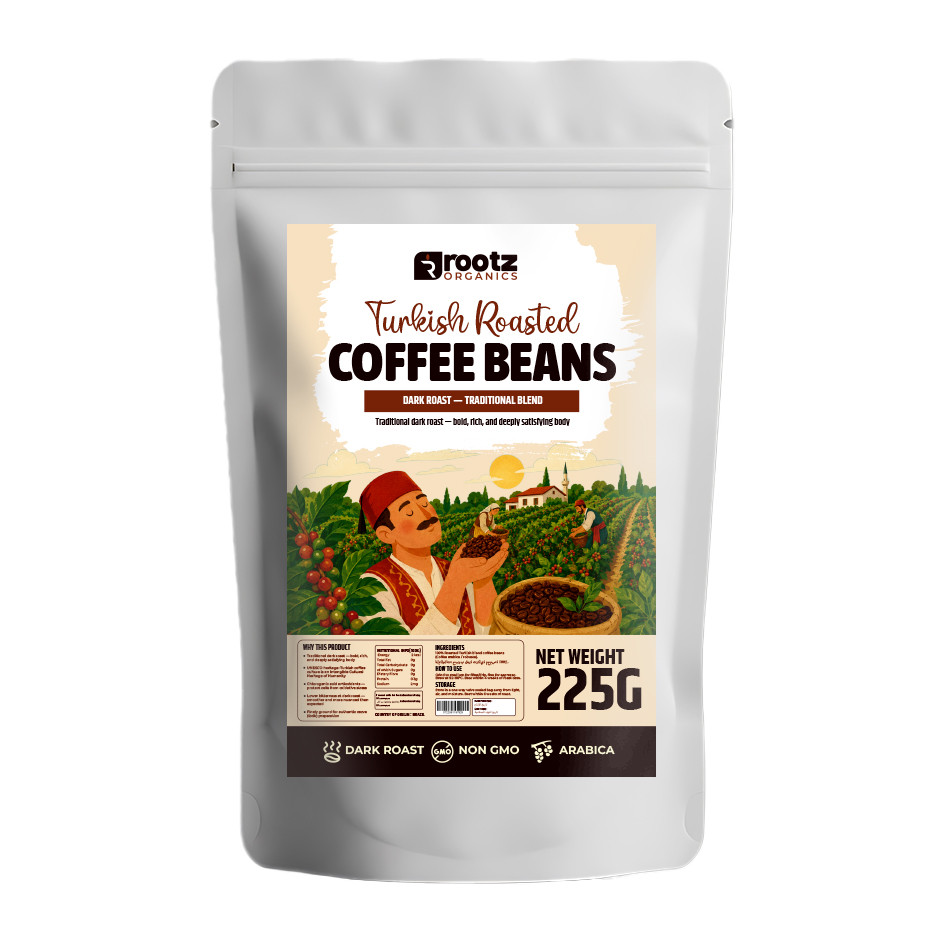
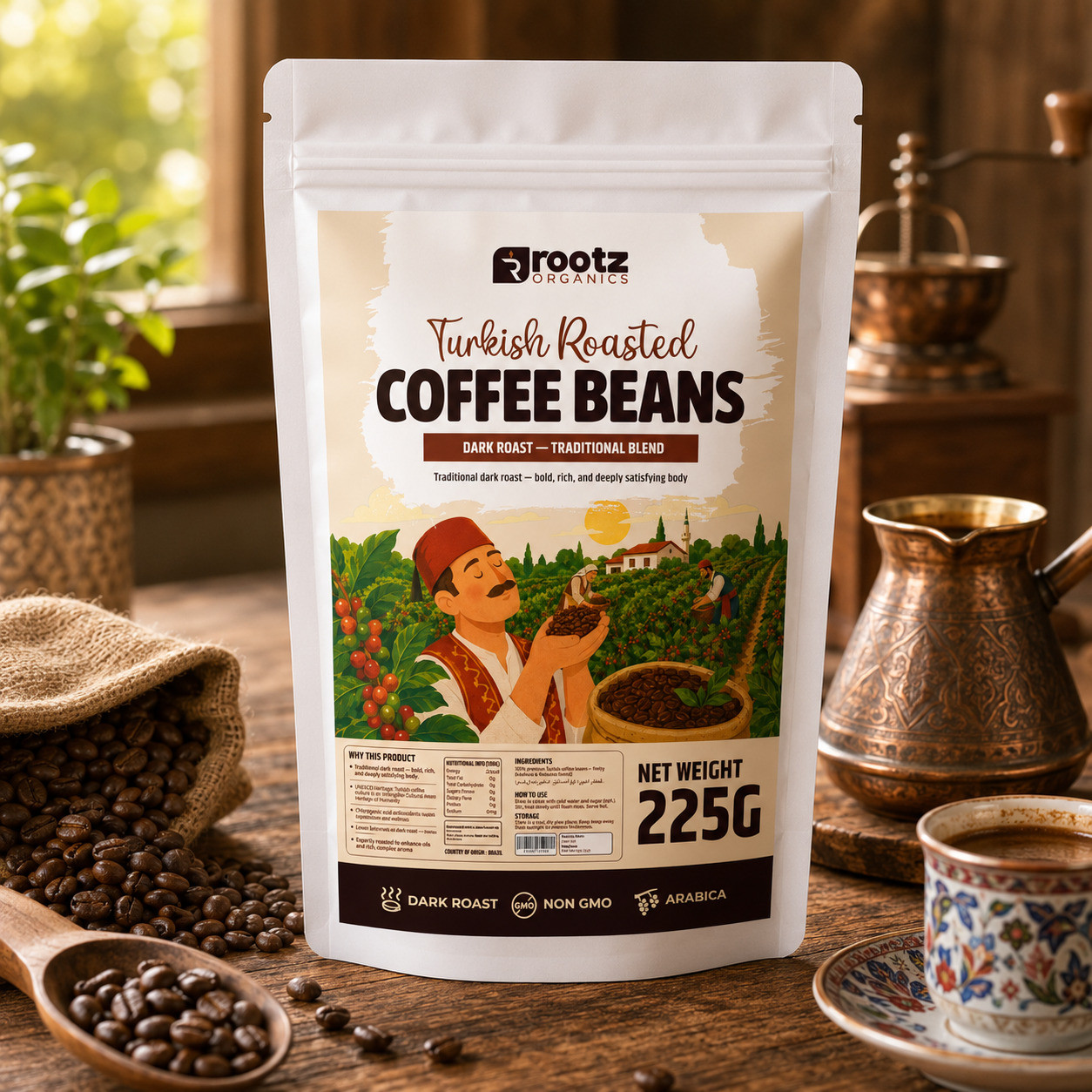
This is a dark roast Turkish blend. Arabica-forward with some Robusta for body and crema ground ultra-fine (finer than espresso) specifically for cezve preparation. The dark roast mellows the natural bitterness, producing a richly bodied, intensely aromatic cup with lower acidity than a lightly roasted Arabica.
WHY TURKISH ROAST SPECIFICALLY?
The dark roast process develops compounds different from lighter roasts: the chlorogenic acids partially transform into melanoidins brown pigments that carry their own antioxidant properties. The result is a cup that is bold and full but not harsh. The signature velvety crema that forms at the surface of a properly prepared Turkish coffee is the indicator of correct grind size and preparation.
HOW TO PREPARE TURKISH COFFEE
- Add cold water to cezve (1 Turkish coffee cup = approx. 75ml)
- Add 1 heaped teaspoon (7–8g) of ground coffee per cup
- Add sugar now if desired (not after) this is how you control the sweetness without stirring later
- Place on LOW heat. Turkish coffee is never boiled, only allowed to approach the boil
- Stir once or twice as it warms
- Watch for the froth rising from the edges the moment it approaches the rim, remove immediately
- Pour slowly into the cup, allowing grounds to settle
- Wait 2 minutes before drinking to allow grounds to settle to the bottom
- Serve with a glass of water and a small sweet this is the traditional Gulf accompaniment
Turkish coffee should never be stirred once poured and should never be fully boiled both destroy the crema and produce an inferior cup.
NUTRITION FACTS
Per 100ml brewed Turkish coffee (black, no sugar, no milk)
| Nutrient | Value | % Daily Value |
|---|---|---|
| Energy | 2 kcal |
0% |
| Total Fat | 0g |
0% |
| Total Carbohydrates | 0g |
0% |
| of which Sugars | 0g |
-- |
| Dietary Fibre | 0g |
-- |
| Protein | 0.3g |
1% |
| Sodium | 2mg |
0% |
| Caffeine | ~60–80mg per cup |
-- |
| Chlorogenic Acid (Antioxidant) | ~30–50mg |
-- |
Reviews
Login
Don't have an account?
Sign UpTurkish coffee uses no pressure — ultra-fine grounds simmered in cold water in a cezve over low heat. Espresso forces pressurised water through tightly packed grounds in seconds. Turkish coffee has heavier body, more sediment, and a different flavour. The grind is finer than espresso and not interchangeable.Turkish coffee uses no pressure — ultra-fine grounds simmered in cold water in a cezve over low heat. Espresso forces pressurised water through tightly packed grounds in seconds. Turkish coffee has heavier body, more sediment, and a different flavour. The grind is finer than espresso and not interchangeable.
Grounds settle to the bottom and should not be disturbed. Stirring churns them back into suspension, making coffee gritty throughout. Wait 2 minutes for grounds to settle. Stop drinking when you feel texture change near the bottom.Grounds settle to the bottom and should not be disturbed. Stirring churns them back into suspension, making coffee gritty throughout. Wait 2 minutes for grounds to settle. Stop drinking when you feel texture change near the bottom.
Per serving (~75ml), Turkish coffee contains ~60–80mg caffeine — similar to a single espresso. It feels strong due to intense flavour concentration, but caffeine per serving is not higher than most brewing methods.Per serving (~75ml), Turkish coffee contains ~60–80mg caffeine — similar to a single espresso. It feels strong due to intense flavour concentration, but caffeine per serving is not higher than most brewing methods.


