
Product description
MADE FROM CHANA DAL
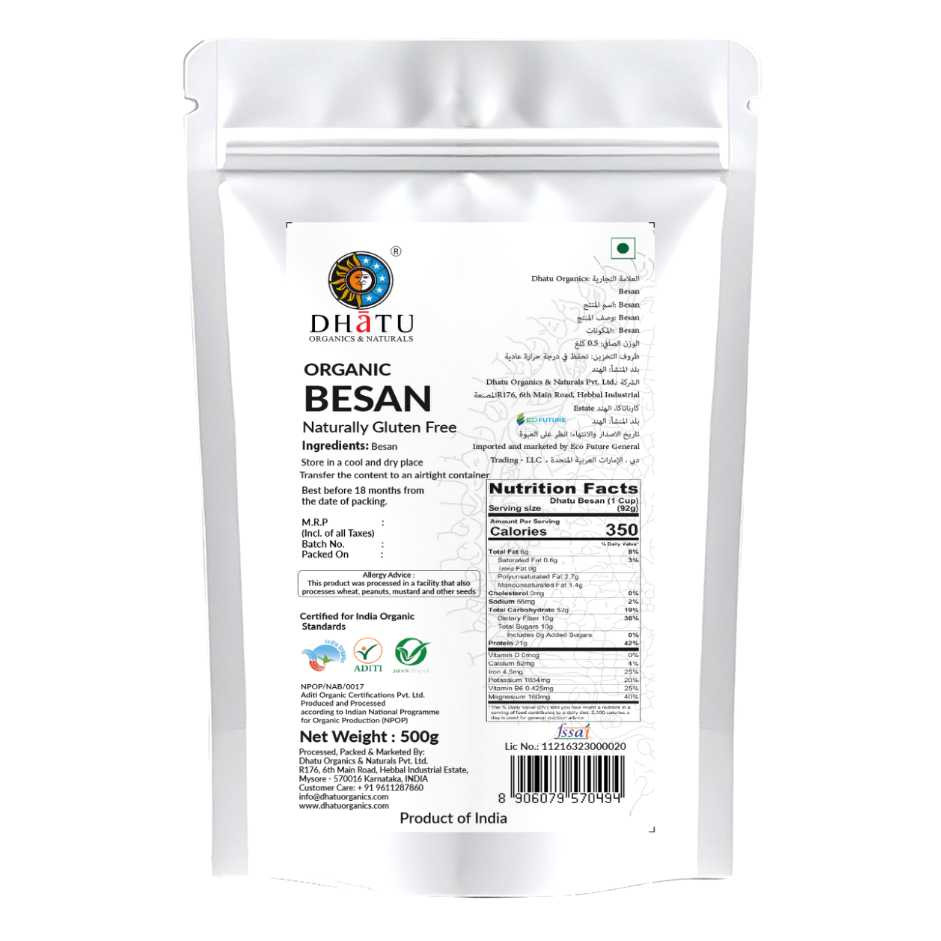
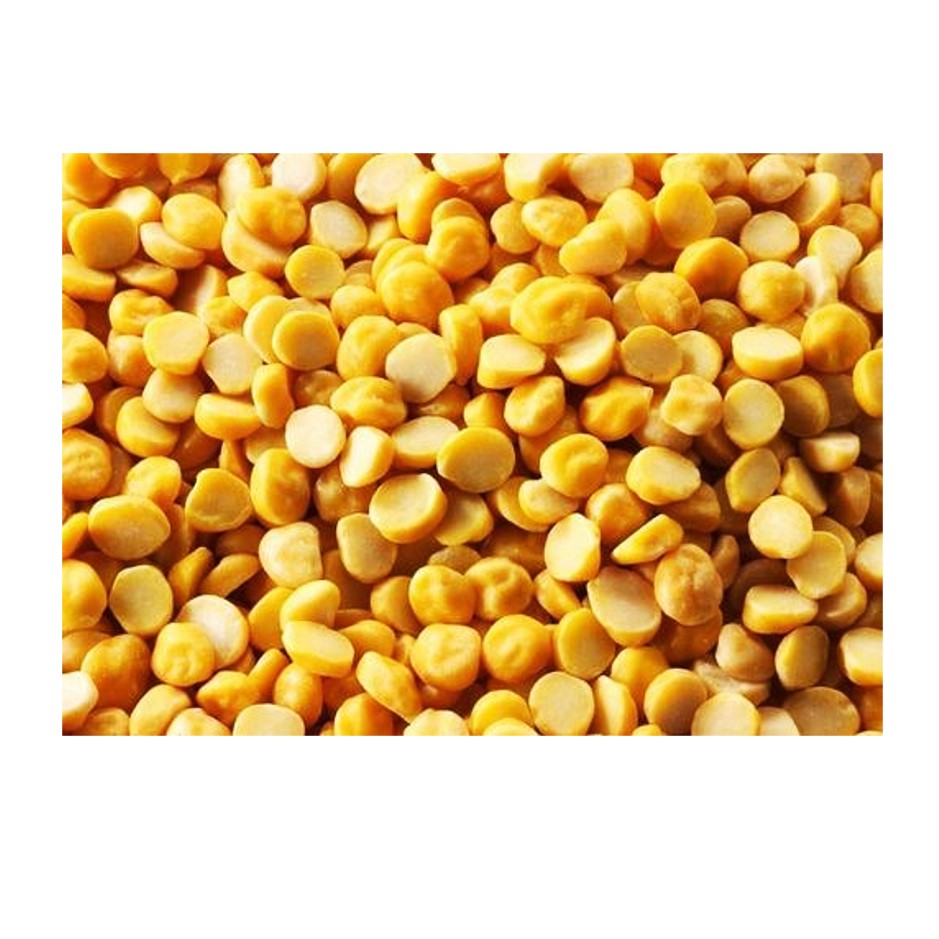
This besan is milled from chana dal — split, husked brown chickpeas (desi chana) — rather than the larger, lighter kabuli chickpea sometimes used for flour internationally. Chana dal-based besan is the traditional standard across Indian kitchens, known for its characteristic nutty flavour and fine, smooth texture once milled.
A GENUINELY STRONG NUTRITION PROFILE
Besan holds up well against far more heavily marketed “superfood” flours. Per 100g, it provides roughly 20–22g of protein and 10–11g of dietary fibre — both meaningfully higher than wheat flour, whole or refined. It also has a low glycemic index, generally cited in the range of 28–35, meaning it's digested and absorbed more gradually than refined wheat flour. This makes besan one of the more nutritionally substantial everyday flours available, without needing any exaggerated claims to make that case.
NATURALLY GLUTEN-FREE
Because besan is made from chickpeas rather than wheat, it is naturally gluten-free — not processed to remove gluten, simply made from a grain that never contained it. This makes it a genuinely suitable option for those avoiding gluten, whether by preference or for a diagnosed gluten sensitivity, though anyone with coeliac disease or a severe gluten allergy should always check for cross-contamination risk during milling and packaging with the specific supplier.
FOLATE, IRON, AND MAGNESIUM
Besan is also a notably good source of folate (vitamin B9), along with iron and magnesium — micronutrients that are largely absent from refined flours like maida. This nutrient density is part of why besan has remained a staple across Indian households for generations, well before “high-protein” or “gluten-free” became marketing terms.
HOW TO USE
Besan is genuinely one of the most versatile flours in Indian cooking — savoury, sweet, and batter applications all at once.
- Pakoras and fritters: The classic batter for crispy vegetable, onion, paneer, seafood, or chicken fritters.
- Chilla and dhokla: Used to make savoury pancakes and steamed cakes that are enjoyed as breakfast, snacks, or light meals.
- Curries and gravies: A traditional thickening ingredient that adds body and texture to a variety of savoury dishes.
- Traditional sweets: A key ingredient in favourites such as besan laddoo, Mysore pak, and other gram flour desserts.
- Coating for frying: Used to create a crisp, golden coating for vegetables, paneer, seafood, or meat before frying.
- Face and skin care (traditional use): Besan has a long-established role in South Asian beauty traditions as a natural cleanser and exfoliant. It is commonly mixed with ingredients such as yogurt, milk, rose water, or turmeric for homemade face and body masks. This is a traditional cosmetic use and not a dietary or medicinal claim.
STORAGE
Store in a cool, dry, airtight container away from direct sunlight and moisture. Besan, like other legume flours, can be more prone to absorbing moisture and developing off-flavours than wheat flour if not stored properly — an airtight container is particularly important.
NUTRITION
Basis: Per 100g
| Nutrient | Per Serving | Per 100g | % Daily Value* |
|---|---|---|---|
| Energy | - | ~387 kcal / 1619 kJ | 19% |
| Total fat | - | 6.8g | 8% |
| Total Carbs | - | 58g | 21% |
— Sugars | - | 10g | — |
Protein | 20g | 44% | |
| Folate (Vitamin B9) | - | 437mcg | 109% |
| Iron | - | 4.9mg | 27% |
| Magnesium | - | 166g | 40% |
| Potassium | - | 846g | 18% |


