

Product description
KODO MILLET — ONE GRAIN, MANY NAMES
Kodo millet (Paspalum scrobiculatum) has been cultivated across the Indian subcontinent for over 3,000 years. It is known by distinctly different names across regions: Varagu in Tamil Nadu, Harka or Haraka in Karnataka, Kodra or Kodon in Hindi-speaking regions, Arikelu in Andhra Pradesh and Telangana, and Kodro in Gujarat. This regional variety in names reflects the grain’s deep roots across South Indian and Deccan agricultural tradition — a staple in communities where it grew on soils too marginal for rice or wheat.
THE HIGHEST POLYPHENOL CONTENT AMONG MILLETS
Among the commonly cultivated and consumed millets, kodo millet stands out for its polyphenol content — the antioxidant compounds concentrated in the grain’s bran layer. Peer-reviewed nutritional research has consistently shown kodo millet to have higher polyphenol activity than foxtail millet, pearl millet, sorghum, and most other millets studied in comparison. Polyphenols are associated with the grain’s ability to help manage oxidative stress in the body, a general nutritional property rather than a specific medical claim.
A GENUINELY STRONG FIBRE AND PROTEIN PROFILE
Kodo millet provides approximately 10.2g of dietary fibre per 100g — among the highest fibre content of any commonly available grain, dramatically more than white rice (0.2g) or wheat (1.2g), and higher than most other millets. It also provides approximately 10.6g of protein per 100g. This combination of high fibre and meaningful protein makes kodo millet one of the more nutritionally substantial whole-grain alternatives for everyday cooking.
LOW GLYCEMIC INDEX
Kodo millet has a low to moderate glycemic index, estimated in the range of approximately 35–55 across research studies — significantly lower than white rice (typically 70–85) or white bread (around 70–75). Its high fibre content is the primary mechanism: fibre slows carbohydrate digestion and glucose release into the bloodstream. This is general nutritional information rather than specific dietary advice — if managing blood sugar is a health concern, a healthcare provider’s guidance should take precedence.
NATURALLY GLUTEN-FREE
Kodo millet contains no gluten, making it a naturally gluten-free grain suited to those avoiding gluten for dietary or sensitivity reasons. As with all naturally gluten-free grains, those with coeliac disease or severe gluten sensitivity should confirm cross-contamination controls during processing direcly with us.
HOW TO COOK KODO MILLET
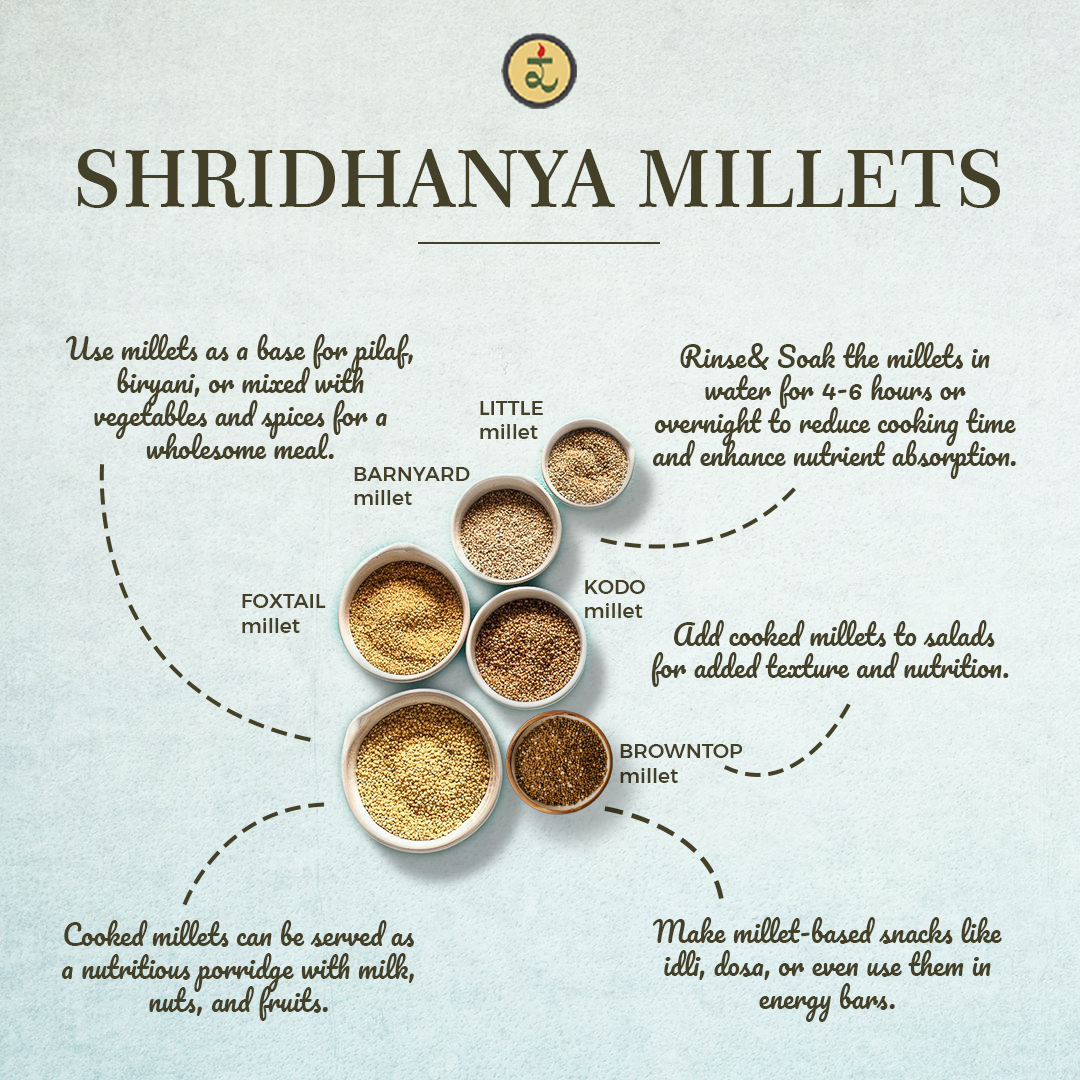
Kodo Millet is a versatile, easy-to-cook ancient grain with a mild, slightly earthy flavour. It cooks similarly to rice in about 20–25 minutes, making it ideal for everyday meals and balanced diets.
Basic Cooking Method
Rinse thoroughly under running water.
Optional: Soak for 20–30 minutes to improve digestibility and reduce cooking time.
Cook using a 1:2.5 ratio (1 cup millet to 2.5 cups water).
Simmer for 20–25 minutes until the water is fully absorbed. Fluff and serve.
Ways to Use Kodo Millet
Rice Alternative: Serve as a direct substitute for white rice with curries, stews, or grilled dishes.
Vegetable Pilaf: Cook with vegetables, herbs, and whole spices for a wholesome one-pot meal.
Savory Breakfast: Prepare with vegetables and mild spices for a light, satisfying start to the day.
Porridge / Breakfast Bowl: Cook with extra water for a softer texture; enjoy sweet or savoury.
Grain Bowls & Salads: Cool and use as a base for nutrient-rich salads or meal prep bowls.
Comfort Meals: Cook softer with minimal seasoning for easy-to-digest, light meals.
Naturally gluten-free and rich in dietary fibre, Kodo Millet fits seamlessly into modern UAE kitchens—perfect for clean eating, meal prep, and everyday nutrition
STORAGE
Store in a cool, dry place in an airtight container, away from moisture, sunlight, and strong odours. Kodo millet’s natural oil content means it keeps best in an airtight environment, particularly in the UAE’s warm climate. Consume within a reasonable timeframe for best quality.
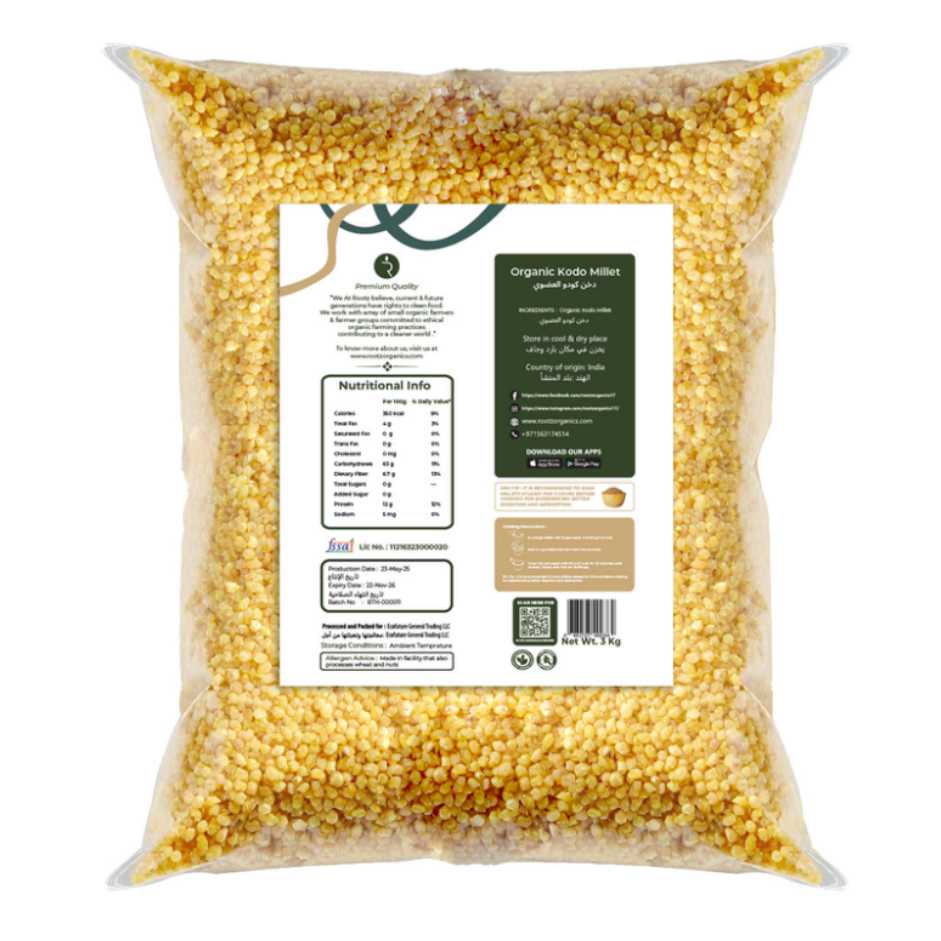
Nutrition Table
Basis: Per 100g dry weight — values from peer-reviewed research on Paspalum scrobiculatum (kodo millet)| Nutrient | Per Serving | Per 100g/ml | % DV* |
| Energy | — | ~353 kcal | 18% |
| Total fat | — | ~3.6g | 5% |
| Total carbohydrates | — | ~66–75g (varies by variety) | 24% |
| — Dietary fibre | — | ~10.2g (among highest of common millets) | 36% |
| Protein | — | ~10.6g | 21% |
| Calcium | — | ~27–31mg | 3% |
| Iron | — | ~0.5–2.0mg | — |
| Magnesium | — | Significant source | — |
| Polyphenols / Antioxidants | — | Highest among commonly available millets (peer-reviewed) | — (no DV) |
| B Vitamins (B3/Niacin, B6, Folate) | — | Present, significant sources | — |
| Glycemic Index | — | Low to moderate (approx. 35–55) | — |
Reviews
Login
Don't have an account?
Sign UpPolyphenols are antioxidant compounds concentrated in the bran layer of grains. Kodo millet’s bran composition gives it a notably high polyphenol profile compared to other commonly consumed millets including foxtail, pearl, and finger millet — a consistent finding across peer-reviewed nutritional research comparing millets. This is a genuine, research-supported differentiator rather than a marketing claim, and it’s one of the reasons kodo millet occupies a distinct place in traditional food wisdom alongside its fibre content.
Yes — kodo millet contains no gluten and is naturally gluten-free. Those with coeliac disease or severe gluten sensitivity should confirm cross-contamination controls during processing directly with us, since “naturally gluten-free” doesn’t guarantee a dedicated gluten-free facility.
Rinse thoroughly, soak for 30 minutes if possible, then cook in a 1:2.5 ratio (kodo millet to water) for approximately 20–25 minutes. It can substitute for rice in most dishes — pongal, upma, khichdi, grain bowls, and porridge all work well. It has a mild, slightly earthy flavour that takes on the character of whatever spices or additions you use.


