
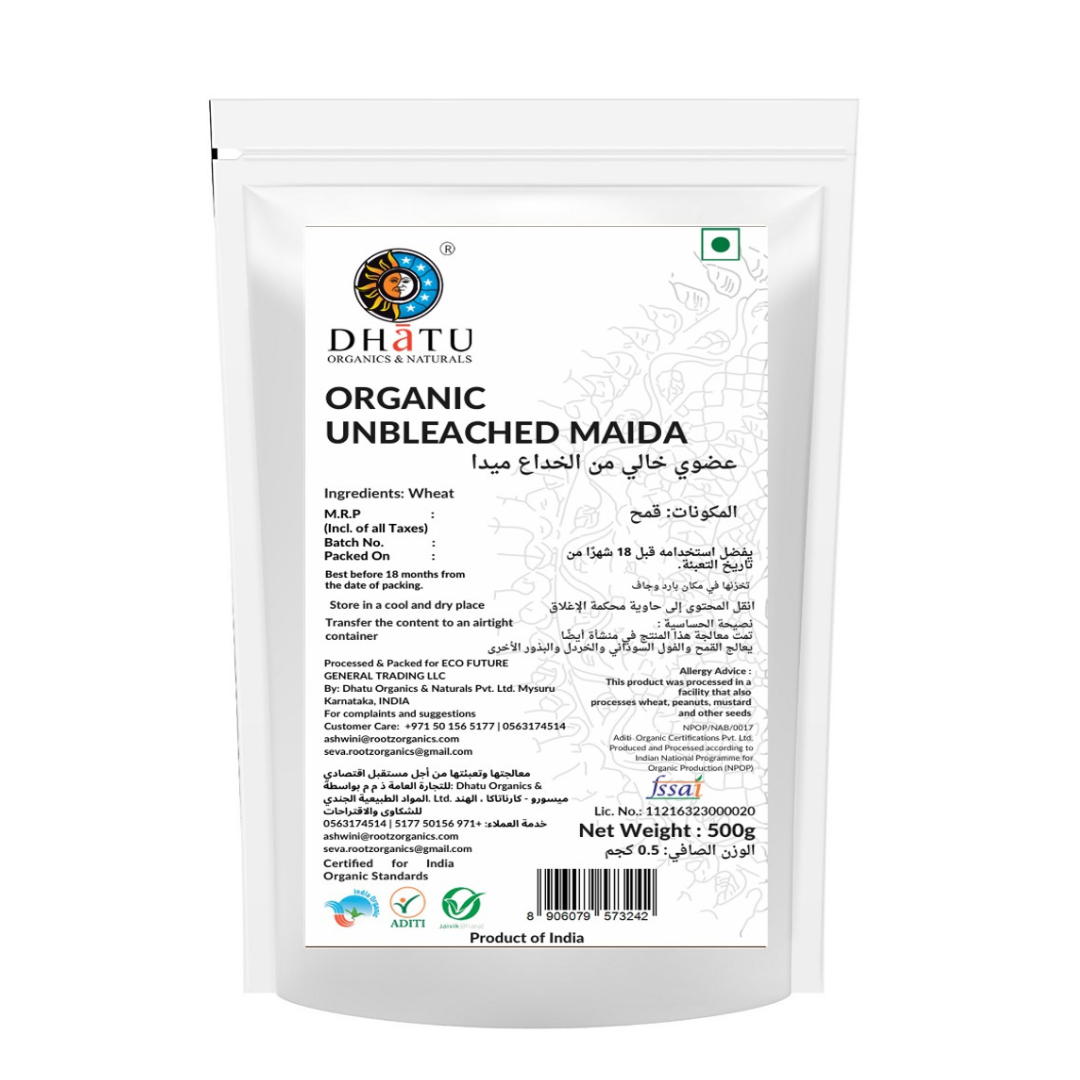
Product description
WHAT “UNBLEACHED” ACTUALLY MEANS
Most commercial maida undergoes chemical bleaching and aging to achieve a bright white colour and more consistent baking performance — commonly using agents like chlorine gas or benzoyl peroxide. This maida skips that step entirely. It is milled from wheat and left as it naturally is, without artificial whitening or aging treatment. The flour may appear slightly less stark white than heavily processed commercial maida — this is expected and is a sign of less processing, not a quality defect.
AN HONEST NOTE ON MAIDA AND NUTRITION
Maida is refined wheat flour — the bran and germ are removed during milling, leaving the starchy endosperm. This means maida, including this organic and unbleached version, is naturally lower in fibre and several micronutrients than whole wheat flour or Rootz's sprouted and Khapli flour range. We're not going to position this as a health food, because it isn't one in the way our whole wheat or sprouted flours are. What this product offers is a cleaner version of maida specifically — organic wheat, no chemical bleaching agents — for the times a recipe genuinely calls for it, rather than a daily dietary staple. For everyday flour use, we'd recommend our whole wheat or sprouted flour range instead.
ORGANICALLY GROWN, SOURCED FROM 200+ FARMER GROUPS
The wheat used in this flour is grown without synthetic pesticides, fertilisers, or genetically modified seeds, sourced through Rootz's network of more than 200 organic farmers and farmer groups.
WHAT MAIDA IS ACTUALLY USED FOR
Maida's fine texture and low gluten-developing fibre content make it suited to specific baked goods and traditional dishes where whole wheat flour would produce a noticeably denser, heavier result — certain breads, pastries, and a range of traditional Indian dishes (such as bhature, certain types of naan, and various sweets) are traditionally made specifically with maida rather than atta.
HOW TO USE
Best used where a recipe specifically calls for maida, rather than as a substitute for everyday whole wheat flour use.
- Bhature and similar fried breads: maida's texture is essential to the traditional puffed, soft result.
- Certain naan and flatbread styles: some traditional recipes specifically call for maida rather than atta.
- Pastries and certain baked goods: where a lighter, finer crumb is the goal.
- Thickening sauces and gravies: a small amount used as a thickening agent in some traditional recipes.
- Traditional sweets: several classic Indian sweets are made specifically with maida.
- Combined with whole wheat: some bakers blend a portion of maida with whole wheat flour for a specific texture result, rather than using either flour alone.
Store in a cool, dry, airtight container away from direct sunlight and moisture. Unbleached flour without chemical preservation may have a somewhat shorter shelf life than heavily processed commercial maida; use within a reasonable timeframe and check for any off smell or visible changes before use.
NUTRITION
Basis: Per 1 tbsp (~13g) / Per 100g
| Nutrient | Per Serving | Per 100g | % Daily Value* |
|---|---|---|---|
| Energy | - | 348 kcal | 17% |
| Total fat | - | 1.2g | 2% |
Total Carbohydrates | - | 73g | 27% |
| — Dietary Fibre | - | 2.7g | 11% |
| Iron | - | >whole wheat | - |


