
Product description
WHY WHITE SORGHUM DESERVES YOUR ATTENTION
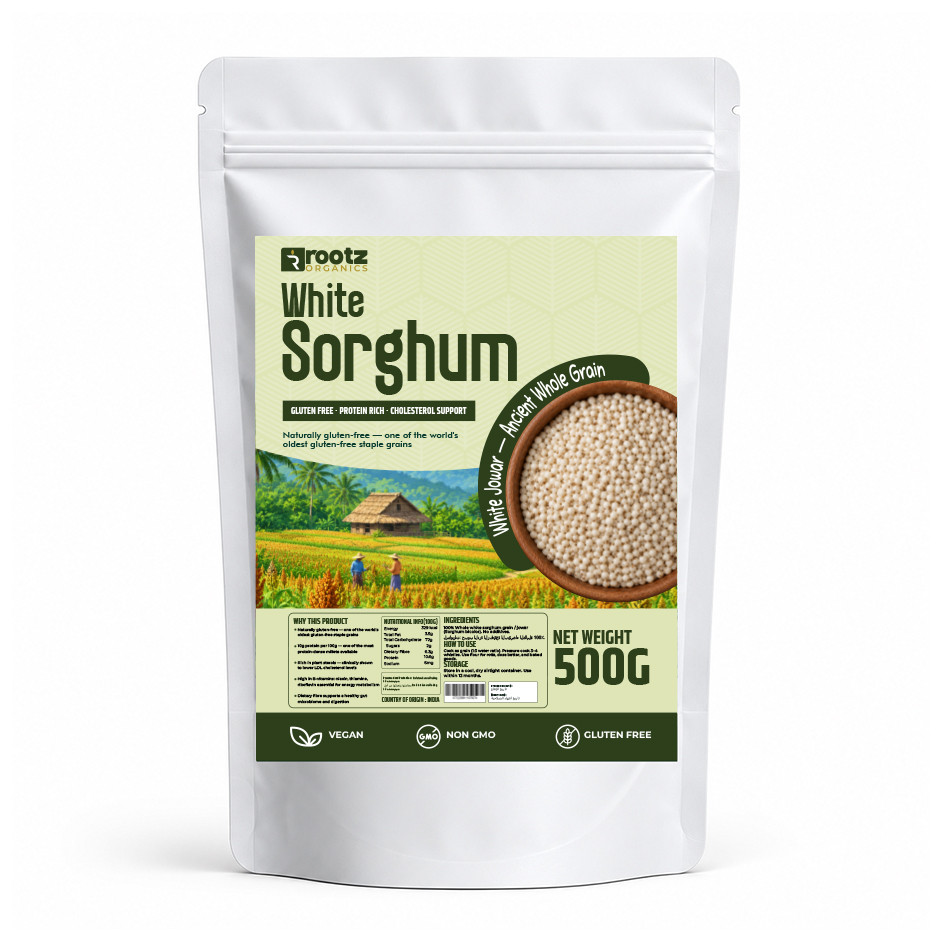
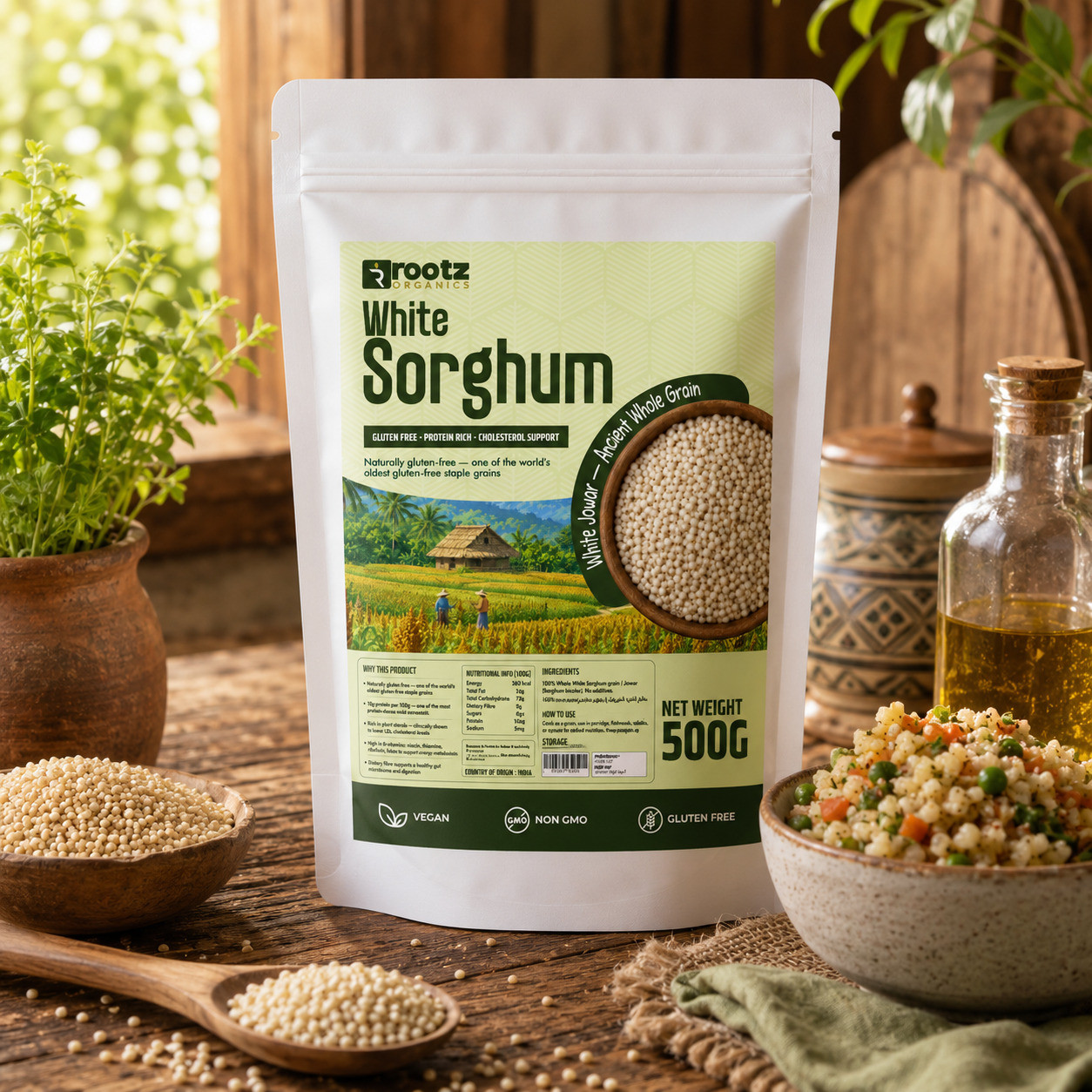
Naturally gluten-free: one of the oldest and most reliable gluten-free staple grains. Ideal for coeliac disease and gluten sensitivity.
10g protein per 100g: higher than rice (8g) and corn (9g). Among the highest protein contents of any cereal grain.
Plant sterols (phytosterols): sorghum contains beta-sitosterol and campesterol — compounds that compete with cholesterol at intestinal receptors. 2g/day of plant sterols (achievable from regular jowar consumption) is associated with 10–15% LDL reduction.
B-vitamins (B3 niacin, B1 thiamine, B2 riboflavin): essential for energy metabolism and nervous system function.
Dietary fibre (6.3g/100g): supports gut health and blood sugar stability.
How to Use Jowar (Sorghum)
- Flatbreads: Mix jowar flour with hot water to create a soft, workable dough. Roll into thin flatbreads and cook on a hot griddle or pan. Perfect alongside dips, grilled meats and Middle Eastern dishes.
- Gluten-Free Bread & Wraps: The hot-water dough can also be shaped into rustic gluten-free wraps or flatbreads for everyday meals.
- Fresh Grain Salads: Cook whole jowar grains and combine with parsley, mint, tomatoes, cucumber, lemon juice and olive oil for a wholesome Mediterranean-style salad.
- Pilafs & Grain Bowls: Use cooked jowar as a nutritious alternative to rice in spiced pilafs, or as the base for warm grain bowls topped with vegetables, proteins and sauces.
- Breakfast Porridge: Simmer whole or cracked jowar in water until tender. Finish with honey, dates, nuts or a drizzle of ghee for a hearty breakfast.
- One-Pot Meals: Cook jowar with lentils, vegetables and aromatic spices for a satisfying, balanced meal.
- Savoury Breakfast Dishes: Lightly toast cracked jowar and cook with vegetables, herbs and seasonings for a warm, savoury breakfast or side dish
STORAGE: Cool, dry, airtight container. Whole grain: 12 months sealed. Flour: 6 months.
Reviews
Login
Don't have an account?
Sign UpProtein: sorghum 10.6g vs quinoa 14.1g/100g (quinoa wins marginally, complete protein). Fibre: sorghum 6.3g vs quinoa 2.8g (sorghum wins). Iron: sorghum 4.4mg vs quinoa 1.5mg (sorghum wins). Plant sterols: sorghum significantly higher. Lower price.Protein: sorghum 10.6g vs quinoa 14.1g/100g (quinoa wins marginally, complete protein). Fibre: sorghum 6.3g vs quinoa 2.8g (sorghum wins). Iron: sorghum 4.4mg vs quinoa 1.5mg (sorghum wins). Plant sterols: sorghum significantly higher. Lower price.
Sorghum lacks gluten. With hot water (70–80°C), starch granules partially gelatinise — absorb water and become sticky, providing cohesion needed to roll the dough. Cold water does not achieve this gelatinisation.Sorghum lacks gluten. With hot water (70–80°C), starch granules partially gelatinise — absorb water and become sticky, providing cohesion needed to roll the dough. Cold water does not achieve this gelatinisation.
Sorghum is naturally gluten-free. For coeliac patients, the product must be processed in a certified gluten-free facility with no cross-contamination from wheat, barley, or rye. Verify processing certification before recommending to coeliac patients.Sorghum is naturally gluten-free. For coeliac patients, the product must be processed in a certified gluten-free facility with no cross-contamination from wheat, barley, or rye. Verify processing certification before recommending to coeliac patients.


